English | 日本語
Eiheiji rewards a different kind of sightseeing: leaving enough room in the day to notice how a place is used. In the mountains of Fukui, a visit moves between wooded surroundings, halls, stairs and the ordinary work of a religious community. The most useful question is not how quickly you can collect its famous views, but how to enter a working monastery with care. This guide connects Dōgen’s history, Sōtō Zen teaching and practical visitor information, while keeping present-day arrangements separate from tradition.
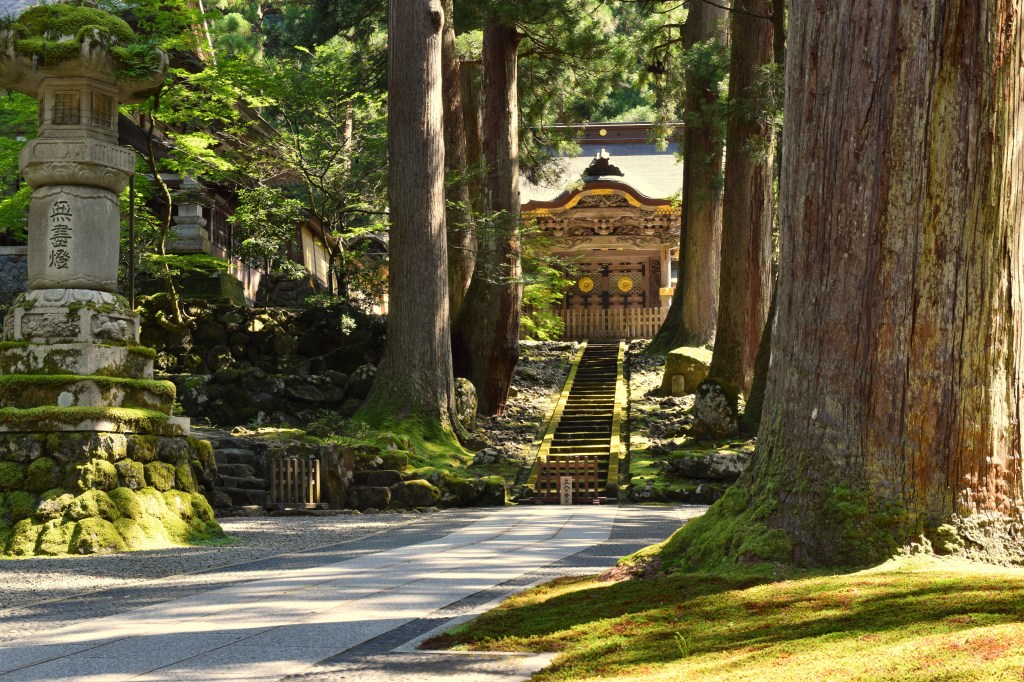
From Dōgen’s journey to a monastery in Echizen
Dōgen lived from 1200 to 1253. The Museum of Zen Culture and History at Komazawa University places his journey to Song-dynasty China in 1223, his study with Rujing in 1225, and his return to Japan in 1227. In 1243, at the invitation of his lay supporter Hatano Yoshishige, he moved to Echizen, in present-day Fukui. He initially stayed at Kippōji. Daibutsuji was established in 1244 and renamed Eiheiji in 1246. This sequence helps a visitor connect the Kyoto, China and Fukui chapters of his life without treating every building now visible as a survival from his lifetime.
A living tradition: practice in ordinary actions
Eiheiji is one of Sōtō Zen’s two head temples, as its official introduction explains. Its account of Zen practice describes zazen as the expression of awakening itself, rather than a certificate to be earned after completing a course. It also places eating, walking and cleaning within practice. These are religious teachings, not promises that a short visit will produce a particular emotional or spiritual result. For a traveller, their practical significance is simple: a corridor, a meal and a moment of waiting deserve attention too.
That perspective changes the pace of a visit. Leave a clear passage for people who are working, put a phone away before entering a quiet hall, and resist the temptation to turn every pause into another photograph. These small choices are a respectful way to travel even if you have never practised Zen. There is no need to claim a sudden personal transformation. Curiosity, patience and the willingness to listen are enough to begin.
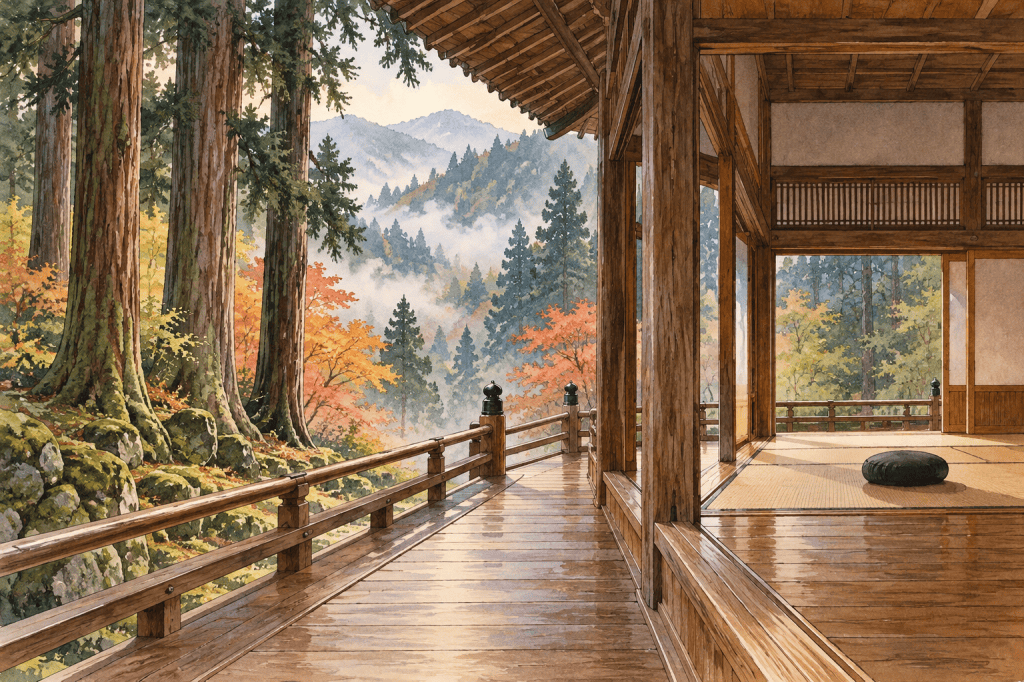
Reading the temple as a place of daily life
Eiheiji Town’s guide identifies seven especially important buildings: the Dharma Hall, Buddha Hall, monks’ hall, kitchen or administrative hall, main gate, lavatory and bathhouse. Together they are known as the shichidō garan. The inclusion of washing and bodily needs alongside worship is worth noticing. It gives the visitor a concrete way to understand why the religious life described here extends beyond seated meditation. Use the route and signs provided on the day; a building’s significance does not mean its interior is open to visitors.
Rather than trying to memorise every hall name, choose a few details to observe slowly: the transition from outdoors to indoors, the change in level between spaces, or the way a corridor connects one activity with another. You can appreciate these relationships without entering restricted areas. A photograph may record the view, but reading the signs and noticing the circulation of people often makes the layout more intelligible.
What zazen involves
The Sōtō Zen guide to zazen describes an upright posture, relaxed shoulders, softly open eyes and quiet, natural breathing. When thoughts arise, practitioners are instructed not to chase them or struggle against them, but to return to posture and awareness. The guide also illustrates sitting in a chair. For a first session, receive guidance from the person teaching you and discuss any difficulty with sitting before it begins; forcing an unfamiliar posture is not the purpose of your visit.
The Sōtō Zen guide to manners in the zendō distinguishes a meditation hall from the traditional monks’ hall, where eating, sleeping and sitting share an organised space. It explicitly notes that details of etiquette vary by temple. Bows, the arrangement of a cushion and responses to bells have meaning within a shared routine. Follow the local explanation instead of trying to perform a complicated sequence from memory. An introductory article can prepare your attention, but cannot replace instruction on site.
Food, care and the work behind a meal
In Sōtō Zen’s explanation of cooking and eating, Dōgen’s Tenzo Kyōkun and Fushuku Hanpo are discussed as guidance for preparing ingredients carefully, receiving food gratefully and considering other people at the table. This is a useful connection to carry into lunch after the temple. Slow down, consider the work behind the meal, and avoid ordering more than you can eat. These are suggestions for your own visit, not a claim that a restaurant meal reproduces monastic training.
Day visits and practice programmes in October 2026
The temple’s Japanese practice page currently lists day zazen sessions at 10:00, 13:30 and 15:30, lasting about 50 minutes. It says advance booking is unnecessary, but registration at reception must be completed at least five minutes before the start. Sessions may be cancelled for temple reasons. Overnight training requires a reservation on specifically offered dates. The same page currently says sutra-copying is suspended. For morning service, visitors are asked to contact reception by the previous day because the gathering time varies.
International visitors should separately read the English-language announcement: it says the international Sanzen programme is unavailable from spring through autumn 2026. The Japanese listing of day sessions must not be read as a guarantee that international overnight training has resumed. Ask the temple about the particular programme, language of instruction and date you want before making plans around it. These details were checked on 8 October 2026; older travel accounts can describe arrangements that no longer apply.
Visitor etiquette that protects the monastery
The temple’s visitor rules ask for modest, neat clothing, quiet conduct and keeping left while walking. Photographing priests or monks is prohibited. Visitors must not touch ritual instruments or altar furnishings, and must stay out of the gardens rather than step off the wooden corridors. Follow any additional signs about photography in particular spaces. Treat these requests as part of the visit from the moment you arrive, including while waiting with companions or adjusting a camera.
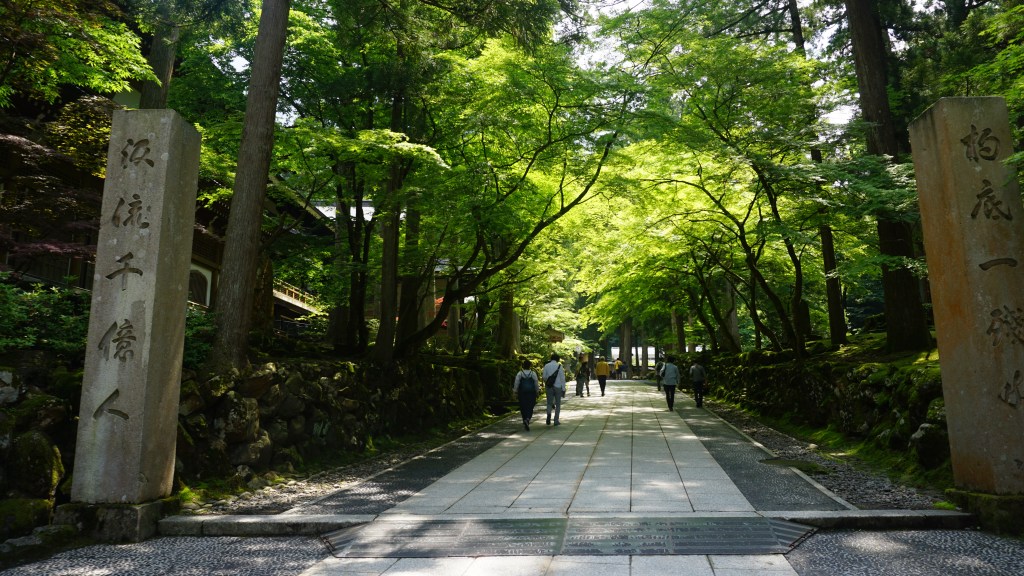
Getting there, admission and a realistic day
The Keifuku Bus Eiheiji Liner runs from Fukui Station’s east exit, stop 1. The timetable effective 1 October 2026 shows a journey of about 28 minutes to Eiheiji. The adult one-way fare is ¥1,000 and the child fare ¥500. Seats are first come, first served and cannot be reserved; a full bus cannot take additional passengers. Check both outward and return journeys before leaving Fukui, and allow for traffic. The additional 08:40 departure operates only on weekends and public holidays, so do not build a weekday plan around it.
The temple’s Japanese visiting information currently gives opening hours of 08:30–16:30, with arrival requested by 16:00. General adult admission is ¥700; elementary and junior-high pupils pay ¥300, and preschool children enter free. Stairs are numerous inside the buildings, and the temple does not allow strollers on the interior route. If stairs or mobility are a concern, contact the temple in advance about what is feasible for you. Check current notices before travel rather than assuming the entire visitor route is accessible.
For an unhurried first visit, reserve a half-day from Fukui, with additional time if joining a confirmed practice session. This is a suggested pace, not an official tour duration. Put the temple first, then decide whether there is time for a short walk outside and a meal. The address is 5-15 Shihi, Eiheiji Town, Fukui. Use this Eiheiji map point, taken from the town tourism page’s embedded map, and follow local signs to reception.
Nearby sights that continue the story
Just outside the temple, the town’s guide to Akiha Gongendō, the Shihi rock engravings and Dōgen’s poetry monuments offers a useful starting point for a modest extension of the visit. Read the explanations as you go and use designated paths. Poetry stones invite a slower form of looking: even when you cannot read every character, the presence of writing in the approach reminds you that the setting has been interpreted and remembered across generations.
For a deeper connection with Dōgen, consider Kippōji (吉峰寺) elsewhere in Eiheiji Town. The local tourism account connects it with his stay in 1243 before Eiheiji’s foundation. It also describes a stone traditionally associated with his meditation. That association should be presented as tradition, not archaeological proof of an individual sitting there. Kippōji is a separate excursion, not a quick stop on the temple’s visitor route. Arrange transport and confirm visiting conditions directly; do not assume the mountain route is an easy casual walk.
With more time in the Fukui area, the Ichijodani Asakura Family Site offers another historical perspective. Its official portal describes the remains of a planned castle town associated with five generations of the Asakura family, and explains the national designations protecting the site, gardens and excavated objects. This is a separate destination with its own transport and visiting arrangements. Pairing it with Eiheiji works best as a considered regional itinerary, rather than a race through unrelated sights on one afternoon.
Continue exploring Japan’s living sacred places
Eiheiji is most rewarding when its history and present life are allowed to sit together: dates provide a framework, religious teaching explains the practice, and current rules tell you how to visit. For another perspective on travel and faith, read our Shikoku pilgrimage and Emon Saburō story. Our guide to Nara’s sacred deer and Kasuga Taisha also explores how inherited beliefs meet the responsibilities of visitors today.
Sources and information date
Checked 8 October 2026. Historical interpretation is drawn from Komazawa University’s museum; teaching and visitor arrangements from Eiheiji and Sōtō Zen; local sights from Eiheiji Town and the Ichijodani official portal; transport from Keifuku Bus. Exact sources are linked beside the relevant passages. Confirm operating notices before travel.
To explore further, visit Zenkei (禅景) for Zen-inspired onigawara art.


.jpg)
