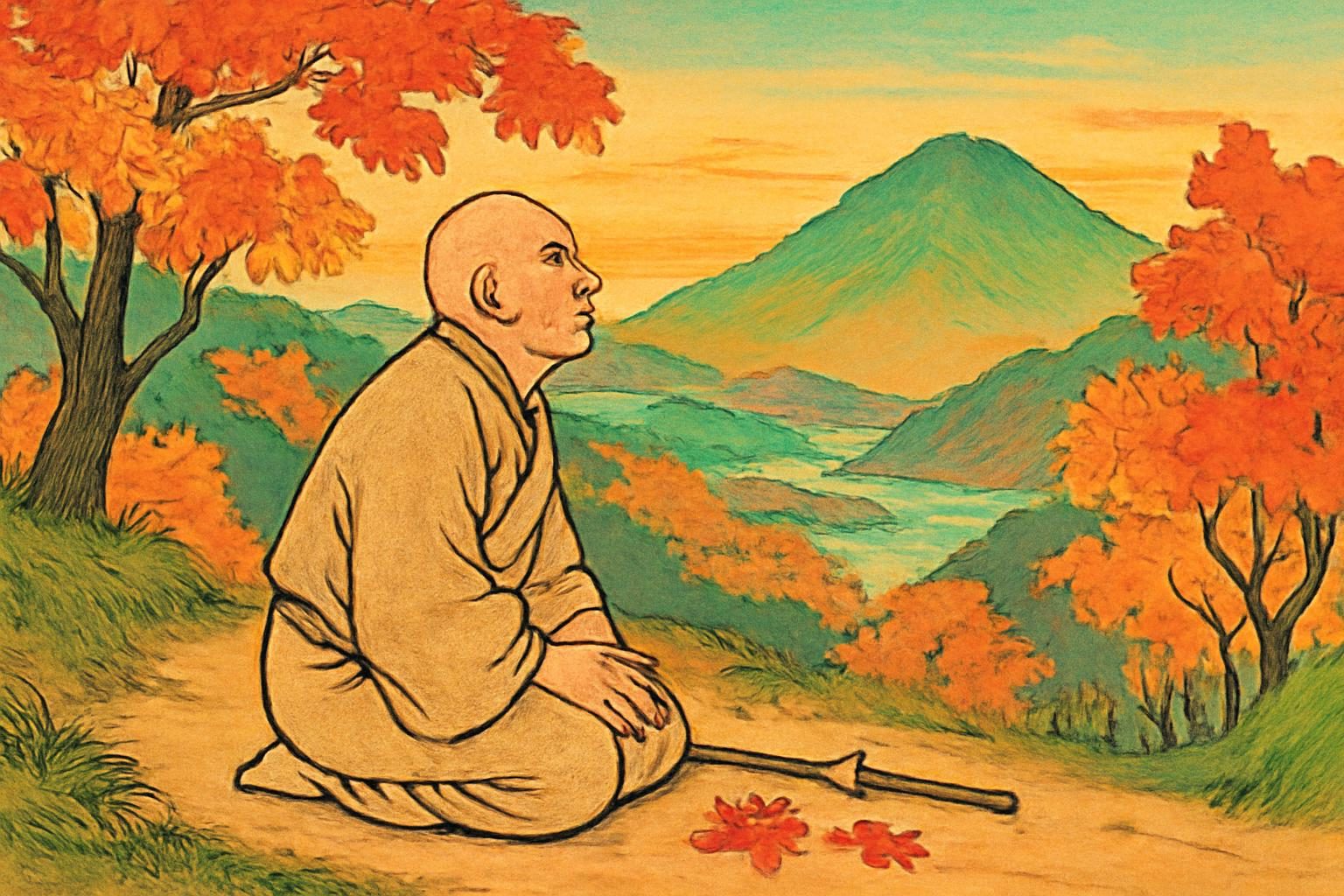
In Naruto, Tokushima Prefecture, the Shikoku Pilgrimage unfolds its rich tapestry of history and legend, particularly during the vibrant autumn season. At the heart of this spiritual journey lies the story of Emon Saburō, a tale of redemption and devotion that continues to inspire pilgrims today.

Introduction to the Shikoku Pilgrimage and Autumn Traditions
FACT: The Shikoku Pilgrimage Route
The Shikoku Pilgrimage, or Shikoku Henro, is a revered spiritual journey encompassing 88 temples across Shikoku Island. This pilgrimage is deeply connected to Kūkai, also known as Kōbō Daishi, the founder of the Shingon school of Buddhism. Although the pilgrimage route developed gradually after Kūkai’s time, it remains a testament to his enduring influence on Japanese spirituality and culture. Pilgrims, known as “henro,” often don traditional white garments and conical hats, symbolizing purity and the shedding of worldly attachments as they traverse the island’s diverse landscapes. The journey is not only a physical challenge but also a spiritual endeavor, inviting participants to reflect on their lives and seek enlightenment.
Throughout the pilgrimage, participants encounter a variety of landscapes, from coastal paths to mountainous trails, each offering unique challenges and moments of introspection. The journey is marked by the ringing of bells and the chanting of sutras, creating an atmosphere of reverence and contemplation. Pilgrims often carry a staff, which symbolizes Kūkai’s presence and guidance along the path. This spiritual journey is not only a test of endurance but also a way to connect deeply with the teachings of Buddhism and the legacy of Kūkai.
Ryōzen‑ji: The Traditional Starting Point in Naruto
FACT: Ryōzen‑ji’s Significance
Ryōzen‑ji, located in Naruto, Tokushima Prefecture, is the first temple on the Shikoku Pilgrimage. It serves as the traditional starting point for pilgrims embarking on this sacred journey. The temple’s serene atmosphere and historical significance make it a pivotal site for those seeking spiritual enlightenment. Visitors to Ryōzen‑ji can witness the temple’s beautiful architecture and tranquil gardens, which provide a peaceful setting for reflection and prayer. The temple also offers a space where pilgrims can receive blessings and guidance before setting off on their journey.
The temple grounds are often bustling with activity as pilgrims gather to begin their journey. The main hall, adorned with intricate carvings and traditional motifs, stands as a testament to the rich history and cultural heritage of the region. Pilgrims can participate in rituals to cleanse their spirit and prepare for the arduous journey ahead. The temple’s location in Naruto, a city known for its natural beauty and cultural significance, adds to the allure of Ryōzen‑ji as a starting point for this profound spiritual endeavor.


The Legend of Emon Saburō and the Reverse Pilgrimage
LEGEND: Emon Saburō’s Redemption
According to legend, Emon Saburō was a wealthy man who broke a pilgrim’s bowl, an act that led to his spiritual awakening. In repentance, he undertook the arduous task of walking the Shikoku Pilgrimage twenty times clockwise and once counter-clockwise. His dedication and remorse were eventually rewarded with absolution from Kūkai on his deathbed, symbolizing the power of repentance and forgiveness. This story highlights the themes of humility and redemption, encouraging pilgrims to reflect on their own actions and seek personal growth through their journey.
The legend of Emon Saburō serves as a moral compass for many pilgrims, illustrating the transformative power of sincere repentance and perseverance. His story is often recounted at various temples along the pilgrimage, reminding pilgrims of the importance of humility and the possibility of redemption regardless of past mistakes. The act of walking the pilgrimage in reverse, as Emon Saburō did, is seen as a profound gesture of atonement and a testament to his unwavering commitment to spiritual growth.
LEGEND: The Practice of Osettai
The legend of Emon Saburō also emphasizes the practice of “osettai,” or alms-giving, which is a significant aspect of the pilgrimage experience. Pilgrims often receive gifts and support from local residents, fostering a sense of community and mutual respect. This tradition of generosity and kindness is believed to bring blessings to both the giver and the receiver, reinforcing the spiritual bonds that connect all participants in the pilgrimage.
Osettai is more than just a tradition; it is a manifestation of the interconnectedness of all beings, a core principle of Buddhism. The act of giving and receiving alms creates a cycle of compassion and gratitude, enriching the pilgrimage experience for both locals and pilgrims. This practice highlights the communal aspect of the pilgrimage, where the journey is not only a personal quest but also a shared experience that strengthens the bonds between individuals and their communities.
Jōshin‑an and Shōsan‑ji: The Tale’s Conclusion in Kamiyama
FACT: Emon Saburō’s Final Resting Place
Emon Saburō’s story concludes at Jōshin‑an near Shōsan‑ji in Kamiyama, Tokushima Prefecture. This site is traditionally linked to his death and absolution, marking the end of his spiritual journey. Pilgrims often visit this location to pay respects and reflect on the themes of redemption and spiritual growth. The serene environment of Jōshin‑an offers a place for contemplation and connection with the deeper meanings of the pilgrimage, allowing visitors to honor the legacy of Emon Saburō’s journey.
Jōshin‑an, with its tranquil surroundings and historical significance, provides a fitting conclusion to the story of Emon Saburō. The site offers a space for reflection and prayer, where pilgrims can meditate on the lessons of humility, perseverance, and redemption embodied by Emon Saburō. The connection to Shōsan‑ji, another important temple on the pilgrimage route, further enriches the spiritual experience, offering pilgrims a chance to deepen their understanding of the pilgrimage’s teachings.


Kōbō Daishi Legends and Tōrin‑in
LEGEND: The Legend of Sowing Daishi
Tōrin‑in, located in Naruto, is associated with the legend of Kōbō Daishi teaching locals both esoteric Buddhism and farming techniques. This tale, known as the “Legend of Sowing Daishi,” highlights Kūkai’s role in spreading both spiritual and practical knowledge, further cementing his legacy in the region. The story reflects Kūkai’s dedication to improving the lives of the people he encountered, blending spiritual teachings with practical skills to foster a harmonious and prosperous community.
The “Legend of Sowing Daishi” illustrates Kūkai’s holistic approach to enlightenment, where spiritual growth is intertwined with practical living. By imparting agricultural knowledge alongside esoteric teachings, Kūkai empowered the local communities to thrive both spiritually and materially. Tōrin‑in stands as a testament to this legacy, inviting visitors to explore the harmonious balance between spirituality and daily life that Kūkai championed.
Tasting Tokushima: Seasonal Naruto Kintoki Sweet Potatoes
FACT: Naruto Kintoki’s Culinary Delight
Naruto Kintoki, a regional brand sweet potato, is celebrated for its red-purple skin and golden interior. This sweet potato is a registered regional collective trademark and is popular in various forms, such as daigaku-imo, roasted sweet potato, cakes, pudding, and soft serve. These treats are especially enjoyed by pilgrims and visitors during the autumn pilgrimage season. The sweet, rich flavor of Naruto Kintoki provides a delightful culinary experience that complements the spiritual journey, offering a taste of the region’s agricultural heritage.
The Naruto Kintoki sweet potato is more than just a culinary delight; it is a symbol of the region’s rich agricultural tradition and the community’s dedication to quality produce. During the autumn pilgrimage season, these sweet potatoes are a staple, offering nourishment and comfort to weary pilgrims. The vibrant colors and sweet taste of Naruto Kintoki reflect the warmth and hospitality of the region, inviting visitors to savor the local flavors as they embark on their spiritual journey.


Related on JAPAN ESSENCE: Hirose Taisha Shrine Nara: Discover the Unique Sand-Throwing Festival | Discover Hida no Takumi: Takayama’s Legendary Woodworking & Crafts
Regional guide
Location: Naruto, Tokushima Prefecture
- Ryōzen‑ji Temple (Naruto) — source
- Tōrin‑in (Naruto) — source
- Jōshin‑an (near Shōsan‑ji) (Kamiyama) — source
- Naruto Kintoki sweet potato (Naruto) — source
Sources
- Emon Saburō – Wikipedia
- Ryōzen-ji (Naruto) – Wikipedia
- Tōrin-in (Naruto) – Wikipedia
- Shōsan-ji (Kamiyama) – Wikipedia
- Shikoku Pilgrimage – Wikipedia
To explore further, visit Zenkei (禅景) for Zen-inspired onigawara art and Oni Kobo (鬼工房) for onigawara demon-tile art and charms.
徳島県鳴門市では、四国遍路がその豊かな歴史と伝説の織り成す物語を展開し、特に鮮やかな秋の季節に際立ちます。この霊的な旅の中心には、衛門三郎の物語があり、贖罪と献身の物語が今日も巡礼者を鼓舞し続けています。
四国遍路と秋の伝統の紹介
事実: 四国遍路ルート
四国遍路、または四国遍路道は、四国島全体にわたる88の寺院を含む尊敬される霊的な旅です。この巡礼は、真言宗の開祖である空海、またの名を弘法大師と深く結びついています。巡礼ルートは空海の時代の後に徐々に発展しましたが、日本の精神性と文化に対する彼の永続的な影響を証明しています。「遍路」として知られる巡礼者たちは、しばしば伝統的な白い衣装と円錐形の帽子を身に着け、島の多様な風景を巡る中で、純粋さと世俗的な執着を捨てることを象徴しています。この旅は、肉体的な挑戦であるだけでなく、精神的な試みでもあり、参加者に自分の人生を振り返り、悟りを求めるよう招きます。
巡礼の間、参加者は海岸沿いの道から山岳の小道まで、さまざまな風景に出会い、それぞれが独自の挑戦と内省の瞬間を提供します。この旅は、鐘の音と経の唱和によって特徴付けられ、敬意と瞑想の雰囲気を作り出します。巡礼者はしばしば杖を持ち、これは道中での空海の存在と導きを象徴しています。この霊的な旅は、耐久力の試練であるだけでなく、仏教の教えと空海の遺産と深くつながる方法でもあります。
霊山寺:鳴門の伝統的な出発点
事実: 霊山寺の重要性
徳島県鳴門市に位置する霊山寺は、四国遍路の最初の寺院です。この神聖な旅に出発する巡礼者にとって、伝統的な出発点として機能します。寺院の静かな雰囲気と歴史的な重要性は、精神的な悟りを求める人々にとって重要な場所となっています。霊山寺を訪れる人々は、美しい建築と静かな庭園を目にすることができ、反省と祈りのための平和な環境を提供します。寺院はまた、巡礼者が旅に出る前に祝福と導きを受けることができる場所を提供しています。
寺院の敷地は、巡礼者が旅を始めるために集まるため、しばしば活気に満ちています。複雑な彫刻と伝統的なモチーフで飾られた本堂は、地域の豊かな歴史と文化遺産の証として立っています。巡礼者は、精神を清め、厳しい旅に備えるための儀式に参加することができます。自然の美しさと文化的な重要性で知られる鳴門市に位置するこの寺院は、この深遠な霊的な試みの出発点としての魅力を増しています。
衛門三郎の伝説と逆打ち
伝承: 衛門三郎の贖罪
伝説によれば、衛門三郎は巡礼者の鉢を壊した裕福な男であり、この行為が彼の霊的な目覚めにつながりました。彼は悔い改めて、四国遍路を時計回りに20回、反時計回りに1回歩くという困難な課題に取り組みました。彼の献身と後悔は、最終的に死の床で空海からの赦しを受けることによって報われ、悔い改めと許しの力を象徴しています。この物語は、謙虚さと贖罪のテーマを強調し、巡礼者に自分の行動を振り返り、旅を通じて個人的な成長を求めるよう促します。
衛門三郎の伝説は、多くの巡礼者にとって道徳的な指針として機能し、誠実な悔い改めと忍耐の変革力を示しています。彼の物語は、巡礼のさまざまな寺院でしばしば語られ、巡礼者に謙虚さの重要性と過去の過ちにもかかわらず贖罪の可能性を思い出させます。衛門三郎が行ったように、逆打ちで巡礼を歩く行為は、贖罪の深遠なジェスチャーと霊的成長への揺るぎない献身の証と見なされています。
伝承: お接待の実践
衛門三郎の伝説はまた、「お接待」または施しの実践を強調しており、これは巡礼体験の重要な側面です。巡礼者はしばしば地元住民から贈り物や支援を受け、コミュニティと相互の尊敬の感覚を育みます。この寛大さと親切の伝統は、与える者と受け取る者の両方に祝福をもたらすと信じられており、巡礼に参加するすべての人々を結びつける霊的な絆を強化します。
お接待は単なる伝統以上のものであり、すべての存在の相互関連性の現れであり、仏教の核心的な原則です。施しを与え、受け取る行為は、思いやりと感謝のサイクルを生み出し、地元住民と巡礼者の両方にとって巡礼体験を豊かにします。この実践は、巡礼の共同体的な側面を強調し、旅が個人的な探求であるだけでなく、個人とそのコミュニティ間の絆を強化する共有体験でもあることを示しています。
常信庵と焼山寺:物語の結末がある神山
事実: 衛門三郎の最終的な安息の地
衛門三郎の物語は、徳島県神山町の焼山寺近くの常信庵で終わります。この場所は伝統的に彼の死と赦しに関連しており、彼の霊的な旅の終わりを示しています。巡礼者はしばしばこの場所を訪れ、贖罪と霊的成長のテーマを振り返り、敬意を表します。常信庵の静かな環境は、巡礼の深い意味とつながるための場所を提供し、訪問者が衛門三郎の旅の遺産を称えることを可能にします。
常信庵は、その静かな環境と歴史的な重要性により、衛門三郎の物語の適切な結論を提供します。この場所は、謙虚さ、忍耐、贖罪の教訓を瞑想するための反省と祈りの場を提供し、巡礼者が衛門三郎によって体現された教訓を瞑想することができます。巡礼ルート上の別の重要な寺院である焼山寺とのつながりは、霊的な体験をさらに豊かにし、巡礼者が巡礼の教えをより深く理解する機会を提供します。
弘法大師の伝説と東林院
伝承: 種まき大師の伝説
鳴門に位置する東林院は、弘法大師が地元の人々に密教と農業技術の両方を教えたという伝説に関連しています。この物語は「種まき大師の伝説」として知られ、霊的な知識と実践的な知識の両方を広める上での空海の役割を強調し、地域における彼の遺産をさらに確固たるものにしています。この物語は、彼が出会った人々の生活を改善することに対する空海の献身を反映し、霊的な教えと実践的なスキルを融合させて調和のとれた繁栄するコミュニティを育むことを目指しました。
「種まき大師の伝説」は、霊的成長が実践的な生活と結びついているという空海の全体的なアプローチを示しています。農業の知識を密教の教えと共に伝えることによって、空海は地元のコミュニティが霊的にも物質的にも繁栄することを可能にしました。東林院はこの遺産の証として立ち、訪問者に空海が提唱した霊性と日常生活の調和の取れたバランスを探求するよう招いています。
徳島の味覚:季節の鳴門金時さつまいも
事実: 鳴門金時の料理の楽しみ
鳴門金時は、赤紫色の皮と黄金色の中身で知られる地域ブランドのさつまいもです。このさつまいもは地域団体商標として登録されており、大学芋、焼き芋、ケーキ、プリン、ソフトクリームなどさまざまな形で人気があります。これらのスイーツは、秋の巡礼シーズン中に巡礼者や訪問者に特に楽しまれています。鳴門金時の甘く豊かな風味は、霊的な旅を補完する素晴らしい料理体験を提供し、地域の農業遺産の味わいを提供します。
鳴門金時さつまいもは単なる料理の楽しみ以上のものであり、地域の豊かな農業伝統と品質の高い生産物へのコミュニティの献身の象徴です。秋の巡礼シーズン中、これらのさつまいもは定番であり、疲れた巡礼者に栄養と快適さを提供します。鳴門金時の鮮やかな色と甘い味は、地域の温かさとホスピタリティを反映し、訪問者が霊的な旅に出る際に地元の味を楽しむよう招いています。
Related on JAPAN ESSENCE: Hirose Taisha Shrine Nara: Discover the Unique Sand-Throwing Festival | Discover Hida no Takumi: Takayama’s Legendary Woodworking & Crafts
地域ガイド
場所: 徳島県鳴門市
Leave a Reply