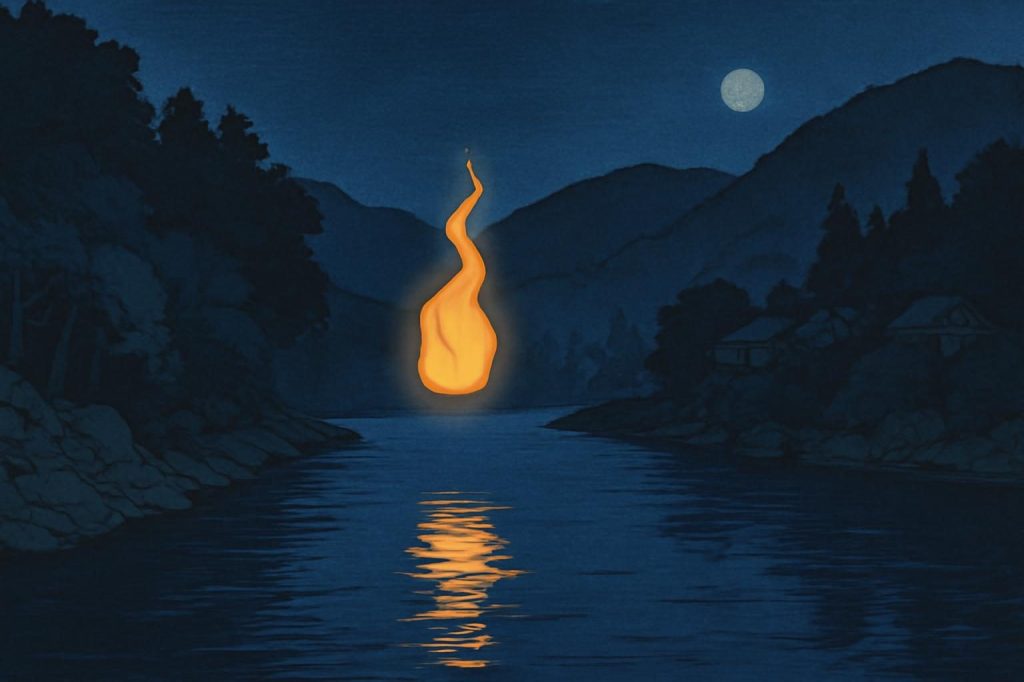
In Kameoka, Kyoto Prefecture, the Hozu River is not only a scenic attraction but also the setting for the mysterious Ubagabi legend, a tale of ghost lights and spectral apparitions that has intrigued locals and visitors alike. This legend, deeply rooted in the cultural fabric of the region, offers a fascinating glimpse into the supernatural beliefs and folklore of Japan.
Introduction to Kameoka and the Hozu River
FACT: The Scenic Hozu River
The Hozu River, known as Ōigawa in some contexts, is a picturesque waterway in Kameoka, Kyoto Prefecture. This river is renowned for the ‘Hozugawa Kudari,’ a boat ride that takes travelers from Kameoka to Arashiyama, offering breathtaking views of the surrounding landscapes. The river’s beauty is a significant draw for tourists, providing a tranquil escape into nature. The journey along the river is not just a visual treat but also an opportunity to connect with the historical and cultural essence of the area.
As visitors embark on the Hozugawa Kudari, they are greeted with the serene beauty of the lush forests and towering cliffs that line the riverbanks. The ride offers a unique perspective of the region’s natural splendor, with each twist and turn revealing a new facet of the landscape. This immersive experience allows travelers to appreciate the harmonious blend of nature and culture that defines the Kameoka area.
FACT: Kameoka’s Historical Significance
Kameoka is situated in the former Tanba Province, a region with a rich history and cultural heritage. As the launch point for the Hozugawa boat ride, Kameoka serves as a gateway to exploring both the natural and historical wonders of Kyoto Prefecture. The area’s historical significance is reflected in its architecture, local traditions, and the enduring legends that continue to capture the imagination of those who visit.
The town’s historical roots are evident in its well-preserved buildings and traditional crafts, which offer a window into the past. Visitors can explore these cultural treasures, gaining insight into the lives of those who have called Kameoka home throughout the centuries. This connection to history enriches the experience of exploring the region, adding depth to the scenic beauty that surrounds it.
What Is Ubagabi? The Legend of the Ghost Light
LEGEND: The Tale of Ubagabi
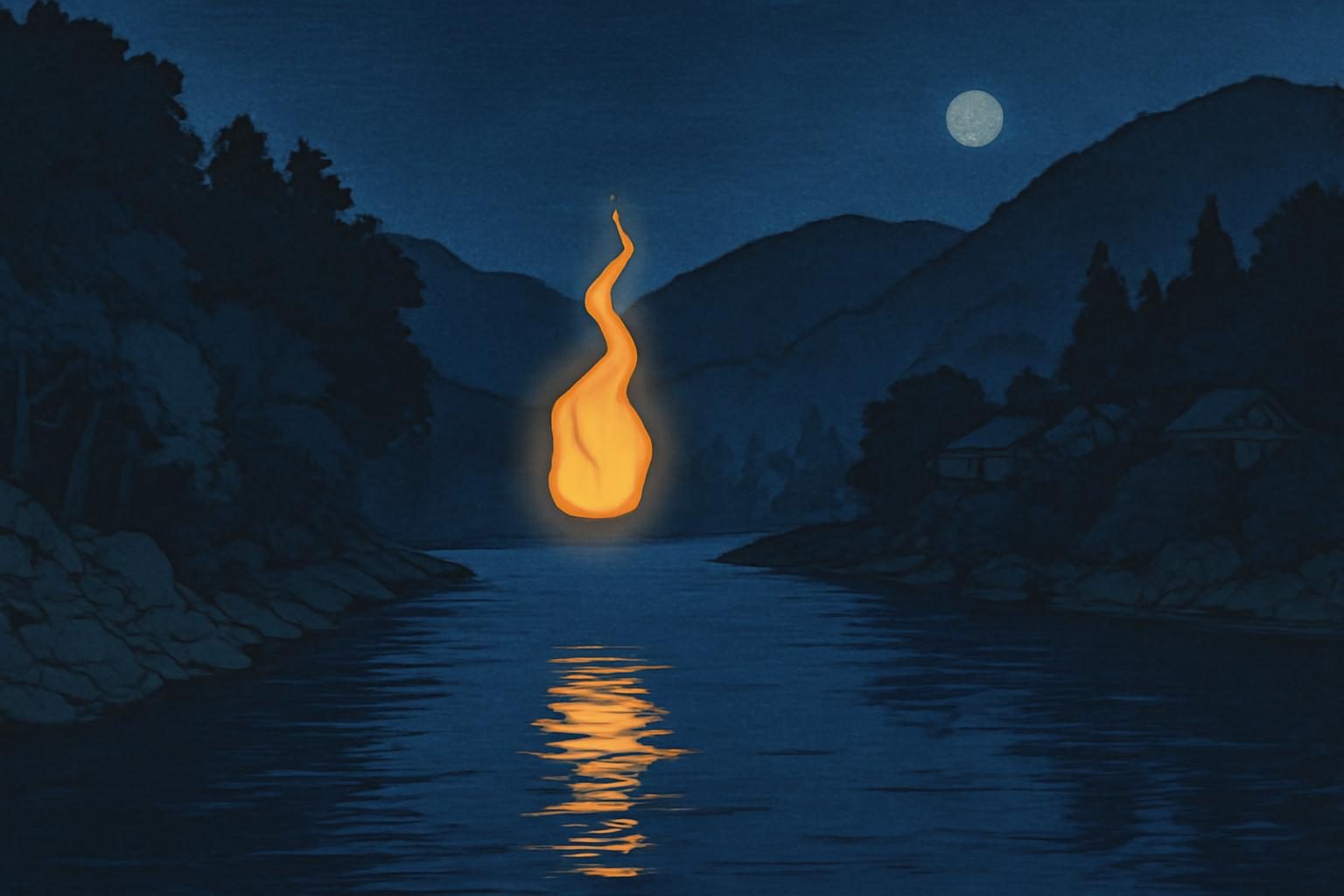
According to legend, Ubagabi is a ghost-light associated with the Hozu River in Kameoka. The story tells of an old woman who lived near Kameyama, now part of Kameoka. She was said to have lured children into the river, leading to her own tragic drowning. After her death, a mysterious flame, known as Ubagabi, began to appear near the river, haunting the area with its eerie glow. This flame is described as a spectral light that hovers over the water, a haunting reminder of the old woman’s tragic fate.
The legend of Ubagabi is often recounted with a sense of caution, serving as a warning to those who might venture too close to the river’s edge. The mysterious flame is said to flicker and dance across the water, its presence a chilling testament to the old woman’s sorrowful story. This spectral phenomenon captivates the imagination, inviting those who hear the tale to ponder the mysteries that lie beneath the river’s surface.
LEGEND: Onibi and Water Spirits
The Ubagabi legend ties into the broader motif of ‘onibi,’ or ghost lights, which are said to appear over water bodies in Japan. These spectral lights are often associated with spirits or supernatural phenomena, adding an air of mystery and intrigue to the regions they are said to haunt. The onibi are considered manifestations of restless spirits, often believed to be the souls of those who met untimely or tragic ends. In the case of Ubagabi, the flame’s appearance is a spectral echo of the old woman’s sorrow and guilt.
Onibi legends are prevalent throughout Japan, each with its own unique characteristics and local variations. These ghost lights are often linked to natural elements, such as water, which are believed to harbor spiritual energy. The Ubagabi flame, with its ethereal glow, is a striking example of how these supernatural beliefs are woven into the cultural landscape, offering a glimpse into the spiritual world that lies just beyond the veil of the everyday.

Historical Roots in Tanba Province
FACT: Early Literary Records
The Ubagabi legend is documented in early Japanese literature, including the ‘Kokon Hyaku Monogatari Hyōban’ and ‘Gazu Hyakki Yagyō.’ These sources record the presence of the ghost light in both the Tanba region, including Kameoka, and the Kawachi region, highlighting its enduring presence in Japanese folklore. Such literary records not only preserve the legend but also provide insights into the cultural and spiritual beliefs of the time, reflecting the way communities understood and interacted with the supernatural.
These early texts serve as a testament to the rich oral traditions that have shaped Japanese folklore. By capturing stories like that of Ubagabi, they offer a window into the past, revealing how legends were used to explain the unexplainable and to impart moral lessons. The continued interest in these stories underscores their lasting impact on the cultural consciousness, inviting new generations to explore the mysteries of the past.
The Hozu River: From Scenic Boat Rides to Folklore
FACT: The Hozugawa Boat Ride
The Hozugawa Kudari boat ride is a popular attraction that allows visitors to experience the natural beauty of the Hozu River while also immersing themselves in the folklore of the area. As the boats glide along the river, passengers can imagine the ghostly tales that have been passed down through generations, adding a layer of cultural depth to the journey. The boat ride is not merely a scenic experience but a cultural voyage, where the whispers of legends like Ubagabi seem to echo in the gentle lapping of the river’s waters.
Guides on the boat ride often share stories of the Ubagabi and other local legends, enriching the experience with a narrative that blends history, myth, and nature. This storytelling tradition enhances the sense of connection to the region’s past, allowing visitors to engage with the folklore in a meaningful way. The journey becomes a shared exploration of cultural heritage, where each participant can reflect on the enduring power of stories to shape our understanding of the world.

Exploring Yokai Lore in Northern Kyoto
LEGEND: Yokai and the Supernatural
Yokai, or supernatural creatures and phenomena, are an integral part of Japanese folklore. The Ubagabi legend is one such tale, reflecting the rich tapestry of ghost stories and myths that permeate the cultural landscape of northern Kyoto. These stories continue to captivate the imagination, offering a glimpse into the region’s spiritual and mythical heritage. Yokai lore, with its diverse array of spirits and creatures, serves as a cultural mirror, reflecting the fears, hopes, and beliefs of the communities that have shared these stories through the ages.
The fascination with yokai and their stories speaks to a broader human curiosity about the unknown and the mystical. In northern Kyoto, these tales are not just remnants of the past but living traditions that continue to inspire art, literature, and popular culture. The Ubagabi, with its haunting presence, is a reminder of the enduring allure of the supernatural, inviting all who encounter the legend to ponder the mysteries that lie beyond the ordinary.

Regional guide
Location: Kameoka, Kyoto Prefecture
- Hozu River (Hozugawa) scenic boat ride (Kameoka) — source


Leave a comment