Author: 禅門道.

  • Exploring Lake Shikotsu: Hokkaido’s Caldera Lake and Its Legends

    Exploring Lake Shikotsu: Hokkaido’s Caldera Lake and Its Legends

    Lake Shikotsu in Chitose, Hokkaido Prefecture, is a captivating destination where nature and folklore intertwine. Known for its stunning clarity and vibrant history, this caldera lake offers visitors a chance to explore its serene beauty and delve into the local legends that have shaped its cultural landscape.

    Mt. Fuppushi-dake view from Lake Shikotsu, Chitose, Hokkaido prefecture, Japan
    “Lake Shikotsu Mt Fuppushi01bs4272” by 663highland, CC BY 2.5, via Wikimedia Commons

    Introduction to Lake Shikotsu and Its Volcanic Origins

    FACT: Geological Formation and Characteristics

    Lake Shikotsu is a caldera lake formed approximately 40,000 years ago by a volcanic eruption. This geological marvel is renowned as Japan’s northernmost non-freezing lake, with a maximum depth of about 360 meters. The name ‘Shikotsu’ is said to derive from the Ainu si-kot, meaning ‘large hollow’. The lake’s clear waters, often referred to as ‘Shikotsu Blue’, are due to low nutrient levels, earning it numerous accolades for water quality. Visitors can marvel at the pristine environment and enjoy the tranquility that this natural wonder offers.

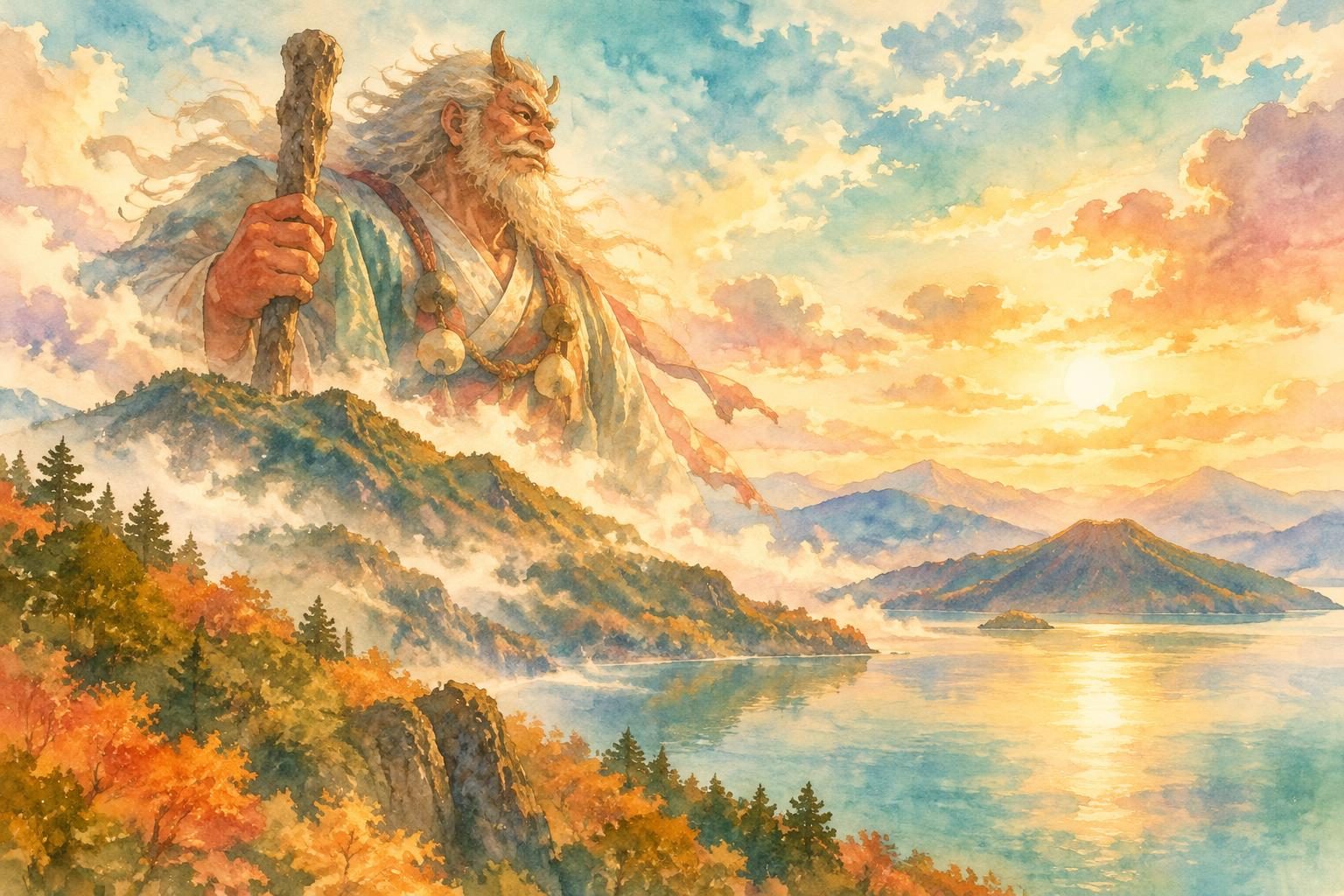
    Ōnyūdō, a giant spirit, stands majestically by Lake Shikotsu, Hokkaido, in warm afternoon light.
    AI生成イメージ / AI-generated illustration (not a photograph of the actual place)

    The Stunning Natural Beauty of Shikotsu Blue

    FACT: Environmental Quality and Recognition

    Lake Shikotsu’s water clarity is so remarkable that it has been nicknamed ‘Shikotsu Blue’. This clarity is attributed to the low levels of nutrients in the water, which has led to the lake being ranked highly in national water quality measurements. The lake has been recognized multiple times for having the highest water quality in Japan, a testament to its unspoiled nature. The vibrant blue of the lake is a sight to behold, especially when contrasted with the lush green forests and towering mountains that surround it.

    FACT: Visitor Experience

    Visitors to Lake Shikotsu can enjoy its pristine beauty, which is enhanced by the surrounding natural landscapes. The lake is a popular spot for various recreational activities such as kayaking, fishing, and sightseeing cruises. These activities allow visitors to immerse themselves in the serene environment and appreciate the lake’s exceptional clarity up close. The area around the lake is also home to a variety of wildlife, offering nature enthusiasts a chance to observe the rich biodiversity of Hokkaido.

    Lake Shikotsu, Hokkaido; August 2021 (05) - Lake Shikotsu
    “Lake Shikotsu, Hokkaido; August 2021 (05)” (Lake Shikotsu) by MIKI Yoshihito. (#mikiyoshihito), CC BY 2.0, source, via Wikimedia Commons

    Mount Fuppushidake: Hiking and Ridge Trails

    FACT: Hiking Opportunities

    Surrounding Lake Shikotsu are several peaks, including Mount Fuppushidake, which offers hiking trails that provide breathtaking views of the lake and its environs. Mount Fuppushidake is a mountain hike, not a casual lakeside walk: the route described by the Lake Shikotsu Visitor Center includes chain-assisted sections. Check current trail, weather, and seasonal conditions and choose a route suited to your experience. Along these trails, hikers can experience the diverse flora and fauna of the region, adding an educational aspect to their adventure. The area is accessible from Sapporo, about an hour’s drive south, and is only 30 minutes away from New Chitose Airport, making it a convenient destination for nature enthusiasts.

    FACT: Access and Amenities

    For those planning a visit, Lake Shikotsu is easily accessible from major transport hubs in Hokkaido. From Sapporo, it is about an hour’s drive south, and from New Chitose Airport, it is approximately a 30-minute journey. The lake area is well-equipped with amenities such as parking, rest areas, and information centers, ensuring a comfortable visit for all. Visitors are encouraged to check the official website for the latest information on access, fees, and opening hours.

    Local Legends: The Ōnyūdō and Giant Spirits of Shikotsu

    LEGEND: The Tale of the Ōnyūdō

    According to local legend, the ridge near Mount Fuppushidake is home to the Ōnyūdō, a giant spirit said to appear on misty nights. This mysterious figure is believed to be a guardian of the lake, watching over its waters and the surrounding land. The story of the Ōnyūdō is a reflection of the deep connection between the people and the natural world, as well as the rich tapestry of folklore in the region. The legend is often recounted by locals and adds an element of mystique to the already enchanting landscape of Lake Shikotsu.

    Lake Shikotsu, Hokkaido; August 2021 (04) - Lake Shikotsu
    “Lake Shikotsu, Hokkaido; August 2021 (04)” (Lake Shikotsu) by MIKI Yoshihito. (#mikiyoshihito), CC BY 2.0, source, via Wikimedia Commons

    Ainu Heritage and Regional Folklore

    FACT: Cultural Significance

    The Ainu, the indigenous people of Hokkaido, have long held Lake Shikotsu in high regard. The lake’s name itself is derived from the Ainu language, highlighting the cultural and historical significance of the area. The legends and stories passed down through generations continue to enrich the cultural landscape of the region, offering visitors a glimpse into the spiritual and historical heritage of Hokkaido. Understanding the Ainu connection to the lake provides a deeper appreciation of the cultural dimensions that influence the local traditions and beliefs.

    Practical Travel Tips: Getting to Lake Shikotsu from Sapporo and Chitose

    Lake Shikotsu is easily accessible from major transport hubs in Hokkaido. From Sapporo, it is about an hour’s drive south, and from New Chitose Airport, it is approximately a 30-minute journey. Visitors can enjoy a variety of activities, including hiking, boat tours, and exploring the local hot springs. For the latest information on access, fees, and opening hours, it is advisable to check the official website.

    Nearby Guide

    Access

    • JR Chitose Station (Chitose) — From JR Chitose Station, take the Hokkaido Chuo Bus to Lake Shikotsu. The journey takes approximately 50 minutes. Buses depart several times a day; please check the latest schedule in advance. official site
    • New Chitose Airport (Chitose) — From New Chitose Airport, take the Hokkaido Chuo Bus to Lake Shikotsu. The ride takes about 55 minutes. Buses run several times daily; confirm the current timetable before your trip. official site
    • By Car — Lake Shikotsu is accessible by car from Chitose Station in approximately 40 minutes. From New Chitose Airport, it’s about a 40-minute drive. Parking is available near the lake; fees may apply. official site

    Nearby sights

    • Lake Shikotsu (Chitose) — A caldera lake renowned for its clear waters and surrounded by mountains like Mt. Eniwa and Mt. Tarumae. Visitors can enjoy boat tours, hiking, and hot springs. official site
    • Lake Shikotsu Visitor Center (Chitose) — A facility providing exhibits on the lake’s natural environment and history, ideal for learning about the area’s geology and ecology. details

    Where to stay

    • Marukoma Onsen Ryokan (Chitose) — A lakeside ryokan offering hot spring baths with views of Lake Shikotsu. Some baths are open to day visitors; check availability in advance. official site
    • Lake Shikotsu Onsen Area (Chitose) — A hot spring area with various accommodations and facilities for day-use bathing, providing a relaxing retreat with scenic views. details

    Where to eat

    • Kokanee Salmon Soup (Chitose) — A local specialty made with kokanee salmon, offering a unique taste of the region’s culinary heritage. official site
    • Lake Shikotsu Koyo Festival (Chitose) — An autumn festival celebrating the vibrant fall foliage around Lake Shikotsu, featuring local food stalls and cultural performances. official site
    Locator map of Japan: Chitose, Hokkaido
    Legend site: Chitose, Hokkaido — Source: Map of Japan with highlight on 01 Hokkaido prefecture.svg; Map: Lincun, CC BY-SA 3.0, via Wikimedia Commons

    Regional guide

    Location: Chitose, Hokkaido Prefecture

    • Lake Shikotsu kokanee salmon (himemasu) cuisine (Chitose) — source
    • Lake Shikotsu (Chitose) — source
    • Mount Fuppushidake (ridge) (Chitose) — source

    Sources

    About the author

    JAPAN ESSENCE Editorial Team
    Our mission is to bring you Japan’s legends, myths, festivals and living traditions, through both historical fact and the stories passed down over generations.

  • Hiroshima’s Tondo Festival: Experiencing Chūgoku’s New Year Bonfire Tradition

    Hiroshima’s Tondo Festival: Experiencing Chūgoku’s New Year Bonfire Tradition

    In Hiroshima, Hiroshima Prefecture, the Tondo Festival is a beloved tradition that brings communities together to celebrate the New Year with towering bonfires and the roasting of mochi. Held annually around January 15, this event is a vibrant expression of local culture and spirituality.

    Ukiyo-e style scene with a vibrant bonfire festival by a shrine, mountains, and river; joyful gathering in lively colors.
    AI生成イメージ / AI-generated illustration (not a photograph of the actual place)

    What Is Hiroshima’s Tondo Festival?

    FACT: The New Year Bonfire Tradition

    The Tondo Festival, or Tondo Matsuri, is a New Year celebration in Hiroshima City where community members gather to burn New Year decorations and talismans in large bonfires. These bonfires, known as tondo, are typically held around January 15, often on the second or third weekend of January. The event is marked by communal gatherings at various urban and community sites, including parks, school grounds, riverbanks, and shrine courtyards, where residents come together to enjoy the spectacle and warmth of the fire.

    These gatherings are not only about the bonfire itself but also about the sense of community they foster. People of all ages participate, creating an atmosphere of camaraderie and shared joy. The fire serves as a focal point for social interaction, where stories are exchanged and new friendships are formed. The tradition of burning New Year decorations is both a symbolic and practical act, ensuring that the past year’s symbols are respectfully disposed of while paving the way for new beginnings.

    FACT: Hiroshima Gokoku Shrine’s Major Tondo Event

    One of the most significant Tondo Festivals in Hiroshima City takes place at the Hiroshima Gokoku Shrine, located next to Hiroshima Castle. This shrine hosts a major tondo event every January 15, regardless of the day of the week or the weather. The festival at this shrine is a major draw for locals and visitors alike, offering a chance to participate in this age-old tradition in a central and historic setting. The shrine’s location, adjacent to the historic Hiroshima Castle, adds a layer of cultural depth and historical resonance to the event. Visitors can experience the juxtaposition of ancient traditions against the backdrop of Hiroshima’s storied past.

    Attending the Tondo Festival at Hiroshima Gokoku Shrine provides an opportunity to witness the grandeur of the event firsthand. The shrine’s spacious grounds accommodate large crowds, and the sight of the towering bonfire against the backdrop of the castle is truly a spectacle to behold. This setting not only enhances the visual impact of the festival but also deepens the cultural experience, as participants are reminded of Hiroshima’s resilience and rich history.

    The Origins and Meaning of the Tondo Bonfire

    FACT: Cultural and Spiritual Significance

    The Tondo Festival is deeply rooted in Japanese culture and spirituality. The act of burning New Year decorations and talismans is not merely a way to dispose of these items but also a symbolic purification ritual. It is believed that by burning these items, the bad luck and misfortunes of the past year are dispelled, making way for good fortune in the coming year. This ritual is a poignant reminder of the cyclical nature of life and the importance of renewal and reflection. The festival is a time for communities to come together, reflect on the past year, and make wishes for health and prosperity in the new year.

    In addition to its spiritual significance, the festival serves as a cultural touchstone, connecting participants to a shared heritage. The act of purification through fire is a common theme in many cultures, but the Tondo Festival’s unique blend of local customs and communal involvement makes it a distinctive expression of Japanese tradition. Participants are encouraged to engage in the ritual with mindfulness and respect, acknowledging the deeper meanings behind the flames.

    FACT: Historical Roots and Community Involvement

    The roots of the Tondo Festival can be traced back to ancient Japanese traditions, including the Sagichō, a similar fire festival that was historically practiced in various regions of Japan. Over time, these traditions have evolved, but the core elements of fire and communal participation remain central. In Hiroshima, the festival serves as a vital cultural link, connecting modern residents with the practices of their ancestors. The communal aspect of the festival fosters a sense of unity and shared purpose, as participants engage in a collective act of renewal and hope.

    Community involvement is a hallmark of the Tondo Festival. Local residents, including children, elders, and entire families, actively participate in the preparations and festivities. This involvement strengthens community bonds and ensures the continuity of the tradition. The festival is a time for neighbors to come together, share stories, and celebrate their shared heritage. Through their participation, community members contribute to the preservation of this important cultural practice.

    Torii, Hiroshima Gokoku Shrine 20190417 1 - Hiroshima Gokoku Shrine
    “Torii, Hiroshima Gokoku Shrine 20190417 1” (Hiroshima Gokoku Shrine) by DXR, CC BY-SA 4.0, source, via Wikimedia Commons

    Key Locations: Where to Witness Tondo in Hiroshima

    FACT: Community Sites and Shrines

    In addition to the Hiroshima Gokoku Shrine, many other locations across Hiroshima City host Tondo Festivals. These include public spaces such as school grounds, parks, and along the city’s wide riverbanks. Each site offers its unique atmosphere and experience, allowing participants to choose a setting that resonates with them. The communal nature of these events fosters a sense of unity and shared purpose among participants. Whether in the heart of the city or along the serene riverbanks, the festival’s spirit of togetherness is palpable.

    Each location hosting a Tondo Festival provides its own distinct flavor of the event. Some sites may feature larger bonfires, while others offer more intimate settings. The choice of location often depends on personal preference, with some participants opting for the bustling energy of a central park, while others prefer the tranquil ambiance of a riverside gathering. Regardless of the setting, the essence of the festival remains the same: a celebration of community, culture, and renewal.

    The Tradition of Roasting Mochi and Wishing for Health

    FACT: Mochi Roasting and Community Bonding

    A highlight of the Tondo Festival is the roasting of mochi, or rice cakes, over the bonfires. This activity is not only a culinary delight but also a communal one, as families and friends gather to roast and share mochi while enjoying warm sake. The act of roasting mochi is steeped in tradition, symbolizing the hope for a healthy and prosperous year ahead. It is a time for laughter, storytelling, and strengthening community bonds. As the sweet aroma of roasting mochi fills the air, participants are reminded of the importance of community and the shared joys of simple pleasures.

    The tradition of mochi roasting is an integral part of the Tondo Festival experience. It provides an opportunity for participants to engage in a hands-on activity that is both enjoyable and meaningful. The simple act of roasting and sharing mochi becomes a metaphor for the warmth and support found within the community. As participants gather around the fire, they are enveloped in a sense of belonging and connectedness, reinforcing the festival’s themes of unity and renewal.

    Hiroshima Gokoku Jinja hdsr Shrine S5 26 - Hiroshima Gokoku Shrine
    “Hiroshima Gokoku Jinja hdsr Shrine S5 26” (Hiroshima Gokoku Shrine) by Hyppolyte de Saint-Rambert, CC BY 4.0, source, via Wikimedia Commons

    Tips for International Travelers Visiting in January

    FACT: Planning Your Visit

    For international travelers planning to experience the Tondo Festival, it is advisable to check the official website for current hours, fees, and access details. While the festival is a public event, specific sites may have their own guidelines and schedules. Visitors are encouraged to dress warmly, as the festival takes place outdoors in January, and to arrive early to secure a good spot near the bonfires. Experiencing the Tondo Festival offers a unique glimpse into local traditions and provides an opportunity to engage with the community in a meaningful way.

    Travelers should also consider exploring the surrounding areas of Hiroshima City, which offer a wealth of cultural and historical attractions. The proximity of the Hiroshima Gokoku Shrine to Hiroshima Castle makes it easy to combine a visit to the festival with a tour of the castle grounds. This allows visitors to immerse themselves in the rich history and culture of Hiroshima, enhancing their overall experience of the Tondo Festival.

    Locator map of Japan: Hiroshima, Hiroshima
    Legend site: Hiroshima, Hiroshima — Source: Map of Japan with highlight on 34 Hiroshima prefecture.svg; Map: Lincun, CC BY-SA 3.0, via Wikimedia Commons

    Sources

    About the author

    JAPAN ESSENCE Editorial Team
    Our mission is to bring you Japan’s legends, myths, festivals and living traditions, through both historical fact and the stories passed down over generations.

  • The Tsurube-Otoshi of Ibigawa: Exploring Gifu’s Tree-Dropping Yokai

    The Tsurube-Otoshi of Ibigawa: Exploring Gifu’s Tree-Dropping Yokai

    In the Tsukumi area of Ibigawa, Gifu Prefecture, the mysterious Tsurube-otoshi is said to lurk high in the trees, waiting to drop like a well bucket upon unsuspecting passers-by. This enigmatic yokai, rooted deeply in local folklore, captures the imagination with its sudden and startling appearances.

    Tsurube-otoshi yokai descends from a tree in autumn against a clear sky.
    AI生成イメージ / AI-generated illustration (not a photograph of the actual place)

    What Is the Tsurube-Otoshi?

    FACT: The Yokai’s Characteristics

    The Tsurube-otoshi is a yokai, or supernatural creature, that is said to inhabit the upper branches of large trees, particularly in the Tsukumi area of Ibigawa. Unlike many other yokai, the Tsurube-otoshi is not depicted in Toriyama Sekien’s famous work, Konjaku Gazu Zoku Hyakki, which suggests its origins are more localized and oral in nature. The creature is known for its sudden descent, akin to a well bucket dropping, which is a motif reflected in its name. The Japanese idiom ‘aki no hi wa tsurube-otoshi’ (autumn day falls like a well bucket) captures this sudden drop, linking the yokai to everyday metaphor.

    This idiomatic expression not only describes the rapid setting of the sun in autumn but also conveys a sense of unexpectedness and abruptness, much like the appearance of the Tsurube-otoshi itself. The yokai’s ability to surprise and potentially threaten those below is a key feature that has kept the legend alive in local storytelling.

    FACT: The Yokai’s Modern Interpretation

    In modern times, the image of the Tsurube-otoshi has been popularized through art, such as Mizuki Shigeru’s 1992 painting, which depicts the yokai as a giant face or severed head descending from trees. This portrayal has become iconic, although not all local tales depict the Tsurube-otoshi in this form. The diversity of its representations highlights the evolving nature of folklore as it adapts to contemporary cultural contexts.

    Artistic interpretations like Mizuki’s have helped to cement the Tsurube-otoshi’s place in popular culture, offering a visual representation that resonates with modern audiences. These depictions often emphasize the yokai’s eerie and unsettling presence, reinforcing its role as a creature of mystery and fear.

    The Legend of Tsukumi in Ibigawa

    LEGEND: The Story of the Tsurube-Otoshi

    According to local legend, the Tsurube-otoshi resides in the dim upper branches of a large tree in the Tsukumi area of what was once Kuze Village, now part of Ibigawa. It is said to drop like a giant severed head to startle, and sometimes even devour, those who pass beneath. This tale has been passed down through generations, maintaining its grip on the local imagination.

    The story is often shared during gatherings and festivals, where it serves as both entertainment and a cautionary tale. The fearsome image of the yokai descending from the trees adds an element of suspense and thrill, making it a popular subject in local folklore.

    LEGEND: Variations of the Tale

    The legend of the Tsurube-otoshi is not uniform across all stories. While some accounts describe it as a terrifying severed head, others might depict it with less gruesome features, emphasizing its role as a trickster or a spirit meant to caution against wandering alone at night. These variations reflect the rich oral tradition and the adaptability of folklore to different contexts and audiences.

    In some versions, the Tsurube-otoshi may appear as a more benign presence, serving as a guardian of the forest or a reminder of nature’s unpredictable power. These alternative narratives highlight the yokai’s multifaceted nature and its ability to embody different cultural values and lessons.

    Kamigare Tea plantation s6 - Kamigare Tea Plantation
    “Kamigare Tea plantation s6” (Kamigare Tea Plantation) by Alpsdake, CC BY-SA 4.0, source, via Wikimedia Commons

    The Metaphor Behind the Name: Autumn Days and Well Buckets

    FACT: Linguistic Origins

    The name “tsurube-otoshi” is deeply embedded in Japanese culture, drawing from the expression ‘aki no hi wa tsurube-otoshi’. This phrase compares the rapid descent of an autumn sunset to a well bucket plunging down its rope, emphasizing the sudden and dramatic nature of both phenomena. This metaphorical connection enriches the understanding of the yokai’s name and its cultural resonance.

    This linguistic link between natural phenomena and supernatural lore underscores the interconnectedness of language, culture, and belief systems in Japan. The Tsurube-otoshi’s name serves as a reminder of how everyday expressions can give rise to rich mythological traditions.

    Mino Province as a Highway of Folklore

    FACT: The Spread of Yokai Narratives

    Mino, including Ibigawa, historically served as a transmission corridor for yokai narratives from the Kinai region eastward. This geographic role helped shape the local version of Tsurube-otoshi lore, integrating it into the broader tapestry of Japanese folklore. The region’s highways facilitated the exchange of stories and cultural motifs, allowing the Tsurube-otoshi to become a part of the local mythos.

    FACT: Cultural Exchange and Influence

    The highways of Mino were not just physical routes but cultural conduits that allowed for the blending and adaptation of stories. As travelers moved through the region, they brought with them tales from distant lands, which were then woven into the local folklore. This dynamic exchange enriched the storytelling tradition, allowing the Tsurube-otoshi to evolve and resonate with different communities.

    This cultural exchange not only preserved the stories but also allowed them to flourish, adapting to new environments and audiences. The Tsurube-otoshi’s presence in Mino is a testament to the enduring power of folklore to transcend geographical and temporal boundaries.

    Kamigare Tea plantation s5 - Kamigare Tea Plantation
    “Kamigare Tea plantation s5” (Kamigare Tea Plantation) by Alpsdake, CC BY-SA 4.0, source, via Wikimedia Commons

    Tracing Yokai Lore Across Gifu Prefecture

    The Tsurube-otoshi is just one example of the rich tapestry of yokai lore that permeates Gifu Prefecture. As stories like these continue to be shared, they provide a window into the cultural and historical landscape of the region, offering insights into the fears and fascinations of past generations. Visitors to the area can explore these tales through local museums and cultural centers, which often host exhibitions and events dedicated to the region’s folklore.

    Engaging with these stories offers a deeper appreciation of the region’s heritage and the ways in which folklore continues to influence local identity and community life. The Tsurube-otoshi, with its dramatic and mysterious nature, remains a captivating figure within this vibrant narrative tradition.

    Nearby Guide

    Nearby sights

    • Tanigumisan Kegonji Temple (Ibigawa) — Tanigumisan Kegonji Temple is the thirty-third and final temple of the Saigoku Kannon pilgrimage, located in Ibigawa Town. The temple is known for its historical significance and beautiful surroundings. Visitors can enjoy a scenic approach lined with shops leading up to the main hall. details
    • Kamigare Tea Plantation (Ibigawa) — Kamigare Tea Plantation, also known as Gifu’s Machu Picchu, is a hillside tea-growing landscape in the Kasuga Kamigare area of Ibigawa. The plantation offers a picturesque view of terraced tea fields and surrounding mountains. official site

    Where to stay

    • Tsukiyodani Fureai no Sato (Ibigawa) — Tsukiyodani Fureai no Sato is an outdoor recreation site in Ozu, Ibigawa, with six cottages available by advance reservation. Gifu tourism information

    Where to eat

    • Yashagaike no Sato Sakauchi Roadside Station (Ibigawa) — Yashagaike no Sato Sakauchi Roadside Station is a small rest stop on National Route 303 in Sakauchi, Ibigawa Town. The station offers game dishes made with local venison, processed venison products, seasonal vegetables, and mountain greens. details
    • Michi-no-Eki Yume Sansan Tanigumi (Ibigawa) — Michi-no-Eki Yume Sansan Tanigumi is a roadside station located in Ibigawa Town. The station offers venison products, chuka soba noodles, and other local specialties. details
    Locator map of Japan: Ibigawa, Gifu
    Legend site: Ibigawa, Gifu — Source: Map of Japan with highlight on 21 Gifu prefecture.svg; Map: Lincun, CC BY-SA 3.0, via Wikimedia Commons

    Sources

    About the author

    JAPAN ESSENCE Editorial Team
    Our mission is to bring you Japan’s legends, myths, festivals and living traditions, through both historical fact and the stories passed down over generations.

  • Winter Zen: Meditative Stillness and Temple Life in Tohoku

    Winter Zen: Meditative Stillness and Temple Life in Tohoku

    In the serene landscapes of Tohoku, Akita Prefecture offers a unique opportunity to embrace winter Zen meditation at two remarkable temples: Manpukuji in Kakunodate and Dairyuji on the Oga Peninsula. These temples provide a tranquil setting for zazen practice amidst the snow-covered gardens, inviting visitors to experience the meditative stillness of winter.

    Universally Recommended Instructions for Zazen. Zen Master Dogen, the founder of the Soto sect, returned to Japan after compl
    “Fukan-Zazengi-Instructions-for-Zazen-1233” by Dogen Zenji, Public domain, via Wikimedia Commons

    Embracing Winter Zen in Northern Japan

    FACT: Manpukuji Temple in Kakunodate

    Manpukuji Temple, located in the picturesque town of Kakunodate, Akita Prefecture, is a Sōtō-Zen Buddhist temple renowned for its zazen meditation sessions. This practice is a cornerstone of Zen Buddhism, focusing on seated meditation to cultivate mindfulness and inner peace. At Manpukuji, visitors are guided by the head monk through this profound experience. Participants receive instruction in posture and the Zen method, ensuring they can fully engage with the practice. The experience includes changing into traditional robes, which adds a layer of authenticity and immersion, and using a small cushion to sit comfortably. This practice allows participants to immerse themselves in the tranquility of Zen amidst the historic ambiance of Kakunodate, often referred to as the ‘Little Kyoto of Michinoku’ due to its well-preserved samurai architecture and scenic beauty.

    FACT: The Setting of Manpukuji

    Kakunodate itself is a town steeped in history, known for its samurai district and cherry blossom trees. The town’s nickname, ‘Little Kyoto,’ reflects its cultural richness and aesthetic appeal. Visitors to Manpukuji can enjoy the serene environment, which is particularly enchanting in winter when the gardens are blanketed in snow. This setting enhances the meditative experience, providing a sense of stillness and reflection that is central to Zen practice. The temple offers a unique opportunity to step away from the hustle and bustle of modern life and find a moment of peace and introspection.

    FACT: Dairyuji Temple on the Oga Peninsula

    Dairyuji, a community-based Sōtō-shū Zen Buddhist temple, is situated on the Oga Peninsula in Akita. This temple is open daily, welcoming visitors to a serene environment where snow blankets the garden during winter, creating a picturesque landscape. The temple complex includes the Rakusuitei Garden, a highlight of the site, where a pagoda-style bell tower (tahōtō) offers panoramic views of the Sea of Japan. This bell tower is unique in Japan, serving both as a pagoda and a bell tower, allowing visitors to strike the large bell and partake in a traditional practice that resonates with the spiritual ambiance of the temple.

    FACT: The Rakusuitei Room

    Within Dairyuji, the Rakusuitei room provides a peaceful space for reflection and relaxation. Meditation cushions are available for visitors, inviting them to engage in zazen amidst the tranquil setting. This room, overlooking the water garden, is an ideal spot for meditation, offering a quiet retreat where one can connect with nature and the essence of Zen. The temple also offers zazen and sutra copying by reservation, allowing visitors to deepen their Zen practice. Sutra copying, or shakyo, involves transcribing Buddhist scriptures, a meditative practice that fosters concentration and spiritual connection.

    Reflection: The Spirit of Winter Zen

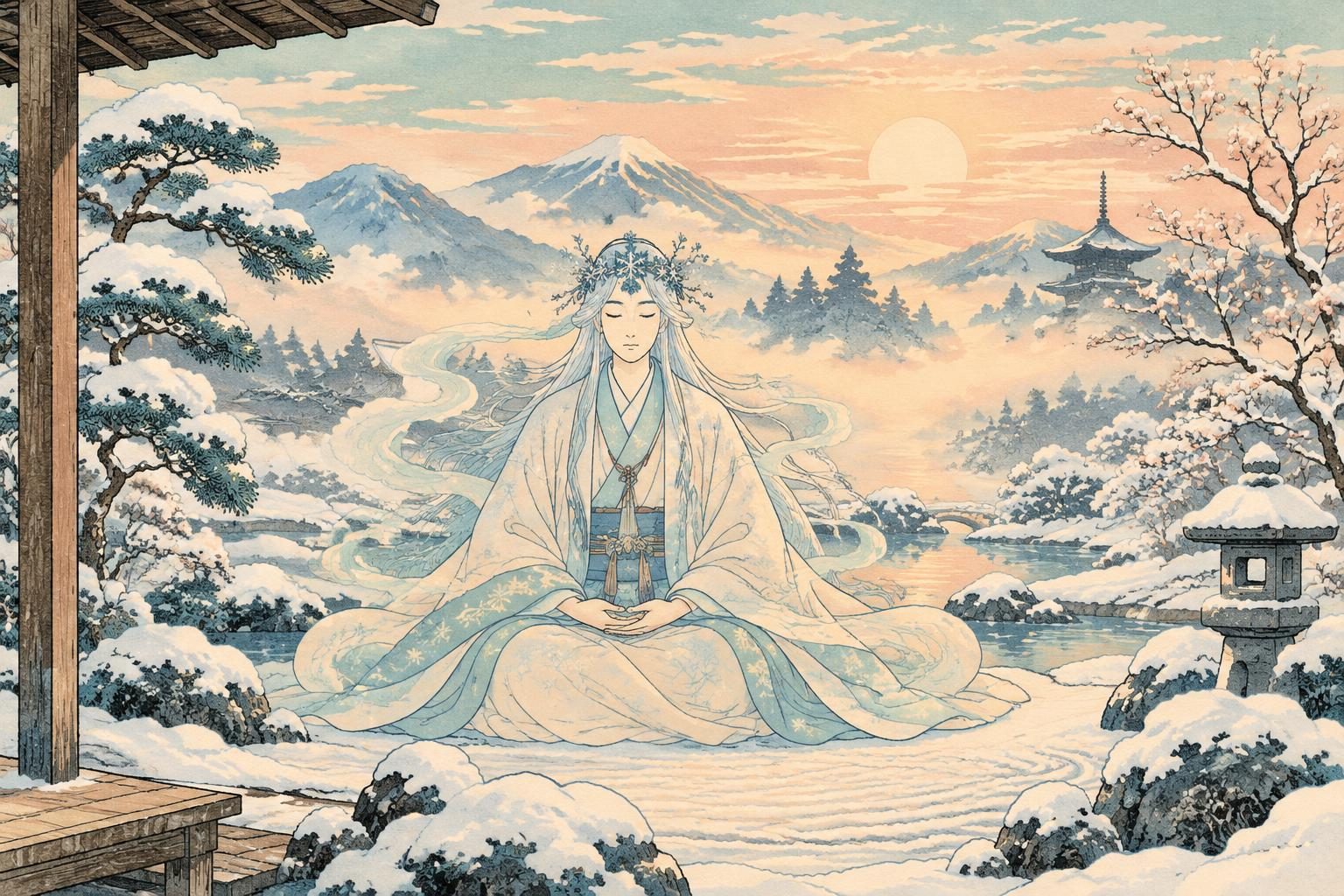
    The quiet of winter can provide a setting for personal reflection and meditation. This is an editorial observation about the atmosphere, not a documented local legend about either temple.

    Spirit of Winter Zen meditating in a snow-covered garden under a luminous sunrise.
    AI生成イメージ / AI-generated illustration (not a photograph of the actual place)

    Practicing Zazen and Sutra Copying in Tohoku

    FACT: Zazen and Sutra Copying at Dairyuji

    At Dairyuji Temple, visitors can engage in zazen meditation and sutra copying, practices that are integral to Zen Buddhism. Zazen, or seated meditation, is a core practice that helps individuals cultivate mindfulness and inner peace. The practice involves sitting in a specific posture, focusing on breathing, and allowing thoughts to pass without attachment. Sutra copying, known as shakyo, involves transcribing Buddhist scriptures as a form of meditation and devotion. This practice is believed to purify the mind and accumulate merit, offering a tangible connection to the teachings of Buddhism. These activities are available by reservation, allowing participants to fully engage with the spiritual practices of Zen in a serene winter landscape.

    Kakunodate 488 - Kakunodate (preservation district)
    “Kakunodate 488” (Kakunodate (preservation district)) by Kmhkmh, CC BY 3.0, source, via Wikimedia Commons

    Planning Your Meditative Winter Journey to Akita

    For those planning to visit these temples, it’s important to check the official websites for current hours, fees, and access details. The winter season offers a unique backdrop for meditation, with snow-covered gardens enhancing the stillness and beauty of the temples. The combination of natural beauty and spiritual practice makes a visit to these temples a deeply enriching experience, providing a respite from the demands of everyday life and an opportunity to explore the depths of Zen meditation.

    Nearby Guide

    Access

    • Kakunodate Station (Kakunodate, Akita) — Manpukuji is approximately 10 minutes away by car. The official experience listing asks participants to arrive by taxi; no transfer is provided. official experience information

    Nearby sights

    • Kakunodate Samurai District (Kakunodate, Akita) — Explore the well-preserved samurai residences and gardens in this historic district, often referred to as the ‘Little Kyoto of Michinoku.’ official site
    • Unganji Temple (Kakunodate, Akita) — Visit the oldest temple in Kakunodate, built in 1450, featuring a Sanmon gate designated as a tangible cultural property of Akita Prefecture. details

    Where to stay

    • Wanoi Kakunodate (Kakunodate, Akita) — Experience staying in renovated traditional storehouses, offering a unique glimpse into the town’s history and culture. official site

    Where to eat

    • Kosendo (Kakunodate, Akita) — Enjoy local specialties like Inaniwa udon, a type of thin, flat noodle unique to the region, served in a clean, flying-fish broth. details
    角館武家屋敷通り20250118-P1063202 - Bukeyashiki Street (Kakunodate), Snow in Kakunodate
    “角館武家屋敷通り20250118-P1063202” (Bukeyashiki Street (Kakunodate), Snow in Kakunodate) by くろふね, CC BY 4.0, source, via Wikimedia Commons
    Locator map of Japan: Kakunodate, Akita
    Legend site: Kakunodate, Akita — Source: Map of Japan with highlight on 05 Akita prefecture.svg; Map: Lincun, CC BY-SA 3.0, via Wikimedia Commons

    Regional guide

    Location: Kakunodate, Akita Prefecture

    • Dairyuji Rakusuitei water-garden and pagoda bell-tower (Ogashi) — source
    • Rakusuitei garden room at Dairyuji (Ogashi) — source

    Sources

    About the author

    JAPAN ESSENCE Editorial Team
    Our mission is to bring you Japan’s legends, myths, festivals and living traditions, through both historical fact and the stories passed down over generations.

  • Following the One-Eyed Dragon: Exploring Date Masamune’s Sendai

    Following the One-Eyed Dragon: Exploring Date Masamune’s Sendai

    In Sendai, Miyagi Prefecture, the legacy of Date Masamune, the legendary “One-Eyed Dragon,” looms large. As the founder of Sendai and its first feudal lord, Masamune’s influence is deeply woven into the city’s fabric, from the historic ruins of Aoba Castle to the cultural artifacts preserved in local museums.

    Statue of daimyo Date Masamune in Aobayama Park Sendai (2016).
    “Statue-of-Date-Masamune-in-Aobayama-Park-Sendai-2016” by Statue: Tōru Komuro (d. 18 June 1953) Photo: foooomio, Public domain, via Wikimedia Commons

    Who Was Date Masamune, the One-Eyed Dragon?

    FACT: The Founder of Sendai

    Date Masamune (1567–1636), the daimyo known as the “One-Eyed Dragon,” lost sight in his right eye after childhood smallpox. His familiar eye-patch image was popularized by later entertainment; it does not appear in his Edo-period portraits. He established Sendai as his capital, transforming it into a thriving city. As the first lord of the Sendai domain, Masamune’s strategic prowess and leadership were instrumental in the city’s development. His ability to navigate the complex political landscape of the time, particularly after the pivotal Battle of Sekigahara, allowed him to consolidate power and lay the foundations for Sendai’s future prosperity.

    Masamune’s vision for Sendai was not merely as a political center but as a cultural and economic hub. His efforts in urban planning and infrastructure development were ahead of his time, ensuring that Sendai would grow into a significant city in the Tohoku region. This foresight is evident today in the city’s layout and cultural vibrancy.

    Date Masamune in samurai armor overlooking Aoba Castle site, vibrant summer day, no central keep.
    AI生成イメージ / AI-generated illustration (not a photograph of the actual place)

    Building Sendai: Aoba Castle Ruins and Park

    FACT: The Construction of Aoba Castle

    Masamune initiated the construction of Aoba Castle around 1600–1601, selecting the strategic location of Aobayama for its natural defenses. The castle served as a symbol of his power and a center for governance. Today, the ruins of Aoba Castle offer visitors a glimpse into the past, with remnants of stone walls and foundations set amidst a scenic park. The site provides a tangible connection to the era of samurai and feudal lords, inviting visitors to imagine the grandeur of the original structure and its role in the region’s history.

    The castle’s location on Aobayama hill provided a strategic advantage, offering views over the city and surrounding areas. Visitors today can still appreciate these vistas, which highlight the strategic genius of Masamune in selecting this site. The park surrounding the ruins is a popular spot for both locals and tourists, providing a serene environment for reflection on the historical significance of the area.

    LEGEND: The Missing Central Keep

    According to tradition, Masamune deliberately chose not to build a central keep (tenshu) at Aoba Castle. This decision was supposedly made to avoid raising suspicions among the Tokugawa shogunate, who might have viewed a large keep as a threat. This legend reflects the delicate balance of power and diplomacy in the early Edo period. The absence of a tenshu is a unique feature of Aoba Castle, setting it apart from other castles of the time, which often featured imposing keeps as a demonstration of their lord’s strength and influence.

    This strategic omission is a testament to Masamune’s diplomatic acumen. By forgoing the tenshu, he demonstrated his loyalty to the Tokugawa shogunate, ensuring his domain’s stability and prosperity. This legend is still recounted today, adding a layer of intrigue to the castle’s history and inviting visitors to ponder the political complexities of the era.

    Sendai castle01s3872 - Waki-yagura (Sendai Castle)
    “Sendai castle01s3872” (Waki-yagura (Sendai Castle)) by 663highland, CC BY 2.5, source, via Wikimedia Commons

    Zuihoden: The Ornate Mausoleum of Date Masamune

    FACT: Resting Place of the One-Eyed Dragon

    Zuihoden, the mausoleum of Date Masamune, is an architectural marvel located near the castle ruins. The structure is renowned for its intricate carvings, vivid colors, and use of gold leaf, embodying the opulence of the Date clan. Visitors can explore the site and learn about the clan’s history through exhibits and guided tours. The mausoleum, rebuilt after being destroyed in World War II, stands as a testament to the enduring legacy of Masamune and the cultural richness of the Edo period.

    The design of Zuihoden reflects the Momoyama style, characterized by its elaborate ornamentation and vibrant colors. This style was popular during Masamune’s time and is considered a symbol of the cultural renaissance that took place under his rule. The mausoleum’s reconstruction efforts have been meticulous, ensuring that visitors can experience the site as it once was, preserving its historical and cultural significance.

    Samurai Artifacts at Sendai City Museum

    FACT: Preserving the Legacy

    The Sendai City Museum houses an impressive collection of artifacts related to Date Masamune and the samurai era. Among these are items from the Keichō Embassy to Europe (1613–1620), which Masamune sponsored. The museum provides insights into the cultural exchanges between Japan and Europe during this period, highlighting Masamune’s forward-thinking diplomacy. The embassy, led by Hasekura Tsunenaga, was one of the earliest Japanese missions to the West, reflecting Masamune’s vision of international engagement and trade.

    Visitors to the museum can explore a range of exhibits that detail the journey of the Keichō Embassy, including replicas of the ship and artifacts brought back from Europe. These displays offer a window into the early interactions between Japan and the Western world, showcasing the global perspective that Masamune embraced and promoted during his rule.

    Fans from Sendai Castle - Sendai Castle, Paintings in the Sendai City Museum
    “Fans from Sendai Castle” (Sendai Castle, Paintings in the Sendai City Museum) by anonymous painter of the Azuchi-Momoyama period, Public domain, source, via Wikimedia Commons

    Exploring DATE Culture and Local Heritage

    FACT: Cultural Influence and Heritage

    Masamune’s influence extends beyond architecture and politics; it permeates the cultural identity of Sendai. The city’s festivals, cuisine, and local crafts often reflect the legacy of the Date clan, with events celebrating their historical contributions and enduring spirit. Traditional crafts, such as Sendai tansu (chests of drawers) and kokeshi dolls, are part of this rich heritage, showcasing the artistry and craftsmanship that flourished under the Date clan’s patronage.

    Festivals in Sendai, such as the Tanabata Matsuri, often incorporate elements that pay homage to the Date clan, celebrating their historical significance and contributions to the region. These cultural events provide an opportunity for both locals and visitors to connect with the past, experiencing the vibrant traditions that have been passed down through generations.

    Nearby Guide

    Access

    • Kokusai Center Station (Sendai) — Take the Tozai Line to Kokusai Center Station; it’s about a 15-minute walk up Aobayama to the castle ruins. details
    • Loople Sendai Bus (Sendai) — From Sendai Station West Exit bus terminal, take the Loople Sendai sightseeing bus to the “Sendai Castle Ruins” stop; the journey takes approximately 22 minutes. details

    Nearby sights

    • Zuihoden Mausoleum (Sendai) — The ornate mausoleum of Date Masamune, featuring vivid colors and gold leaf, is a short distance from the castle ruins and offers insight into the Date clan’s heritage. details
    • Osaki Hachimangu Shrine (Sendai) — A historic shrine built by Date Masamune, showcasing traditional architecture and cultural significance, located near the castle ruins. details

    Where to stay

    • Hotel Metropolitan Sendai (Sendai) — A modern hotel located near Sendai Station, offering comfortable accommodations and easy access to public transportation. details
    • Hotel Monterey Sendai (Sendai) — A stylish hotel situated in the city center, providing convenient access to shopping and dining options. details

    Where to eat

    • Gyutan Yaki (Sendai) — A local specialty featuring grilled beef tongue, available at various restaurants throughout Sendai, including those near the castle ruins. details
    • Sendai Asaichi Market (Sendai) — A bustling market offering fresh seafood, local produce, and street food, ideal for sampling regional delicacies. details
    Locator map of Japan: Sendai, Miyagi
    Legend site: Sendai, Miyagi — Source: Map of Japan with highlight on 04 Miyagi prefecture.svg; Map: Lincun, CC BY-SA 3.0, via Wikimedia Commons

    Sources

    About the author

    JAPAN ESSENCE Editorial Team
    Our mission is to bring you Japan’s legends, myths, festivals and living traditions, through both historical fact and the stories passed down over generations.

  • Guide to Akita’s Namahage: Tōhoku’s Fierce New Year Tradition

    Guide to Akita’s Namahage: Tōhoku’s Fierce New Year Tradition

    In Oga, Akita Prefecture, the Namahage tradition is an integral part of the New Year celebrations, where fierce demon-like figures visit homes to admonish laziness and bring good fortune for the coming year.

    Wood and straw namahage at Namahage Museum. Oga, Akita, Japan.
    “Straw namahage.2” by Douglas P Perkins ( Douglaspperkins ( talk )), CC BY 3.0, via Wikimedia Commons

    What Is the Namahage Ritual of Oga City?

    FACT: The Ritual’s Practice and Significance

    The Namahage ritual, recognized by UNESCO as an Intangible Cultural Heritage, is a unique tradition in Oga City, Akita Prefecture. Every New Year’s Eve, young men dress up as Namahage, wearing fearsome masks and straw capes, and visit homes throughout the community. These figures, with their terrifying appearance, serve a dual purpose: they admonish children and young adults, asking if they have been lazy or misbehaved over the past year. This ritual is not merely about inducing fear; it is a symbolic act meant to scare away laziness and bring good fortune, acting as both a moral lesson and a cultural celebration.

    FACT: Origins and Cultural Recognition

    The Namahage ritual is deeply rooted in the cultural fabric of Oga. It is believed to have originated from ancient agricultural practices, where the ritual was performed to ensure a bountiful harvest. The presence of Namahage was thought to cleanse the village of evil spirits and laziness, thus ensuring prosperity for the coming year. In 2018, it was inscribed on UNESCO’s Representative List of the Intangible Cultural Heritage of Humanity, highlighting its cultural significance and the community’s efforts to preserve this tradition. This recognition underscores the importance of the Namahage ritual not only as a local custom but as a cultural treasure of global interest.

    Namahage demons startled on stone steps in snowy Oga landscape.
    AI生成イメージ / AI-generated illustration (not a photograph of the actual place)

    The True Meaning Behind the Name: Etymology and Origins

    FACT: Etymology of ‘Namahage’

    The name is commonly traced to namomi-hagi: peeling away namomi, the heat marks caused by lingering at the hearth. It symbolically rebukes idleness. Oga City’s cultural-heritage account explains this origin.

    Straw namahage.1 - Interior of Namahage Museum
    “Straw namahage.1” (Interior of Namahage Museum) by Douglas P Perkins ( Douglaspperkins ( talk )), CC BY 3.0, source, via Wikimedia Commons

    Legends and Folklore: Demons, Ascetics, and Ancient Myths

    LEGEND: The Story of the Namahage

    In the stone-steps legend recorded by Oga City, villagers promise a girl each year if the demons build 1,000 steps to Akagami Shrine’s Goshadō before dawn. At 999 steps, a false rooster call tricks the demons into abandoning the task. This is an origin legend, not established history.

    LEGEND: Variants and Local Accounts

    Oga City’s account also presents an ascetic-origin theory: mountain practitioners descended from Honzan and Shinzan to pray at village homes, and their formidable appearance became associated with Namahage. This is one of several origin theories, not an established historical account.

    Visiting the Namahage Museum and Oga Shinzan Folklore Museum

    FACT: What to Expect at the Museums

    Located in the Kitaura Shinzan area of Oga City, the Namahage Museum and the Oga Shinzan Folklore Museum offer visitors an immersive experience into the world of Namahage. These museums house extensive collections of Namahage masks and costumes, providing insights into the craft and cultural significance of these items. Visitors can explore the intricate designs of the masks, each one unique and crafted to evoke fear and respect. Interactive exhibits allow visitors to try on Namahage costumes and participate in reenactments, offering a hands-on understanding of this vibrant tradition. This engagement provides a deeper appreciation of the skills and artistry involved in keeping this tradition alive.

    FACT: How to Visit

    The museums’ official access guide lists JR Oga Station and the advance-reservation Namahage Shuttle, taking approximately 25 minutes. Check current transport schedules, opening hours and fees before visiting.

    Thatched roof with snow in Oga City Akita Prefecture March 2017 - Oga, Akita
    “Thatched roof with snow in Oga City Akita Prefecture March 2017” (Oga, Akita) by ウィキ太郎 Wiki Taro, Public domain, source, via Wikimedia Commons

    Experiencing Namahage-Daiko and Local Cultural Displays

    FACT: Namahage-Daiko Performances

    Visitors to Oga can also experience Namahage-Daiko, a powerful drumming performance inspired by the Namahage tradition. These performances are often held at local festivals and events, showcasing the rhythmic and energetic spirit of the Namahage. The drumming is said to mimic the footsteps of the Namahage, adding an auditory layer to the visual spectacle of the tradition. The beats resonate with the energy of the Namahage, creating an immersive experience that captivates audiences and connects them to the cultural heartbeat of Oga.

    FACT: Local Festivals and Events

    Throughout the year, Oga hosts various festivals celebrating the Namahage tradition. These events feature parades, performances, and opportunities to engage with the local community. They provide a deeper understanding of how the Namahage ritual is woven into the cultural and social fabric of the region. Participating in these festivals offers a unique glimpse into the communal spirit and the enduring legacy of the Namahage tradition, fostering a sense of connection between visitors and the local culture.

    Nearby Guide

    Access

    • JR Oga Station (Oga, Akita) — Take the advance-reservation Namahage Shuttle to the Namahage Museum, approximately 25 minutes. official access guide

    Nearby sights

    • Shinzan Shrine (Oga, Akita) — Located a five-minute walk from the Namahage Museum, Shinzan Shrine is a significant site in the Namahage tradition. details
    • Oga Aquarium GAO (Oga, Akita) — Approximately a 30-minute drive from the Namahage Museum, Oga Aquarium GAO features marine life from Akita and polar bears, making it a popular spot for families. details
    • Nyūdōzaki Lighthouse (Oga, Akita) — Situated at the northern tip of the Oga Peninsula, Nyūdōzaki Lighthouse offers panoramic views, especially beautiful at sunset. details

    Where to stay

    • Oga Onsenkyo (Oga, Akita) — Located near the Namahage Museum, Oga Onsenkyo offers hot spring accommodations. At night, performances like the ‘Gofu Namahage Taiko Live’ may be held, featuring taiko drumming inspired by Namahage. details

    Where to eat

    • Local Seafood Restaurants (Oga, Akita) — Oga is renowned for its fresh seafood. Numerous local restaurants offer dishes featuring the day’s catch, providing an authentic taste of the region’s maritime offerings. details
    Locator map of Japan: Oga, Akita
    Legend site: Oga, Akita — Source: Map of Japan with highlight on 05 Akita prefecture.svg; Map: Lincun, CC BY-SA 3.0, via Wikimedia Commons

    Sources

    About the author

    JAPAN ESSENCE Editorial Team
    Our mission is to bring you Japan’s legends, myths, festivals and living traditions, through both historical fact and the stories passed down over generations.

  • Kyushu Onigawara Demon Tiles: Guardians of the Roof

    Kyushu Onigawara Demon Tiles: Guardians of the Roof

    In Dazaifu, Fukuoka Prefecture, the ancient art of onigawara—demon tiles—stands as a testament to Japan’s rich cultural tapestry. These unique roof tiles, adorned with fierce demon faces, are not only architectural features but also bearers of stories and traditions that span centuries.

    A fierce demon spirit on a roof ridge with clouds and chrysanthemums, in a Dazaifu landscape, under golden light.
    AI生成イメージ / AI-generated illustration (not a photograph of the actual place)

    Introduction to Onigawara: Japan’s Protective Roof Guardians

    FACT: What Onigawara Are

    Onigawara are ornamental tiles typically placed at the ends of the main ridge of traditional Japanese roofs. These tiles often depict fierce demon faces, clouds, or other motifs, serving both decorative and protective purposes. The belief is that these demon faces ward off evil spirits and protect the buildings they adorn, a tradition deeply rooted in Japanese culture. The presence of these tiles on historical buildings highlights their significance as both an art form and a spiritual safeguard.

    The tradition of using onigawara as protective symbols is intertwined with the broader Japanese spiritual practice of employing talismans to guard against malevolent forces. This practice reflects a cultural understanding of balance, where the fierce appearance of demons is harnessed to repel negativity, thus safeguarding the sanctity of homes and temples. Visitors to regions where onigawara are prevalent can observe the intricate designs that vary from one locality to another, offering insights into the regional artistic expressions and beliefs.

    Dazaifu’s Ancient Roots: The Origins of Kyushu Demon Tiles

    FACT: The Dazaifu Onigawara Discovery

    A high-relief ridge-end tile depicting a demon’s face in relief, known as the Dazaifu-style onigawara, was excavated from the Dazaifu Government Office Ruins. This tile, now housed at the Kyushu National Museum, is an Important Cultural Property. It dates back to the late 7th to early 8th century, showcasing the ancient roots of this craft in the region. Visitors to the museum can view this significant artifact, which provides a tangible connection to the past and the enduring cultural practices of the area.

    The Dazaifu-style onigawara is not just a relic but a window into the sophisticated craftsmanship of the era. Its preservation and display at the Kyushu National Museum allow modern audiences to appreciate the skill and artistry involved in its creation. The museum provides context through detailed exhibits, explaining the historical significance of the tile and its role in the architectural and cultural landscape of ancient Japan.

    FACT: Influences from Abroad

    The Dazaifu-style onigawara is distinct from the flatter tiles found in central Japan. Its style likely shows influences from the Korean peninsula or Tang China, reflecting the cultural exchanges that occurred during that period. The high-relief design is a testament to the artistic and cultural interactions that shaped the region’s history. This stylistic uniqueness highlights the region’s historical significance as a cultural and administrative center, where diverse influences converged to create unique local traditions.

    These influences are indicative of the broader patterns of cultural exchange that characterized the Asuka and Nara periods in Japan. The incorporation of foreign elements into local art forms illustrates the openness of the region to external ideas and aesthetics, which were then adapted to fit the local context. This blending of styles resulted in a distinctive artistic heritage that continues to be celebrated in Dazaifu today.

    View of Dazaifu City near Kamado Shrine - Dazaifu, Fukuoka
    “View of Dazaifu City near Kamado Shrine” (Dazaifu, Fukuoka) by そらみみ, CC BY-SA 4.0, source, via Wikimedia Commons

    The Historic Kokubu Tile Kilns of Dazaifu

    FACT: Kilns that Shaped History

    The kilns that produced these tiles were climbing kilns with walls and arched ceilings made of mud bricks. These kilns supplied tiles not only to the Dazaifu Government Office but also to other significant sites like Chikuzen Kokubun-ji and Kanzeonji. Although the kilns are now reburied, they are marked by a stone marker and panel, preserving their historical importance. Visitors can learn about the tile-making process and the historical context of these kilns through the informative panels at the site.

    The Kokubu Tile Kiln Site serves as a reminder of the industrial and cultural advancements of the time. While the kilns themselves are no longer visible, the site offers a glimpse into the technological prowess of ancient craftsmen. The informative panels provide context about the production techniques and the distribution of tiles, emphasizing the role of these kilns in the architectural development of the region.

    See the Originals: Kyushu National Museum Highlights

    FACT: Visiting the Museum

    The Kyushu National Museum in Dazaifu offers visitors a chance to see the original Dazaifu-style onigawara. The museum’s exhibits provide insights into the region’s history and the cultural significance of these demon tiles. Visitors can explore a range of artifacts that illuminate Kyushu’s past. The museum serves as a cultural hub, offering a comprehensive view of the region’s artistic and historical developments.

    In addition to the onigawara, the museum hosts a variety of exhibitions that showcase the rich history of Kyushu. These exhibits include artifacts from different periods, providing a broader understanding of the cultural and historical context in which the onigawara were created. The museum’s architecture itself is a blend of modern design and traditional elements, creating an inviting space for exploration and learning.

    Dazaifu tenmangu shrine, 太宰府天満宮 - panoramio (12) - Honden, Dazaifu Tenman-gū, Sandō, Dazaifu Tenman-gū
    “Dazaifu tenmangu shrine, 太宰府天満宮 – panoramio (12)” (Honden, Dazaifu Tenman-gū, Sandō, Dazaifu Tenman-gū) by z tanuki, CC BY 3.0, source, via Wikimedia Commons

    Jojima Onigawara: Kurume’s Post-Sekigahara Craft Legacy

    FACT: The Rise of Jojima Onigawara

    In Jojima, Kurume, the tradition of tile making began after the Battle of Sekigahara under the Arima clan. The region became renowned for its refined, lustrous, and durable onigawara, which were used across Kyushu. These tiles often depicted demon faces, clouds, and chrysanthemums, serving as apotropaic devices to ward off evil. The craftsmanship of these tiles reflects the skilled artisanship that has been passed down through generations, maintaining the cultural legacy of the region.

    The post-Sekigahara period marked a significant era of cultural and economic development in the region. The Arima clan’s patronage of the arts, including tile making, contributed to the flourishing of local craftsmanship. Jojima’s onigawara became highly sought after for their quality and aesthetic appeal, symbolizing the region’s artistic achievements and its role in the broader cultural landscape of Kyushu.

    LEGEND: Talismans of Protection

    According to local craft tradition, Jojima onigawara placed at roof ridge-ends serve as powerful talismans. The fierce demon faces, along with clouds and chrysanthemums, are believed to protect the household by warding off evil spirits. This belief continues to be an integral part of the region’s cultural heritage. The tradition of using these tiles as protective symbols underscores the deep-rooted spiritual beliefs that continue to influence local customs and practices.

    This enduring tradition reflects the community’s connection to its past and the ongoing importance of spiritual protection in daily life. The use of onigawara as talismans is a vivid example of how ancient practices are preserved and adapted in contemporary settings, allowing the cultural heritage of Jojima to remain vibrant and relevant.

    Symbolism and Meaning: Why Demon Faces Ward Off Evil

    FACT: Cultural Significance

    The use of demon faces on onigawara is deeply symbolic, representing the dual nature of demons in Japanese folklore. While demons can be malevolent, they are also seen as protectors when depicted on these tiles. This duality reflects the complex relationship between humans and the spiritual world in Japanese culture. The onigawara serve as a reminder of the protective power attributed to these figures, blending artistry with spiritual significance.

    This duality is a recurring theme in Japanese mythology, where the same entity can embody both protective and destructive qualities. The onigawara, therefore, serve not only as architectural elements but also as cultural symbols that communicate the nuanced understanding of good and evil in Japanese thought. This symbolism is evident in the meticulous craftsmanship and the careful placement of these tiles on significant structures.

    Nearby Guide

    Access

    • Dazaifu Station (Dazaifu) — From Dazaifu Station, it’s a 30-minute walk to the Dazaifu Government Office Ruins. Alternatively, buses are available from the station, taking approximately five minutes. official site

    Nearby sights

    • Dazaifu Tenmangu Shrine (Dazaifu) — A renowned shrine dedicated to Sugawara no Michizane, a scholar and politician from the Heian period. It offers a glimpse into Japan’s rich cultural heritage. details
    • Kyushu National Museum (Dazaifu) — A modern museum showcasing artifacts and exhibitions related to Kyushu’s history and culture. It’s located near the Dazaifu Government Office Ruins and provides a deeper understanding of the region’s past. details
    Locator map of Japan: Dazaifu, Fukuoka
    Legend site: Dazaifu, Fukuoka — Source: Map of Japan with highlight on 40 Fukuoka prefecture.svg; Map: Lincun, CC BY-SA 3.0, via Wikimedia Commons

    Regional guide

    Location: Dazaifu, Fukuoka Prefecture

    • Jojima Onigawara (Kurume) — source
    • Kyushu National Museum (Dazaifu) — source
    • Kokubu Tile Kiln Site (Dazaifu) — source

    Sources

    About the author

    JAPAN ESSENCE Editorial Team
    Our mission is to bring you Japan’s legends, myths, festivals and living traditions, through both historical fact and the stories passed down over generations.

  • Unlocking the Nurikabe: Folklore and History of Onga District’s Invisible Wall

    Unlocking the Nurikabe: Folklore and History of Onga District’s Invisible Wall

    In the coastal roads of Onga, Fukuoka Prefecture, an enigmatic yokai known as Nurikabe is said to obstruct the paths of nighttime travelers. This mysterious entity, often described as an invisible wall, has intrigued both locals and yokai enthusiasts for generations.

    Location Map of Onga_District in Fukuoka Prefecture, Japan
    “Onga District in Fukuoka Prefecture” by user:alberth2, Public domain, via Wikimedia Commons

    Introduction to Nurikabe and Onga District

    FACT: The Setting of the Legend

    The legend of Nurikabe is deeply rooted in the coastal roads of Onga District, Fukuoka Prefecture. Historically, Onga was part of the larger Chikuzen Province, and today it remains a place where the whispers of this peculiar yokai continue to linger. The setting is crucial to the story, as the narrow, winding roads along the coast provide the perfect backdrop for an encounter with an unseen obstacle. These roads, often shrouded in mist and shadow, create an eerie atmosphere that heightens the tension of encountering the unknown.

    Travelers navigating these coastal paths might feel an inexplicable presence, a sensation that something is blocking their way even though nothing is visible. This feeling of being stopped by an invisible force adds a layer of mystery to the journey, encouraging those who walk these roads to remain vigilant and respectful of the unseen world that folklore suggests exists alongside our own.

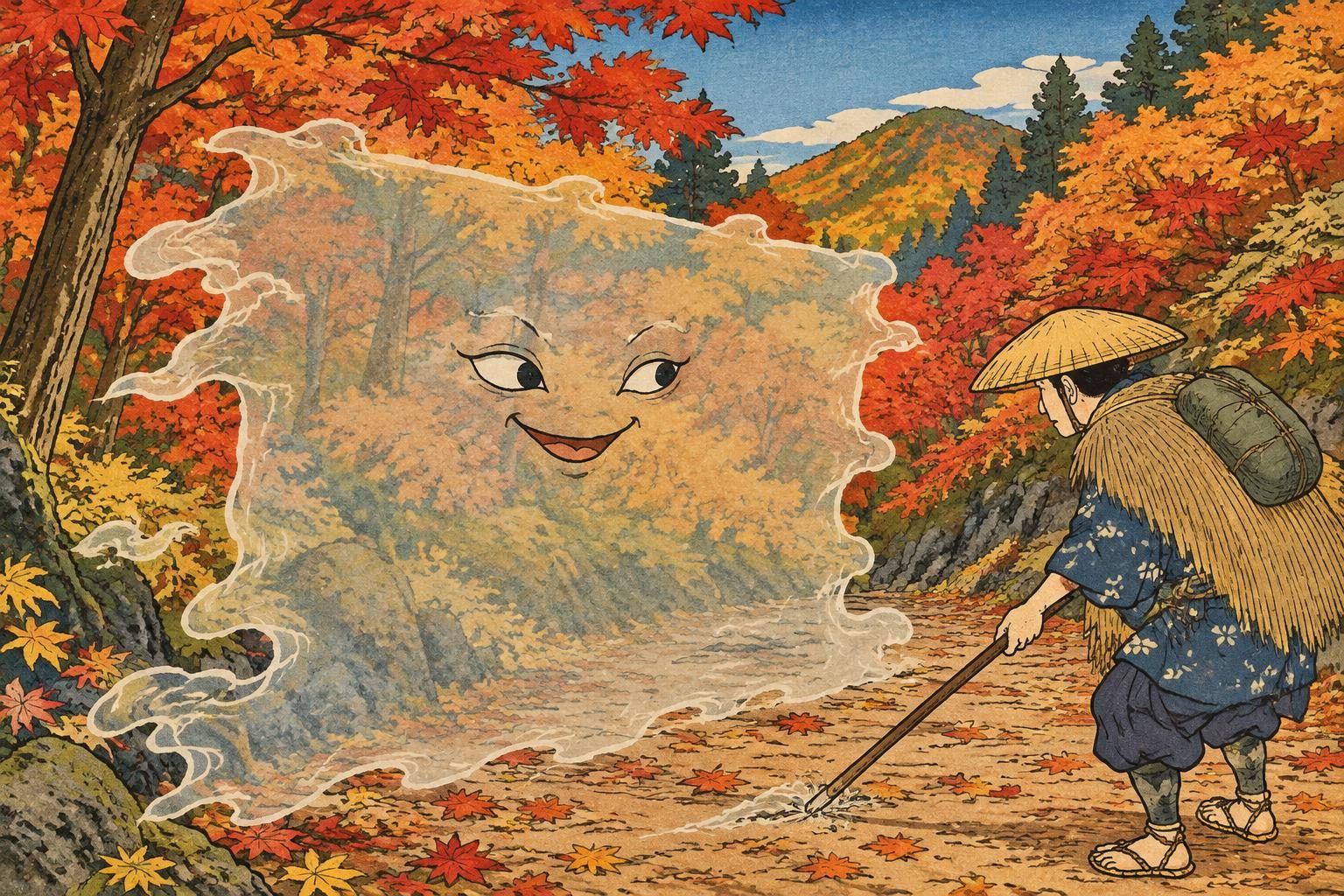
    Nurikabe, the invisible yokai wall, playfully blocks a path in an autumn forest, traditional traveler attempts to pass.
    AI生成イメージ / AI-generated illustration (not a photograph of the actual place)

    Kunio Yanagita and the Original Folklore of Fukuoka

    FACT: Documenting the Legend

    Kunio Yanagita, a renowned folklorist, played a pivotal role in documenting Japan’s rich tapestry of yokai tales, including that of Nurikabe. His work helped preserve the oral traditions of rural Japan, capturing the essence of stories that might otherwise have been lost to time. Yanagita’s records highlight the importance of these tales in understanding regional cultures and beliefs. His dedication to collecting and recording these stories has ensured that the legend of Nurikabe remains a vital part of Japan’s cultural heritage.

    Yanagita’s efforts were instrumental in bringing attention to the diverse and rich folklore of regions like Onga. By compiling these narratives, he provided a window into the past, offering insights into how communities interacted with their environment and the supernatural elements they believed influenced their daily lives. His work continues to inspire both scholars and enthusiasts of Japanese folklore.

    LEGEND: The Plastered Wall Yokai

    According to local tradition, Nurikabe manifests as an invisible wall that blocks the path of travelers at night. The only way to dispel this obstruction is to sweep the base of the wall with a stick or your hand. The legend suggests that Nurikabe is not malevolent but rather a mischievous spirit testing the resolve and patience of those who encounter it. This playful nature of the yokai reflects a broader theme in Japanese folklore, where many supernatural beings are seen as tricksters rather than outright threats.

    This element of the legend highlights a cultural understanding of the supernatural as a part of everyday life, where such entities are not necessarily feared but respected. The act of sweeping the ground to reveal the path is symbolic of the need to engage with the unknown, using wit and tradition to navigate the challenges posed by these mysterious forces.

    Onga River in Iizuka city - Onga River, Geography of Iizuka, Fukuoka
    “Onga River in Iizuka city” (Onga River, Geography of Iizuka, Fukuoka) by Wakuwaku99, Public domain, source, via Wikimedia Commons

    How the Night Road Phenomenon Worked in Local Tradition

    LEGEND: Navigating the Invisible Barrier

    In the folklore of Onga, the Nurikabe is said to appear suddenly, leaving travelers bewildered as they attempt to find their way. The invisible nature of the yokai adds to its mystique, as it challenges the senses and forces individuals to rely on intuition and local knowledge to overcome the obstacle. This aspect of the legend emphasizes the importance of community wisdom and the shared experiences of those who traverse these roads. It is said that those who successfully navigate past the Nurikabe are rewarded with a deeper understanding of the local landscape and its hidden paths.

    The shared stories of encounters with Nurikabe serve as a communal bond, reinforcing social ties through the shared experience of the supernatural. These tales are passed down through generations, each retelling adding layers to the communal understanding of the landscape and its spiritual inhabitants.

    Edo-Period Depictions: Scrolls and Historical Imagery

    FACT: Artistic Interpretations

    During the Edo period, yokai like Nurikabe were often depicted in scrolls and other artworks. These visual representations varied, with some artists choosing to illustrate the yokai as a literal wall, while others opted for more abstract interpretations. Such depictions reflect the evolving nature of folklore and the ways in which stories adapt to cultural and artistic trends over time. The scrolls served not only as artistic expressions but also as educational tools, teaching viewers about the various yokai and their characteristics.

    These artistic interpretations allowed for a visual exploration of the yokai, providing a tangible form to the otherwise invisible. The diversity in depiction underscores the flexibility of folklore, where stories can be molded to fit the artistic and cultural context of the time, ensuring their continued relevance and appeal.

    Onga River Source park01 - Kama, Fukuoka, Parks in Fukuoka prefecture
    “Onga River Source park01” (Kama, Fukuoka, Parks in Fukuoka prefecture) by Muyo, CC BY-SA 4.0, source, via Wikimedia Commons

    From Invisible Force to Pop Culture Icon: The Shigeru Mizuki Legacy

    FACT: Modern Adaptations

    In the 20th century, the legendary Nurikabe gained new life through the works of Shigeru Mizuki, a manga artist renowned for his contributions to yokai culture. Mizuki’s portrayal of Nurikabe as an anthropomorphic creature introduced the yokai to a broader audience, transforming it into a recognizable figure in Japanese pop culture. This adaptation illustrates the enduring appeal of yokai and their ability to resonate with contemporary audiences. Mizuki’s work has been instrumental in popularizing yokai tales beyond Japan, making them accessible to a global audience.

    Mizuki’s adaptations not only brought yokai to the forefront of modern storytelling but also highlighted the cultural significance of these entities. His works serve as a bridge between traditional folklore and modern media, ensuring that the stories of yokai continue to be told and appreciated by new generations.

    Exploring the Cultural Roots of Northern Kyushu Yokai

    FACT: The Role of Yokai in Regional Identity

    Yokai like Nurikabe are more than just stories; they are integral to the cultural identity of regions like Onga. These tales offer insights into the values, fears, and imaginations of the communities that tell them. In Northern Kyushu, yokai serve as symbols of the natural and supernatural forces that shape the landscape and the lives of its inhabitants. The presence of yokai in local folklore underscores the deep connection between the people and their environment, highlighting the ways in which nature and the supernatural are intertwined in the cultural consciousness.

    By understanding the role of yokai in regional identity, one gains a deeper appreciation for how these stories reflect the interaction between humans and their environment. The narratives of yokai are not static; they evolve with the culture, adapting to contemporary contexts while retaining their core significance.

    Nearby Guide

    Nearby sights

    • Onga Shimazu-Maruyama Natural Park (Onga) — This riverside park serves as a conservation area for the region’s history and nature. It features ancient burial mounds, exhibition halls, and showcases seasonal flora, offering a serene environment for visitors. official site
    • Onga River (Nakama) — Flowing along the eastern edge of Onga Town, the Onga River is a popular spot for relaxation and nature observation. Walking paths and small bridges connect both sides, allowing visitors to enjoy the gentle flow of the river. official site
    • Onga-Munakata Bicycle Trail (Onga) — This 34 km cycling route runs along the seaside, offering cyclists beautiful ocean vistas and the opportunity to enjoy the changing scenery. The trail is known for its stunning sunsets over the water. official site
    Locator map of Japan: Onga, Fukuoka
    Legend site: Onga, Fukuoka — Source: Map of Japan with highlight on 40 Fukuoka prefecture.svg; Map: Lincun, CC BY-SA 3.0, via Wikimedia Commons

    Sources

    About the author

    JAPAN ESSENCE Editorial Team
    Our mission is to bring you Japan’s legends, myths, festivals and living traditions, through both historical fact and the stories passed down over generations.

  • Misotsuchi Icicles in Chichibu: A Stunning Winter Light Sculpture

    Misotsuchi Icicles in Chichibu: A Stunning Winter Light Sculpture

    In Chichibu, Saitama Prefecture, the Misotsuchi Icicles transform the winter landscape into a stunning natural light sculpture. These breathtaking ice formations attract visitors from all over Japan, eager to witness their beauty and the magical night illuminations.

    "Misotsuchi no Tsurara" (Icicles of the Misotsuchi) in Chichibu, Saitama
    “Misotsuchi Icicles 120215a” by Tak1701d, Public domain, via Wikimedia Commons

    What Are the Misotsuchi Icicles?

    FACT: Natural Formation and Location

    The Misotsuchi Icicles are a natural ice formation found along the Arakawa River in Chichibu, Saitama Prefecture. These icicles form as water seeps from the rocks and freezes in the cold winter air, creating a spectacular display of ice pillars. This natural phenomenon is a result of the unique geographic and climatic conditions of the region, where the cold air and flowing water from the river and surrounding rocks come together to craft these magnificent structures. The site is accessible from mid-January to mid-February, offering a unique winter attraction for nature lovers. Visitors can enjoy the serene beauty of the area, with the icicles providing a dramatic contrast against the rugged landscape.

    Kami spirit gazing at Misotsuchi Icicles under a moonlit night sky in Chichibu, with serene silver-blue hues.
    AI生成イメージ / AI-generated illustration (not a photograph of the actual place)

    Natural Wonders and Impressive Dimensions

    FACT: The Scale of the Icicles

    The Misotsuchi Icicles can reach impressive sizes, with some formations stretching several meters high. The sheer scale and intricate patterns of the ice create a mesmerizing sight that captivates visitors. Each icicle is a testament to the power of nature, sculpted over time by the persistent flow of water and the biting chill of winter. The icicles’ formation depends on the region’s cold temperatures and the flow of water from the surrounding rocks, which combine to create this natural wonder. As visitors stand before these towering formations, they are often struck by the delicate beauty and the silent, frozen majesty of the scene.

    Misotsuchi Icicles 120215b - Taken with Fujifilm FinePix F80EXR, Misotuchi no Tsurara
    “Misotsuchi Icicles 120215b” (Taken with Fujifilm FinePix F80EXR, Misotuchi no Tsurara) by Tak1701d, Public domain, source, via Wikimedia Commons

    When to Visit: Seasonality and Timing

    FACT: Best Viewing Times

    The best time to visit the Misotsuchi Icicles is during their peak season from mid-January to mid-February. The 2027 season is scheduled for January 8 through February 23, with regular hours of 8:30 AM to 5:00 PM. Illuminations are scheduled for January 9 through February 23, with closing times extended to 7:00 PM on weekdays and 8:00 PM on weekends and national holidays. The season may end early depending on ice conditions; check the official guide before visiting. The illuminations transform the icicles into a kaleidoscope of colors, with lights reflecting off the ice to create a dreamlike atmosphere that enchants all who visit.

    Magical Night Illuminations

    FACT: Illuminating the Icicles

    The night illuminations of the Misotsuchi Icicles are a highlight for many visitors. The lights cast colorful glows across the ice, enhancing the natural beauty of the formations and creating a dreamlike atmosphere. These illuminations draw crowds who come to experience the unique combination of nature and art. As the sun sets, the icicles take on a new life under the glow of the lights, offering a different perspective on their beauty and allowing visitors to see them in a whole new light. This magical transformation is a must-see for anyone visiting the area during the winter months.

    Chichibu Misotsuchi-Tsurara - Picture of the month on the Japanese Wikipedia, Misotuchi no Tsurara
    “Chichibu Misotsuchi-Tsurara” (Picture of the month on the Japanese Wikipedia, Misotuchi no Tsurara) by MaedaAkihiko, CC BY-SA 4.0, source, via Wikimedia Commons

    Practical Information: Fees and Access

    FACT: Visiting Details

    Visitors to the Misotsuchi Icicles can expect a modest entrance fee of 300 yen for junior high school students and older, and 200 yen for elementary school students. The site is accessible by public transport, with buses running from Seibu Chichibu Station and Mitsumineguchi Station. Parking is available at the Wood Roof Oku-Chichibu Auto Campground, which also offers a viewing platform. This ensures that visitors can easily access the site and enjoy the stunning views of the icicles from a comfortable vantage point.

    Nearby Guide

    Access

    • Seibu Chichibu Station (Chichibu) — From Seibu Chichibu Station on the Seibu Railway, take the Seibu Kanko Bus bound for “Mitsumine-Jinja” and get off at the “Misotsuchi” bus stop. official site
    • Mitsumineguchi Station (Chichibu) — From Chichibu Railway “Mitsumineguchi Station”, take the Seibu Kanko Bus bound for “Chichibuko Lake” and get off at the “Misotsuchi” bus stop. The icicles are a short walk from the bus stop. details
    • Wood Roof Oku-Chichibu Auto Campground Parking Lot (Chichibu) — Visitors can park at the Wood Roof Oku-Chichibu Auto Campground parking lot, which offers a viewing platform for the icicles. The parking fee is 500 yen per car. official site

    Nearby sights

    • Misotsuchi Icicles (Chichibu) — A natural ice formation along the Arakawa River, best viewed from mid-January to mid-February. The icicles are illuminated at night, creating a magical atmosphere. official site
    • Otaki Onsen (Chichibu) — A hot spring facility located near the Misotsuchi Icicles, offering relaxation after viewing the icicles. It is a popular spot for visitors seeking warmth and comfort. official site
    • Chichibu Fruit Farm (Chichibu) — A local farm offering strawberry picking experiences. Visitors can enjoy fresh strawberries and other fruits, making it a delightful activity for families. official site

    Where to stay

    • Wood Roof Oku-Chichibu Auto Campground (Chichibu) — A campground offering cabins and camping sites, located near the Misotsuchi Icicles. It provides easy access to the icicles and other local attractions. official site
    • Tsuchiuchi Camping Ground (Chichibu) — Another camping ground near the Misotsuchi Icicles, offering a rustic experience with access to the natural beauty of the area. official site

    Where to eat

    • Cafe Woodroof (Chichibu) — A café located near the Misotsuchi Icicles, offering warm drinks and local specialties like amazake and miso-flavored snacks. It’s a great place to warm up after viewing the icicles. official site
    • Local Restaurants in Chichibu (Chichibu) — Chichibu is known for its local cuisine, including miso-flavored dishes and fresh river fish. Visitors can explore various restaurants in the area to enjoy these specialties. official site
    Locator map of Japan: Chichibu, Saitama
    Legend site: Chichibu, Saitama — Source: Map of Japan with highlight on 11 Saitama prefecture.svg; Map: Lincun, CC BY-SA 3.0, via Wikimedia Commons

    Sources

    About the author

    JAPAN ESSENCE Editorial Team
    Our mission is to bring you Japan’s legends, myths, festivals and living traditions, through both historical fact and the stories passed down over generations.

  • Exploring Mount Nasu’s Sesshō-seki: Legend, Geology, and History

    Exploring Mount Nasu’s Sesshō-seki: Legend, Geology, and History

    In Nasu, Tochigi Prefecture, lies a stone steeped in mystery and legend: the Sesshō-seki, or “Killing Stone.” This enigmatic boulder is said to be the transformed remains of a malevolent nine-tailed fox, Tamamo-no-Mae, whose spirit lingers in the area. The stone’s location on the slopes of Mount Nasu, near Nasu Yumoto Onsen, adds to its allure, drawing visitors eager to explore its mythical and geological significance.

    Sessho-seki(殺生石 せっしょうせき) in Nasu Town, Tochigi Pref., Japan
    “Sessho-seki, Tochigi 01” by Σ64, CC BY 3.0, via Wikimedia Commons

    What is the Sesshō-seki (Killing Stone)?

    FACT: The geological reality

    The Sesshō-seki is a volcanic rock located beside one of Mount Chausu’s vents, which emit toxic gases such as hydrogen sulfide and sulfur dioxide. These emissions have historically been lethal to small animals, a fact noted by the famous haiku poet Matsuo Bashō during his visit in 1689. He observed that bees and butterflies lay dead so thickly around the stone that the sand beneath was obscured. This natural phenomenon adds a layer of eerie reality to the legend, as the stone’s lethal aura is not entirely mythical.

    Visitors today can witness the same natural conditions that have inspired legends for centuries. The volcanic activity in the area, characterized by the emission of these noxious gases, creates a unique environment where the boundary between myth and reality blurs. The stone itself, with its mysterious aura, stands as a testament to the power of nature and the stories it inspires.

    Nine-tailed fox Tamamo-no-Mae in Nasu's autumn landscape.
    AI生成イメージ / AI-generated illustration (not a photograph of the actual place)

    The Legend of Tamamo-no-Mae and the Nine-Tailed Fox

    LEGEND: The story of Tamamo-no-Mae

    According to local legend, Tamamo-no-Mae was a beautiful woman who served the emperor but was later revealed to be a wicked nine-tailed fox in disguise. After her true identity was discovered, she fled to Nasu, where she was eventually killed by the emperor’s troops. Her body is said to have transformed into the Sesshō-seki, a stone that continued to exude a malevolent aura and noxious gases, embodying her lingering spirit. This tale of transformation and lingering malevolence is central to the stone’s legendary status.

    The story of Tamamo-no-Mae is not just a tale of deceit and transformation but also one of enduring cultural significance. The legend has been passed down through generations, becoming a part of the local folklore that shapes the identity of Nasu. The stone, as a physical reminder of this tale, continues to captivate visitors who are drawn to its mysterious past and the supernatural elements that surround it.

    LEGEND: The monk Gennō’s intervention

    Centuries after the fox’s demise, a Buddhist monk named Gennō is said to have visited Nasu during the Muromachi period. According to legend, he shattered the Sesshō-seki with his ritual power, breaking it into three pieces. These fragments were scattered across Japan, with one landing in Fukushima and another in Hiroshima. This tale is dramatized in the Noh play “Sesshōseki,” highlighting its cultural significance. The story of Gennō’s intervention adds a layer of spiritual redemption to the narrative, suggesting that even a cursed object can be subdued by righteous power.

    The legend of Gennō’s intervention is celebrated in various cultural expressions, including traditional Noh theater, which brings the story to life through performance. This dramatization not only preserves the tale but also allows audiences to engage with the themes of redemption and the triumph of good over evil. The enduring popularity of such performances underscores the deep cultural roots of the Sesshō-seki legend in Japanese society.

    20090321那須岳Tagged - Mount Nasu
    “20090321那須岳Tagged” (Mount Nasu) by BehBeh, CC BY-SA 3.0, source, via Wikimedia Commons

    Volcanic Geology and Toxic Vents at Mount Nasu

    FACT: The natural environment

    Mount Nasu is an active volcanic range, and the Sesshō-seki is situated near its vents. The sulfurous gases emitted from these vents contribute to the area’s eerie atmosphere and have been a part of the local folklore for centuries. The combination of natural phenomena and myth makes the site a fascinating destination for both geologists and those interested in Japanese legends. Visitors to the area can witness the interplay between natural forces and cultural narratives, as the landscape itself seems to breathe life into the legend.

    The geological features of Mount Nasu provide a compelling backdrop to the legend of the Sesshō-seki. The active volcanic vents, with their continuous emission of gases, create a dynamic environment that has long captured the imagination of locals and visitors alike. This natural setting enhances the mystical aura of the site, making it a unique place where the lines between science and legend converge.

    Matsuo Basho and Historical Literary Ties

    FACT: Basho’s observations

    Matsuo Bashō, one of Japan’s most revered poets, visited the Sesshō-seki during his travels. His observations of the dead insects around the stone are recorded in his writings, providing a historical account that ties the legend to real-world phenomena. Bashō’s notes add a layer of literary depth to the site’s history, bridging the gap between myth and reality. His writings serve as a testament to the enduring power of the Sesshō-seki’s legend, capturing the imagination of artists and thinkers across generations.

    Bashō’s reflections on the Sesshō-seki highlight the stone’s impact on cultural and literary traditions. His poetic insights offer a unique perspective on the legend, illustrating how the natural and supernatural elements of the site have inspired artistic expression. Bashō’s work continues to resonate with those who visit the site, offering a poetic lens through which to view the mysterious landscape.

    20090418那須岳 - Mount Nasu
    “20090418那須岳” (Mount Nasu) by BehBeh, CC BY-SA 3.0, source, via Wikimedia Commons

    The Annual Gojinkasai Festival

    FACT: Rituals and traditions

    Each year, the Gojinkasai festival is held on the last Sunday of May to appease the spirit of Tamamo-no-Mae. Participants carry torches from Nasu Onsen Shrine to the Sesshō-seki, accompanied by the rhythmic sound of drumming. This ritual underscores the enduring cultural impact of the legend and its integration into local traditions. The festival is not only a spiritual event but also a vibrant cultural celebration, drawing both locals and tourists who wish to experience the living traditions of Nasu.

    The Gojinkasai festival is a vivid expression of the community’s connection to the Sesshō-seki legend. The torch-lit procession and drumming create a dramatic and immersive experience, allowing participants to engage with the story in a tangible way. This annual event serves as a reminder of the legend’s lasting influence and its role in shaping the cultural landscape of Nasu.

    Tips for Visiting Nasu Yumoto Onsen and Sesshō-seki Safely

    FACT: Current conditions and events

    In March 2022, the Sesshō-seki was found split in two, prompting the town to hold a memorial prayer ceremony. Visitors to the site should be aware of the potential hazards posed by the volcanic gases and are advised to check the official website for current hours, fees, and access information to ensure a safe visit. The splitting of the stone has added a new chapter to its legend, sparking interest and speculation about its significance and future.

    The recent splitting of the Sesshō-seki has reignited interest in the stone’s legend, with many speculating about its implications. This event has added a contemporary layer to the narrative, inviting both locals and tourists to reflect on the stone’s historical and cultural significance. As the site continues to evolve, it remains a focal point for those interested in the intersection of legend, history, and natural phenomena.

    Nearby Guide

    Access

    • Nasu Yumoto Onsen Bus Stop (Nasu-machi) — From JR Kuroiso Station, take the Kanto Bus bound for “Nasu Yumoto Onsen” (about 50 minutes), then walk about 10 minutes from the “Nasu Yumoto Onsen” bus stop. details

    Nearby sights

    • Mount Chausu and Ropeway (Nasu-machi) — An active volcano offering a ropeway ride with panoramic views. The gondola climbs from 1,390 to 1,684 meters in about four minutes. In late September and early October, the slopes below turn vivid red. Bus from Nasushiobara or Kuroiso station in season. official site
    • Shika-no-yu (Nasu-machi) — Nasu’s original bathhouse, named for a wounded deer said to have led a hunter to the spring. Inside the dark wooden hall are small pools graded from about 41°C to 48°C. No soap or shampoo; bring a towel. Strongly acidic sulphur water — remove silver jewellery. official site

    Where to stay

    • Hotel Sun Valley Nasu (Nasu-machi) — A forest resort spread across a vast estate, offering diverse accommodations, hot spring facilities, and restaurants. details

    Where to eat

    • La Vita e Bella Nasu Kogen (Nasu-machi) — A resort-style Italian restaurant where guests can enjoy seasonal ingredients and locally grown vegetables. details
    Locator map of Japan: Nasu, Tochigi
    Legend site: Nasu, Tochigi — Source: Map of Japan with highlight on 09 Tochigi prefecture.svg; Map: Lincun, CC BY-SA 3.0, via Wikimedia Commons

    Sources

    About the author

    JAPAN ESSENCE Editorial Team
    Our mission is to bring you Japan’s legends, myths, festivals and living traditions, through both historical fact and the stories passed down over generations.