Nestled in the lush mountains of Tokushima Prefecture, Iya Valley is a region steeped in history and culture. Among its many treasures is the traditional folk song, Iya no Konahiki‑bushi, which captures the spirit and heritage of this unique area.

Introduction to Iya Valley’s Musical Heritage
FACT: The Cultural Significance of Iya no Konahiki‑bushi
Iya no Konahiki‑bushi is a traditional work song originating from the Iya Valley in Miyoshi, Tokushima Prefecture. This song is deeply rooted in the local culture, serving as a musical accompaniment to the labor-intensive process of stone milling. The song’s rhythm and lyrics were designed to coordinate the efforts of workers, making the arduous task more bearable and fostering a sense of community among them. The communal singing not only helped synchronize the physical work but also created a shared cultural experience that reinforced social bonds within the community.
The song’s enduring appeal lies in its ability to connect the present with the past, as it continues to be a symbol of the region’s cultural identity. The melody and lyrics have been passed down through generations, preserving the unique dialect and expressions of the Iya Valley. This transmission of cultural heritage is a testament to the song’s significance and its role in maintaining the social fabric of the community.
Origins of Iya no Konahiki‑bushi: Milling at Night
FACT: The Work Song’s Historical Context
The origins of Iya no Konahiki‑bushi can be traced back to the milling of grains, particularly buckwheat, which was a staple in the region. The song was traditionally sung during nighttime milling sessions, where the repetitive and rhythmic nature of the work lent itself well to musical accompaniment. This practice not only helped in synchronizing the workers’ efforts but also served as a form of entertainment and storytelling. The nocturnal setting added a unique atmosphere, where the sounds of the mill and the voices of the singers blended into a harmonious backdrop against the quiet of the night.
Nighttime milling was not merely a practical necessity but also a social event, where community members gathered to share stories and experiences. The song’s lyrics often incorporated local tales and historical events, making each performance a reflection of the community’s collective memory. This storytelling aspect of the song allowed it to evolve over time, incorporating new elements while retaining its core themes.


Melodies of the Mountains: East and West Iya Variations
FACT: Regional Variations and Lyric Content
Iya no Konahiki‑bushi has several variations, reflecting the diverse cultural influences within the Iya Valley. The song’s lyrics often reference local landmarks such as the vine bridges and the sorrow of the Heike clan, a theme that resonates deeply with the area’s historical narrative. These variations are celebrated in annual competitions, where performers from different parts of the valley showcase their unique interpretations. Each variation of the song captures distinct nuances of the local dialect and cultural expressions, making the competition a vibrant display of regional identity and pride.
These regional variations highlight the adaptability of the song, as each community infuses its own cultural elements into the performance. The competitions serve as a platform for preserving these variations, ensuring that the rich tapestry of local traditions is not lost. Participants often wear traditional attire, adding a visual element to the performances that enhances the cultural experience for both performers and audience members.
Echoes of History: The Heike Clan Legend and the Vine Bridge
LEGEND: Local Traditions and Historical Echoes
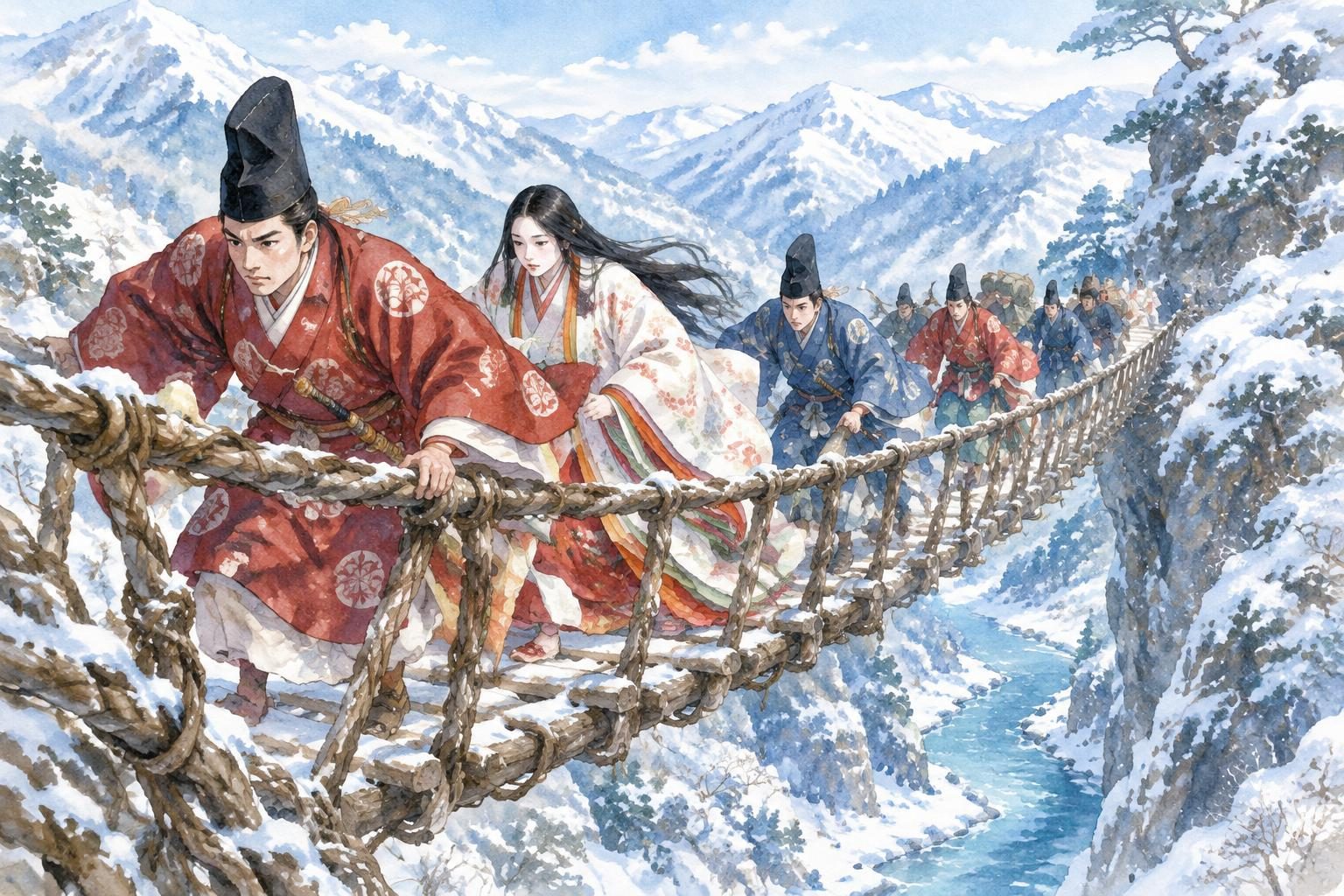
According to local tradition, the Iya Valley served as a refuge for the defeated Heike clan after their loss in the Genpei War. The vine bridges, which are a prominent feature in the song’s lyrics, are said to have been constructed by the Heike to escape their pursuers. This legend adds a layer of historical intrigue to the song, intertwining the music with the valley’s storied past. The bridges themselves, made from woven vines, symbolize both the ingenuity and the desperation of the Heike clan as they sought to evade capture in the dense, mountainous terrain.
The legend of the Heike clan is a poignant reminder of the region’s historical significance and the resilience of its people. The vine bridges, still standing today, serve as tangible connections to this past, allowing visitors to experience the same landscapes that inspired the song. The story of the Heike clan is a powerful narrative that continues to captivate the imagination of locals and visitors alike, enriching their understanding of the Iya Valley’s cultural heritage.


Preserving the Tradition: The Annual Iya no Konahiki‑bushi Championship
FACT: Modern Celebrations and Competitions
Today, the Iya no Konahiki‑bushi is celebrated annually at the Higashi‑Iya Historical Folk Museum in Miyoshi. This event draws participants from across the region who compete in performing the song, each bringing their own style and interpretation. The championship not only preserves the song’s legacy but also promotes cultural exchange and appreciation among the participants and audience. The museum, which serves as the venue for this event, provides an ideal setting for the celebration of this cultural heritage, offering visitors a deeper understanding of the song’s significance and the region’s history.
The championship is a lively event that brings together people of all ages, fostering a sense of community and shared cultural pride. It is an opportunity for younger generations to engage with their heritage, learning from experienced performers and gaining a deeper appreciation for the song’s historical and cultural context. The event also attracts tourists, providing them with a unique insight into the local culture and traditions of the Iya Valley.
Experiencing Culture and Buckwheat Heritage in Miyoshi City
FACT: Visiting the Iya Valley and Its Attractions
Visitors to Miyoshi City can immerse themselves in the rich cultural heritage of the Iya Valley. The Higashi‑Iya Historical Folk Museum offers insights into the region’s history and traditions, including the Iya no Konahiki‑bushi. The museum is easily accessible from JR Awa-Ikeda Station, making it a convenient destination for those interested in exploring Tokushima’s unique cultural landscape. In addition to the museum, the surrounding area offers breathtaking natural scenery, including the famous vine bridges and picturesque mountain views, providing a perfect backdrop for cultural exploration.
The Iya Valley’s attractions extend beyond its musical heritage, offering visitors a chance to explore its stunning landscapes and traditional architecture. The vine bridges, in particular, are a must-see, providing a glimpse into the region’s past and the ingenuity of its people. Visitors can also enjoy local cuisine, including dishes made with buckwheat, which is a staple of the area’s culinary tradition. These experiences combine to create a rich tapestry of cultural and natural beauty that is unique to the Iya Valley.
Nearby Guide
Access
- JR Awa-Ikeda Station (Miyoshi) — Take the JR Dosan Line to Awa-Ikeda Station. From there, board a bus bound for Higashi-Sodani and alight at “Government Office” bus stop, which is immediately adjacent to the museum. details


Related on JAPAN ESSENCE: Takeda no Komoriuta: Exploring Kyoto’s Poignant Lullaby Tradition
Sources
- iwafu – Iya no Konahiki-bushi Japan Championship|Shikoku Tokushima|Japan Events Calendar: Real-Time Local Festivals & Gems
- Shikoku | Destinations | Travel Japan – Japan National Tourism Organization (Official Site)
- Michiya Mihashi’s Complete Folk Song Collection | RELEASE | SOUND FUJI
- details
To explore further, visit Onigawara Experience for hands-on onigawara experiences in Japan and Kawara Kobo (瓦工房) for a hands-on kawara experience.
徳島県の豊かな山々に囲まれた祖谷谷は、歴史と文化に満ちた地域です。その多くの宝の中には、このユニークな地域の精神と遺産を捉えた伝統的な民謡「祖谷の粉挽き節」があります。
祖谷谷の音楽遺産の紹介
事実: 祖谷の粉挽き節の文化的意義
祖谷の粉挽き節は、徳島県三好市の祖谷谷に起源を持つ伝統的な労働歌です。この歌は地元の文化に深く根ざしており、石臼の労働集約的な過程に音楽的な伴奏を提供しています。歌のリズムと歌詞は、労働者の努力を調整し、困難な作業をより耐えやすくし、彼らの間にコミュニティの感覚を育むように設計されています。共同で歌うことは、物理的な作業を同期させるだけでなく、コミュニティ内の社会的絆を強化する共有文化体験を生み出しました。
この歌の持続的な魅力は、過去と現在を結びつける能力にあります。それは地域の文化的アイデンティティの象徴として存在し続けています。メロディーと歌詞は世代を超えて受け継がれ、祖谷谷の独特な方言と表現を保存しています。この文化遺産の伝承は、歌の重要性とコミュニティの社会的構造を維持する役割を証明しています。
祖谷の粉挽き節の起源: 夜の粉挽き
事実: 労働歌の歴史的背景
祖谷の粉挽き節の起源は、特に地域の主食である蕎麦の粉挽きに遡ります。この歌は伝統的に夜間の粉挽きの際に歌われ、作業の反復的でリズミカルな性質が音楽的伴奏に適していました。この習慣は、労働者の努力を同期させるのに役立っただけでなく、娯楽や物語の語りとしても機能しました。夜間の設定は独特の雰囲気を加え、臼の音と歌い手の声が夜の静けさの中で調和した背景を作り出しました。
夜間の粉挽きは単なる実用的な必要性ではなく、物語や経験を共有するためにコミュニティメンバーが集まる社会的なイベントでもありました。歌の歌詞にはしばしば地元の物語や歴史的な出来事が組み込まれ、各パフォーマンスがコミュニティの集団記憶を反映していました。この物語の側面は、歌が時間とともに進化し、新しい要素を取り入れながらもその核心テーマを保持することを可能にしました。
山のメロディー: 東西祖谷のバリエーション
事実: 地域のバリエーションと歌詞の内容
祖谷の粉挽き節にはいくつかのバリエーションがあり、祖谷谷内の多様な文化的影響を反映しています。歌の歌詞には、つる橋や平家一族の悲しみなど、地域の歴史的な物語に深く共鳴するテーマがしばしば登場します。これらのバリエーションは毎年の競技会で祝われ、谷の異なる部分からのパフォーマーが独自の解釈を披露します。歌の各バリエーションは、地元の方言と文化的表現の独特なニュアンスを捉え、競技会は地域のアイデンティティと誇りの活気ある展示となっています。
これらの地域のバリエーションは、各コミュニティが独自の文化的要素をパフォーマンスに注入することで、歌の適応性を強調しています。競技会はこれらのバリエーションを保存するためのプラットフォームとして機能し、豊かな地元の伝統の織物が失われないようにしています。参加者はしばしば伝統的な衣装を着用し、パフォーマンスに視覚的な要素を加え、出演者と観客の両方にとって文化的な体験を高めています。
歴史のこだま: 平家伝説とつる橋
伝承: 地元の伝統と歴史のこだま
地元の言い伝えによると、祖谷谷は源平合戦で敗れた平家一族の避難所となったとされています。歌の歌詞に登場するつる橋は、追手から逃れるために平家が建設したと言われています。この伝説は、音楽と谷の歴史的な過去を絡ませ、歌に歴史的な興味を加えています。つる橋自体は、編まれたつるで作られ、平家一族が密集した山岳地帯で捕縛を逃れようとした際の創意工夫と絶望を象徴しています。
平家一族の伝説は、地域の歴史的重要性とその人々のレジリエンスを思い起こさせる感動的な物語です。今日もなお立ち続けるつる橋は、この過去への具体的なつながりを提供し、訪問者が歌にインスピレーションを与えた同じ風景を体験することを可能にしています。平家一族の物語は、地元の人々や訪問者の想像力を引き続き魅了し、祖谷谷の文化遺産の理解を深めています。
伝統の保存: 年次祖谷の粉挽き節選手権
事実: 現代の祝祭と競技会
今日、祖谷の粉挽き節は三好市の東祖谷歴史民俗資料館で毎年祝われています。このイベントは地域中から参加者を集め、各々が独自のスタイルと解釈で歌を競います。選手権は歌の遺産を保存するだけでなく、参加者と観客の間で文化交流と理解を促進します。このイベントの会場となる資料館は、この文化遺産の祝祭に理想的な場所を提供し、訪問者に歌の重要性と地域の歴史についての深い理解を提供します。
選手権は、すべての年齢の人々を集め、コミュニティと共有文化の誇りを育む活気あるイベントです。若い世代が遺産と関わり、経験豊富なパフォーマーから学び、歌の歴史的および文化的背景に対する深い理解を得る機会です。このイベントは観光客も引き付け、祖谷谷の地元文化と伝統に対するユニークな洞察を提供します。
三好市での文化と蕎麦の遺産を体験
事実: 祖谷谷とその観光名所を訪れる
三好市を訪れる人々は、祖谷谷の豊かな文化遺産に浸ることができます。東祖谷歴史民俗資料館は、地域の歴史と伝統、そして祖谷の粉挽き節についての洞察を提供しています。資料館はJR阿波池田駅から簡単にアクセスでき、徳島のユニークな文化的風景を探求したい人々にとって便利な目的地です。資料館に加えて、周辺地域は有名なつる橋や絵のように美しい山の景色を含む息をのむような自然の風景を提供し、文化探求のための完璧な背景を提供します。
祖谷谷の観光名所は音楽遺産を超えて広がり、訪問者にその素晴らしい風景と伝統的な建築を探索する機会を提供します。特に、つる橋は必見であり、地域の過去とその人々の創意工夫を垣間見ることができます。訪問者はまた、地域の料理の伝統である蕎麦を使った料理を楽しむことができます。これらの体験は、祖谷谷に特有の文化的および自然の美しさの豊かな織物を作り出します。
周辺ガイド
アクセス
- JR阿波池田駅(三好) — JR土讃線で阿波池田駅へ。そこから東祖谷行きのバスに乗り、「役場前」バス停で下車すると、資料館のすぐ隣です。詳細
Related on JAPAN ESSENCE: Takeda no Komoriuta: Exploring Kyoto’s Poignant Lullaby Tradition
Sources
- iwafu – Iya no Konahiki-bushi Japan Championship|Shikoku Tokushima|Japan Events Calendar: Real-Time Local Festivals & Gems
- Shikoku | Destinations | Travel Japan – Japan National Tourism Organization (Official Site)
- Michiya Mihashi’s Complete Folk Song Collection | RELEASE | SOUND FUJI
- details
さらに楽しみたい方は、鬼瓦づくりを体験できるOnigawara Experienceや、瓦にふれる体験ができる瓦工房もご覧ください。
Leave a Reply