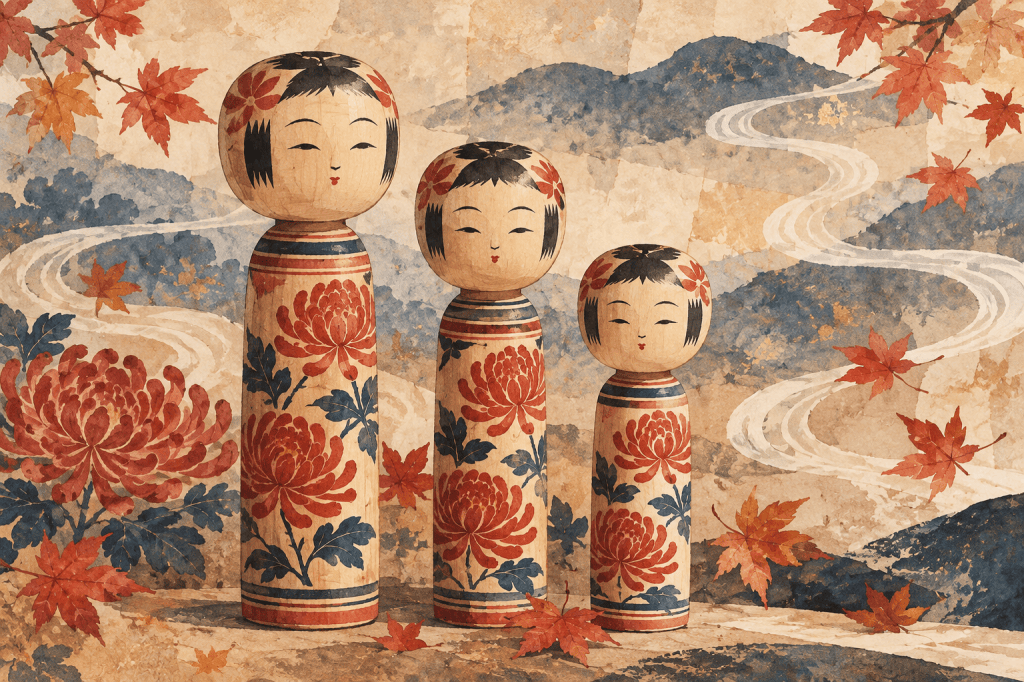
A wooden doll is a small object to carry away from a journey, but in Naruko it can also be a way into the place itself. The head, painted face and flower-covered body invite close attention. Set the doll beside the hot-spring town, its museum and its public celebrations, and the subject becomes larger: how a local craft is recognized, remembered and shared. This guide treats Naruko kokeshi as part of regional culture, with a museum visit at its center and time to look carefully rather than hurry through a shopping list.
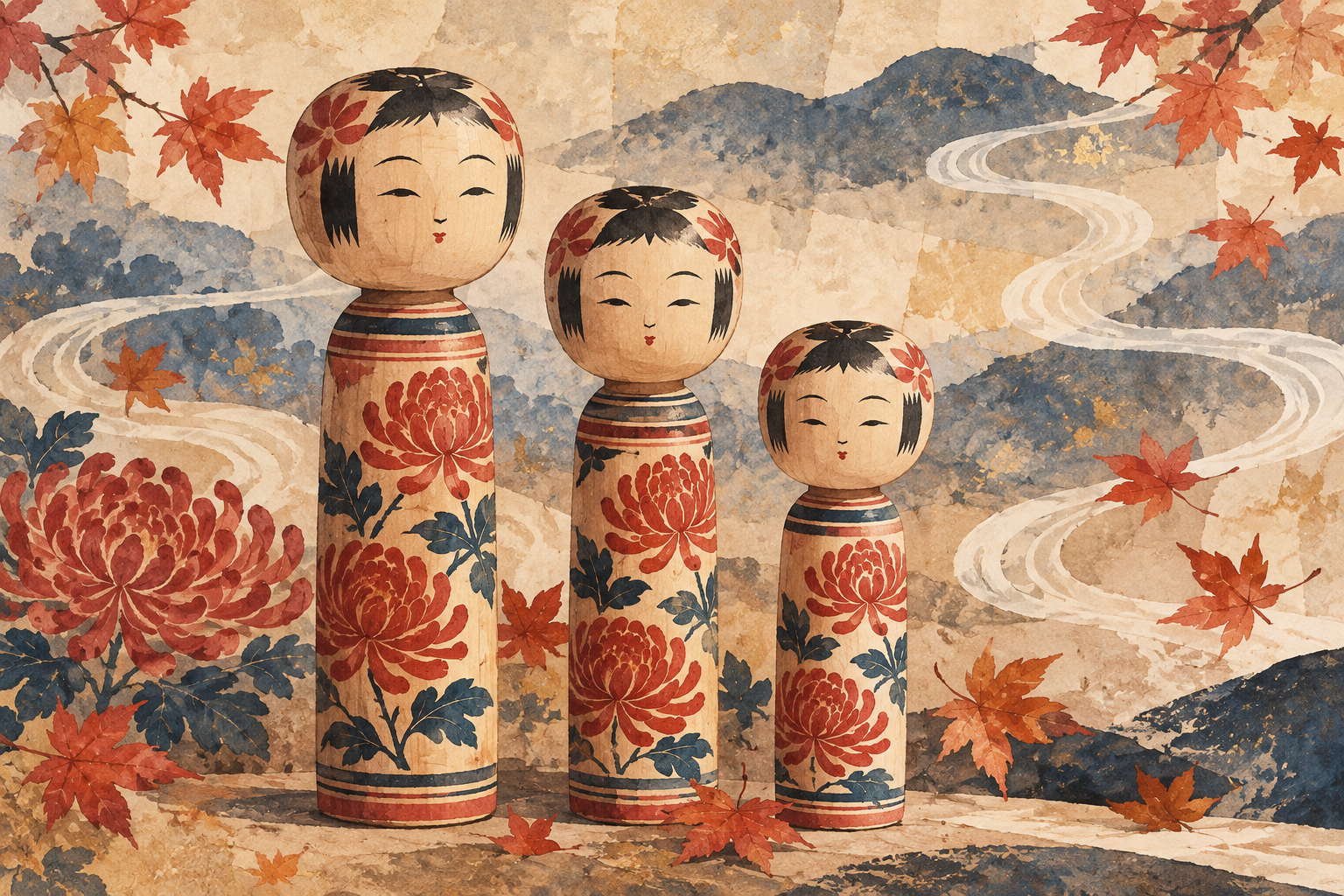
Origins: a tradition, not a precise birthday
Miyagi Prefecture describes traditional kokeshi as having emerged as children’s souvenirs in Tohoku hot-spring districts around the end of the Edo period. The local tourism association connects their spread with visitors taking wooden dolls home from therapeutic stays. These are institutional accounts of a tradition, not proof of one inventor or a single founding day. It is more accurate to keep that uncertainty than to turn a broad origin story into a dated event. Miyagi Prefecture’s overview; the local account.
An administrative milestone is much firmer. Miyagi traditional kokeshi received national traditional-craft designation on 22 June 1981. The prefectural listing groups Naruko with Togatta, Yajiro, Sakunami and Hijiori. That classification helps a visitor ask a useful question: which details belong to a regional family of forms, and which reflect an individual maker? A designation recognizes a craft tradition; it does not mean every doll looks the same or that all wooden dolls sold in the region belong to the same lineage. Official designation and five lineages.
Learning to recognize the Naruko form
The regional tourism association identifies a sturdy silhouette with pronounced shoulders, a slightly narrower middle and a base that widens again. Layered chrysanthemum designs are particularly associated with Naruko. Its fitted neck can make a squeaking sound when turned. These are helpful points of recognition, not a checklist to apply by handling museum objects: look first, and ask staff whether a demonstration is possible. Never test the neck of a display piece yourself. Naruko’s characteristic shape, patterns and neck.
For a slower way of looking, choose two labeled examples and compare only one feature at a time. Begin with the balance between head and body. Then follow the painted flowers and the spaces left between them. Finally, look at the face: a small change in the angle or length of a line may change the expression you perceive. This is a viewing exercise, not a rule about authenticity. A label naming the maker or school carries information that a first impression cannot supply. Photograph the label too, where photography is allowed, so that a remembered face remains connected to its maker.
The museum as a shared regional memory
Osaki City records that the Japan Kokeshi Museum opened in 1975. Two important foundations were the 1953 donation of the collection of poet and children’s writer Kaname Fukazawa and the continuing gifts of festival-dedication dolls from craftspeople beginning in 1957. Those dates describe the formation of an institution, rather than the invention of kokeshi. They show why a museum visit adds another layer to an encounter with a doll: collecting, donating and keeping objects accessible are also part of cultural continuity. Osaki City’s museum history.
The tourism bureau’s March 2026 guide describes a collection of around 5,000 traditional kokeshi, together with craft demonstrations and painting experiences. Rather than treating the number as a challenge to see everything, use the collection for comparison. Start with a small group, read its labels and return to a favorite after looking elsewhere. If a demonstration or painting session matters to your visit, confirm that day’s availability in advance; a general facility description is not a reservation or a promise that a particular craftsperson will be present. Current museum visitor guide.
A painting experience is most rewarding when approached as an introduction to attention. Before starting, notice how a motif sits on a curved surface and how an empty area contributes to the whole design. Ask the instructor which parts you will paint and what care the finished object needs. A visitor’s painted keepsake and a traditional maker’s work can both be meaningful while representing different kinds of learning. Keeping that distinction clear helps avoid reducing the skill of a practiced artisan to the length of a short workshop.
From a doll to a town-wide celebration
The 2026 official listing for the National Kokeshi Festival advertised its 71st edition for 5–6 September, with traditional-kokeshi displays, demonstrations, painting activities and a festival parade. Those dates have already passed at this article’s publication. The event is relevant here as an example of the public life of the craft, not as an October activity to book. A future edition needs its own dated announcement; visitors should not assume that the venue or detailed program repeats unchanged. Dated 2026 festival announcement.
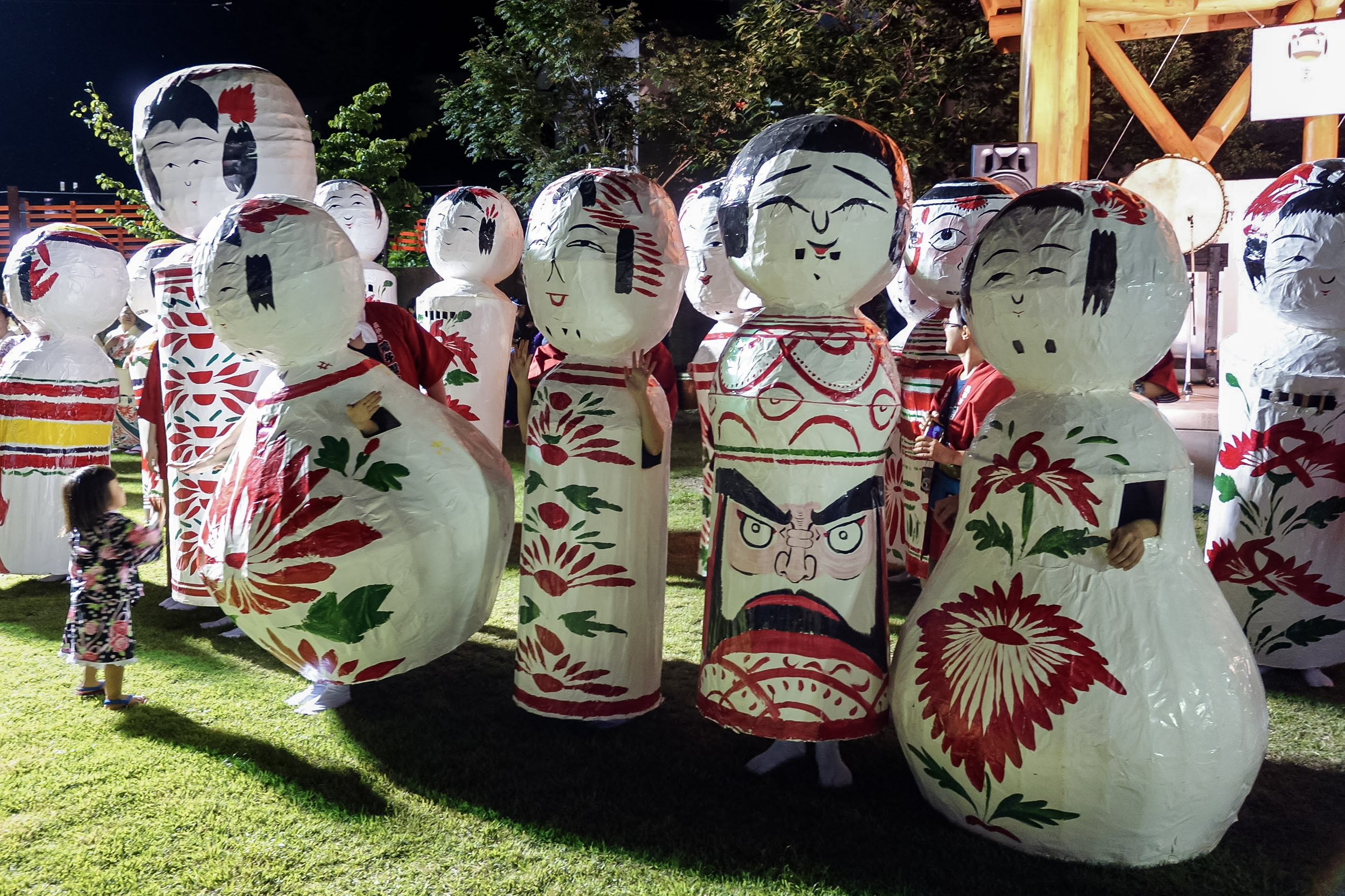
The local association also records kokeshi imagery in the streets, including a postbox, bollards and manhole covers. Such objects offer a different kind of encounter from a museum case: the motif becomes part of ordinary movement through town. Make a small observation walk, looking for how the same simplified figure changes with its setting and purpose. Stay out of the road when photographing street details, keep entrances clear and respect private property. The pleasure lies in noticing a shared visual language, without needing to turn every sighting into a purchase. Kokeshi in the townscape.
Nearby landscapes: Naruko Gorge and Katanuma
For an outdoor extension, the regional association identifies Naruko Gorge and Katanuma as local sights. It gives late October to early November as the usual autumn-color period for the gorge and describes Katanuma as a caldera lake whose appearance changes from day to day. Both have winter closures. The photograph below is from October 2025, so it shows a past seasonal scene, not a report of today’s colors. Treat published seasonal ranges as planning guidance and check weather, access notices and the condition of paths before setting out. Official sightseeing information.
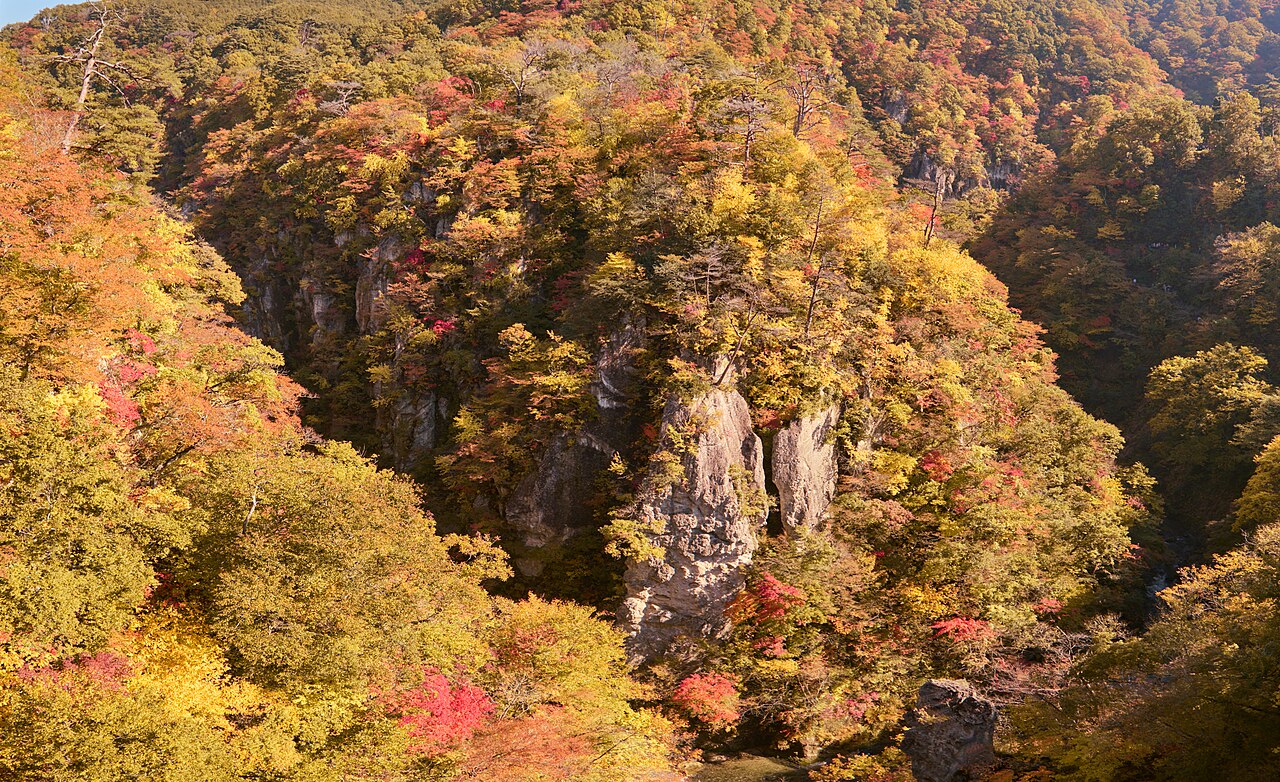
Choose one landscape addition if your main purpose is the museum. Moving between the station, exhibits and a viewpoint takes more time than a cluster of map markers suggests, especially when you also want to read labels or join an activity. The association’s 2026 walking map distinguishes the town from more distant sights and marks seasonal restrictions. Use it to judge the day’s scale, then confirm the actual route. A satisfying visit might end with one carefully remembered doll and one landscape, rather than a hurried attempt to collect every landmark. Official 2026 walking map.
Getting there and planning a museum visit
The standard rail approach from the Sendai side is via Furukawa, changing from the Tohoku Shinkansen to the Rikuu East Line for Naruko-Onsen. The tourism association gives approximately 45 minutes for the Furukawa–Naruko-Onsen leg; connection time must be added. A crucial current exception concerns travel from the west: on 8 October 2026, JR East still reported the Naruko-Onsen–Shinjo section suspended after the July 2024 heavy rain, with replacement buses. Check the operator’s latest information and do not plan that section as an ordinary through train. Regional access guide; JR East operating notice.
The museum is at 74-2 Shitomae, Naruko Onsen, Osaki City, Miyagi. The March 2026 tourism-bureau guide gives approximately five minutes by car from Naruko-Onsen Station and around 45 minutes from Furukawa Interchange. Osaki City lists opening hours of 9:00–16:00, last admission 15:30, during 1 April–31 December, with winter closure from 1 January–31 March. For current admission charges, painting fees and any exceptional closure, contact the museum before travel rather than relying on older price listings. The published telephone number is 0229-83-3600. Access information; Municipal hours and contact details.
For the location, use the museum map linked by Osaki City. For a manageable sequence, check the return transport first, visit the museum while there is ample time before last admission, and leave a town walk or a single outdoor stop for the remaining daylight. This is an editorial suggestion, not an official timed itinerary. Ask about access needs in advance if slopes, steps or transport between stops could affect your visit.
Continue exploring Japanese regional culture
For other regional perspectives, read JAPAN ESSENCE’s articles on Hida woodworking and Takayama’s crafts and Tono’s local folklore. They are separate destinations, not nearby stops on a Naruko day trip.
Sources and editorial note
Sources checked on 8 October 2026. Origin accounts are presented as transmitted history; museum dates and craft designation are documented institutional facts. Viewing exercises and the suggested order of visits are editorial guidance. Photo credits and licenses appear with each real photograph; the imagined illustration is explicitly labeled as AI-generated.
Miyagi Prefecture: Miyagi traditional kokeshi
Osaki City: Japan Kokeshi Museum
Naruko Onsenkyo Tourism Association: local crafts
Naruko Onsen Tourism Association: enjoying kokeshi
Miyagi Osaki Tourism Bureau: Japan Kokeshi Museum, 30 March 2026
Miyagi Tourism Federation: 71st National Kokeshi Festival, 2026
Naruko Onsenkyo Tourism Association: sightseeing
Naruko Onsenkyo Tourism Association: transport and access
JR East: Rikuu East Line operating information
To explore further, visit Oni Kobo (鬼工房) for onigawara demon-tile art and charms and Onigawara Experience for hands-on onigawara experiences in Japan.


Leave a Reply