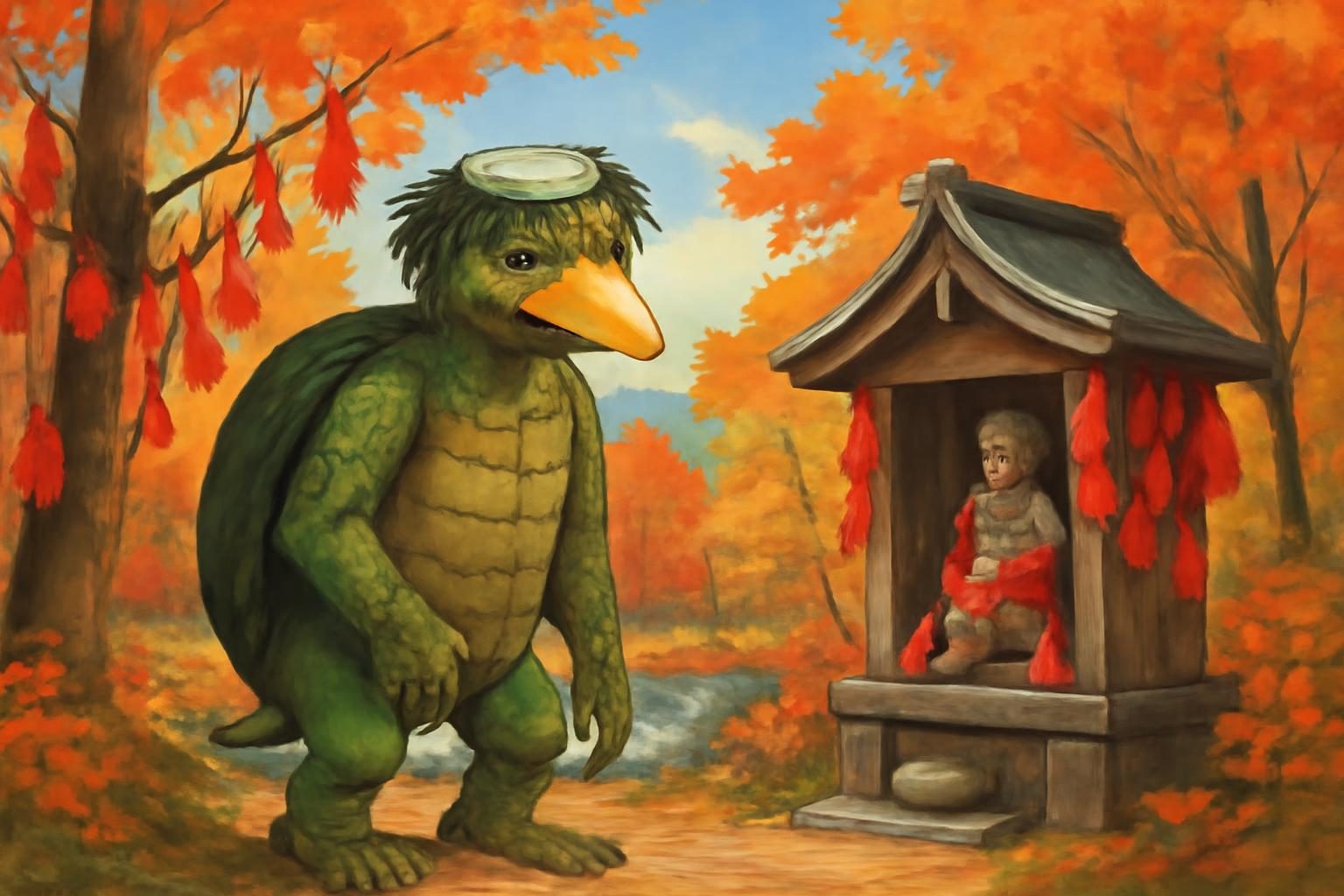
In Tōno, Iwate Prefecture, the air is thick with tales of mystical creatures and ancient traditions, making it a must-visit for anyone intrigued by Japanese folklore.


Introduction to Tōno: The Land of Japanese Folklore
FACT: What the records say about Tōno Monogatari
Tōno Monogatari, or The Legends of Tōno, published on June 14, 1910, by Kunio Yanagita, is a cornerstone of Japanese folklore studies. Compiled from tales gathered by Kizen Sasaki, this collection brought the mystical world of Tōno to the forefront of cultural consciousness. It established Tōno as a land rich in yokai and supernatural stories, making it a significant site for those interested in the cultural heritage of Japan.
FACT: The significance of Tōno Monogatari
Tōno Monogatari is not just a collection of tales; it is a cultural artifact that has shaped the understanding and appreciation of Japanese folklore. The stories within this collection highlight the unique blend of local beliefs and the supernatural, providing insight into the lives and imaginations of the people of Tōno. This work has been instrumental in preserving the oral traditions of the region and continues to be a vital reference for scholars and enthusiasts alike.

Uncovering Tōno Monogatari and Kunio Yanagita’s Legacy
FACT: The legacy of Kunio Yanagita
Kunio Yanagita, often hailed as the father of Japanese folklore studies, played a pivotal role in documenting and preserving the rich tapestry of oral traditions found in Tōno. His collaboration with Kizen Sasaki, a local storyteller, was crucial in capturing the essence of Tōno’s folklore. Yanagita’s work not only preserved these tales for future generations but also elevated the status of folklore as a legitimate field of academic study in Japan.
Yanagita’s dedication to collecting and analyzing these stories helped to formalize folklore as a discipline, encouraging others to explore and document the cultural narratives of their own regions. His influence extends beyond Tōno, impacting the broader understanding of folklore across Japan and inspiring a deeper appreciation for the cultural narratives that shape communities.


Visiting Kappa-buchi: The Shaded Stream of Tōno’s Kappa
FACT: What visitors can experience at Kappa-buchi
Kappa-buchi, located behind Jōken-ji Temple in Tsuchibuchi-chō, Tōno, is a serene stream said to be the home of the kappa, a mischievous water creature from Japanese folklore. Visitors to Kappa-buchi can immerse themselves in the lore of these creatures by purchasing a playful “Kappa-catching permit” from Denshoen or the Tōno Tourism Association. This permit allows visitors to engage in the whimsical tradition of attempting to ‘catch’ a kappa using cucumbers as bait, with the humorous promise of a 10 million yen reward if successful.
The experience at Kappa-buchi is not just about the playful pursuit of kappa, but also about connecting with the natural beauty of the area. The shaded stream provides a tranquil setting for reflection and exploration, inviting visitors to ponder the legends that have been passed down through generations. The presence of the kappa in local lore adds a layer of mystique to the landscape, enhancing the visitor’s appreciation of both the natural and supernatural elements of Tōno.
LEGEND: The nursing deity shrine at Kappa-buchi
According to local legend, Kappa-buchi is not only home to kappa but also features a small shrine dedicated to a nursing deity. Expecting or nursing mothers visit this shrine to offer breast-shaped red-cloth tokens, praying for abundant breast milk. This practice highlights the blend of folklore and local customs, where the mystical and the everyday intersect.
This shrine serves as a poignant reminder of the community’s reliance on both spiritual beliefs and practical traditions to navigate life’s challenges. The red-cloth tokens, symbolizing the hopes and prayers of mothers, create a vibrant and touching display of faith and cultural continuity. Visitors can witness this unique aspect of Tōno’s cultural heritage, gaining insight into the ways in which folklore and daily life are intertwined.
Jōken-ji Temple and the Legend of the Kappa-Komainu
LEGEND: The story of the Kappa-Komainu
Jōken-ji Temple is home to unique Kappa-komainu stone guardian statues, which feature concave depressions atop their heads. According to legend, these statues commemorate a kappa that helped extinguish a fire at the temple. This tale is a testament to the kappa’s dual nature in folklore as both trickster and helper, embodying the complex relationship between humans and yokai.
The Kappa-komainu statues stand as silent witnesses to the stories that have shaped Tōno’s cultural landscape. Their distinctive design reflects the local community’s reverence for the kappa’s role in their history, blending artistic expression with narrative tradition. Visitors to Jōken-ji Temple can explore these statues and consider the ways in which folklore influences both the physical and spiritual realms of Tōno.
FACT: Architectural and cultural significance of Jōken-ji Temple
Beyond its legendary associations, Jōken-ji Temple is a site of architectural and cultural significance. The temple’s structures and statues offer a glimpse into the religious and artistic traditions of the region. Visitors can explore the temple grounds, appreciating the serene atmosphere and the intricate craftsmanship of the stone statues, which reflect the deep-rooted spiritual beliefs of the local community.
The temple’s architecture, characterized by its traditional design and attention to detail, serves as a testament to the enduring cultural heritage of Tōno. As visitors wander through the temple grounds, they are enveloped in an atmosphere of tranquility and reverence, providing a deeper understanding of the spiritual and historical context of the region’s folklore.


Experiencing Traditional Life at Denshōen and Tōno Furusato Village
FACT: Preserving Tōno’s cultural heritage at Denshōen
Denshōen Park, also known as the Magariya folk village, offers a glimpse into the traditional life of Tōno. The park preserves traditional thatched-roof Magariya L-shaped farmhouses, including the Former Kikuchi Family Residence, an Important Cultural Property. Visitors can also explore the Oshira-dō hall, which houses wooden Oshirasama figures, and a memorial dedicated to Kizen Sasaki, further connecting the site to the rich folklore of the region.
These preserved structures provide a tangible link to the past, allowing visitors to experience the architectural and cultural legacy of Tōno firsthand. The park’s commitment to preserving these historical buildings ensures that the stories and traditions of the area continue to be accessible to future generations, fostering a deeper appreciation for the region’s unique cultural identity.
FACT: Exploring Tōno Furusato Village
Tōno Furusato Village is another essential destination for those interested in the region’s cultural heritage. The village showcases traditional Magariya farmhouses, which are integral to the setting of Tōno Monogatari. These structures provide insight into the architectural styles and rural lifestyles of the past, allowing visitors to step back in time and experience the world as it was during the era of these legends.
The village serves as a living museum, where the daily lives and practices of Tōno’s inhabitants are brought to life through carefully preserved environments. Visitors can explore the farmhouses and surrounding landscapes, gaining a deeper understanding of the historical context in which the legends of Tōno were born and nurtured.


Related on JAPAN ESSENCE: Exploring Iso-onna: The Shore-Woman Yokai of Kakara Island in Saga | Exploring Japanese Folklore: The Yōkai Legends of Kameoka and Nantan
Regional guide
Location: Tōno, Iwate Prefecture
For centuries, onigawara (demon roof tiles) have guarded Japanese rooftops from evil. You can find onigawara pieces at Oni Koubou. To meet these guardian faces in person, try a hands-on onigawara experience with Onigawara Experience.
Sources
- Traveling in Tōno, Iwate: A Birthplace of Japanese Legends | Nippon.com
- Tōno, Iwate – Wikipedia
- Fish for Kappa at the Kappa Fuchi|Search Destinations in Tohoku | TRAVEL TO TOHOKU – The official tourism website of Tohoku, Japan
- Tono | Travel Japan – Organización Nacional de Turismo de Japón (sitio web oficial)
- Tono | Travel Japan – Japan National Tourism Organization (Official Site)
岩手県遠野市では、神秘的な生き物や古代の伝統の物語が溢れており、日本の民俗学に興味がある人にとって必見の場所です。
遠野の紹介: 日本の民俗学の地
事実: 遠野物語に関する記録
『遠野物語』は、1910年6月14日に柳田國男によって出版され、日本の民俗学研究の礎となっています。佐々木喜善が集めた物語を元に編纂されたこのコレクションは、遠野の神秘的な世界を文化的意識の最前線に押し上げました。妖怪や超自然の物語が豊富な地として遠野を確立し、日本の文化遺産に興味がある人々にとって重要な場所となっています。
事実: 遠野物語の重要性
『遠野物語』は単なる物語の集まりではなく、日本の民俗学の理解と評価を形作った文化的遺産です。このコレクションに含まれる物語は、地元の信仰と超自然の独特な融合を強調し、遠野の人々の生活と想像力に洞察を与えます。この作品は地域の口承伝統を保存する上で重要な役割を果たし、学者や愛好家にとっても重要な参考資料であり続けています。
遠野物語と柳田國男の遺産を探る
事実: 柳田國男の遺産
日本の民俗学研究の父と称される柳田國男は、遠野に見られる口承伝統の豊かなタペストリーを記録し保存する上で重要な役割を果たしました。地元の語り部である佐々木喜善との協力は、遠野の民俗学の本質を捉える上で非常に重要でした。柳田の仕事は、これらの物語を後世に保存するだけでなく、民俗学を日本の正当な学問分野としての地位を高めました。
柳田のこれらの物語の収集と分析への献身は、民俗学を学問として正式化するのに役立ち、他の人々が自分の地域の文化的物語を探求し記録することを奨励しました。彼の影響は遠野を超えて広がり、日本全体の民俗学の理解に影響を与え、コミュニティを形作る文化的物語へのより深い感謝を促しました。
河童淵を訪れる: 遠野の河童の木陰の流れ
事実: 河童淵での訪問者の体験
遠野市土淵町の常堅寺の裏に位置する河童淵は、日本の民俗学に登場するいたずら好きな水の生き物である河童の住処とされています。河童淵を訪れる人々は、伝承園や遠野観光協会で遊び心のある「河童捕獲許可証」を購入することで、これらの生き物の伝説に浸ることができます。この許可証により、訪問者はキュウリを餌にして河童を「捕まえる」風習に参加でき、成功すれば1,000万円の報酬が得られるというユーモラスな約束がされています。
河童淵での体験は、河童の遊び心ある追求だけでなく、この地域の自然美とのつながりをもたらします。木陰の流れは、訪問者に世代を超えて伝えられてきた伝説を考えるよう招き、反省と探求のための静かな環境を提供します。地元の伝説における河童の存在は、風景に神秘的な層を加え、遠野の自然と超自然の要素の両方に対する訪問者の感謝を高めます。
伝承: 河童淵の乳神様の祠
地元の伝説によれば、河童淵には河童だけでなく、乳神様に捧げられた小さな祠もあります。妊娠中または授乳中の母親は、この祠を訪れ、豊かな母乳を祈って乳房の形をした赤い布の供物を捧げます。この習慣は、民俗学と地元の習慣が交差する場所を示しています。
この祠は、精神的信念と実用的な伝統の両方に依存して生活の課題を乗り越えるコミュニティの頼りにされる存在を思い起こさせます。赤い布の供物は、母親たちの希望と祈りを象徴し、信仰と文化の継続性を示す感動的な展示を作り出します。訪問者は、遠野の文化遺産のこのユニークな側面を目撃し、民俗学と日常生活がどのように絡み合っているかについての洞察を得ることができます。
常堅寺と河童狛犬の伝説
伝承: 河童狛犬の物語
常堅寺には、頭の上に凹みがあるユニークな河童狛犬の石像があります。伝説によれば、これらの像は、寺の火を消すのを手伝った河童を記念しています。この物語は、民俗学における河童の両義的な性質を証明しており、いたずら者でありながら助け手でもあることを示しています。
河童狛犬の像は、遠野の文化的風景を形作った物語の静かな証人として立っています。その独特なデザインは、地元のコミュニティが河童の歴史における役割を敬う様子を反映しており、芸術的表現と物語の伝統を融合させています。常堅寺を訪れる人々は、これらの像を探求し、民俗学が遠野の物理的および精神的領域にどのように影響を与えているかを考えることができます。
事実: 常堅寺の建築的および文化的意義
伝説的な関連性を超えて、常堅寺は建築的および文化的意義を持つ場所です。寺の構造と像は、この地域の宗教的および芸術的伝統を垣間見ることができます。訪問者は寺の敷地を探索し、地元のコミュニティの深い精神的信念を反映した石像の精巧な職人技と静かな雰囲気を楽しむことができます。
寺の建築は、伝統的なデザインと細部へのこだわりによって特徴づけられ、遠野の永続的な文化遺産の証となっています。訪問者が寺の敷地を歩くと、静けさと敬意の雰囲気に包まれ、この地域の民俗学の精神的および歴史的背景をより深く理解することができます。
伝承園と遠野ふるさと村での伝統的な生活体験
事実: 伝承園での遠野の文化遺産の保存
伝承園公園、またの名を曲り家民俗村は、遠野の伝統的な生活を垣間見ることができます。公園は、重要文化財である旧菊池家住宅を含む伝統的な茅葺き屋根の曲り家を保存しています。訪問者はまた、木製のオシラサマ像を収めたオシラ堂や、佐々木喜善に捧げられた記念碑を探索することができ、この場所を地域の豊かな民俗学とさらに結びつけています。
これらの保存された構造は過去への具体的なリンクを提供し、訪問者が遠野の建築的および文化的遺産を直接体験できるようにします。公園のこれらの歴史的建物の保存への取り組みは、この地域の物語と伝統が将来の世代にもアクセス可能であり続けることを保証し、地域のユニークな文化的アイデンティティへのより深い感謝を育みます。
事実: 遠野ふるさと村の探索
遠野ふるさと村は、この地域の文化遺産に興味がある人にとってもう一つの重要な目的地です。村は、遠野物語の舞台となった伝統的な曲り家を展示しています。これらの構造は、過去の建築様式と農村生活様式に洞察を提供し、訪問者がこれらの伝説の時代に世界を体験することを可能にします。
村は生きた博物館として機能し、遠野の住民の日常生活と慣習が注意深く保存された環境を通じて生き生きと再現されています。訪問者は農家や周囲の風景を探索し、遠野の伝説が生まれ育まれた歴史的背景をより深く理解することができます。
Related on JAPAN ESSENCE: Exploring Iso-onna: The Shore-Woman Yokai of Kakara Island in Saga | Exploring Japanese Folklore: The Yōkai Legends of Kameoka and Nantan
地域ガイド
場所: 岩手県遠野市
屋根の上で魔除けとして家を守ってきた鬼瓦に興味のある方は、鬼工房もご覧ください。 鬼瓦の世界を実際に体験してみたい方は、Onigawara Experienceもどうぞ。
Sources
- Traveling in Tōno, Iwate: A Birthplace of Japanese Legends | Nippon.com
- Tōno, Iwate – Wikipedia
- Fish for Kappa at the Kappa Fuchi|Search Destinations in Tohoku | TRAVEL TO TOHOKU – The official tourism website of Tohoku, Japan
- Tono | Travel Japan – Organización Nacional de Turismo de Japón (sitio web oficial)
- Tono | Travel Japan – Japan National Tourism Organization (Official Site)
Leave a Reply