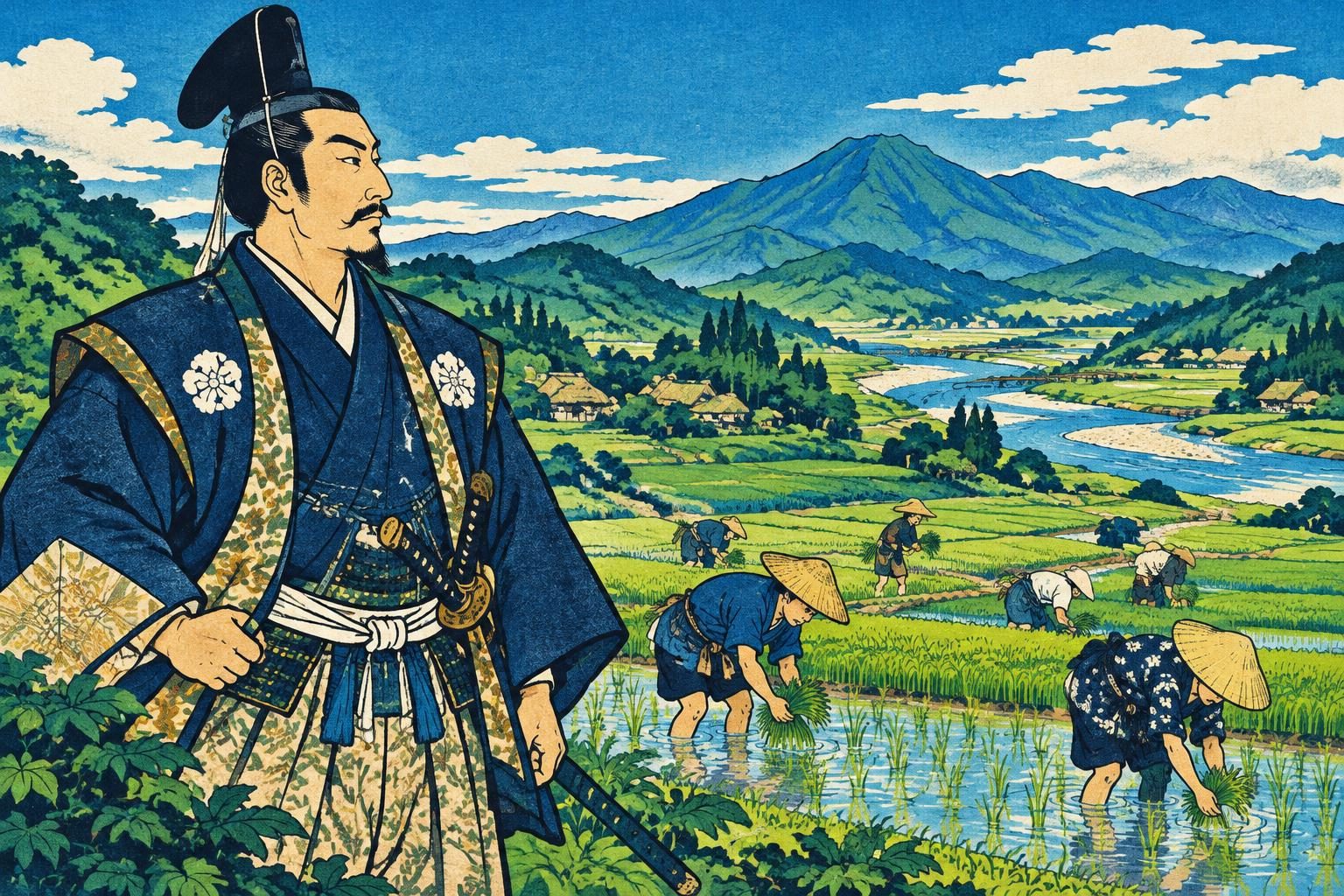
In Kōchi, Kōchi Prefecture, lies the storied Kōchi Castle, a testament to the rich samurai history of the region. This castle, with its deep connections to the Chōsokabe clan and its leader Chōsokabe Motochika, offers a window into the feudal past of Shikoku.


Introduction to Kochi Castle and Tosa Province
FACT: The Historical Significance of Kōchi Castle
Kōchi Castle stands as one of Japan’s few castles that retains an Edo-period keep, a rarity that allows visitors to step back in time and experience the architectural marvels of the Edo period. Built by Yamauchi Kazutoyo starting in 1601, the castle was constructed on the site where Chōsokabe Motochika, a prominent daimyo, attempted to establish his seat in 1588. The strategic location of Kōchi Castle in Tosa Province, now Kōchi Prefecture, made it a significant military and political center during the feudal era. Its construction marked a new chapter in the region’s history, transitioning from the Chōsokabe to the Yamauchi clan’s rule.
The castle’s surviving Edo-period structures include the main keep, which was rebuilt after the fire of 1727 and completed in 1749. This keep, along with its surrounding gates and walls, offers a glimpse into the defensive strategies employed during the Edo period. The castle’s design reflects the architectural styles of the time, characterized by its wooden structures and stone foundations, which have withstood the test of time.

Chosokabe Motochika: From Oko Castle to the Unification of Shikoku
FACT: Chōsokabe Motochika’s Rise to Power
Chōsokabe Motochika was born into the Chōsokabe clan, which held sway over Tosa Province. Under his leadership, the clan expanded its influence across Shikoku, unifying the island by 1585. This expansion was marked by strategic battles and alliances, showcasing Motochika’s prowess as a military leader. His ability to forge alliances and lead his troops to victory in numerous battles demonstrated his strategic acumen and solidified his reputation as a formidable daimyo.
Motochika’s rise was not just a tale of military conquest but also a story of political savvy. By forming alliances with other powerful clans and navigating the complex political landscape of the time, he was able to extend his influence beyond Tosa. His leadership style, which combined diplomacy with military strength, was instrumental in his success.
LEGEND: The Legacy of Chōsokabe Motochika
According to local tradition, Motochika was not only a skilled warrior but also a benevolent ruler who promoted agricultural development and infrastructure improvements. These efforts endeared him to the people of Tosa, and his legacy is still celebrated in the region today. Local stories often highlight his contributions to the prosperity of Tosa, painting him as a leader who cared deeply for his subjects and their welfare.
One popular tale recounts how Motochika encouraged the cultivation of new crops and the construction of irrigation systems, which significantly boosted agricultural productivity. This focus on agriculture not only strengthened the local economy but also ensured the sustenance of his people, reinforcing his image as a compassionate ruler.


The Evolution of Tosa’s Seats: From Otakasaka to Urado
FACT: The Strategic Relocation of Seats
The Chōsokabe clan’s seat moved several times during its rule, reflecting the dynamic political landscape of the time. Initially based at Otakasaka, the clan later relocated to Urado, a move that underscored the need for more defensible positions. These relocations were integral to maintaining the clan’s power and influence in the region, as they allowed the Chōsokabe to adapt to changing circumstances and threats from rival clans.
Each relocation was carefully considered, taking into account the geographical advantages and potential vulnerabilities of the new site. The move to Urado, for example, provided better access to maritime routes, enhancing trade and communication with other regions. This strategic foresight helped the Chōsokabe clan maintain its dominance in a volatile period.
The Ichiryo Gusoku: The Unique Farmer-Samurai of the Chosokabe
FACT: The Role of Ichiryo Gusoku in Chōsokabe’s Rule
The Chōsokabe clan is noted for its use of the Ichiryo Gusoku, a class of farmer-samurai who played a crucial role in the clan’s military campaigns. These farmer-samurai were unique to the Chōsokabe domain, blending agricultural duties with military responsibilities, which helped sustain the clan’s armies during prolonged conflicts. The dual roles of these individuals were pivotal in ensuring the clan’s self-sufficiency and resilience, allowing them to maintain their military strength while also supporting the local economy.
The Ichiryo Gusoku system exemplified the integration of civilian and military life, where farmers were trained to defend their lands while continuing their agricultural work. This approach not only maximized the manpower available for military campaigns but also ensured that the economic backbone of the region remained strong, even during times of war.


Yamauchi Kazutoyo and the Construction of Modern Kochi Castle
FACT: The Transition to Yamauchi Rule
After the fall of the Chōsokabe clan, Yamauchi Kazutoyo was granted control of Tosa Province. He began construction in 1601 and entered the castle in 1603. After his death in 1605, his successor Yamauchi Tadayoshi continued the work, with the Sannomaru completed in 1611. This marked a new era for the region, as the Yamauchi clan established its dominance and continued to shape the political landscape of Shikoku. The castle not only served as a military stronghold but also as a symbol of the Yamauchi clan’s authority and influence.
The construction of Kōchi Castle under Yamauchi Kazutoyo’s rule was a significant undertaking that involved the mobilization of resources and labor from across the province. The castle’s design incorporated the latest defensive features of the time, reflecting the Yamauchi clan’s commitment to securing their rule and protecting their domain from potential threats.
Visiting Kochi Castle Today: What Remains Intact
FACT: Exploring the Castle Grounds
Today, visitors to Kōchi Castle can explore its well-preserved structures, including the main keep, gates, and walls. The castle offers panoramic views of Kōchi City and provides insight into the architectural styles and defensive features of the Edo period. The castle grounds also host various cultural events, celebrating the rich history of the region. Visitors can immerse themselves in the past, walking through the same corridors that once echoed with the footsteps of samurai.
These events often include reenactments of historical battles, traditional music performances, and exhibitions that highlight the cultural heritage of Kōchi. The castle’s museum offers additional context, displaying artifacts and documents related to the Chōsokabe and Yamauchi clans, providing a comprehensive understanding of the region’s history.
Nearby Guide
Access
- Kōchi Station (Kōchi) — From JR Kōchi Station, take the streetcar to Kōchijō-mae Station, then walk approximately 5 minutes to the castle. details
- Kōchijō-mae Station (Kōchi) — The nearest streetcar station to Kōchi Castle. details
Nearby sights
- Kōchi Castle Museum of History (Kōchi) — Located opposite the castle gate, this museum presents materials from the Yamauchi family and the history and culture of Kōchi. official site
- Hirome Market (Kōchi) — A lively market filled with local Kōchi dishes, sake, and a variety of food stalls, located near the castle. details
Where to eat
- Katsuo no Tataki (Kōchi) — A local specialty featuring seared bonito fish, often served with garlic and green onions. details
- Hirome Market (Kōchi) — A covered food hall with dozens of stalls and shared tables, offering a variety of local dishes and snacks. details


Related on JAPAN ESSENCE: Exploring Matsumae: Hokkaido’s Only Samurai Castle and Frontier Domain | Exploring Kiyosu Castle: Oda Nobunaga’s Early Stronghold in Aichi
Sources
- Ryoma Sakamoto: The Kochi-born samurai who fought for modern Japan |Highlights|VISIT KOCHI JAPAN
- Invasion of Shikoku (1585)
- Shikoku Campaign (1585) territory map – Sengoku Shogun Map
- Uwajima Castle – Samurai World
- Castles of Japan, Part 5. Kōchi Castle. Kōchi City, Shikoku. | めぐりジャパン
- The quiet magic of Japan’s fourth island
- details
- official site
To explore further, visit Zenkei (禅景) for Zen-inspired onigawara art and Oni Kobo (鬼工房) for onigawara demon-tile art and charms.
高知県高知市には、地域の豊かな侍の歴史を証明する高知城があります。この城は、長宗我部氏とその指導者である長宗我部元親との深い関係を持ち、四国の封建時代の過去を垣間見ることができます。
高知城と土佐国の紹介
事実: 高知城の歴史的意義
高知城は、江戸時代の天守が現存する数少ない城の一つであり、訪問者が江戸時代の建築の驚異を体験できる希少な場所です。1601年に山内一豊が築城を始めたこの城は、1588年に長宗我部元親という著名な大名がその拠点を確立しようとした場所に建設されました。土佐国、現在の高知県における高知城の戦略的な位置は、封建時代の重要な軍事および政治の中心地となりました。その建設は、長宗我部氏から山内氏への支配の移行を示す地域の歴史の新しい章を開きました。
現存する天守は、1727年の火災で焼失した後、1749年に再建されたものです。この天守とその周囲の門や壁は、江戸時代に採用された防御戦略を垣間見ることができます。城の設計は、木造構造と石の基礎によって特徴付けられる当時の建築様式を反映しており、時の試練に耐えてきました。
長宗我部元親: 岡豊城から四国の統一へ
事実: 長宗我部元親の権力への台頭
長宗我部元親は、土佐国を支配していた長宗我部氏に生まれました。彼の指導の下、氏は四国全体にその影響を拡大し、1585年までに島を統一しました。この拡大は、戦略的な戦闘と同盟によって特徴付けられ、元親の軍事指導者としての力量を示しました。彼の同盟を築く能力と多くの戦闘での勝利への導きは、彼の戦略的な洞察力を示し、強力な大名としての評判を確立しました。
元親の台頭は、単なる軍事征服の物語ではなく、政治的な才覚の物語でもありました。他の強力な氏との同盟を結び、当時の複雑な政治的状況を乗り越えることで、彼は土佐を超えてその影響を拡大することができました。外交と軍事力を組み合わせた彼の指導スタイルは、彼の成功において重要な役割を果たしました。
伝承: 長宗我部元親の遺産
地元の言い伝えによると、元親は優れた武将であるだけでなく、農業の発展やインフラの改善を推進した慈悲深い統治者でもありました。これらの努力は土佐の人々に愛され、彼の遺産は今日でも地域で祝われています。地元の物語はしばしば彼の土佐の繁栄への貢献を強調し、彼をその臣民とその福祉を深く気にかけた指導者として描いています。
人気のある物語の一つは、元親が新しい作物の栽培と灌漑システムの建設を奨励し、農業生産性を大幅に向上させたことを語っています。この農業への焦点は、地域経済を強化しただけでなく、彼の人々の維持を確保し、慈悲深い統治者としての彼のイメージを強化しました。
土佐の拠点の進化: 大高坂から浦戸へ
事実: 拠点の戦略的移転
長宗我部氏の拠点は、その支配の間に何度か移動し、当時の動的な政治情勢を反映していました。最初は大高坂に拠点を置いていましたが、後に浦戸に移転し、より防御的な位置が必要であることを強調しました。これらの移転は、長宗我部氏が地域での権力と影響力を維持するために不可欠であり、変化する状況や敵対する氏からの脅威に適応することを可能にしました。
各移転は慎重に考慮され、新しい場所の地理的利点と潜在的な脆弱性を考慮に入れました。例えば、浦戸への移転は、他の地域との貿易と通信を強化する海上ルートへのより良いアクセスを提供しました。この戦略的な先見性は、長宗我部氏が不安定な時期にその支配を維持するのに役立ちました。
一領具足: 長宗我部の独自の農民侍
事実: 長宗我部の統治における一領具足の役割
長宗我部氏は、その軍事キャンペーンで重要な役割を果たした一領具足という農民侍の使用で知られています。これらの農民侍は、農業の義務と軍事の責任を融合させた長宗我部領独自のものであり、長期にわたる紛争中に氏の軍隊を維持するのに役立ちました。これらの個人の二重の役割は、氏の自給自足と回復力を確保する上で重要であり、軍事力を維持しながら地域経済を支えることを可能にしました。
一領具足制度は、農民が農業を続けながら自分たちの土地を守るために訓練された、民間と軍事生活の統合を例示しています。このアプローチは、軍事キャンペーンに利用可能な人員を最大化するだけでなく、戦争中でも地域の経済的基盤が強く保たれることを保証しました。
山内一豊と現代高知城の建設
事実: 山内氏への移行
長宗我部氏の没落後、山内一豊が土佐国の支配を任されました。一豊は1601年に築城を始め、1603年に入城しました。1605年に一豊が亡くなった後は、後継の山内忠義が工事を引き継ぎ、1611年に三ノ丸が完成しました。これは、山内氏がその支配を確立し、四国の政治的風景を形成し続けた地域の新しい時代を示しました。城は軍事要塞としてだけでなく、山内氏の権威と影響力の象徴としても機能しました。
山内一豊の統治下での高知城の建設は、県全体からの資源と労働力の動員を伴う重要な事業でした。城の設計は、当時の最新の防御機能を取り入れ、山内氏がその支配を確保し、潜在的な脅威からその領域を守ることへのコミットメントを反映していました。
今日の高知城を訪れる: 残っているもの
事実: 城の敷地を探検する
今日、高知城を訪れる人々は、天守、門、壁を含むよく保存された構造を探索することができます。城は高知市のパノラマビューを提供し、江戸時代の建築様式と防御機能についての洞察を提供します。城の敷地では、地域の豊かな歴史を祝うさまざまな文化イベントも開催されています。訪問者は、かつて侍の足音が響いた同じ廊下を歩きながら、過去に浸ることができます。
これらのイベントには、歴史的な戦闘の再現、伝統音楽の演奏、そして高知の文化遺産を強調する展示が含まれることがよくあります。城の博物館は、長宗我部氏と山内氏に関連する遺物や文書を展示し、地域の歴史を包括的に理解するための追加のコンテキストを提供します。
周辺ガイド
アクセス
周辺の見どころ
- 高知城歴史博物館(高知)— 城門の向かいに位置し、山内家の資料や高知の歴史と文化を展示しています。公式サイト
- ひろめ市場(高知)— 地元の高知料理、酒、さまざまな屋台が集まる活気ある市場で、城の近くにあります。詳細
食べる
- かつおのたたき(高知)— ニンニクやネギと一緒に提供されることが多い、炙ったカツオの地元の名物料理です。詳細
- ひろめ市場(高知)— 何十もの屋台と共有テーブルがある屋内フードホールで、さまざまな地元の料理やスナックを提供しています。詳細
Related on JAPAN ESSENCE: Exploring Matsumae: Hokkaido’s Only Samurai Castle and Frontier Domain | Exploring Kiyosu Castle: Oda Nobunaga’s Early Stronghold in Aichi
Sources
- Ryoma Sakamoto: The Kochi-born samurai who fought for modern Japan |Highlights|VISIT KOCHI JAPAN
- Invasion of Shikoku (1585)
- Shikoku Campaign (1585) territory map – Sengoku Shogun Map
- Uwajima Castle – Samurai World
- Castles of Japan, Part 5. Kōchi Castle. Kōchi City, Shikoku. | めぐりジャパン
- The quiet magic of Japan’s fourth island
- details
- official site
Leave a Reply