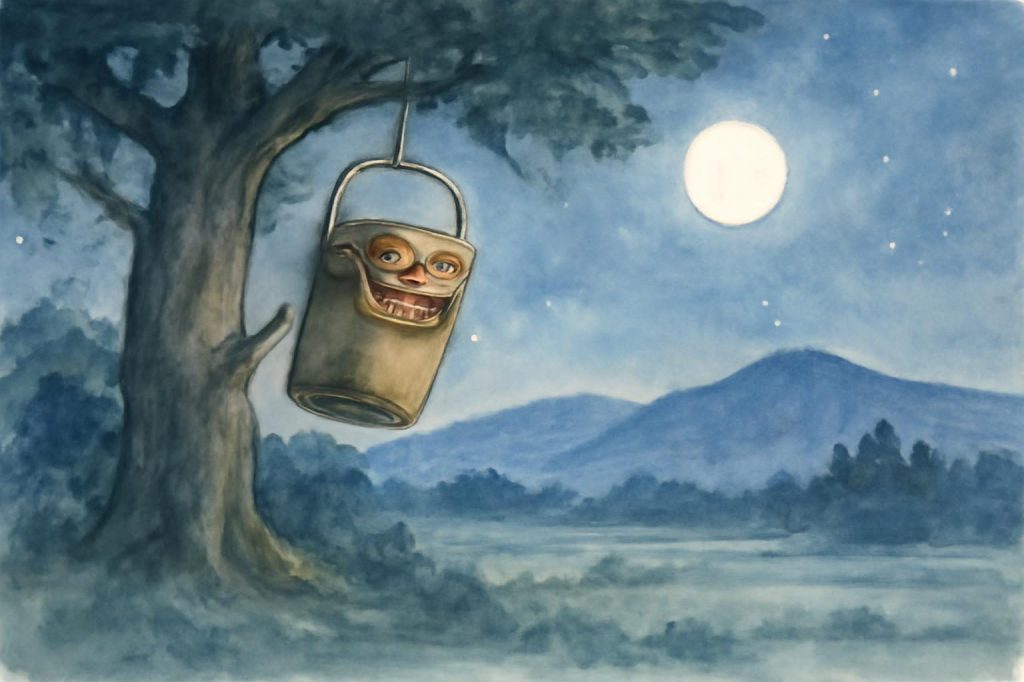
In Kameoka, Kyoto Prefecture, the Tsurube-otoshi (also called Tsurube-oroshi) is the yokai that local folklore says appears in the area. Its stories were recorded in the Tanba region and are still introduced by local history enthusiasts today.
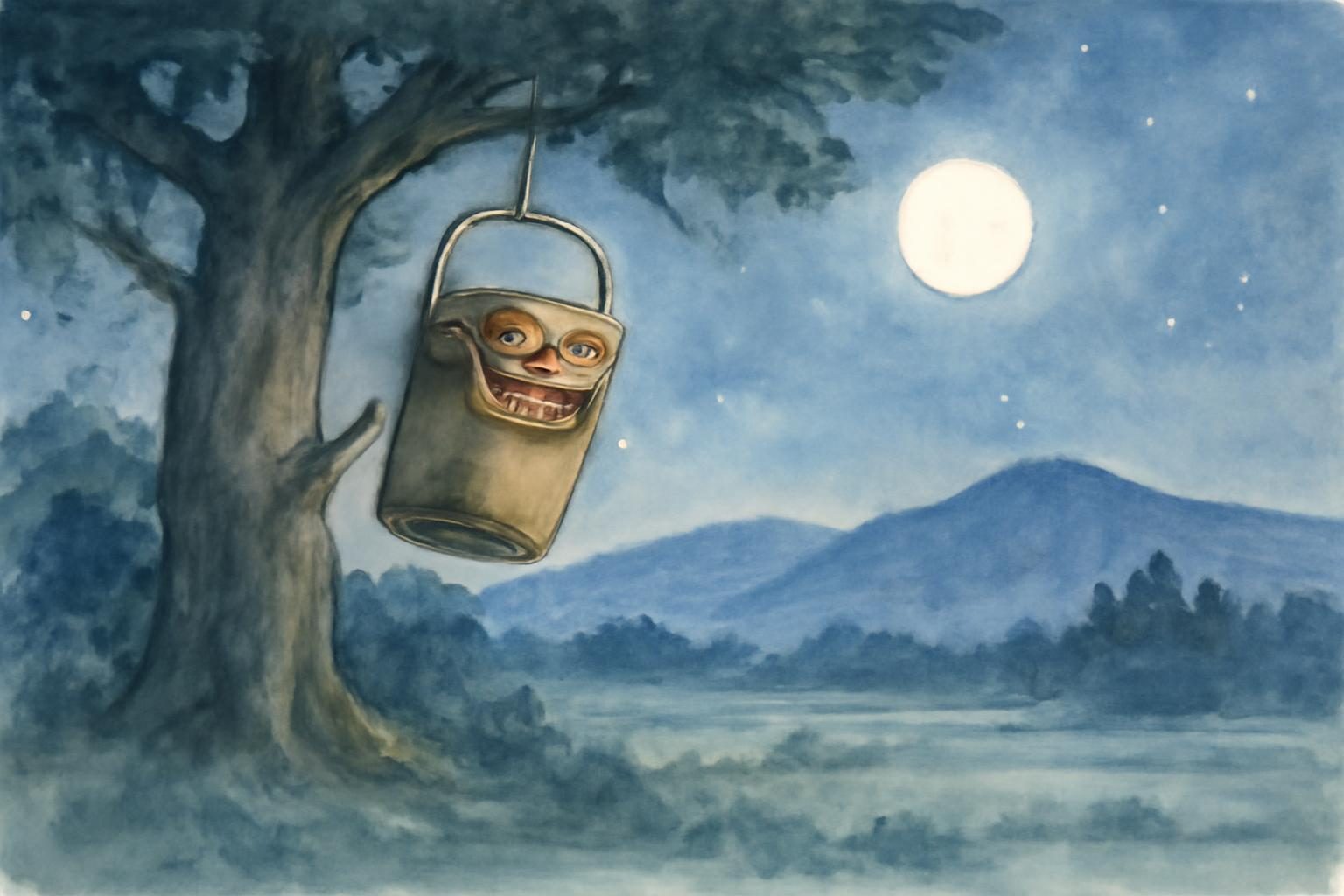
Introduction to the Tsurube-otoshi Legend
FACT: What the records say
The Tsurube-otoshi is a yokai from Japanese folklore whose name refers to a tsurube, the bucket lowered into a well on a rope. It is said to drop suddenly from a tree onto the road at night. The Kameoka and Nantan stories introduced below are cited from the folklore collection Kuchitanba Kōhi Shū (口丹波口碑集, Kakita Iyoji and Tsuboi Tadahiko, 1925) and Tanba no Denshō (丹波の伝承, Tanaka Katsuo, 1941), as summarised by the Kameoka history and culture note linked in the Sources.
LEGEND (言い伝え): The Kaya Tree of Hōki, Sogabe-chō
According to legend, a Tsurube-otoshi would suddenly drop down from a kaya (Japanese nutmeg-yew) tree in Hōki, Sogabe-chō, Kameoka. It would burst into loud laughter and say, “Yonabe sunda ka, tsurube orosō ka, gii gii” (“Is your night work done? Shall I lower the bucket? Creak, creak”), and then climb back up into the tree.
LEGEND (言い伝え): The Old Pine of Tera and Tsuchida
Another legend from Tera, Sogabe-chō, tells of a severed head that fell from an old pine tree, pulled passers-by up and ate them. It is said that after eating someone it would not appear for a while, then show up again two or three days later. In Tsuchida, Ōi-chō, a Tsurube-otoshi was also said to appear in a large tree and eat people.
LEGEND (言い伝え): Aoto, Yagi-chō, Nantan
In neighbouring Nantan City, a Tsurube-otoshi is recorded in Aoto, Yagi-chō. People there feared an eerie, ivy-wrapped pine tree from which the Tsurube-otoshi was said to come out.
Note
These are legends (言い伝え). We could not find current evidence that the trees in these stories still stand, so this article gives no directions to them.
Nearby Guide
Nearby sights
- Yono Shrine (Kameoka) — A historic shrine in Terajidani, Sogabe-cho, Kameoka, at the western foot of Mt. Ryugao, surrounded by a shrine forest listed among Kyoto Prefecture’s natural sites. details
- Hozukyo Gorge (Kameoka) — The gorge runs from the Hozu Bridge area in Kameoka to Togetsukyo Bridge in Arashiyama, and the Hozugawa river boat ride is one of its main attractions. official site
Where to stay
- Yunohana Onsen (Kameoka) — A hot spring area in Kameoka City. details


Related on JAPAN ESSENCE: Unraveling the Nyudo-Bozu: The Shifting Monk Yokai of Shinshiro | Exploring Oboke’s Yokai Village: Shikoku’s Hidden Valley of Japanese Folklore
Sources
- Tsurube-otoshi – Wikipedia
- 京都亀岡の妖怪②釣瓶下ろし(つるべおろし)|京都亀岡の歴史と文化のミュージアム
- Yono Shrine
- Hozukyo Gorge
- Yunohana Onsen
To explore further, visit Oni Kobo (鬼工房) for onigawara demon-tile art and charms and Kawara Kobo (瓦工房) for a hands-on kawara experience.


Leave a Reply