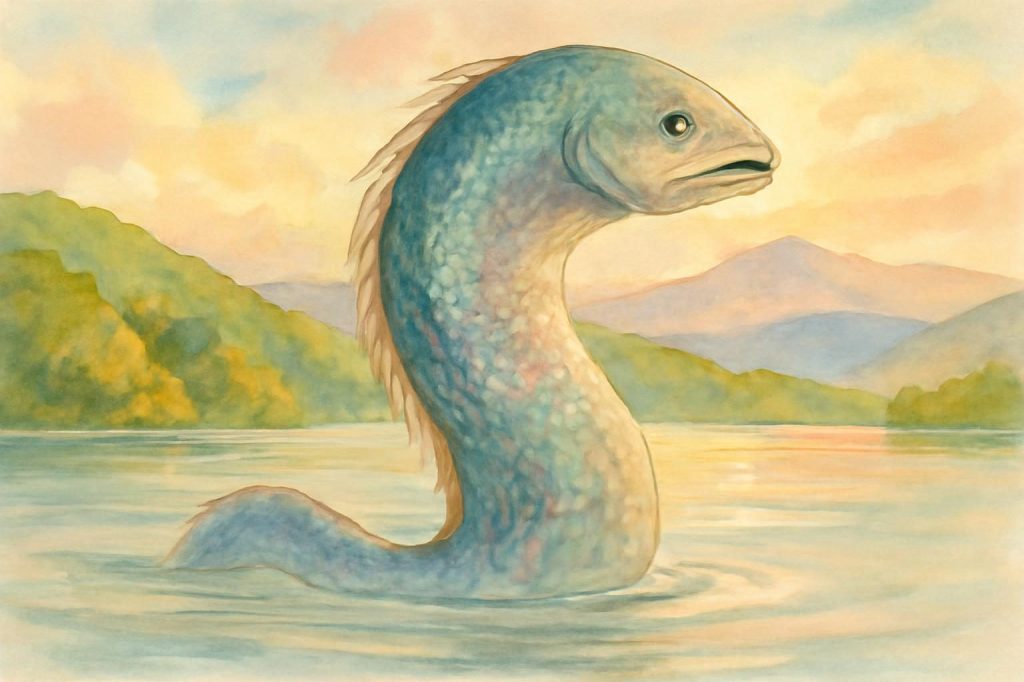
In the serene landscapes of Hokkaido, Lake Kussharo in Teshikaga is not only Japan’s largest caldera lake but also a place rich in Ainu heritage and local lore. Visitors are drawn to its tranquil waters and to the modern tale of Kussie, the lake’s famous unconfirmed “monster.” In this article we label verified facts, recorded legends, and modern tales separately, with sources.
Introduction to Lake Kussharo: Japan’s Largest Caldera Lake
FACT: Geographic and Natural Features
Lake Kussharo lies in Teshikaga, eastern Hokkaido, within Akan-Mashu National Park (designated in 1934 as part of Akan National Park and renamed in 2017). It is Japan’s largest caldera lake by surface area (about 79 km², shoreline about 57 km) and the largest lake in Japan that freezes over completely in winter. The lake sits inside the Kussharo caldera, about 26 km east–west, and the lake itself took shape roughly 30,000 years ago. Its name comes from the Ainu word kutchar, “throat,” meaning the outlet where the lake drains into a river; the lake’s outflow is the Kushiro River (Wikipedia (JA): 屈斜路湖; Wikipedia: Lake Kussharo).
Because the area is volcanic, hot springs rise along the shore and even from the lake bed. In winter, whooper swans from Siberia gather where warm water keeps the shore free of ice. Nakajima, the island in the middle of the lake, is Japan’s largest island in a lake (about 5.7 km², highest point 355 m) (Wikipedia (JA)).
Important: Nakajima can be viewed from the shore or from the water, but landing on the island is prohibited (上陸禁止). Under the Lake Kussharo usage rules published by Teshikaga Town, landing on Nakajima is restricted to protect its primeval forest ecosystem and other valuable natural environment. The same manual also describes past boating accidents caused by strong winds, so check the weather and wear a life jacket on the water (Teshikaga Town, Lake Kussharo Rules & Safety Manual (PDF)).
Lake Spirits in Ainu Tradition: The Giant Amemasu and Other Tales
LEGEND: Recorded Ainu Tales of the Lake
Accounts drawn from the published literature record Ainu legends of a giant snake living in Lake Kussharo (one tale says it swallowed a deer whole), as well as legends of a giant amemasu (white-spotted char) or itō (Sakhalin taimen) living in the lake. One story also tells how settlers from Honshu who arrived in the Meiji era were warned by local Ainu about the lake’s nushi (guardian spirit): if they saw it, they should tell no one, or misfortune would follow. Settlers are said to have feared earthquakes as the nushi‘s curse (Wikipedia (JA): クッシー, “言い伝え” section, citing 宇留島進 1993).
These are told as legends, not as historical events, and published versions differ in their details. Elaborate interpretations you may see online, such as fixed rules about what angers the creature, are not confirmed by the sources we checked, so we do not repeat them here. To learn about Ainu oral literature (yukar) firsthand, visit the Kussharo Kotan Ainu Museum described below.

Kussie: Hokkaido’s Famous Lake Kussharo Monster
MODERN TALE: Kussie Sightings (UMA)
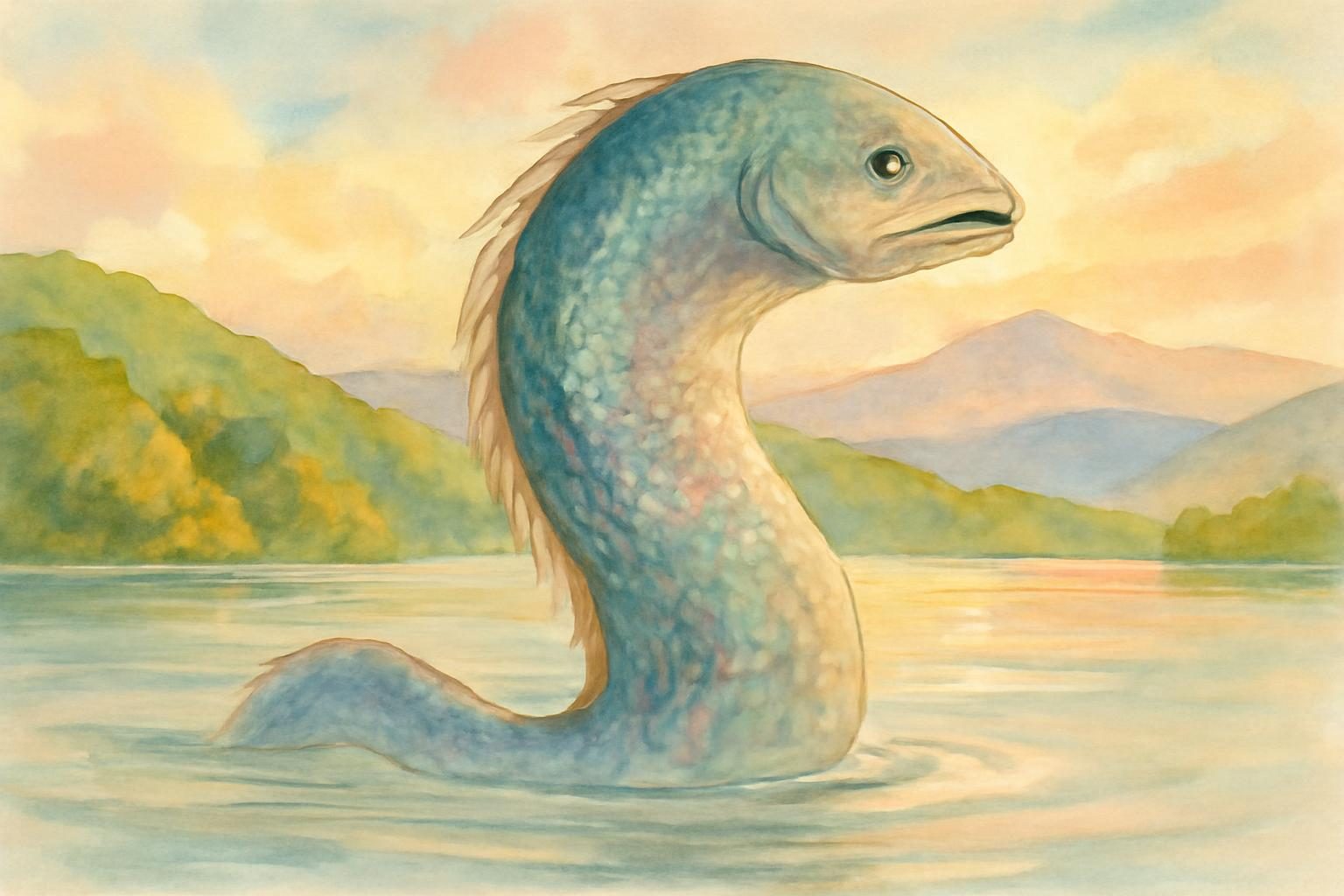
Kussie (クッシー) is a modern cryptid, or UMA, named after Scotland’s “Nessie.” It is not an Ainu tradition. A driver reported an unusual object in November 1972, and the story became famous after a group of about 40 junior high school students said they saw a creature in August 1973 while on a school trip to Mt. Mokoto. Photos of ripples and objects followed in the 1970s, but none has been verified, and reports have almost stopped since the 2000s (Wikipedia (JA): クッシー; Wikipedia (JA): 屈斜路湖).
FACT / SPECULATION: What Science Says
Skeptics point out that the 1938 Kussharo earthquake released sulfur from the lake bed and turned the water strongly acidic (around pH 4), wiping out most fish. That leaves little food for a large animal, so its existence is considered very unlikely. Suggested explanations include large fish (amemasu or itō) or misidentified boats. Locals also say that omiwatari ice ridges, which form when lake ice cracks and pushes up into snake-like lines, are “Kussie’s doing.” Some writers suggest the Ainu snake legend may have been inspired by the same phenomenon (Wikipedia (JA): クッシー). Today a Kussie statue stands on the lakeshore, and the creature has become a lighthearted local mascot and a draw for tourists.
Preserving Heritage at the Kussharo Kotan Ainu Museum
FACT: Ainu Culture and History
The Teshikaga Town Kussharo Kotan Ainu Museum opened on June 6, 1982, on the southern shore of Lake Kussharo to pass on the history and culture of the Ainu. Its exhibits are organized around five themes: the forest of yukar (Ainu oral epics), the land of the kotan (village), how the kotan has changed, life in the hills and fields, and the people who support the kotan. In 2020 its name was changed from “Ainu Folklore Museum” to “Ainu Museum” (Teshikaga Town official site; Hokkaido Digital Museum).
Hands-on programs listed by the town include Ainu-pattern embroidery (a coaster, ¥1,000, about 120 minutes), magatama bead making (¥700), and free try-ons of traditional Ainu clothing. The embroidery and magatama programs need a phone reservation at least 3 days ahead (tel. 015-484-2128). The museum also screens a shortened version of a film recording a 1986 Chironnupu Kamui Iomante (fox spirit-sending) ceremony (Teshikaga Town official site).

Experiencing Sunayu: Natural Hot Sand Baths on the Shore
FACT: Unique Onsen Experience
At Sunayu (砂湯), on the eastern shore, hot spring water wells up when you dig into the beach sand, so visitors can make their own small open-air foot bath (Wikipedia (JA)). According to the Lake Mashu Tourism Association, the spring water is a sodium-bicarbonate type. Geothermal heat keeps this part of the shore from freezing even in deep winter, which is why whooper swans rest here. The site is open 24 hours with no admission fee, and there is a campground and a rest house nearby (摩周湖観光協会 (Lake Mashu Tourism Association): 砂湯).
Safety notes: the water can be very hot in places, so test it with your hand first and watch children closely. Sunayu is a natural shoreline, not a staffed bathhouse, so bring a towel and follow posted signs.
Planning Your Visit to Lake Kussharo in Eastern Hokkaido
FACT: Travel Tips and Access (checked October 2026)
A car is the most practical way to tour the lake. Public transport in the area is limited, so check current routes and timetables before you go. Kussharo Kotan Ainu Museum: In fiscal 2026 the museum is open daily from April 10 to November 30, 9:00–17:00 (last entry 16:30), and closed in winter. Admission is ¥420 for adults and ¥280 for elementary and junior high school students (Teshikaga Town; Hokkaido Digital Museum). Hours and fees can change, so confirm them before your visit.
Safety and rules: Landing on Nakajima is prohibited. Weather on the lake changes quickly, and strong winds have caused boating accidents in the past, so check the forecast and wear a life jacket for canoeing or boating (Teshikaga Town rules & safety manual). Winters are severe, and the lake usually freezes from around December to March. Brown bears live in eastern Hokkaido, so follow local guidance when walking in forests.

Related on JAPAN ESSENCE: Exploring Lake Kussharo: Hokkaido’s Caldera, Monsters, and Ainu Legends | Exploring Kamui Kotan: Geology and Ainu Legend in Asahikawa
Regional guide
Location: Teshikaga, Hokkaido Prefecture
- Kussharo Kotan Ainu Museum (Teshikaga) — source
Sources
- 屈斜路湖適正利用のルール&安全マニュアル (Teshikaga Town / 弟子屈町)
- 弟子屈町屈斜路コタンアイヌ民族資料館 (Teshikaga Town official site)
- 砂湯 – 摩周湖観光協会 (Lake Mashu Tourism Association)
- Kussharo Kotan Ainu Museum – Hokkaido Digital Museum
- 屈斜路湖 – Wikipedia (JA)
- クッシー – Wikipedia (JA)
- Lake Kussharo – Wikipedia
To explore further, visit Onigawara Experience for hands-on onigawara experiences in Japan and Zenkei (禅景) for Zen-inspired onigawara art.


Leave a Reply