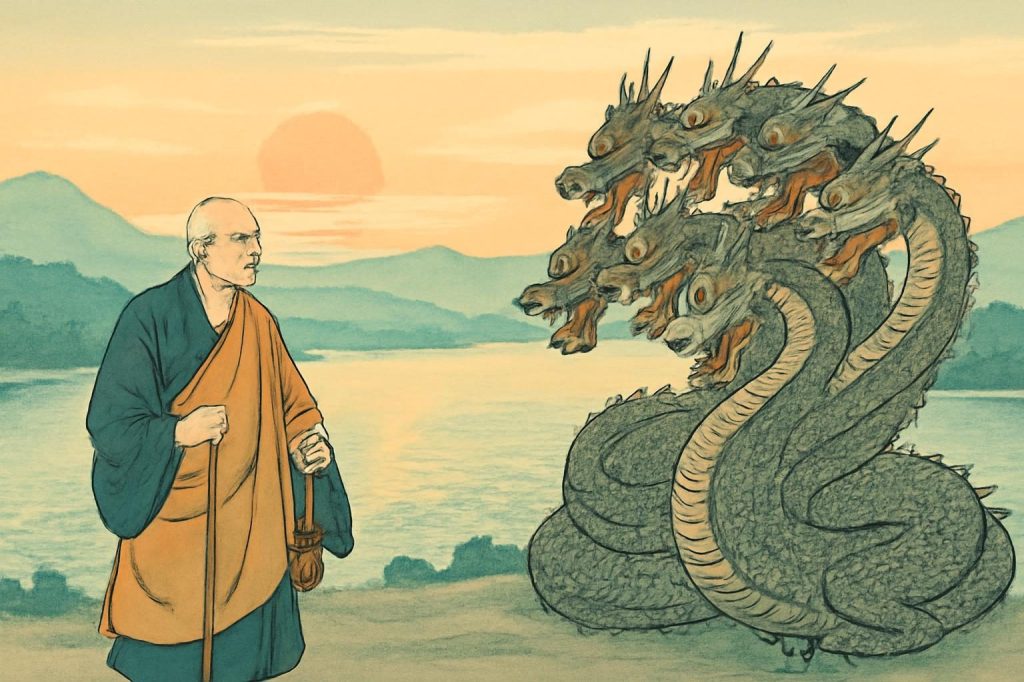
In the serene surroundings of Towada, Aomori Prefecture, lies a mystical tale woven into the fabric of the region’s cultural heritage. The legend of Nansonobo and the eight-headed dragon at Lake Towada is a captivating story that continues to enchant visitors to Towada Shrine.

Introduction to Lake Towada’s Mystical Heritage
FACT: The Natural Beauty of Lake Towada
Lake Towada, nestled in the northern part of Japan’s Honshu Island, is a caldera lake renowned for its stunning natural beauty. It straddles the border between Aomori and Akita Prefectures, offering picturesque views and a tranquil atmosphere that draws tourists year-round. The lake is part of Towada-Hachimantai National Park, a protected area that showcases the diverse flora and fauna of the region. Visitors can enjoy activities such as hiking, boating, and simply relaxing by the water’s edge, surrounded by lush forests and mountainous landscapes. The lake’s clear waters and the vibrant colors of the changing seasons make it a photographer’s paradise.
Beyond its visual appeal, Lake Towada holds a significant place in the cultural and spiritual life of the region. The lake’s serene environment provides a setting that inspires reflection and a deeper connection with nature. As visitors explore the area, they are often struck by the sense of peace that permeates the surroundings, a feeling that is deeply intertwined with the local legends and spiritual practices centered around the lake.
Towada Shrine: Center of Regional Dragon Worship
FACT: Historical Significance of Towada Shrine
Towada Shrine, located on the shores of Lake Towada, is a spiritual center with deep historical roots. The shrine is dedicated to Seiryu Daigongen, a deity associated with dragons and water. This connection to dragons is a recurring theme in the local folklore and spiritual practices. The shrine serves as a place of worship and a site for various traditional rituals, reflecting the spiritual connection the local people have with the natural world. It is a place where visitors can feel the serene energy and perhaps catch a glimpse of the spiritual essence that has been revered here for centuries.
The architectural design of Towada Shrine, with its traditional wooden structures and intricate carvings, offers a glimpse into the craftsmanship and artistic expression of the region. Visitors to the shrine can explore its various halls and altars, each dedicated to different aspects of the spiritual world. The presence of dragon motifs throughout the shrine underscores the importance of these mythical creatures in local beliefs, inviting visitors to ponder the mysteries and legends that have shaped the cultural identity of Towada.

The Epic Legend of Monk Nansonobo and the Eight-Headed Serpent
LEGEND: The Tale of Nansonobo
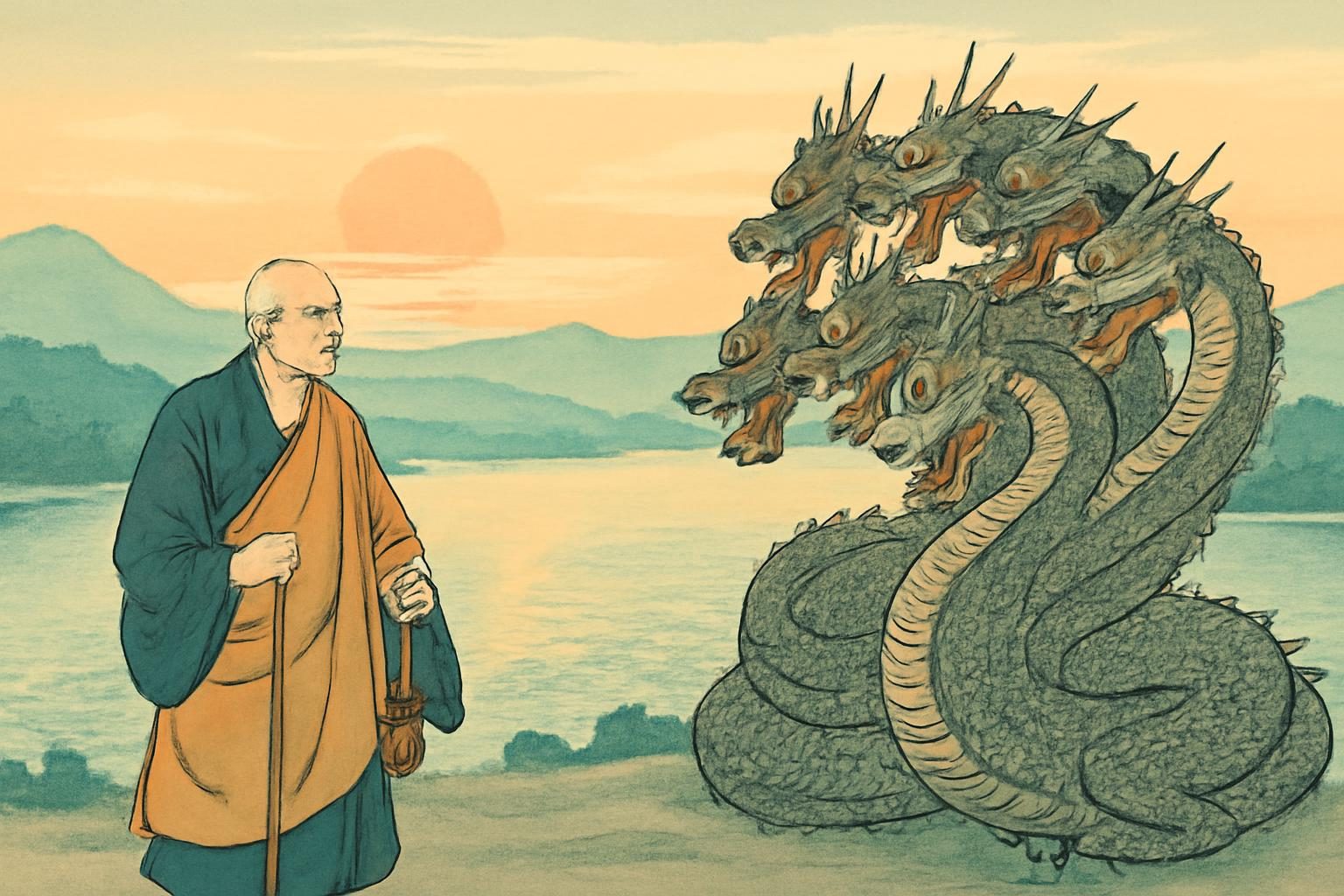
According to local tradition, a monk named Nansonobo once resided in the area surrounding Lake Towada. The legend tells of an eight-headed dragon that terrorized the region, causing fear and destruction. Nansonobo, known for his spiritual prowess, confronted the dragon in a battle of wits and strength. The monk’s bravery and wisdom ultimately subdued the dragon, bringing peace to the region. This story is a testament to the enduring power of courage and faith, themes that resonate deeply with those who visit the shrine today.
The legend of Nansonobo is not just a tale of heroism but also a reflection of the values and beliefs held by the local community. The story emphasizes the importance of harmony between humans and nature, a theme that is echoed in many aspects of Japanese culture. Visitors to Towada Shrine can sense this harmony in the peaceful coexistence of the shrine’s sacred spaces with the surrounding natural beauty, a reminder of the balance that Nansonobo sought to restore.
LEGEND: Variants of the Dragon’s Defeat
Different versions of the legend describe the dragon’s defeat in various ways. Some accounts suggest that Nansonobo used a pair of iron sandals to walk across the lake’s surface, a symbol of his supernatural abilities. This imagery of the monk walking on water evokes a sense of awe and wonder, highlighting the mystical aspects of the tale. Other stories emphasize the monk’s use of chants and prayers to pacify the beast, showcasing the power of spiritual practices in overcoming adversity. Despite these variations, the core theme of the monk’s triumph over the dragon remains consistent in local folklore, illustrating the rich tapestry of storytelling that surrounds Lake Towada.
These variations in the legend reflect the oral tradition of storytelling that has preserved the tale over generations. Each retelling adds a new layer of interpretation, allowing the story to evolve while maintaining its essential message. For visitors, these diverse accounts provide a fascinating glimpse into the cultural imagination of the region, inviting them to explore the many ways in which the legend has been woven into the fabric of local life.
The Iron Sandals and the Three Lakes Legend
LEGEND: The Creation of the Three Lakes
Another fascinating aspect of the legend involves the creation of three lakes, including Lake Towada. It is said that the dragon’s thrashing during the battle with Nansonobo led to the formation of these lakes. This tale highlights the mythical origins of the region’s geography, adding a layer of enchantment to the natural landscape. The idea that a dragon’s movements could shape the land itself speaks to the deep connection between the natural and the supernatural in local beliefs. This legend not only enriches the cultural narrative of the region but also enhances the allure of the lakes as destinations imbued with mystery and wonder.
Visitors to the area can explore the natural beauty of these lakes, each offering its own unique charm and character. The story of their creation serves as a reminder of the powerful forces of nature and the mythical creatures that are believed to inhabit the landscape. As travelers wander along the shores of Lake Towada, they are invited to imagine the ancient battles that once took place, adding a sense of adventure and intrigue to their journey.

Uranai-ba: The Historic Divination Spot
Current access notice (checked October 15, 2026): The historic Uranai-ba (Osago-ba) is currently closed to entry because of the dangerous cliff approach and falling rocks. Do not descend the iron ladder. Towada Shrine currently directs visitors wishing to perform sangu-uchi (divination and prayer) to Gozen-ga-hama, the beach in front of the Statue of Maidens. Follow the latest on-site guidance. Towada Shrine official grounds guide
FACT: Significance of Uranai-ba
Uranai-ba, located near Towada Shrine, is a historic divination spot where pilgrims historically practiced oyorigami. This ritual involves using paper divination to seek guidance and insights. The practice is deeply rooted in the spiritual traditions of the area, offering a unique cultural experience for those who visit. Participants in the oyorigami ritual can feel a connection to the past, as they partake in a tradition that has been passed down through generations. The site itself is imbued with a sense of history and spirituality, making its history significant for those interested in the cultural heritage of Aomori.
The experience at Uranai-ba is not only about divination but also about connecting with the spiritual landscape of Towada. As visitors perform the ritual, they are encouraged to reflect on their own lives and the guidance they seek. This introspective process is enhanced by the tranquil setting of the divination spot, where the whispers of the past seem to linger in the air, offering wisdom and insight to those who listen closely.
Practicing the Oyorigami Ritual Today
FACT: Experiencing Oyorigami
Today, visitors to Towada Shrine can participate in the oyorigami ritual, connecting with the spiritual heritage of the region. The ritual involves folding paper into specific shapes and interpreting the results to gain insights into one’s future. This practice provides a tangible link to the past, allowing participants to engage with the cultural traditions of Aomori. The experience of performing oyorigami is not only a personal journey but also a communal one, as visitors share in the collective history and spirituality of the area. It is an opportunity to reflect on one’s life and seek guidance from the spiritual realm.
Engaging in oyorigami at Towada Shrine is a unique way to experience the living culture of the region. Participants often find that the ritual offers a moment of peace and contemplation, set against the backdrop of the serene natural environment. This connection to the spiritual world is a key aspect of the shrine’s appeal, drawing visitors who seek to understand and participate in the traditions that have shaped the identity of Towada.
Planning Your Visit to Towada Shrine
FACT: Visiting Towada Shrine
Towada Shrine is accessible to visitors throughout the year, offering a serene setting for reflection and exploration. While the shrine itself is a focal point, the surrounding natural beauty of Lake Towada enhances the experience. The tranquil environment provides a perfect backdrop for meditation and spiritual contemplation. Visitors are encouraged to check the official website for current hours, fees, and access information to ensure a smooth visit. Whether you are drawn by the legends, the natural beauty, or the spiritual practices, Towada Shrine offers a unique and enriching experience for all who come.
The journey to Towada Shrine is as much about the experience of travel as it is about the destination. As visitors make their way to the shrine, they are invited to immerse themselves in the landscapes and stories that define the region. This pilgrimage is a chance to step away from the everyday and enter a world where the past and present coexist, offering insights and inspiration to those who seek them.

Related on JAPAN ESSENCE: Exploring Lake Kussharo: Hokkaido’s Caldera, Monsters, and Ainu Legends | Tracing the Momotaro Legend at Kibitsu Shrine in Okayama
Sources
To explore further, visit Kawara Kobo (瓦工房) for a hands-on kawara experience and Oni Kobo (鬼工房) for onigawara demon-tile art and charms.


.jpg)

Leave a Reply