Category: Travel

観光

  • Exploring Sefa-utaki: Okinawa’s Most Sacred Grove and UNESCO Site

    Exploring Sefa-utaki: Okinawa’s Most Sacred Grove and UNESCO Site

    In the serene landscape of Nanjo, Okinawa Prefecture, lies Sefa-utaki, a site steeped in legend and history. This sacred grove, part of the UNESCO World Heritage ‘Gusuku Sites and Related Properties of the Kingdom of Ryukyu,’ offers a glimpse into the spiritual heart of the Ryukyu Kingdom.

    Yuinchi (Sefautaki)
    “Okinawa Nanjo Sefa-utaki Gusuku site Yuinchi 07” by Hyppolyte de Saint-Rambert, CC BY 4.0, via Wikimedia Commons

    Introduction to Sefa-utaki: Okinawa’s Sacred World Heritage Site

    FACT: A UNESCO World Heritage Site

    Sefa-utaki, located in Nanjo, Okinawa, is recognized as a UNESCO World Heritage Site, celebrated for its cultural and historical significance. It was designated a National Historic Site in 2018, underscoring its importance in the Ryukyuan cultural landscape. The site is renowned for its natural rock formations and dense forest, which contribute to its sacred atmosphere. These natural features create a serene and mystical environment that has been revered for centuries.

    FACT: The Sacred Prayer Points

    Sefa-utaki is home to several revered prayer points, including Ufugūi, Yuinchi, Sangūi, and Chōnohana. These areas are deeply tied to the religious practices of the Ryukyu Kingdom and are named after facilities in Shuri Castle, reflecting their historical and spiritual connections. Each prayer point serves a unique purpose in the rituals conducted here, and their names evoke the sacred traditions of the past. However, to protect the sanctity of the site, entry into the Sangūi area is now prohibited, ensuring that the spiritual integrity of Sefa-utaki is preserved for future generations.

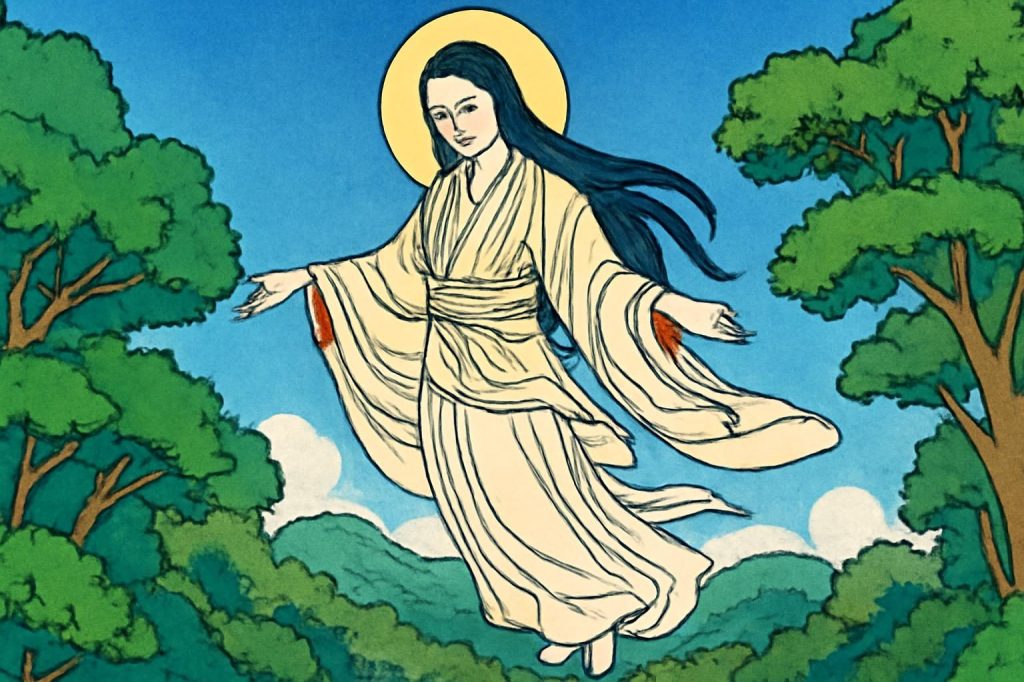
    Illustration of goddess Amamikiyo descending to a lush grove, vivid colors, ukiyo-e style.
    AI生成イメージ / AI-generated illustration (not a photograph of the actual place)

    The Legend of Amamikiyo and the Creation of the Ryukyu Islands

    LEGEND: The Descent of Amamikiyo

    According to legend, the creator goddess Amamikiyo descended to Earth at Sefa-utaki after first arriving on Kudaka Island. The story of her descent is a cornerstone of Ryukyuan mythology, symbolizing the divine origins of the islands. She is said to have established the sacred grove at Sefa-utaki, which became a focal point for spiritual activities. Following this, she is believed to have built Tamagusuku Castle and Chinen Castle, laying the foundations for the Ryukyu Kingdom and its cultural heritage.

    FACT: Amamikiyo’s Role in Ryukyuan Mythology

    Amamikiyo is revered as the Ryukyuan creator goddess who, along with Shinerikyu, created the land, people, and several utaki (sacred sites). Her mythological journey from Kudaka Island to Sefa-utaki is a cornerstone of Ryukyuan spiritual beliefs. The goddess’s actions are seen as the genesis of the Ryukyu Islands, and her influence is evident in the numerous sacred sites attributed to her creation. This mythology underscores the deep connection between the people of Okinawa and their spiritual landscape.

    Okinawa Nanjo Sefa-utaki Gusuku site Yuinchi 02 - Yuinchi (Sefautaki)
    “Okinawa Nanjo Sefa-utaki Gusuku site Yuinchi 02” (Yuinchi (Sefautaki)) by Hyppolyte de Saint-Rambert, CC BY 4.0, source, via Wikimedia Commons

    Royal Rituals and the History of the Ryukyu Kingdom

    FACT: Rituals at Sefa-utaki

    Sefa-utaki served as a focal point for royal and priestess rituals in the Ryukyu Kingdom. It was the site for the inauguration of the Kikoe-ōgimi, the supreme priestess, and the Oaraori, a royal pilgrimage. These rituals highlight the site’s central role in the spiritual and political life of the kingdom, where the divine and royal spheres intersected. The Kikoe-ōgimi played a crucial role in maintaining the spiritual well-being of the kingdom, and her inauguration at Sefa-utaki signified the divine approval of her role.

    Visiting Nanjo: Tamagusuku Castle and Surrounding Landmarks

    FACT: Tamagusuku Castle Ruins

    Located in Nanjo, the Tamagusuku Castle Ruins are tied to the legend of Amamikiyo, who is said to have built the castle after descending to Earth. While archaeological evidence of deity involvement is mythical, the ruins remain a significant historical site reflecting the architectural style of the Ryukyu Kingdom. Visitors to the ruins can explore the remnants of this once-majestic castle, gaining insight into the region’s rich history and the enduring legacy of its legends.

    FACT: The Cultural and Spiritual Significance of Sefa-utaki

    Sefa-utaki is considered one of the most sacred sites in Okinawa. Traditionally, it was off-limits to men, emphasizing its spiritual purity and the reverence in which it was held. The site’s cultural and spiritual significance is deeply embedded in the identity of the Okinawan people, serving as a reminder of their ancestral roots and the divine origins of their land. As visitors walk through the sacred grove, they are enveloped in the tranquility and mysticism that have characterized Sefa-utaki for centuries.

    Okinawa Nanjo Sefa-utaki Gusuku site Yuinchi 05 - Yuinchi (Sefautaki)
    “Okinawa Nanjo Sefa-utaki Gusuku site Yuinchi 05” (Yuinchi (Sefautaki)) by Hyppolyte de Saint-Rambert, CC BY 4.0, source, via Wikimedia Commons
    Locator map of Japan: Nanjo, Okinawa
    Legend site: Nanjo, Okinawa — Source: Map of Japan with highlight on 47 Okinawa prefecture.svg; Map: Lincun, CC BY-SA 3.0, via Wikimedia Commons

    Regional guide

    Location: Nanjo, Okinawa Prefecture

    • Tamagusuku Castle Ruins (Nanjo) — source

    Sources

    About the author — JAPAN ESSENCE Editorial Team. Our mission is to bring you Japan’s legends, myths, festivals and living traditions, through both historical fact and the stories passed down over generations.

  • 斎場御嶽を探る: 沖縄で最も神聖な森とユネスコ遺産

    斎場御嶽を探る: 沖縄で最も神聖な森とユネスコ遺産

    沖縄県南城市の静かな風景の中に、伝説と歴史に彩られた斎場御嶽があります。この神聖な森は、ユネスコ世界遺産「琉球王国のグスク及び関連遺産群」の一部であり、琉球王国の精神的な中心を垣間見ることができます。

    Yuinchi (Sefautaki)
    “Okinawa Nanjo Sefa-utaki Gusuku site Yuinchi 07” by Hyppolyte de Saint-Rambert, CC BY 4.0, via Wikimedia Commons

    斎場御嶽の紹介: 沖縄の神聖な世界遺産

    事実: ユネスコ世界遺産

    南城市に位置する斎場御嶽は、その文化的および歴史的な重要性からユネスコ世界遺産として認められています。2018年には国の史跡に指定され、琉球文化の風景におけるその重要性が強調されています。この場所は自然の岩の形成と密集した森で有名であり、それが神聖な雰囲気を醸し出しています。これらの自然の特徴は、何世紀にもわたって崇拝されてきた静かで神秘的な環境を作り出しています。

    事実: 神聖な祈りの場所

    斎場御嶽には、ウフグーイ、ユインチ、サングーイ、チョーノハナなど、いくつかの崇拝される祈りの場所があります。これらの場所は琉球王国の宗教的慣習と深く結びついており、首里城の施設にちなんで名付けられ、その歴史的および精神的なつながりを反映しています。各祈りの場所は、ここで行われる儀式において独自の役割を果たしており、その名前は過去の神聖な伝統を呼び起こします。しかし、斎場御嶽の神聖さを保護するために、現在サングーイエリアへの立ち入りは禁止されており、未来の世代のためにその精神的な完全性が保たれています。

    Illustration of goddess Amamikiyo descending to a lush grove, vivid colors, ukiyo-e style.
    AI生成イメージ / AI-generated illustration (not a photograph of the actual place)

    アマミキヨの伝説と琉球諸島の創造

    伝承: アマミキヨの降臨

    伝説によれば、創造の女神アマミキヨは、まず久高島に降り立った後、斎場御嶽に降臨しました。彼女の降臨の物語は琉球神話の礎であり、島々の神聖な起源を象徴しています。彼女は斎場御嶽に神聖な森を設立したとされ、これは精神的な活動の中心となりました。その後、彼女は玉城城と知念城を築いたとされ、琉球王国とその文化遺産の基盤を築きました。

    事実: 琉球神話におけるアマミキヨの役割

    アマミキヨは、シネリキヨと共に土地、人々、そしていくつかの御嶽(神聖な場所)を創造した琉球の創造の女神として崇拝されています。久高島から斎場御嶽への彼女の神話的な旅は、琉球の精神的信念の礎です。女神の行動は琉球諸島の起源と見なされ、彼女の影響は彼女の創造に帰される多くの神聖な場所に明らかです。この神話は、沖縄の人々と彼らの精神的な風景との深い結びつきを強調しています。

    Okinawa Nanjo Sefa-utaki Gusuku site Yuinchi 02 - Yuinchi (Sefautaki)
    “Okinawa Nanjo Sefa-utaki Gusuku site Yuinchi 02” (Yuinchi (Sefautaki)) by Hyppolyte de Saint-Rambert, CC BY 4.0, source, via Wikimedia Commons

    王室の儀式と琉球王国の歴史

    事実: 斎場御嶽での儀式

    斎場御嶽は、琉球王国における王室および巫女の儀式の中心地として機能しました。ここでは、最高の巫女である聞得大君の就任式や王室の巡礼であるオアラオリが行われました。これらの儀式は、神聖と王室の領域が交差する王国の精神的および政治的生活におけるこの場所の中心的な役割を強調しています。聞得大君は王国の精神的な健康を維持する上で重要な役割を果たし、斎場御嶽での彼女の就任は彼女の役割に対する神の承認を意味しました。

    南城を訪れる: 玉城城と周辺の名所

    事実: 玉城城跡

    南城市に位置する玉城城跡は、アマミキヨが地上に降臨した後に築いたとされる伝説に結びついています。神の関与の考古学的証拠は神話的ですが、遺跡は琉球王国の建築様式を反映する重要な歴史的場所として残っています。訪問者は、このかつて壮大だった城の遺構を探索し、地域の豊かな歴史とその伝説の持続的な遺産を知ることができます。

    事実: 斎場御嶽の文化的および精神的意義

    斎場御嶽は沖縄で最も神聖な場所の一つと考えられています。伝統的に、男性の立ち入りは禁止されており、その精神的な純粋さと崇拝の念が強調されています。この場所の文化的および精神的な意義は、沖縄の人々のアイデンティティに深く根付いており、彼らの祖先のルーツと土地の神聖な起源を思い起こさせます。訪問者が神聖な森を歩くとき、彼らは何世紀にもわたって斎場御嶽を特徴づけてきた静けさと神秘に包まれます。

    Okinawa Nanjo Sefa-utaki Gusuku site Yuinchi 05 - Yuinchi (Sefautaki)
    “Okinawa Nanjo Sefa-utaki Gusuku site Yuinchi 05” (Yuinchi (Sefautaki)) by Hyppolyte de Saint-Rambert, CC BY 4.0, source, via Wikimedia Commons
    Locator map of Japan: Nanjo, Okinawa
    Legend site: Nanjo, Okinawa — Source: Map of Japan with highlight on 47 Okinawa prefecture.svg; Map: Lincun, CC BY-SA 3.0, via Wikimedia Commons

    地域ガイド

    所在地: 沖縄県南城市

    • 玉城城跡 (南城) — source

    Sources

    執筆者 — JAPAN ESSENCE 編集部。日本各地の伝説や神話、祭り、受け継がれてきた文化を、史実と言い伝えを皆様にお届けするのを使命としています。

  • Exploring the Killing Stone of Nasu: The Legend of Tamamo-no-Mae

    Exploring the Killing Stone of Nasu: The Legend of Tamamo-no-Mae

    In the heart of Nasu, Tochigi Prefecture, lies the enigmatic Killing Stone (Sesshō-seki), a place where the boundaries between history and legend blur amidst a stunning volcanic landscape. This site is not only a natural wonder but also a cultural landmark steeped in myth and mystery, drawing visitors from all over Japan and beyond.

    栃木県那須町、殺生石のバナー。ウィキヴォヤージュのバナー。
    “Sessho-seki Nasu Wikivoyage banner” by 663highland, CC BY-SA 3.0, via Wikimedia Commons

    Introduction to the Killing Stone of Nasu

    FACT: A National Place of Scenic Beauty

    The Killing Stone, known as Sesshō-seki, is a lava boulder located near Nasu Yumoto Onsen in Nasu Town. It was designated a national Place of Scenic Beauty on March 18, 2014. This designation underscores its importance as both a cultural and natural treasure. The stone’s unique geological formation and the surrounding landscape make it a captivating destination for those interested in the intersection of natural beauty and cultural heritage. Visitors can explore the area and appreciate the scenic views that have been preserved for their historical and aesthetic value.

    The designation as a Place of Scenic Beauty also highlights the stone’s role in preserving the cultural narratives associated with it. It serves as a reminder of the deep connection between Japan’s natural landscapes and its mythological past, inviting contemplation and respect for the stories that have shaped the region.

    FACT: Volcanic Gases and Their Deadly Effect

    The stone’s ominous name, ‘Killing Stone,’ is derived from the poisonous volcanic gases emitted in its vicinity. These gases have historically been lethal to animals that ventured too close, leading to tales of death and danger surrounding the stone. The area around Sesshō-seki is known for its geothermal activity, contributing to the stone’s deadly reputation. Visitors to the site can often smell the sulfurous gases that hint at the volcanic forces at work beneath the earth’s surface.

    This natural phenomenon has fascinated scientists and tourists alike, offering a glimpse into the powerful forces that shape the earth. The presence of these gases is a reminder of the delicate balance between life and death in nature, a theme that resonates deeply with the legend of the Killing Stone.

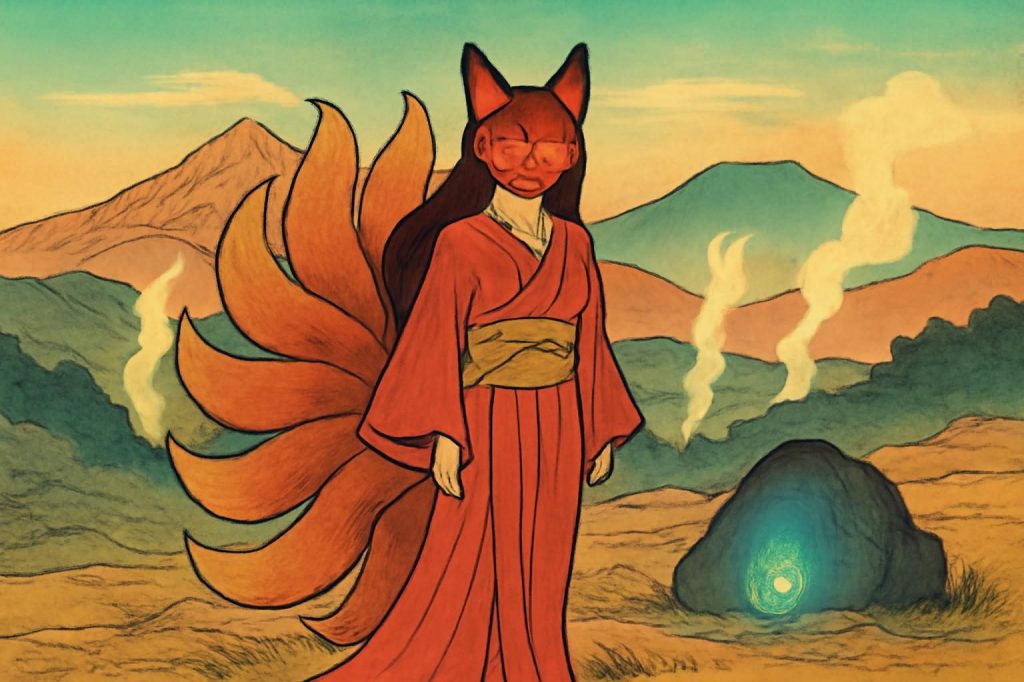
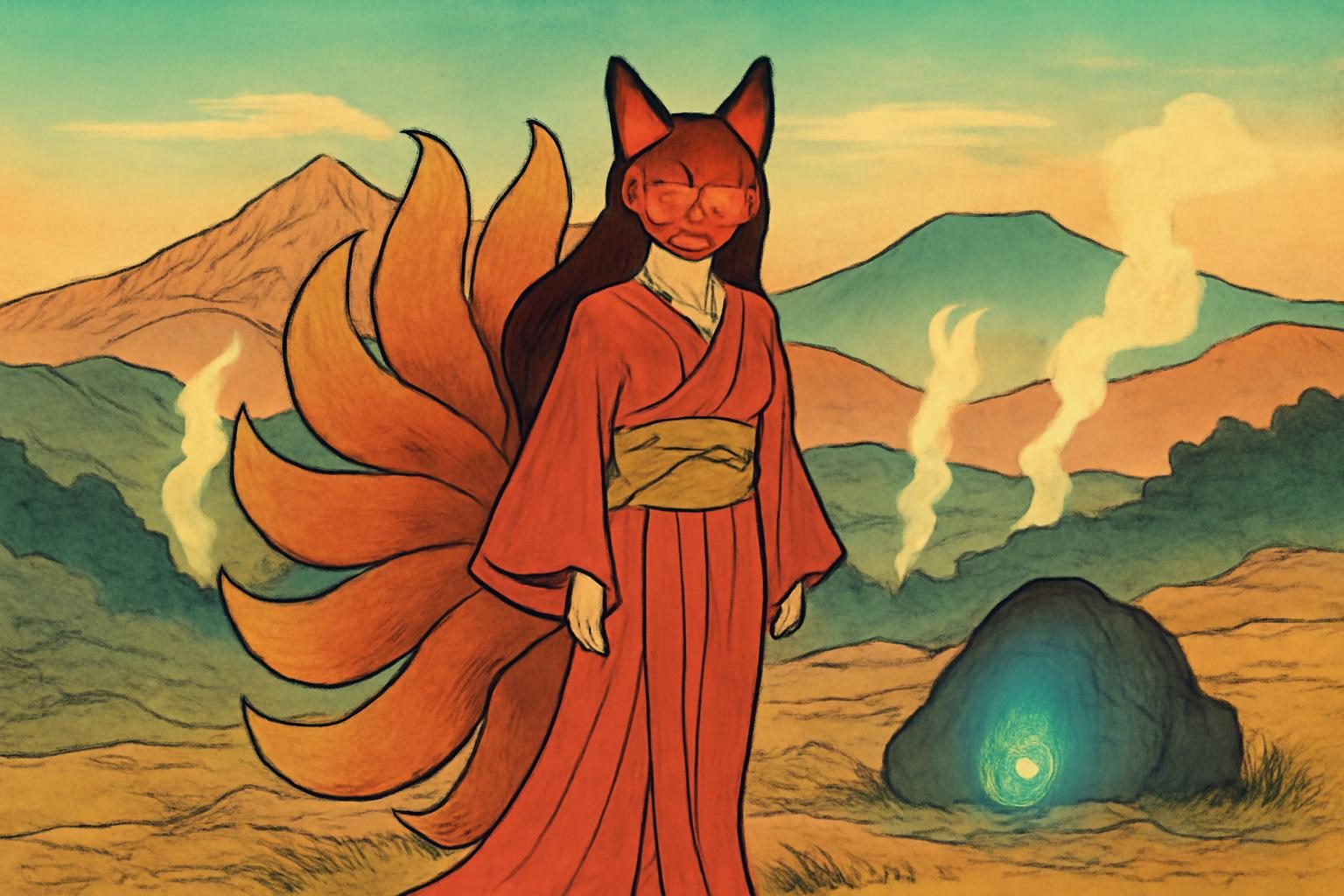
    Tamamo-no-Mae, the nine-tailed fox spirit, in a Nasu landscape with glowing tails.
    AI生成イメージ / AI-generated illustration (not a photograph of the actual place)

    The Legend of Tamamo-no-Mae and the Nine-Tailed Fox

    LEGEND: The Spirit of Tamamo-no-Mae

    According to legend, Sesshō-seki is intrinsically linked to the story of Tamamo-no-Mae, a mythical nine-tailed fox spirit. This fox spirit, known for its cunning and shape-shifting abilities, transformed into a beautiful woman and served as a courtesan to Emperor Toba. Her true identity was eventually discovered, leading to her spirit being sealed within the stone, where it continued to exude a poisonous aura, killing any living creature that came near. This tale of deception and supernatural power is a staple of Japanese folklore, illustrating themes of transformation and the hidden dangers of beauty.

    The story of Tamamo-no-Mae is often recounted with a sense of intrigue and caution, serving as a moral tale about the perils of deceit and the potential for danger lurking beneath a beautiful facade. The legend has been passed down through generations, adding layers of meaning to the already mysterious Killing Stone.

    LEGEND: The Nine-Tailed Fox’s Curse

    The legend further narrates that the spirit of Tamamo-no-Mae, trapped within the stone, continued to harbor malevolence. Her vengeful spirit was believed to be responsible for the death of countless creatures, thus cementing the stone’s fearsome reputation and its place in Japanese folklore. The story of the nine-tailed fox is often told with a sense of awe and caution, reminding listeners of the mysterious and often dangerous forces that lie just beyond the veil of the visible world.

    This enduring legend serves as a cultural touchstone, reflecting the complex relationship between humans and the supernatural. It invites reflection on the nature of power and the consequences of its misuse, themes that are as relevant today as they were in ancient times.

    那須温泉郷 - Nasu Yumoto Onsen
    “那須温泉郷” (Nasu Yumoto Onsen) by 竹のしずく, CC BY-SA 4.0, source, via Wikimedia Commons

    Volcanic Reality: Why the Stone Emits Poisonous Gases

    FACT: Geological Activity in Nasu

    The area surrounding Sesshō-seki is part of a larger volcanic region, characterized by geothermal vents and hot springs. This geological activity is responsible for the emission of toxic gases, which have contributed to the stone’s deadly reputation. Nasu Yumoto Onsen, a nearby hot spring, is a popular destination for visitors seeking to experience the region’s natural wonders. The hot springs offer a stark contrast to the deadly gases, providing a place of relaxation and healing amidst the rugged volcanic terrain.

    For those visiting the area, the juxtaposition of danger and tranquility is a compelling draw. The hot springs, known for their therapeutic properties, invite guests to unwind and reflect on the natural beauty that surrounds them, while the Killing Stone stands as a reminder of the earth’s untamed power.

    In the Footsteps of Matsuo Bashō

    FACT: Bashō’s Visit and Observations

    The famous haiku poet Matsuo Bashō visited Sesshō-seki in 1689 during his journey chronicled in ‘Oku no Hosomichi.’ He wrote about the stone, observing that dead bees and butterflies lay so thick around it that the sand could scarcely be seen. Bashō’s account adds a historical layer to the stone’s already rich tapestry of stories. His observations highlight the stark beauty and eerie atmosphere of the site, capturing the imagination of those who read his words and inspiring a deeper appreciation for the natural and supernatural elements at play.

    Bashō’s visit underscores the cultural significance of the site, as his poetic reflections continue to resonate with readers today. His writings offer a lens through which to view the Killing Stone, inviting visitors to engage with the site not only as a natural wonder but also as a source of artistic inspiration.

    那須湯本十石 - Hotels in Tochigi prefecture, Nasu Yumoto Onsen
    “那須湯本十石” (Hotels in Tochigi prefecture, Nasu Yumoto Onsen) by 富双江葉大馬, CC BY-SA 3.0, source, via Wikimedia Commons

    The Split Stone: Recent Events and Preservation

    FACT: The 2022 Split and Rituals

    On March 5, 2022, Sesshō-seki was observed to have split into two. Local authorities attributed this to natural deterioration. In response, a peace-prayer ritual was held to honor the stone’s cultural significance and to appease any lingering spirits. This event drew attention to the ongoing preservation efforts for this historic site. The splitting of the stone was seen by some as a symbolic event, perhaps indicating a change in the spiritual energy associated with the site.

    The ritual held in response to the stone’s splitting reflects the community’s deep respect for the legend and its commitment to preserving the site’s cultural heritage. Such events highlight the importance of maintaining a connection to the past while navigating the changes brought about by time and nature.

    Nasu Onsen Shrine and the Gojinka Festival

    FACT: Annual Rituals and Celebrations

    Each May, the Gojinka (Sacred Fire) Festival is held with a torch procession from Nasu Onsen Shrine to Sesshō-seki. Participants don white robes and fox masks, and the event features a drum performance known as ‘White-Faced Golden Nine-Tailed Fox Taiko.’ This festival is a vibrant celebration of the legend, drawing visitors who wish to partake in the cultural festivities. The festival serves as a reminder of the enduring power of the legend and the community’s connection to the spiritual and natural world.

    The Gojinka Festival is not only a celebration of the legend but also a testament to the community’s efforts to keep their cultural traditions alive. The participation of locals and visitors alike in the festivities fosters a sense of unity and shared heritage, making it a memorable experience for all who attend.

    Locator map of Japan: Nasu, Tochigi
    Legend site: Nasu, Tochigi — Source: Map of Japan with highlight on 09 Tochigi prefecture.svg; Map: Lincun, CC BY-SA 3.0, via Wikimedia Commons

    Regional guide

    Location: Nasu, Tochigi Prefecture

    • Nasu Seshoseki Gojinka Festival (Nasu) — source

    Sources

    About the author — JAPAN ESSENCE Editorial Team. Our mission is to bring you Japan’s legends, myths, festivals and living traditions, through both historical fact and the stories passed down over generations.

  • 那須の殺生石を探る: 玉藻前の伝説

    那須の殺生石を探る: 玉藻前の伝説

    栃木県那須町の中心に位置する謎めいた殺生石(せっしょうせき)は、歴史と伝説が交錯する美しい火山景観の中にあります。この場所は自然の驚異であるだけでなく、神話と謎に満ちた文化的なランドマークでもあり、日本全国から訪れる人々を魅了しています。

    栃木県那須町、殺生石のバナー。ウィキヴォヤージュのバナー。
    “Sessho-seki Nasu Wikivoyage banner” by 663highland, CC BY-SA 3.0, via Wikimedia Commons

    那須の殺生石の紹介

    事実: 名勝地

    殺生石、またの名をせっしょうせきは、那須湯本温泉近くに位置する溶岩の巨石です。2014年3月18日に名勝地に指定され、その文化的および自然的な重要性が強調されています。この石の独特な地質形成と周囲の景観は、自然の美しさと文化遺産の交差点に興味を持つ人々にとって魅力的な目的地となっています。訪問者はこの地域を探索し、歴史的および美的価値のために保存された景色を楽しむことができます。

    名勝地としての指定は、石に関連する文化的な物語の保存におけるその役割も強調しています。これは、日本の自然景観と神話的過去との深い結びつきを思い起こさせ、その地域を形作った物語に対する考察と敬意を招きます。

    事実: 火山ガスとその致命的な影響

    「殺生石」という不吉な名前は、その周辺で放出される有毒な火山ガスに由来しています。これらのガスは、近づきすぎた動物にとって歴史的に致命的であり、石を巡る死と危険の物語を生み出しました。せっしょうせき周辺は地熱活動で知られており、石の致命的な評判に寄与しています。訪問者は、地中の火山活動を示唆する硫黄の匂いをしばしば嗅ぐことができます。

    この自然現象は科学者や観光客を魅了し、地球を形作る強力な力を垣間見ることができます。これらのガスの存在は、自然界における生と死の微妙なバランスを思い起こさせ、殺生石の伝説と深く共鳴するテーマです。

    Tamamo-no-Mae, the nine-tailed fox spirit, in a Nasu landscape with glowing tails.
    AI生成イメージ / AI-generated illustration (not a photograph of the actual place)

    玉藻前と九尾の狐の伝説

    伝承: 玉藻前の霊

    伝説によれば、せっしょうせきは玉藻前の物語と密接に結びついています。玉藻前は、狡猾で変身能力を持つ九尾の狐の霊で、美しい女性に変身し、鳥羽天皇の側室として仕えました。彼女の正体が発覚し、その霊は石に封じ込められ、近づく生物を殺す毒のオーラを放ち続けました。この欺瞞と超自然的な力の物語は、日本の民間伝承の定番であり、変身と美の隠れた危険というテーマを描いています。

    玉藻前の物語は、興味と警戒心を持って語られ、欺瞞の危険性と美の裏に潜む潜在的な危険についての教訓的な物語として伝えられています。この伝説は世代を超えて伝えられ、既に神秘的な殺生石にさらなる意味を加えています。

    伝承: 九尾の狐の呪い

    伝説はさらに、石に閉じ込められた玉藻前の霊が悪意を抱き続け、多くの生物の死の原因とされ、石の恐ろしい評判と日本の民間伝承における地位を確立しました。九尾の狐の物語は、畏敬と警戒心を持って語られ、目に見える世界のすぐ外に潜む神秘的でしばしば危険な力を思い起こさせます。

    この永続する伝説は、文化的な基盤として、人間と超自然の複雑な関係を反映しています。それは、力の本質とその誤用の結果についての考察を招き、古代と同様に今日でも関連性のあるテーマです。

    那須温泉郷 - Nasu Yumoto Onsen
    “那須温泉郷” (Nasu Yumoto Onsen) by 竹のしずく, CC BY-SA 4.0, source, via Wikimedia Commons

    火山の現実: 石が有毒ガスを放出する理由

    事実: 那須の地質活動

    せっしょうせきを囲む地域は、地熱噴気孔や温泉で特徴付けられる広範な火山地域の一部です。この地質活動が有毒ガスの放出の原因であり、石の致命的な評判に寄与しています。近くの温泉である那須湯本温泉は、地域の自然の驚異を体験しようとする訪問者に人気のある目的地です。温泉は致命的なガスとは対照的に、険しい火山地形の中でリラクゼーションと癒しの場を提供します。

    この地域を訪れる人々にとって、危険と静けさの対比は魅力的な引力です。治療効果で知られる温泉は、周囲の自然の美しさを反映し、リラックスするよう招待し、一方で殺生石は地球の手に負えない力を思い起こさせます。

    松尾芭蕉の足跡をたどる

    事実: 芭蕉の訪問と観察

    有名な俳句詩人松尾芭蕉は、1689年に『奥の細道』の旅の途中でせっしょうせきを訪れました。彼は石について書き、死んだ蜂や蝶がその周りに厚く積もり、砂がほとんど見えないと観察しました。芭蕉の記録は、石の既に豊かな物語の織物に歴史的な層を加えています。彼の観察は、サイトの厳しい美しさと不気味な雰囲気を強調し、彼の言葉を読む人々の想像力をかき立て、自然と超自然の要素へのより深い感謝を促します。

    芭蕉の訪問は、彼の詩的な反映が今日でも読者に共鳴し続けるように、サイトの文化的な重要性を強調しています。彼の著作は、殺生石を自然の驚異としてだけでなく、芸術的なインスピレーションの源として訪問者を招待します。

    那須湯本十石 - Hotels in Tochigi prefecture, Nasu Yumoto Onsen
    “那須湯本十石” (Hotels in Tochigi prefecture, Nasu Yumoto Onsen) by 富双江葉大馬, CC BY-SA 3.0, source, via Wikimedia Commons

    割れた石: 最近の出来事と保存

    事実: 2022年の割れと儀式

    2022年3月5日、せっしょうせきが二つに割れているのが観察されました。地元当局はこれを自然の劣化に起因するとしました。これに応じて、石の文化的意義を称え、残る霊を鎮めるために平和祈願の儀式が行われました。この出来事は、この歴史的な場所の保存努力に注目を集めました。石の割れは、サイトに関連する霊的エネルギーの変化を示す象徴的な出来事と見なす人もいました。

    石の割れに対する儀式は、伝説に対する地域社会の深い敬意と、サイトの文化遺産を保存するためのコミットメントを反映しています。このような出来事は、時間と自然によってもたらされる変化を乗り越えながら、過去とのつながりを維持することの重要性を強調しています。

    那須温泉神社と御神火祭

    事実: 年次儀式と祝祭

    毎年5月に、御神火祭が那須温泉神社からせっしょうせきまでの松明行列で開催されます。参加者は白い衣装と狐の面を着用し、「白面金毛九尾太鼓」と呼ばれる太鼓の演奏が行われます。この祭りは伝説の活気ある祝祭であり、文化的な祝祭に参加したい訪問者を引き寄せます。祭りは、伝説の持続的な力と精神的および自然界との地域社会のつながりを思い起こさせます。

    御神火祭は、伝説の祝祭であるだけでなく、文化的伝統を生かし続ける地域社会の努力の証でもあります。地元の人々と訪問者が祭りに参加することで、団結と共有された遺産の感覚が育まれ、参加者全員にとって忘れられない体験となります。

    Locator map of Japan: Nasu, Tochigi
    Legend site: Nasu, Tochigi — Source: Map of Japan with highlight on 09 Tochigi prefecture.svg; Map: Lincun, CC BY-SA 3.0, via Wikimedia Commons

    地域ガイド

    場所: 栃木県那須町

    • 那須殺生石御神火祭(那須) — source

    Sources

    執筆者 — JAPAN ESSENCE 編集部。日本各地の伝説や神話、祭り、受け継がれてきた文化を、史実と言い伝えを皆様にお届けするのを使命としています。