Introduction: Look Up
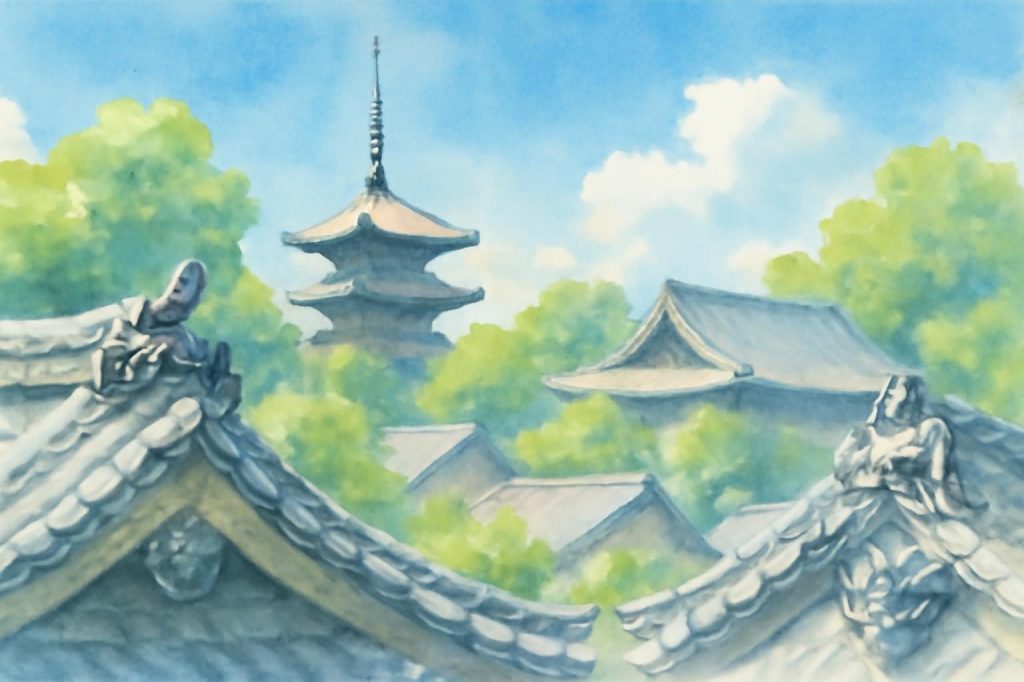
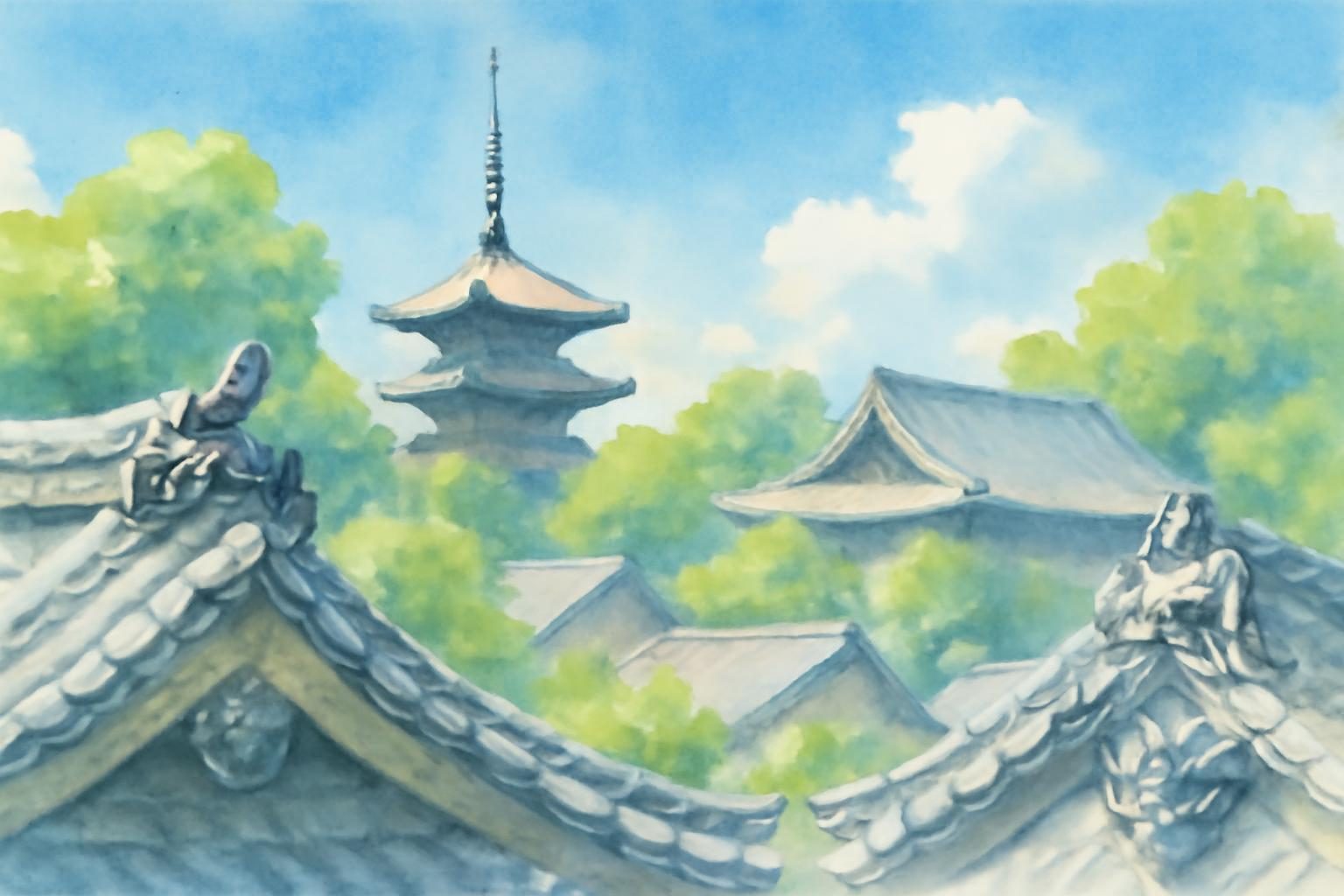
Walk through Kyoto and you will notice that the city is crowned by a sea of gray tile. These roof tiles, called kawara, are so common that most visitors forget to look at them. Yet they carry more than 1,400 years of history, and at the ends of the ridges you will often find a stern, sometimes smiling face: the onigawara, or “demon tile.”
Tiles Arrive with Buddhism
Roof tiles came to Japan from the Asian continent together with Buddhism. According to the Nihon Shoki, one of Japan’s oldest chronicles, craftsmen skilled in making tiles were sent from the Korean kingdom of Baekje in the late sixth century to help build Asukadera, an early Buddhist temple in the Asuka region. For a long time afterward, tiled roofs were a privilege of temples, shrines, and government buildings, because they were costly and heavy.
From Lotus Patterns to Fierce Faces
The earliest decorated tile ends were not demons at all. They carried lotus flower designs, a Buddhist symbol of purity. Over the centuries, ridge-end tiles took many forms, including shapes inspired by mythical creatures and, eventually, the glaring faces we now call onigawara. Faces of this kind became more widespread as tile roofs spread beyond temples.
Tiles for Everyone
In the Edo period, large fires repeatedly burned the crowded wooden cities. Tile roofs resist sparks far better than thatch or wooden shingles, so the authorities encouraged townspeople to adopt them. Tile making grew into a major craft, and regional traditions developed across Japan, each with its own clay, color, and style. Kyoto’s temples and townhouses helped make the quiet gray tone of traditional roofs part of the city’s character.
Fact vs Legend
Facts
- Roof tiles reached Japan with Buddhism from the Asian continent in the sixth century.
- Early tile ends were decorated with lotus patterns, not demon faces.
- In the Edo period, fire safety was a major reason tile roofs spread to ordinary houses.
Legends
- Onigawara are said to scare away evil spirits and bad luck from the house below.
- Some people believe a demon’s face can turn away misfortune because “fighting fire with fire” works against evil, and so a fearsome face is chosen to guard the roof.
- In the traditional belief about the northeast “demon gate,” roofs facing that direction are given extra protection.
How to Enjoy Roofs in Kyoto
You do not need a special tour. Slow down in a temple courtyard, a quiet lane in Higashiyama, or the streets near Gion, and look at the ridge ends. Notice how each face differs: some frown, some grin, some look almost kind. Respect private homes, and enjoy the roofs from the street.
Conclusion
Kawara began as a technology borrowed from the continent and became a living craft of Japan. The onigawara on a Kyoto roof is a small reminder that the people who built these houses wanted them to be safe, beautiful, and protected. Next time you visit, remember to look up.


Leave a comment