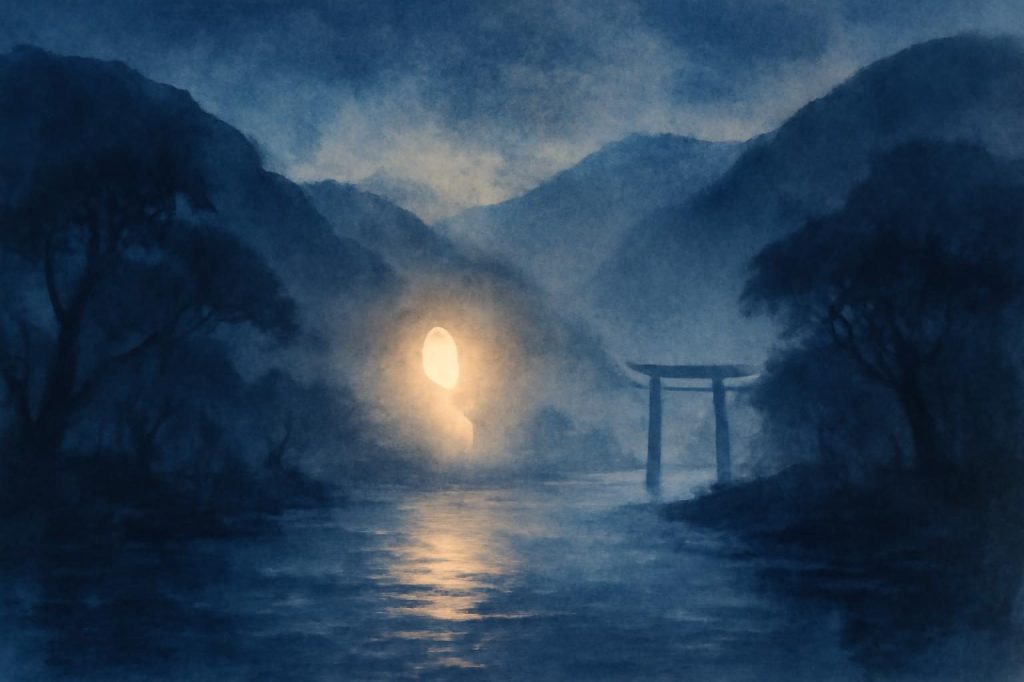
Kyoto Prefecture, steeped in history and tradition, is also a land of mysterious tales and ghostly encounters. Among these, the legend of the Ubagabi ghost-light stands out, casting an eerie glow over the Hozu River in Tanba.
Introduction to Kyoto’s Supernatural Folklore
FACT: What the records say
The ubagabi, or ‘old woman’s fire,’ is a type of atmospheric ghost-light found in Japanese folklore, particularly in the legends of Kawachi Province (now Osaka Prefecture) and Tanba Province (now northern Kyoto Prefecture). This phenomenon is often described as a will-o’-the-wisp, appearing on rainy nights as an orange fireball that sometimes reveals the face of an old woman or transforms into a bird shape. These traditions are especially prevalent around Hiraoka in Kawachi and along the Hozu River in Tanba.
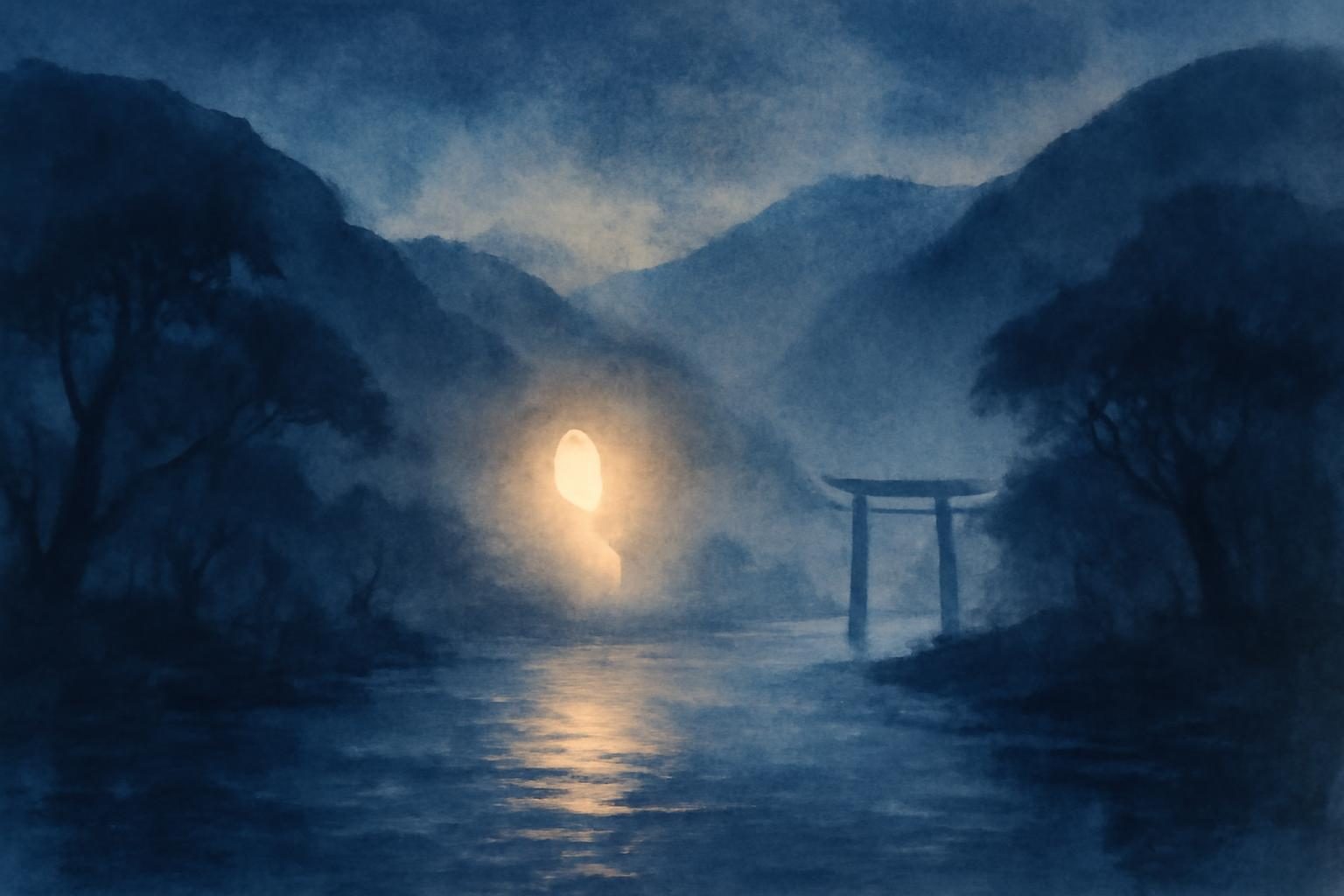
The Legend of Ubagabi: The Ghost-Light of Tanba
LEGEND: The story of the Hozu River
According to legend, the ubagabi first appeared near the Hozu River in Kyoto Prefecture after a tragic event. An old woman, living near Kameyama (now Kameoka), was said to have drowned in the river after betraying children. Following her death, a mysterious flame began to appear near the river, believed to be her restless spirit manifesting as the ubagabi.
The Hozu River: Where Folklore Meets Nature
FACT: A scenic and storied location
The Hozu River, flowing through the picturesque landscapes of Kyoto Prefecture, is not only known for its ghostly legends but also for its natural beauty. The river is a popular spot for scenic boat tours, attracting tourists who wish to experience the serene and sometimes eerie atmosphere of this storied waterway.
Ichijo Modoribashi: The Legendary Bridge Between Worlds
FACT: A bridge with a history
Ichijō Modoribashi, located in Kyoto City’s Kamigyō Ward, spans the Horikawa River and is steeped in folklore. This small bridge is associated with legends from the Heian period, often described as a boundary between the human world and the realm of yōkai, or supernatural creatures. One famous tale involves the warrior Watanabe no Tsuna, who is said to have cut off the arm of the demon Ibaraki Dōji at this very spot.
Exploring Kyoto’s Yōkai Sites Safely as a Traveler
FACT: Visiting with respect and curiosity
For those intrigued by the supernatural, Kyoto offers a wealth of sites connected to its rich tapestry of folklore. When visiting places like the Hozu River or Ichijō Modoribashi, it is important to approach with respect for the cultural and historical significance of these locations. Whether you’re drawn by the legends or the natural beauty, these sites offer a unique glimpse into the mystical side of Japan.
Planning Your Mythological Journey Through Kyoto Prefecture
Kyoto’s blend of history, culture, and folklore makes it a fascinating destination for those interested in Japan’s supernatural heritage. From the ghost-lights of the Hozu River to the legendary Ichijō Modoribashi, the prefecture is a treasure trove of stories waiting to be explored.

Regional guide
- Ichijō Modoribashi (Bridge of Return) — source


Leave a comment