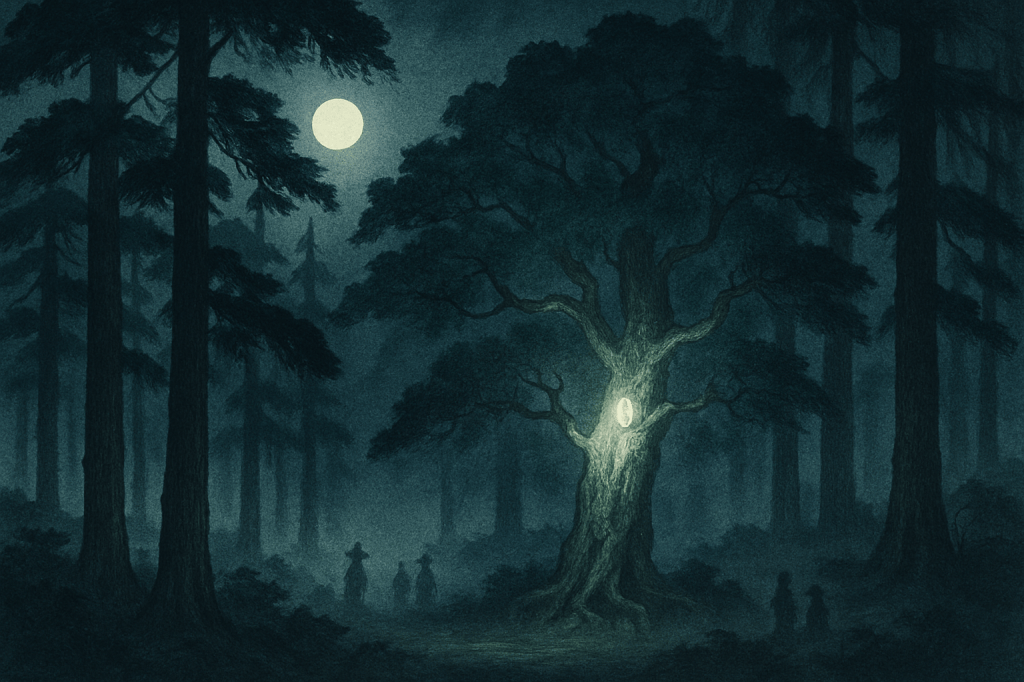
In the heart of Kyoto Prefecture lies the region of southern Tanba, where the legends of yōkai, or supernatural creatures, have been passed down through generations. Among these tales, the story of the Tsurube-otoshi stands out, captivating the imagination of locals and visitors alike.
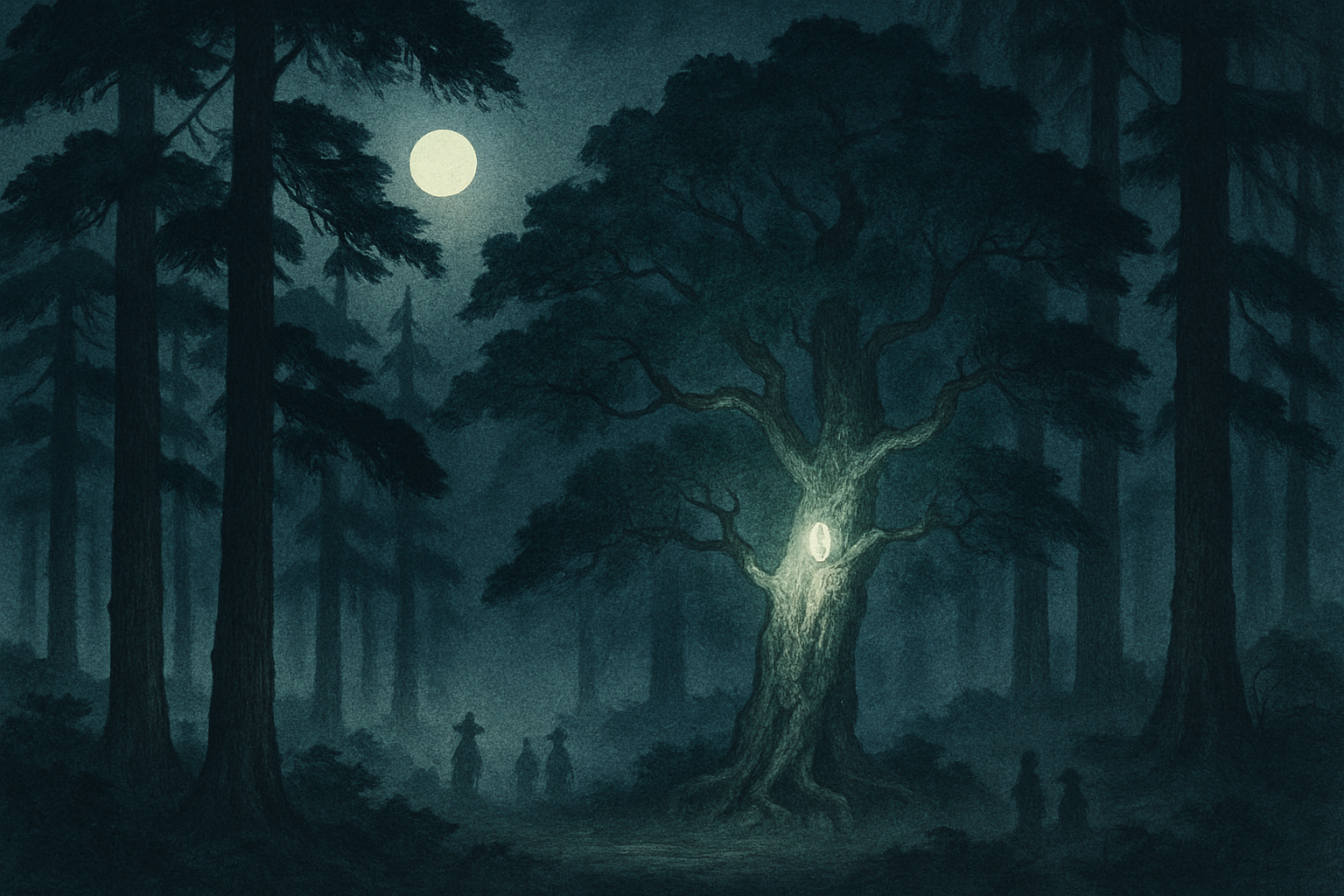
Introduction to Southern Tanba Folklore
FACT: What the records say
The Tsurube-otoshi is a yōkai known for its eerie presence in the folklore of southern Tanba, particularly in the areas now known as Kameoka and Nantan. According to historical records, the densest cluster of these legends is found here, making it a significant location for those interested in Japanese folklore.
The Legend of Tsurube-otoshi in Kameoka
LEGEND: The story from Hōki
According to the Taishō-period oral legend collection “Kuchitanba Kōhi Shū,” in the Hōki section of former Sogabe village, now part of Kameoka, a Tsurube-otoshi is said to drop from a kaya tree. It sniggers, “has your night work ended, how ’bout we drop a bucket, gii-gii,” before rising back up. This chilling tale has been recounted through generations, adding to the mystique of the area.
LEGEND: The tale from Tera
In another part of Sogabe village, known as the Tera section, the legend describes a Tsurube-otoshi appearing as a severed head that drops from an old pine tree. It is said to devour people before disappearing for two to three days, only to reappear later. This gruesome tale highlights the fearsome nature of this yōkai.
Folklore Sites and Landmarks in Nantan
LEGEND: The haunted tree of Tomimoto
In Tomimoto, now part of Nantan, an ivy-wrapped tree was feared as a site where the Tsurube-otoshi might appear. This legend adds to the area’s rich tapestry of folklore, drawing those intrigued by supernatural tales.
Exploring the History of Kameoka
FACT: Historical significance
Kameoka is not only rich in folklore but also in history. The site of Tanba Kameyama Castle is a testament to the area’s historical importance, offering visitors a glimpse into the past.
Local Flavors and Specialties of the Region
FACT: Culinary delights
Kameoka is renowned for its local produce, including Tamba Daigon azuki beans and Kameoka beef. These specialties are celebrated for their quality and are a must-try for any visitor to the region.
Plan Your Journey Through Tanba’s Mythical Countryside
With its rich tapestry of folklore and history, southern Tanba offers a unique journey into the world of Japanese legends. Whether you’re drawn by the tales of the Tsurube-otoshi or the area’s historical sites, Kameoka and Nantan provide a captivating experience.

Regional guide
- Tamba Daigon azuki beans (Kameoka) — source
- Kameoka beef (Kameoka) — source
- Site of Tanba Kameyama Castle (Kameoka) — source
For centuries, onigawara (demon roof tiles) have guarded Japanese rooftops from evil. You can find onigawara pieces at Oni Koubou. To meet these guardian faces in person, try a hands-on onigawara experience with Onigawara Experience.


Leave a comment