Introduction to Tsurube-otoshi
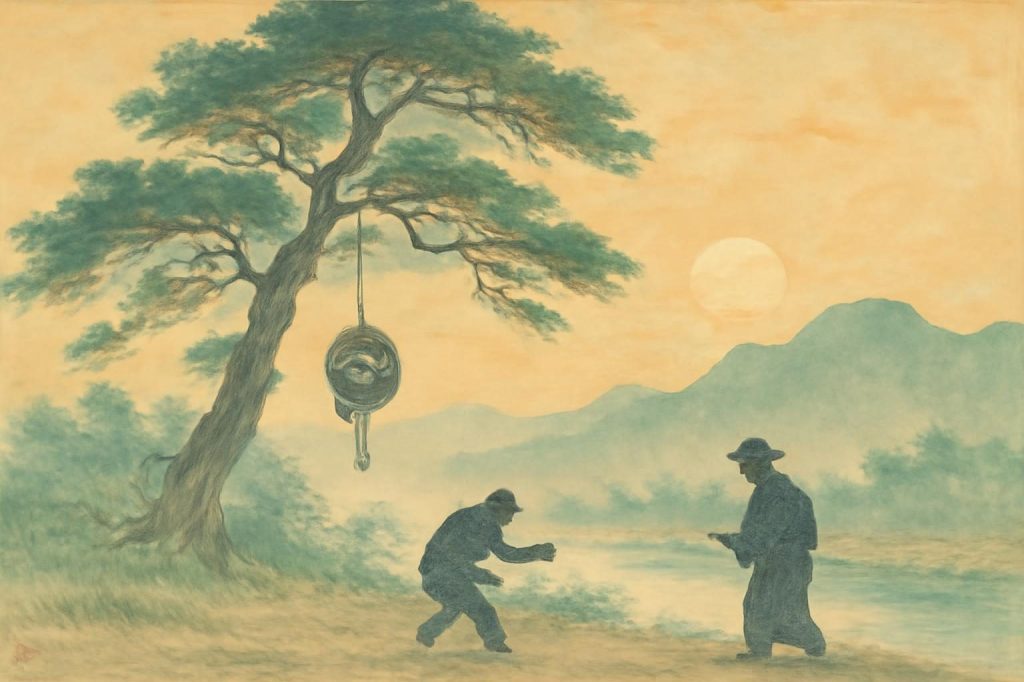
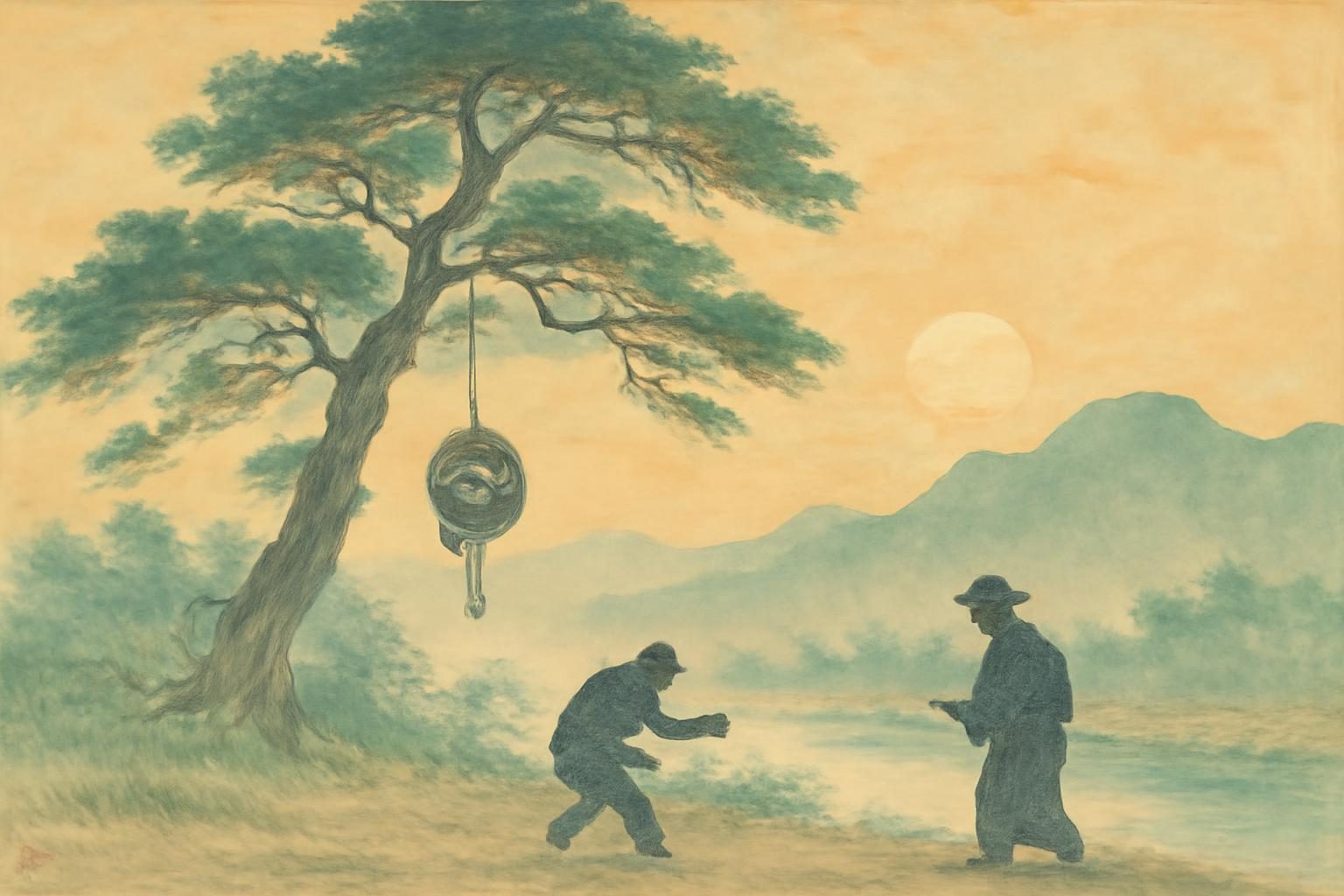
The Tsurube-otoshi is one of the intriguing figures in Japanese yokai legends. Known as the dropping well-bucket spirit, this yōkai is deeply rooted in the folklore of Japan, particularly in the Kyoto region. The legend of Tsurube-otoshi captures the imagination with its eerie presence and mysterious behavior, often associated with trees and the night.
The Origins of the Legend in Kyoto
The legend of Tsurube-otoshi is prominently found in the southern Tanba region of Kyoto Prefecture. It was recorded in the Taishō-period folklore collection ‘Kuchitanba Kōhishū’. In this version of the tale, the spirit descends from a kaya tree, laughing and uttering a haunting phrase before ascending again. This version of the legend is specific to Sogabe, now part of Kameoka, and highlights the spirit’s connection to nature and the supernatural.
FACT: The Tsurube-otoshi in Southern Tanba
In the southern Tanba region, the Tsurube-otoshi is said to appear from a kaya tree, a type of Japanese nutmeg tree. The spirit is known to descend, laugh, and speak, before disappearing back into the tree. This account is part of the local folklore and has been preserved through oral traditions and written records.
LEGEND: The Haunting Phrase
According to the legend, the Tsurube-otoshi utters a phrase that translates to something like “Finished your night work? Shall I lower the bucket?—gii-gii”. This phrase adds to the mystique of the spirit, as it suggests a connection to the night and possibly to the labor of those who encounter it.
Regional Variations Across Japan
While the Tsurube-otoshi is closely associated with the Kyoto region, it is not confined to it. Variants of the legend exist in other parts of Japan, each adding unique elements to the story. These regional variations reflect the diverse cultural landscape of Japan and how localities adapt folklore to their own contexts.
LEGEND: Variants in Other Regions
In the Hokuriku region, the Tsurube-otoshi may appear as a falling bucket or a disembodied voice. In Wakayama, it is depicted as severed heads or bucket-traps. Some traditions even describe a fiery ball, known as tsurube-bi, emerging from the trees. These variations show how the core concept of the Tsurube-otoshi can be interpreted differently across Japan.
Connecting Tsurube-otoshi to Related Fire Yōkai
In Japanese folklore, the concept of fire yōkai is prevalent, and the Tsurube-otoshi is sometimes linked to these fiery spirits. The term tsurube-bi refers to a fire-yōkai depicted by the artist Toriyama Sekien. This yōkai is derived from earlier accounts of spirit-fire descending from trees, which sometimes gets conflated with the Tsurube-otoshi by name and motif.
FACT: The Tsurube-bi Connection
The depiction of tsurube-bi as a fire spirit adds another layer to the Tsurube-otoshi legend. While the two are distinct, the shared imagery of descending spirits from trees creates a thematic link that enriches the folklore. Toriyama Sekien’s artwork and earlier accounts like the Kokon Hyaku Monogatari Hyōban contribute to this complex tapestry of yōkai lore.
Where to Explore Japanese Folklore Today
For those interested in exploring Japanese folklore, the legend of Tsurube-otoshi offers a fascinating glimpse into the country’s rich cultural heritage. Visiting regions like Kyoto, Wakayama, and Hokuriku can provide deeper insights into the local variations of the legend. Museums, folklore collections, and local festivals often showcase these stories, allowing visitors to experience the enduring legacy of Japan’s yōkai.
The Tsurube-otoshi is more than just a story; it is a testament to the imaginative spirit of Japanese folklore and its ability to adapt and thrive across generations and regions.


Leave a comment