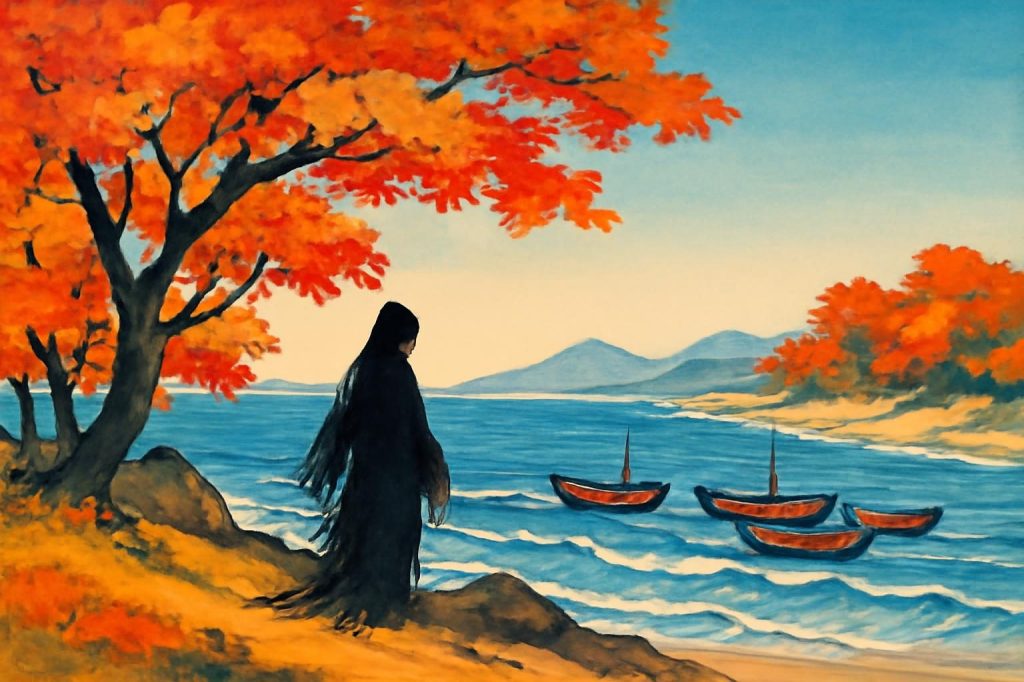
In the coastal town of Karatsu, Saga Prefecture, the legend of Iso-onna, a mysterious shore-woman yokai, weaves a tapestry of intrigue and maritime lore. This enigmatic figure is said to haunt the shores of Kakara Island, a place known for its wild camellias and free-roaming cats.
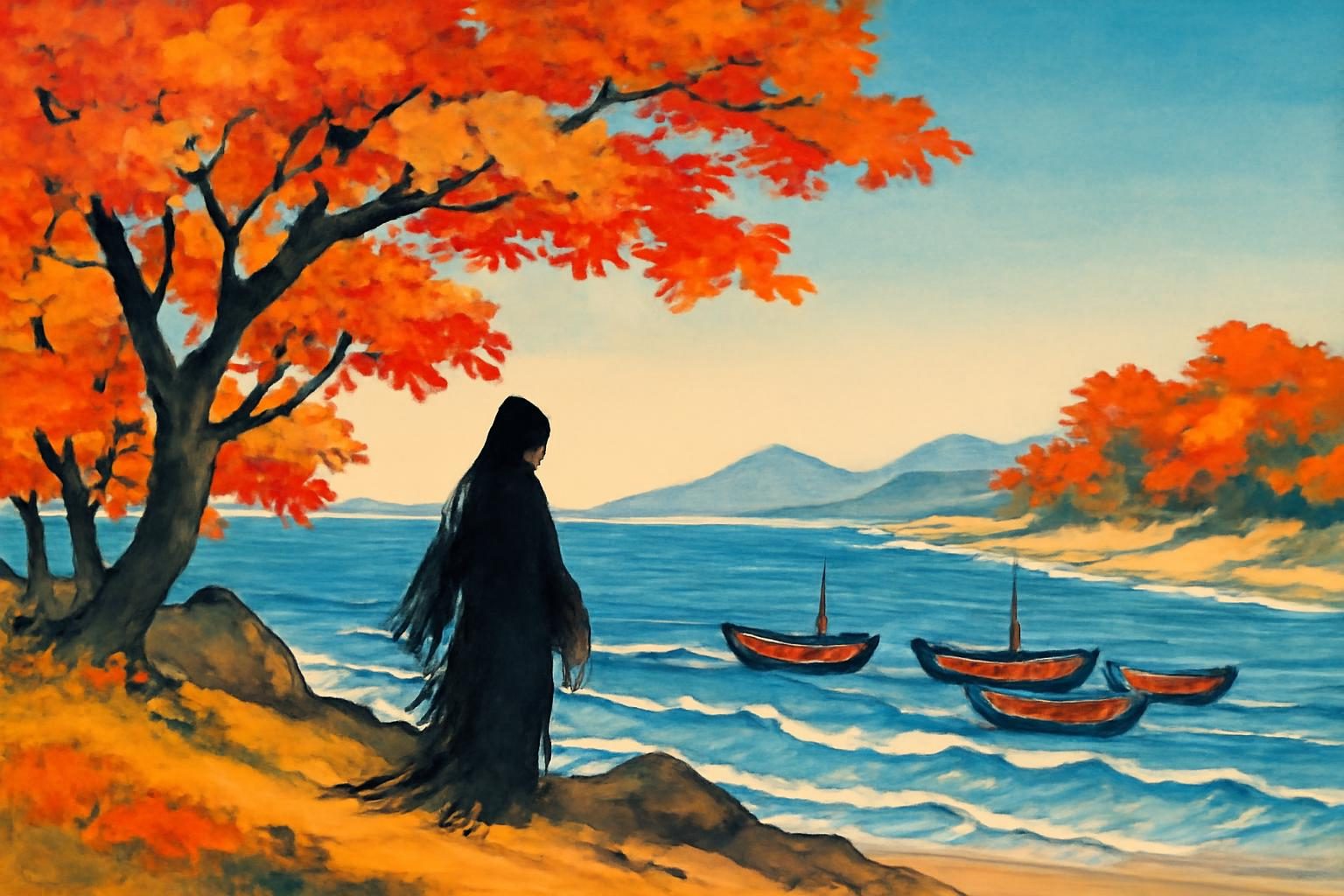
Introduction to Iso-onna: The Shore-Woman of Northwestern Kyushu
FACT: What the records say
Iso-onna is a type of yokai, a supernatural entity in Japanese folklore, predominantly appearing along the northwestern coast of Kyushu, including areas like Amakusa, Shimabara, Tsushima, and notably, Kakara Island in Karatsu. This yokai is often depicted as a beautiful woman who lures sailors to their doom, embodying the dangers of the sea and the allure of the unknown. According to folklore scholars, Iso-onna is classified as a boundary or threshold yokai, appearing at the rocky shore or anchorage, distinct from deep-water monsters like Umibōzu. Her presence is a reminder of the thin line between safety and peril that sailors navigate.
Folklore scholars emphasize that Iso-onna’s role as a boundary yokai highlights her connection to transitional spaces, where the land meets the sea. These areas are often seen as liminal zones, places of change and uncertainty. Iso-onna’s ability to traverse these spaces, moving between the sea and the shore, adds to her mystique and the fear she instills in those who encounter her. Her legend serves as a metaphor for the unpredictable nature of the sea, a force that can be both nurturing and destructive.
LEGEND: The story of Iso-onna on Kakara Island
According to legend, Iso-onna appears along the shores of Kakara Island, climbing mooring ropes to board boats and using her long hair to suck the blood of unsuspecting sailors. This fearsome reputation has led to various maritime customs aimed at avoiding her wrath. In Amakusa, for instance, boats would only drop anchor and refrain from tying stern mooring ropes to the shore, a practice also observed near Kakara Island, to prevent giving Iso-onna a path to climb aboard.
The legend of Iso-onna on Kakara Island is deeply rooted in the local maritime culture. Sailors and fishermen, who often faced the unpredictable and dangerous conditions of the sea, found in this legend a way to explain the unexplainable. The practice of avoiding tying the stern rope became a ritualistic safeguard, a way to show respect and caution towards the supernatural forces believed to inhabit the waters. This custom reflects the blend of practical navigation and spiritual beliefs that characterize the region’s maritime traditions.
LEGEND: The encounter at Takanosu
One particular tale recounts an encounter at Takanosu on Kakara Island. As a boat crew was raising its stern rope, Iso-onna appeared and demanded raw fish. In a desperate attempt to escape, the crew severed the rope with a hatchet, narrowly avoiding her grasp. This story, passed down through generations, highlights the perilous nature of life at sea and the lengths to which sailors would go to protect themselves from supernatural threats.
The encounter at Takanosu is a vivid illustration of the Iso-onna legend, capturing the tension and fear that sailors experienced. The act of severing the rope symbolizes a decisive break from danger, a dramatic gesture that underscores the immediacy of the threat posed by Iso-onna. This tale, like many in Japanese folklore, serves both as a cautionary story and a testament to human resilience in the face of supernatural adversity. It is a narrative that reinforces communal identity and shared cultural memory, reminding the community of the ever-present risks of their maritime environment.
The Legend of Kakara Island and Maritime Folklore
FACT: Kakara Island’s geographical and cultural significance
Kakara Island, part of Karatsu City, is located in the Genkai Sea and is renowned for its natural beauty and cultural heritage. The island is famed for its wild camellias and is often referred to as a ‘cat island’ due to the numerous free-roaming cats that inhabit its harbor and village paths. These elements contribute to the island’s unique atmosphere, blending natural splendor with a sense of mystery.
The island’s historical significance is further underscored by its association with the birth of King Muryeong of Baekje, as mentioned in the Nihon Shoki, highlighting its role as a maritime junction with the Korean Peninsula. This connection adds a layer of historical depth to the island, intertwining legend with documented history. Kakara Island’s position as a cultural and historical crossroads enhances its allure, offering visitors a glimpse into a past where legends and reality intertwine.
LEGEND: Iso-onna’s influence on local customs
The presence of Iso-onna in local folklore has influenced maritime practices around Kakara Island. Fishermen traditionally refrained from tying the stern mooring rope, known as tomo-zuna, when anchoring near the island, relying solely on the anchor to secure their vessels. This custom reflects the deep-rooted belief in Iso-onna’s ability to climb aboard via the rope, a testament to the enduring power of local legends in shaping daily life. Such practices illustrate the intersection of folklore and practical navigation techniques.
The adherence to these customs demonstrates the profound impact of folklore on the community’s way of life. It highlights the respect for the unseen forces believed to govern the natural world, a respect that is woven into the fabric of daily activities. By observing these practices, the inhabitants of Kakara Island maintain a connection to their cultural heritage, ensuring that the stories of Iso-onna remain alive and relevant in contemporary times.

Exploring Kakara Island Today: Cats and Wild Camellias
FACT: Kakara Island as a tourist destination
Today, Kakara Island attracts visitors not only for its folklore but also for its natural attractions. The island’s wild camellias are a significant draw, with the production of natural cold-pressed camellia oil being a local specialty. This oil, derived from the island’s abundant yabu-tsubaki trees, is highly prized for its quality and is a testament to the island’s rich natural resources. Visitors can explore the lush landscapes where these camellias flourish, offering a sensory experience of sight and scent.
The camellia oil production on Kakara Island is a reflection of the island’s harmonious relationship with its natural environment. The process of creating this oil, though not detailed here, is a craft that has been perfected over generations, symbolizing the islanders’ deep knowledge of and respect for their natural resources. This local specialty not only supports the island’s economy but also serves as a tangible connection to the island’s natural beauty and cultural identity.
FACT: The charm of the ‘cat island’
Additionally, the island’s reputation as a ‘cat island’ adds to its charm, offering tourists the delightful experience of encountering numerous cats roaming freely along the picturesque paths of the harbor and village. These cats, integral to the island’s identity, create a whimsical and endearing atmosphere, attracting animal lovers and curious travelers alike. The interplay between the island’s natural beauty and its feline inhabitants creates a unique setting that captivates visitors.
The presence of the cats on Kakara Island has become a symbol of the island’s serene and welcoming environment. These feline residents are more than just a tourist attraction; they are a living part of the island’s ecosystem and community. Their freedom to roam and interact with visitors adds an element of spontaneity and joy to the island experience, making each visit unique and memorable. The cats, alongside the legends and landscapes, contribute to the island’s enchanting allure.


Related on JAPAN ESSENCE: Shachihoko: The Fire-Guarding Sea Creatures on Japan’s Castle Roofs (and the Secret in Nagoya’s Golden Scales) | Namahage: The Masked Gods Who Knock on Doors in Akita on New Year’s Eve (and the 999 Steps the Oni Built)
Regional guide
Location: Karatsu, Saga Prefecture
- Wild camellias and cold-pressed camellia oil (Karatsu) — source
- Cat island tourism (Karatsu) — source
- Kakara Island (Karatsu) — source


Leave a comment