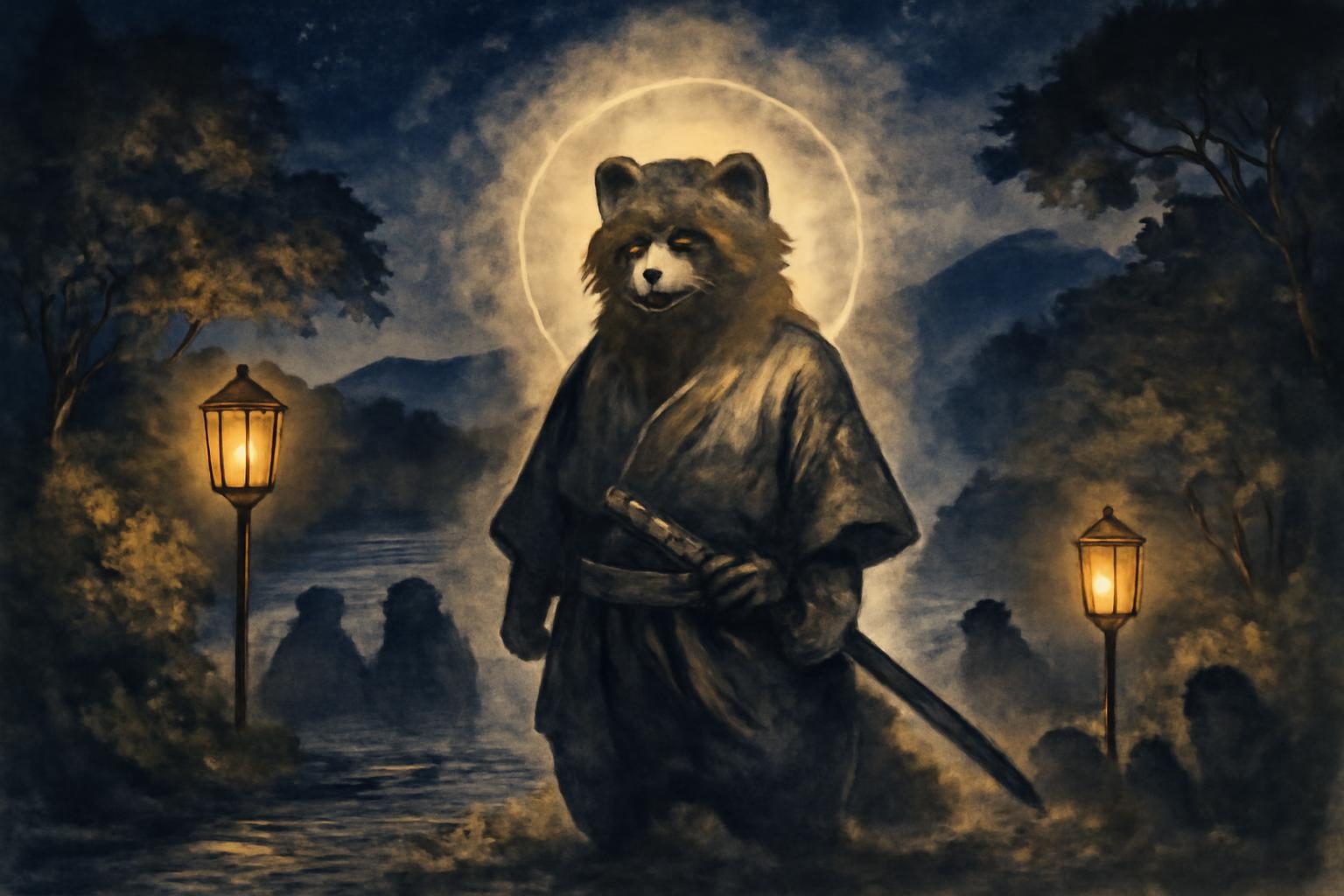
In the city of Komatsushima, Tokushima Prefecture, a legendary battle between mythical creatures known as tanuki (raccoon dogs) is said to have taken place. This is the story of the Great Tanuki War of Awa, a tale that continues to captivate the imagination of locals and visitors alike. The tanuki, often depicted in Japanese folklore as shape-shifters and tricksters, are believed to bring good fortune, adding a layer of cultural depth to this enduring legend.


Introduction to the Great Tanuki War of Awa
FACT: The historical setting of the legend
The legend of the Awa-Tanuki Gassen, or the Great Tanuki War of Awa, is set in the late Edo period in an area known as Higaino, which is now part of Komatsushima. It revolves around a tanuki named Kinchō who was rescued by a local dyer named Moemon. Kinchō became the guardian spirit of Moemon’s shop, bringing prosperity and protection. This tale is deeply rooted in the local culture and is celebrated throughout the city. The legend signifies the intertwining of human lives with mythical beings, highlighting the cultural significance of tanuki in Japanese folklore.
The relationship between humans and tanuki in this legend is emblematic of the broader Japanese cultural theme where nature and the supernatural are closely linked to everyday life. The tale of Kinchō and Moemon is a narrative that reflects the mutual respect and beneficial coexistence between humans and the mystical creatures of their folklore, which is a recurring motif in many Japanese legends.
LEGEND: The story of Kinchō and the battle
According to legend, Kinchō later became a disciple of Rokuemon, a powerful tanuki general from Tsuda. However, when Kinchō politely refused to marry Rokuemon’s daughter, it sparked a fierce conflict. The ensuing battle, known as the Awa-Tanuki Gassen, took place across the Katsuura River and lasted for three days and nights. The river, a natural boundary, became the stage for this epic confrontation. Despite being severely wounded, Kinchō emerged victorious but ultimately succumbed to his injuries after returning to Higaino, where he expressed his gratitude to Moemon before dying. This poignant moment underscores the themes of loyalty and sacrifice, which resonate deeply with the audience.
The battle itself is depicted as a grand and dramatic event, filled with the kind of mythical grandeur that characterizes many traditional Japanese tales. The three-day and night duration of the battle adds to the epic scale of the story, illustrating the intensity and significance of the conflict. This narrative not only entertains but also conveys moral lessons about honor, duty, and the consequences of choices, which are central to many Japanese folktales.
FACT: The legacy of Kinchō in local culture
The legacy of Kinchō is not only preserved through oral tradition but also through various cultural expressions in Komatsushima. The story of Kinchō’s bravery and the dramatic battle has been passed down through generations, becoming an integral part of the local identity. The narrative serves as a reminder of the values of courage and gratitude, which are celebrated in various local festivals and events.
Festivals and cultural events often feature reenactments or symbolic representations of the legend, allowing both locals and visitors to engage with the story in a communal setting. These events serve as a living testament to the enduring nature of the legend and its continued relevance in modern times, reinforcing community bonds and cultural heritage.

Komatsushima Station Park and the World’s Largest Bronze Tanuki
FACT: A monumental tribute to Kinchō
In Komatsushima Station Park, visitors can find a remarkable tribute to the legend of Kinchō. The park is home to a 5-meter-tall, 5-ton bronze statue of Kinchō, recognized as the world’s largest bronze tanuki statue. Since its unveiling, this statue has become a symbol of the city. A unique feature of the statue is that clapping hands near it triggers a waterfall behind the statue, adding to the magical atmosphere of the park. This interactive element invites visitors to engage with the legend in a tangible way, enhancing the experience of the folklore.
The statue’s presence in the park serves as a constant reminder of the legend’s significance to Komatsushima. It is not only a tourist attraction but also a place of reflection where the spirit of Kinchō is celebrated. The waterfall, activated by clapping, symbolizes the connection between visitors and the legend, creating a dynamic interaction that brings the story to life.
FACT: The significance of the bronze statue
The statue not only serves as a visual representation of the legend but also as a cultural landmark that attracts tourists and locals alike. It embodies the spirit of Kinchō and the values he represents, making it a focal point for cultural activities and gatherings. The unveiling of the statue marked a significant moment for Komatsushima, reinforcing the city’s connection to its mythical past.
As a cultural landmark, the statue plays a crucial role in promoting local heritage and tourism. It stands as a testament to the artistic and cultural investment of the community in preserving and celebrating their unique folklore, drawing visitors from near and far who wish to experience the legend firsthand.


Paying Respects at Kincho Shrine
FACT: The establishment of Kincho Shrine
To honor Kinchō’s memory and his contributions as a guardian spirit, Moemon enshrined him as Shōichi-i Kinchō Daimyōjin. Kincho Shrine was built in Komatsushima to ensure that Kinchō would be remembered as a deity forever. The shrine stands as a testament to the enduring legacy of the tanuki and the cultural significance of the legend in the region. Visitors to the shrine can experience a sense of reverence and connection to the past, as they pay homage to Kinchō and the values he embodies.
Kincho Shrine is more than just a religious site; it is a cultural beacon that highlights the spiritual aspects of the tanuki legend. Visitors often leave offerings and prayers, seeking blessings and protection, much like Moemon did when he first enshrined Kinchō. The shrine thus serves as a bridge between the past and present, allowing the legacy of Kinchō to continue influencing contemporary life.
FACT: The role of Kincho Shrine in local culture
Kincho Shrine plays a pivotal role in the spiritual and cultural life of Komatsushima. It serves as a venue for various rituals and ceremonies that honor the memory of Kinchō and celebrate the values of protection and prosperity he brought to Moemon’s shop. The shrine is a place where the community gathers to reflect on the lessons of the past and to seek blessings for the future.
Throughout the year, the shrine hosts numerous events that draw participants from across the region, fostering a sense of unity and cultural pride. These gatherings not only keep the legend alive but also strengthen the community’s connection to their shared heritage, ensuring that the story of Kinchō remains a vibrant part of Komatsushima’s cultural landscape.
Tanuki-Themed Explorations Across Komatsushima
FACT: Tanuki motifs throughout the city
Komatsushima is adorned with tanuki-themed statues and motifs that celebrate the Awa-Tanuki Gassen legend. These can be found at various locations, including South Komatsushima Station, bus stops, mailboxes, and parks. The tanuki imagery serves as a constant reminder of the folklore that shapes the identity of the city. These artistic expressions provide a visual narrative of the legend, inviting residents and visitors to explore and engage with the story of Kinchō in everyday settings.
The abundance of tanuki imagery throughout the city creates a unique urban landscape where the legend is interwoven with daily life. This integration of folklore into the public space not only beautifies the city but also educates and entertains, making the legend accessible to all who pass by.
FACT: The cultural impact of tanuki art
The prevalence of tanuki-themed art throughout Komatsushima highlights the cultural impact of the Awa-Tanuki Gassen legend. These motifs not only beautify the city but also foster a sense of community and shared heritage. They serve as a daily reminder of the values and stories that have shaped the local culture, encouraging both residents and tourists to appreciate the rich tapestry of folklore that defines Komatsushima.
By incorporating these artistic elements into the city’s infrastructure, Komatsushima has effectively created an open-air museum of folklore. This approach not only preserves the legend but also promotes cultural tourism, inviting visitors to discover the stories behind each piece of art and to delve deeper into the rich history of the region.


Related on JAPAN ESSENCE: Visiting Jōren Falls: Shizuoka’s Legendary Spider Woman Waterfall | Shachihoko: The Fire-Guarding Sea Creatures on Japan’s Castle Roofs (and the Secret in Nagoya’s Golden Scales)
Regional guide
Location: Komatsushima, Tokushima Prefecture
- Tanuki mikoshi (portable shrine) parade at the annual Kinchō Festival (Komatsushima) — source
- Tanuki-themed street art and statues throughout Komatsushima (Komatsushima) — source
- Komatsushima Station Park (Tanuki Plaza) (Komatsushima) — source
- Kincho Shrine (Shōichi-i Kinchō Daimyōjin Shrine) (Komatsushima) — source
Sources & Further Reading
- Wikipedia — Awa Tanuki Gassen
- Komatsushima City tourism site — Kinchō Tanuki (in Japanese)
- Komatsushima City tourism site — Komatsushima Station Park (in Japanese)
- Komatsushima City tourism site — Kinchō Shrine (in Japanese)
For centuries, onigawara (demon roof tiles) have guarded Japanese rooftops from evil. You can find onigawara pieces at Oni Koubou. To meet these guardian faces in person, try a hands-on onigawara experience with Onigawara Experience.
徳島県小松島市では、タヌキ(狸)と呼ばれる神話上の生き物の間で伝説的な戦いがあったと言われています。これは阿波の大タヌキ戦争の物語であり、地元の人々や訪問者の想像力を引き続き魅了しています。タヌキは日本の民間伝承でしばしば変身能力を持つトリックスターとして描かれ、幸運をもたらすと信じられており、この永続する伝説に文化的な深みを加えています。
阿波の大タヌキ戦争の紹介
事実: 伝説の歴史的背景
阿波タヌキ合戦、または阿波の大タヌキ戦争の伝説は、現在の小松島の一部である日開野という地域で、江戸時代後期に設定されています。地元の染物師である茂右衛門に救われたタヌキの金長を中心に展開します。金長は茂右衛門の店の守護霊となり、繁栄と保護をもたらしました。この物語は地元文化に深く根付いており、市内全体で祝われています。この伝説は、人間の生活と神話上の存在が絡み合うことを意味し、日本の民間伝承におけるタヌキの文化的意義を強調しています。
この伝説における人間とタヌキの関係は、自然と超自然が日常生活と密接に結びついているという日本文化の広範なテーマを象徴しています。金長と茂右衛門の物語は、人間と彼らの民間伝承の神秘的な生き物との間の相互尊重と有益な共存を反映する物語であり、多くの日本の伝説において繰り返されるモチーフです。
伝承: 金長と戦いの物語
伝説によれば、金長は後に津田の強力なタヌキ将軍である六右衛門の弟子となりました。しかし、金長が六右衛門の娘との結婚を丁重に断ったことで激しい対立が生じました。その後の戦いは阿波タヌキ合戦として知られ、勝浦川を舞台に3日間と夜にわたって行われました。川は自然の境界となり、この壮大な対決の舞台となりました。金長は重傷を負いながらも勝利を収めましたが、日開野に戻った後に茂右衛門に感謝の意を表してから亡くなりました。この感動的な瞬間は、忠誠心と犠牲のテーマを強調し、観客に深く響きます。
戦い自体は、多くの伝統的な日本の物語を特徴づける神話的な壮大さに満ちた壮大で劇的な出来事として描かれています。戦いの3日間と夜の期間は、物語の壮大なスケールを示し、対立の激しさと重要性を示しています。この物語は、娯楽だけでなく、名誉、義務、選択の結果についての道徳的な教訓も伝え、多くの日本の民話の中心的なテーマです。
事実: 地元文化における金長の遺産
金長の遺産は口承だけでなく、小松島のさまざまな文化的表現を通じても保存されています。金長の勇敢さと劇的な戦いの物語は世代を超えて受け継がれ、地元のアイデンティティの一部となっています。この物語は、勇気と感謝の価値を思い出させるものであり、さまざまな地元の祭りやイベントで祝われています。
祭りや文化イベントでは、伝説の再現や象徴的な表現が行われ、地元の人々や訪問者が共同の場で物語に触れることができます。これらのイベントは、伝説の持続的な性質と現代におけるその関連性を強化し、コミュニティの絆と文化遺産を強化する生きた証です。
小松島駅公園と世界最大の青銅製タヌキ
事実: 金長への壮大なオマージュ
小松島駅公園では、金長の伝説への注目すべきオマージュを見つけることができます。この公園には、世界最大の青銅製タヌキ像として認められる高さ5メートル、重さ5トンの金長の像があります。公開以来、この像は、市の象徴となっています。像のユニークな特徴は、像の近くで手を叩くと、像の後ろに滝が現れることです。これにより、公園の魔法のような雰囲気が増し、訪問者が伝説に触れることができるインタラクティブな要素が追加されています。
公園にあるこの像は、小松島における伝説の重要性を常に思い出させるものです。それは観光名所であるだけでなく、金長の精神が祝われる反省の場でもあります。手を叩くことで作動する滝は、訪問者と伝説のつながりを象徴し、物語を生き生きとさせる動的な相互作用を生み出します。
事実: 青銅像の意義
この像は、伝説の視覚的な表現であるだけでなく、観光客や地元の人々を引き付ける文化的ランドマークでもあります。それは金長の精神と彼が代表する価値を体現し、文化活動や集まりの中心となっています。像の公開は、小松島にとって重要な瞬間であり、神話的な過去とのつながりを強化しました。
文化的ランドマークとして、この像は地元の遺産と観光を促進する重要な役割を果たしています。それは、コミュニティが独自の民間伝承を保存し祝うための芸術的および文化的投資の証であり、伝説を直接体験したいと望む近隣や遠方からの訪問者を引き付けます。
金長神社での参拝
事実: 金長神社の設立
金長の記憶と守護霊としての貢献を称えるために、茂右衛門は金長を正一位金長大明神として祀りました。金長神社は、小松島に建てられ、金長が永遠に神として記憶されることを保証しました。この神社は、タヌキの永続的な遺産と地域における伝説の文化的意義を証明するものです。神社を訪れる人々は、金長と彼が体現する価値に敬意を表し、過去とのつながりを感じることができます。
金長神社は単なる宗教的な場所ではなく、タヌキ伝説の精神的側面を強調する文化的な灯台です。訪問者はしばしば供物や祈りを捧げ、茂右衛門が金長を最初に祀ったときのように、祝福と保護を求めます。したがって、神社は過去と現在をつなぐ橋渡しの役割を果たし、金長の遺産が現代生活に影響を与え続けることを可能にしています。
事実: 地元文化における金長神社の役割
金長神社は、小松島の精神的および文化的生活において重要な役割を果たしています。それは、金長の記憶を称え、茂右衛門の店にもたらした保護と繁栄の価値を祝うためのさまざまな儀式や式典の場として機能しています。神社は、コミュニティが過去の教訓を振り返り、未来の祝福を求める場所です。
年間を通じて、神社は地域全体から参加者を引き付ける多くのイベントを開催し、団結感と文化的誇りを育んでいます。これらの集まりは、伝説を生き生きとさせるだけでなく、共有された遺産へのコミュニティのつながりを強化し、金長の物語が小松島の文化的景観の一部として生き続けることを保証します。
小松島を巡るタヌキテーマの探検
事実: 市内のタヌキモチーフ
小松島は、阿波タヌキ合戦の伝説を祝うタヌキテーマの像やモチーフで飾られています。これらは、南小松島駅、バス停、郵便ポスト、公園など、さまざまな場所で見つけることができます。タヌキのイメージは、市のアイデンティティを形作る民間伝承を常に思い出させるものです。これらの芸術的表現は、伝説の視覚的な物語を提供し、住民や訪問者が日常の設定で金長の物語を探求し、関与するよう招いています。
市内全体に広がるタヌキのイメージの豊富さは、伝説が日常生活と織り交ぜられたユニークな都市景観を作り出しています。この民間伝承の公共空間への統合は、市を美化するだけでなく、教育し、楽しませ、通り過ぎるすべての人に伝説を身近に感じさせます。
事実: タヌキアートの文化的影響
小松島全体に広がるタヌキテーマのアートの普及は、阿波タヌキ合戦の伝説の文化的影響を強調しています。これらのモチーフは、市を美化するだけでなく、コミュニティと共有された遺産の感覚を育みます。それらは、地元文化を形作ってきた価値と物語を日々思い出させ、住民と観光客の両方に小松島を定義する豊かな民間伝承の織物を評価するよう促します。
これらの芸術的要素を市のインフラに組み込むことにより、小松島は民間伝承のオープンエアミュージアムを効果的に作り出しました。このアプローチは、伝説を保存するだけでなく、文化観光を促進し、訪問者に各アート作品の背後にある物語を発見し、地域の豊かな歴史を深く掘り下げるよう招いています。
Related on JAPAN ESSENCE: Visiting Jōren Falls: Shizuoka’s Legendary Spider Woman Waterfall | Shachihoko: The Fire-Guarding Sea Creatures on Japan’s Castle Roofs (and the Secret in Nagoya’s Golden Scales)
地域ガイド
場所: 徳島県小松島市
- 毎年開催される金長祭りでのタヌキみこし(小松島) — source
- 小松島市内のタヌキテーマのストリートアートと像(小松島) — source
- 小松島駅公園(タヌキ広場)(小松島) — source
- 金長神社(正一位金長大明神神社)(小松島) — source
Sources & Further Reading
- Wikipedia — Awa Tanuki Gassen(阿波狸合戦、英語)
- 小松島市観光サイト「小松島ナビ」— 金長たぬき
- 小松島市観光サイト「小松島ナビ」— 小松島ステーションパーク
- 小松島市観光サイト「小松島ナビ」— 金長神社
屋根の上で魔除けとして家を守ってきた鬼瓦に興味のある方は、鬼工房もご覧ください。 鬼瓦の世界を実際に体験してみたい方は、Onigawara Experienceもどうぞ。
Leave a Reply