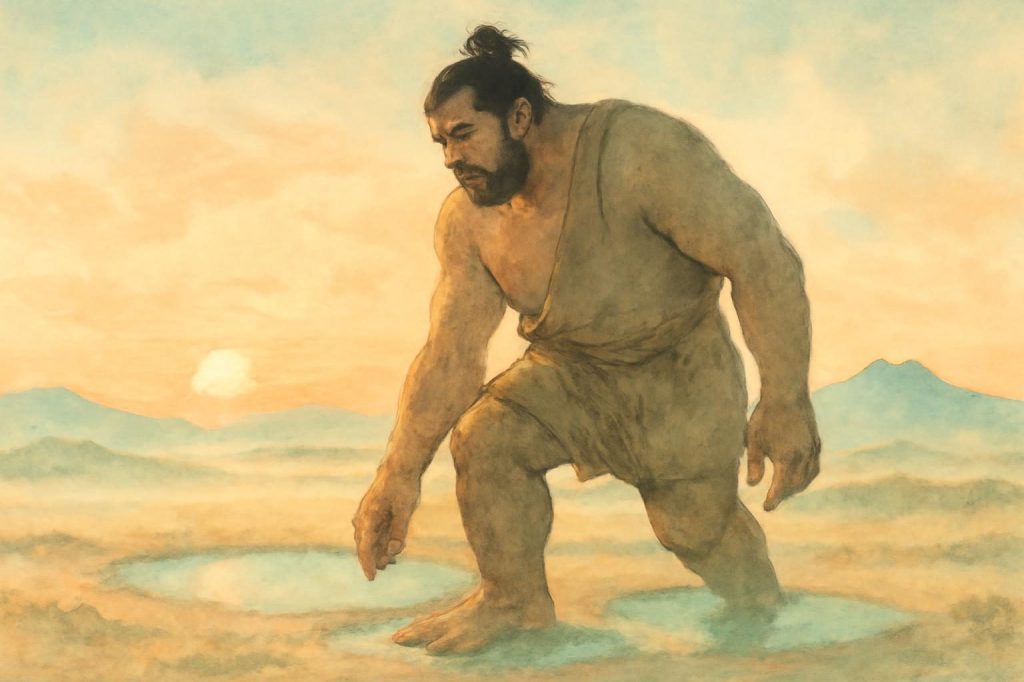
In Tsukuba, Ibaraki Prefecture, a legendary giant named Daidarabocchi is said to have left an indelible mark on the landscape, shaping the Kanto plain with his massive footprints and creating lakes with his resting places. This legend is a fascinating part of the local folklore, intertwining natural geography with mythical narratives that have been passed down through generations.

Introduction to the Hitachi Daidarabocchi Legend
LEGEND: The giant’s journey across the Kanto plain
According to legend, Daidarabocchi was a giant of immense size and strength who roamed the Kanto plain. His footsteps were said to be so powerful that they left depressions in the earth, which later filled with water to become lakes. The legend specifically mentions that Kasumigaura, the second-largest lake in Japan, and Lake Tega were formed when the giant rested, creating large depressions that filled with water over time. The low grounds around Tsukuba and Tsuchiura are believed to be the footprints left by this giant as he traversed the region.
This mythological narrative not only explains the formation of these significant water bodies but also embeds a sense of wonder and mysticism into the natural landscape. The idea of a giant resting to create lakes invites a vivid imagery that captures the imagination, making the legend an integral part of local storytelling traditions. These stories have been shared across generations, serving as a cultural touchstone that connects the present to the past.
LEGEND: Weighing Mount Tsukuba against Mount Fuji
Another fascinating aspect of the legend involves a comparison of weights between Mount Tsukuba and Mount Fuji. The giant, curious about the weight of these two iconic mountains, is said to have weighed them, marking the topographic significance of Mount Tsukuba in the process. This part of the legend highlights the cultural importance of Mount Tsukuba in the region’s folklore, as it draws a direct connection between the natural landscape and the mythological narrative.
This comparison underscores the prominence of Mount Tsukuba within local culture and its symbolic stature alongside Mount Fuji, Japan’s most famous peak. The act of weighing the mountains by the giant adds a layer of intrigue and elevates Mount Tsukuba’s status as a site of mythical importance. Such stories enrich the cultural landscape, offering a narrative that intertwines natural beauty with legendary feats.
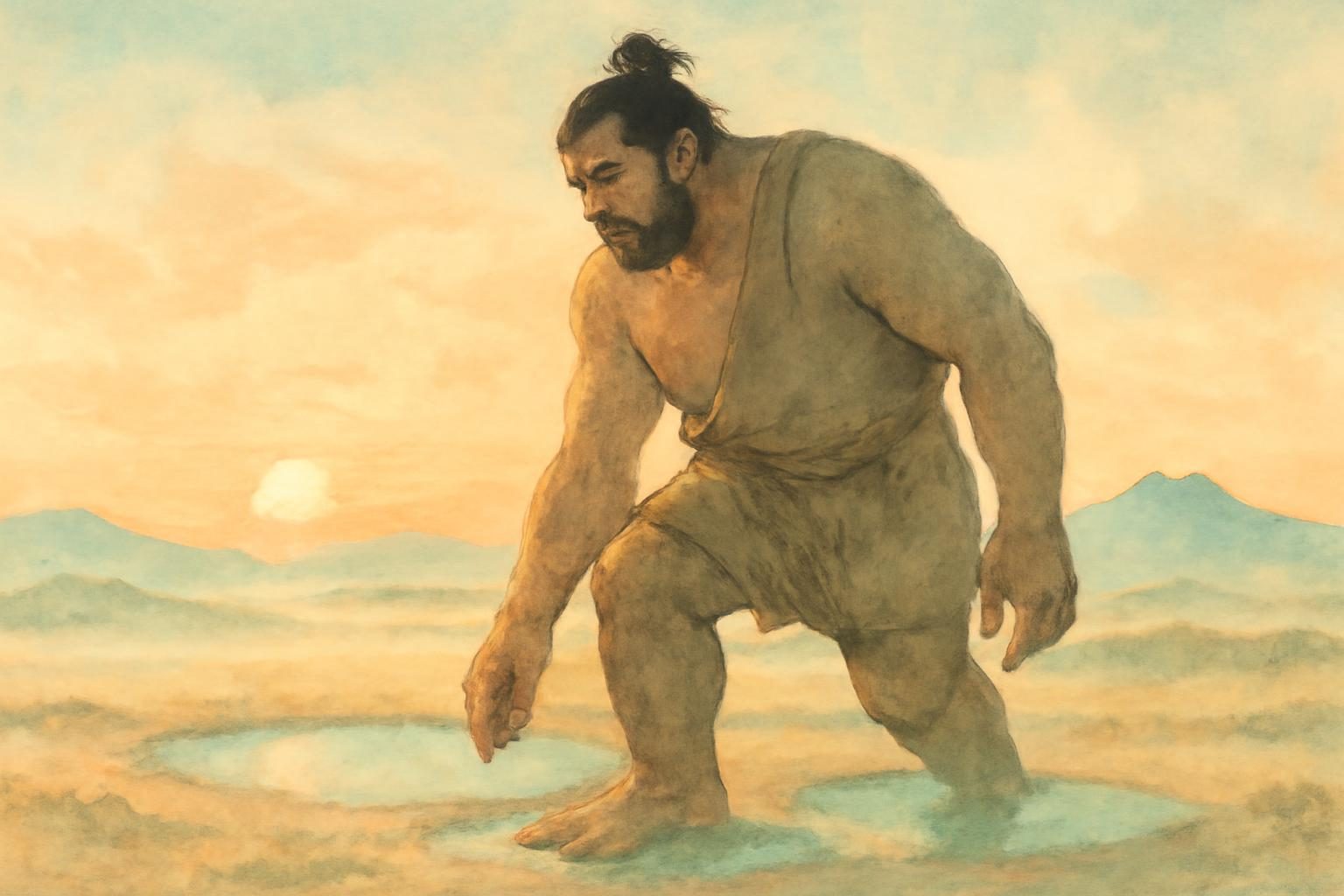
Shaping the Kanto Plain: Lakes, Footprints, and Landforms
FACT: Geographic settings of the legend
The slopes of Mount Tsukuba and the lake-and-marsh district around Kasumigaura and Ushiku in Tsukuba and Tsuchiura serve as the geographic backdrop for the legend of Daidarabocchi. These areas are characterized by their unique landforms, which the legend attributes to the giant’s movements and resting places. The presence of these natural features provides a tangible connection to the folklore, allowing visitors to imagine the giant’s influence on the landscape.
Exploring these regions offers a unique opportunity to witness the interplay between myth and geography. The natural formations, viewed through the lens of the legend, become more than just physical features; they transform into storied landscapes that speak to the creativity and imagination of those who first told these tales. Visitors can appreciate the harmony between the environment and the cultural narratives that have been woven around it.
FACT: Local place names derived from the legend
In Tsukuba, certain place names such as ‘Oashi’ and ‘Sasagi’ are believed to have originated from the Daidarabocchi legend. These names serve as cultural reminders of the giant’s presence and the stories that have been passed down through generations. They reflect the deep connection between the local geography and the folklore that has shaped the region’s identity.
These place names are more than mere labels; they are echoes of the past that resonate with the stories of Daidarabocchi. They offer a glimpse into how the landscape has been perceived and understood through the ages, providing a continuous thread that links the present-day community with its storied past. Such names are a testament to the enduring influence of folklore on the cultural and geographical identity of the region.

Mount Tsukuba and the Giant’s Scale
FACT: Historical roots in the Hitachi no Kuni Fudoki
The legend of Daidarabocchi has its origins in the Hitachi no Kuni Fudoki, an ancient gazetteer from the 8th century. This document records various myths and legends from the region, including tales of giants like Daidarabocchi. One such story describes a giant on Okushi Hill who scoops shellfish from the beach and piles the shells to form a hill, a narrative structure similar to the Daidarabocchi traditions. This historical context provides a foundation for understanding the enduring nature of the legend.
The Fudoki texts not only preserve these myths but also offer insight into the cultural and spiritual life of ancient Japan. They reveal how the people of that era interpreted their surroundings and the supernatural elements they believed influenced their world. The continuity of these stories into modern times speaks to their power and the role they play in maintaining a cultural heritage that is both rich and evocative.
FACT: The enduring cultural significance
The Hitachi no Kuni Fudoki not only provides historical roots for the Daidarabocchi legend but also emphasizes the cultural significance of these myths in shaping regional identities. The stories recorded in these ancient texts offer insight into how the people of the time perceived their environment and the supernatural forces they believed shaped it. This connection between myth and geography continues to be a source of cultural pride and identity for the residents of Tsukuba and its surrounding areas.
Today, the legend of Daidarabocchi continues to inspire a sense of wonder and curiosity. It serves as a reminder of the rich tapestry of myths that have historically colored the understanding of the natural world in Japan. The enduring appeal of these stories lies in their ability to connect people to their past and to the landscapes that have been shaped by both nature and narrative.
Exploring the Legend in Tsukuba and Tsuchiura
LEGEND: Tracing the giant’s footsteps
Visitors to Tsukuba and Tsuchiura can explore the areas where Daidarabocchi is said to have left his mark. The landscape, with its lakes and low-lying areas, invites imagination and storytelling. While the legend remains a tale of folklore, the physical geography of the region offers a fascinating backdrop for those interested in Japanese mythology and the stories that connect people to their land. Walking through these areas, one can almost feel the presence of the giant, as if stepping into the footprints of a myth.
These explorations offer more than just a journey through picturesque scenery; they provide an immersive experience into the world of Japanese folklore. As visitors trace the paths believed to be trodden by Daidarabocchi, they engage with a narrative that has shaped the cultural and physical landscape of the region. The legend becomes a living story, inviting each person to become a part of its ongoing tale.
LEGEND: Imagining the giant’s presence today
As you explore the region, the legend of Daidarabocchi becomes more than just a story; it transforms into a lens through which the landscape is viewed. The lakes and landforms attributed to the giant’s actions serve as a reminder of the rich tapestry of myths that color the history of Japan. Visitors are encouraged to let their imaginations roam as freely as the giant once did, envisioning a time when the land was shaped by the hands of mythological beings.
This imaginative engagement with the landscape allows for a deeper appreciation of the cultural narratives that have been passed down through generations. It fosters a connection between the past and the present, where the myths of old continue to resonate with the people who walk the land today. The legend of Daidarabocchi is not just a story of the past; it is a living tradition that continues to inspire and captivate.


Related on JAPAN ESSENCE: Exploring Mount Oeyama: The Legend of Shuten-doji in Kyoto | Miho no Matsubara: Exploring Japan’s Legendary Pine Grove and Mount Fuji Views
Sources
- Hitachi Daidarabocchi Legend|Legend from 怪談・怪異伝承資料|IZANORA
- The Yokai Encyclopedia of Ibaraki Prefecture — The Keystone of Kashima, the Giant Catfish, Taira no Masakado, and the Kappa of Lake Ushiku | YOKAI.JP
To explore further, visit Zenkei (禅景) for Zen-inspired onigawara art and Oni Kobo (鬼工房) for onigawara demon-tile art and charms.


Leave a Reply