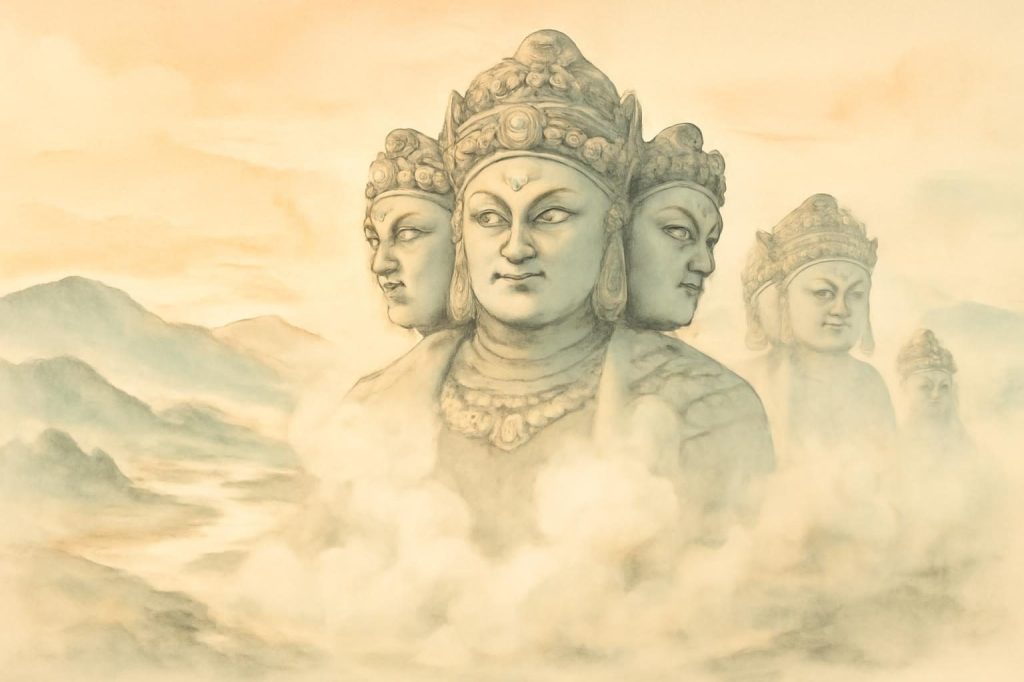
In Unzen, Nagasaki Prefecture, the mystical allure of the Oshimen deities and the volcanic steam of Unzen Jigoku intertwine to create a captivating tale of spiritual vision and natural wonder. This region is not only a geographical marvel but also a place steeped in spiritual history and vibrant local legends.

Introduction to Unzen Jigoku and Its Volcanic Steam
FACT: The Natural Wonders of Unzen Jigoku
Unzen Jigoku, often referred to as the ‘Hells of Unzen,’ is a geothermal area known for its steaming fumaroles and bubbling hot springs. These natural phenomena are a result of volcanic activity, creating a dramatic and otherworldly landscape. The area has long been a site of both scientific interest and spiritual significance, drawing visitors who are eager to witness its unique environmental features. The geothermal activity here is a constant reminder of the earth’s dynamic nature, with steam rising continuously from the ground, creating an ethereal and somewhat mystical atmosphere.
Visitors to Unzen Jigoku can expect to be enveloped in a landscape that seems almost otherworldly. The constant hiss of steam escaping from the ground and the sulfuric scent that permeates the air contribute to the area’s nickname, the ‘Hells of Unzen.’ This environment has inspired countless stories and legends, and its raw, untamed beauty continues to captivate those who venture into its midst. The fumaroles and hot springs are not only natural wonders but also serve as a backdrop for the spiritual narratives that have been woven into the region’s history.
Monk Gyōki and the 8th-Century Vision of the Oshimen
FACT & TRADITION: What the Records Say
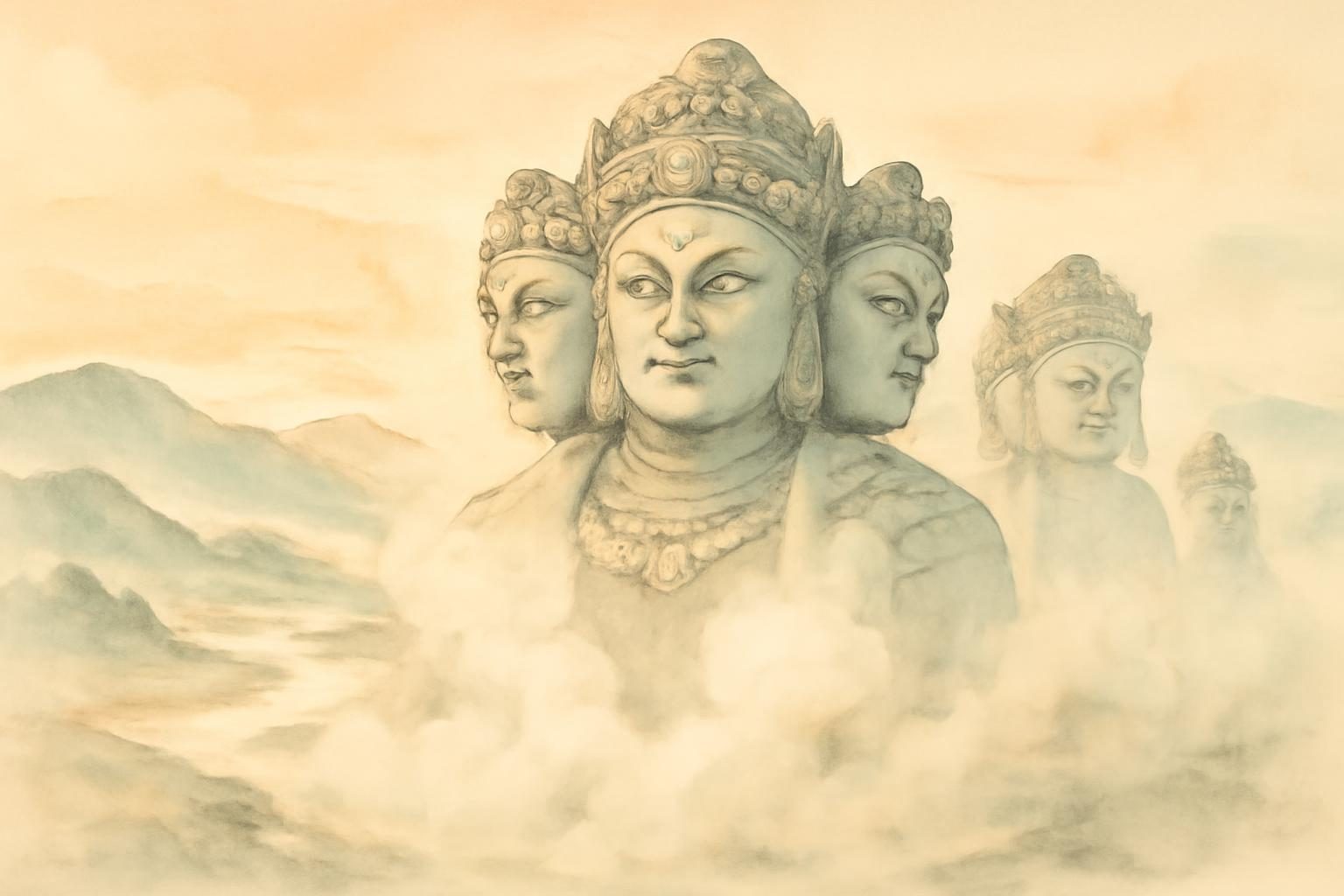
According to tradition, recorded in the shrine’s founding chronicle (the Onsenzan Engi), the monk Gyōki came to Unzen in the early 8th century and, in 701, founded the temple Onsenzan Manmyōji and enshrined the four-faced guardian deity — the Oshimen — as protector of the mountain. Later tellings, such as JNTO’s, describe Gyōki following the volcanic steam and encountering the Oshimen there; this encounter is legend rather than documented history.

Who Are the Four-Faced Oshimen Deities?
LEGEND (言い伝え / 諸説あり): The Story of the Oshimen
Tradition — accounts vary. The Oshimen (“Shimen”, four faces) take their name from a passage in the Kojiki, which says the island of Tsukushi (Kyushu) has one body and four faces, each with its own name: Shirahiwake (Tsukushi), Toyohiwake (Toyo), Takehimukahitoyokujihinewake (Hi) and Takehiwake (Kumaso). Onsen Jinja enshrines these deities — Shirahiwake-no-Mikoto and four others — which is why it was also called Shimengū, “the Four-Faced Shrine” (Wikipedia; Shimengu-kai official).
According to the shrine’s founding chronicle, the Onsenzan Engi, the monk Gyōki opened the temple Onsenzan Manmyōji in 701 and enshrined the four-faced deity as guardian of the mountain; this founding date is traditional (伝承) rather than independently verified (Wikipedia; Kotobank). Under the old fusion of Buddhism and Shinto the deity was revered as the “Shimen Daibosatsu”, and locals still affectionately call the shrine “Oshimen-san” (Kotobank; Japan Tourism Agency).
The Founding of Onsen Jinja (Shimengu) Shrine
FACT & TRADITION: Establishing a Sacred Site
Onsen Jinja Shrine, originally known as Shimengū Shrine, is said by tradition to have been founded by Gyōki in 701; the date comes from the shrine’s founding chronicle and is not independently verified. Located near the Unzen Jigoku thermal area, the shrine attracts visitors who come to pay their respects and experience the serene atmosphere. The shrine’s architecture and its location amidst the natural beauty of Unzen Jigoku make it a place of reflection and tranquility, offering a spiritual retreat for pilgrims and tourists alike.
The architecture of Onsen Jinja Shrine reflects traditional Japanese design, harmonizing with the natural surroundings. The shrine’s placement near the steaming fields of Unzen Jigoku enhances its spiritual ambiance, drawing visitors into a serene and contemplative space. As they approach the shrine, visitors are often struck by the peacefulness that envelops the area, a stark contrast to the dynamic and sometimes tumultuous environment of the geothermal fields. This juxtaposition highlights the shrine’s role as a sanctuary, a place where the spiritual and natural worlds converge.

Legends of Kyushu Protection
LEGEND (言い伝え / 諸説あり): Guardians of Kyushu
Tradition — accounts vary. Because the four faces correspond to the four ancient regions of Kyushu, the Oshimen were worshipped as protectors of the whole island. The shrine association’s official history states that the shrine became a chief guardian shrine of Kyushu (九州総鎮守) in 1281 (Kōan 4), and the Japan Tourism Agency notes that the Oshimen are revered across the Shimabara Peninsula as protectors of the region and its hot springs (Shimengu-kai official; Japan Tourism Agency).
Experiencing Unzen Shrine and Nighttime Performances Today
FACT: Modern-Day Attractions
The Unzen Tourism Bureau has staged “Shimengū Densetsu” (Legend of Shimengū), a theatrical tour held in the grounds of Onsen Jinja that tells of Gyōki and the Oshimen. It is mainly offered for group tours; its most recent public performance listed officially was a one-day special on 16 May 2026 (Nagasaki official tourism site). For future dates, check the Unzen tourism official site.

Related on JAPAN ESSENCE: Discovering Hyōsube: The Hairy Water Spirits of Takeo’s Shiomi Shrine | Uncovering the Legend of Urashima Tarō at Ine’s Urashima Shrine
Regional guide
Location: Unzen, Nagasaki Prefecture
- Onsen (hot‑spring bathing at Unzen) (Unzen) — source
- Unzen Jigoku (Unzen ‘Hells’ volcanic fumarole field) (Unzen) — source
Sources
- Shimengū Densetsu event – Nagasaki Tabinet (official, ja)
- Discover the Guardian Deities of Kyushu
- Onsen Jinja (Unzen) – Wikipedia (ja)
- Unzen Onsen Jinja – Shimengu-kai official site (ja)
- Audio Guide: Onsen-jinja Shrine – Japan Tourism Agency
- 温泉神社 – Kotobank (ja)
To explore further, visit Oni Kobo (鬼工房) for onigawara demon-tile art and charms and Onigawara Experience for hands-on onigawara experiences in Japan.


Leave a Reply