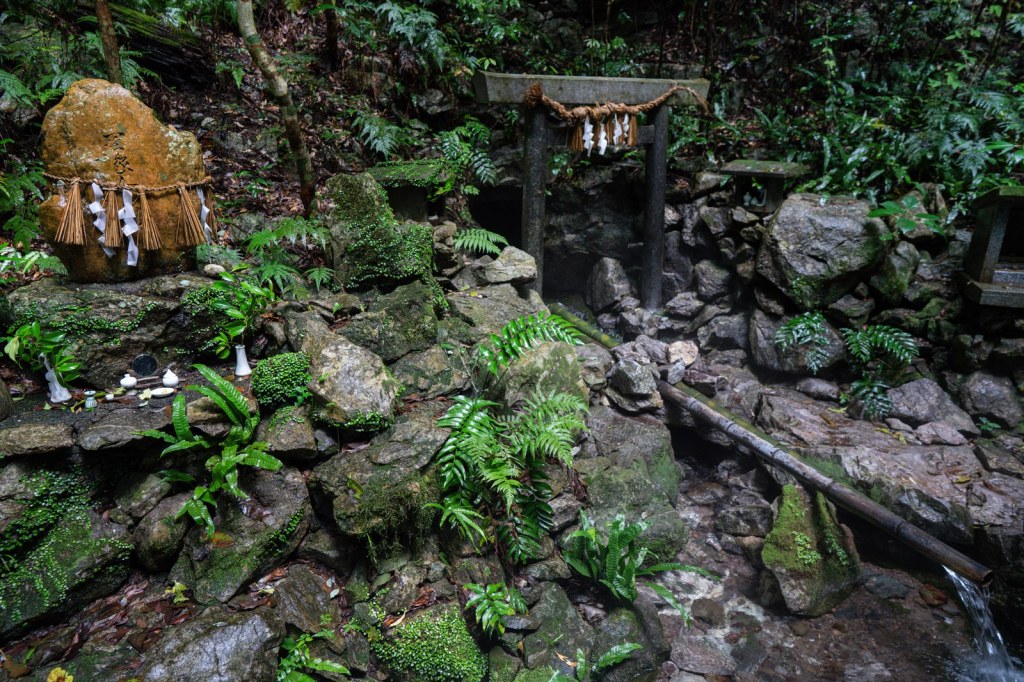
“Ama no Iwato (Erihara no Mizuana) – Jul 9, 2021” (Ama no Iwato, Torii in Mie prefecture) by Big Ben in Japan, CC BY-SA 2.0, source, via Wikimedia Commons
“Origin of the Cave Door Dance (Amaterasu) by Shunsai Toshimasa 1889” (Ama no Iwato, Shunsai Toshimasa) by Shunsai Toshimasa, Public domain, source, via Wikimedia Commons
In Shima, Mie Prefecture, lies Amano Iwato, a site steeped in Japanese mythology and natural beauty. This legendary cave is said to be where Amaterasu, the sun goddess, once hid, casting the world into darkness. Today, visitors can explore this serene location, surrounded by lush nature and cultural history.
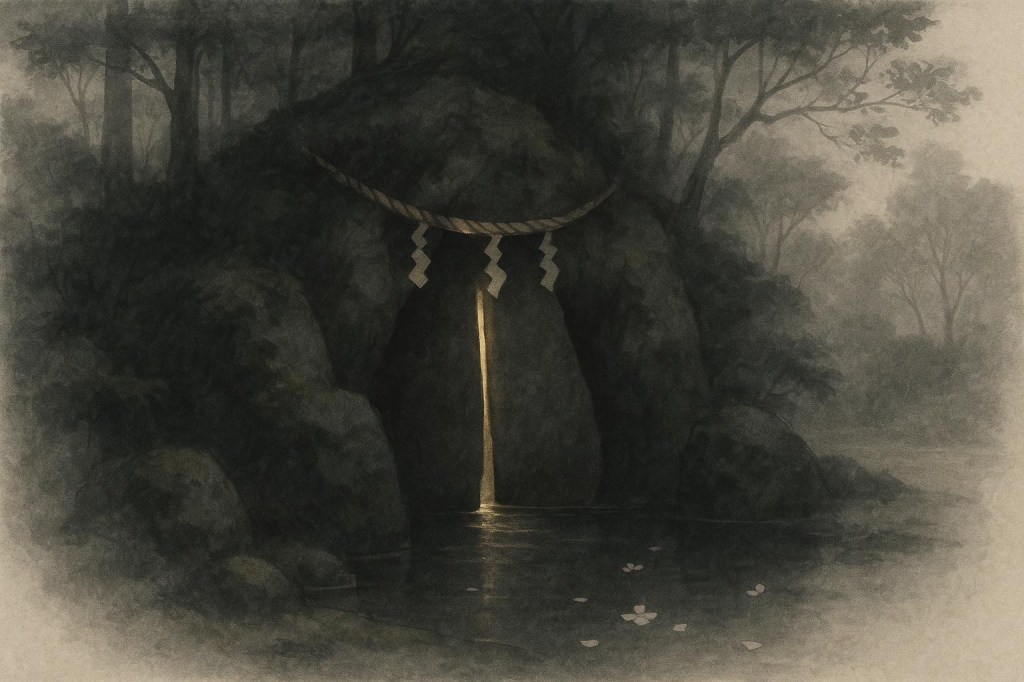
AI-generated illustration
Introduction to Amano Iwato and Japanese Mythology in Shima
FACT: The Mythical Significance of Amano Iwato
Amano Iwato, located in the Erihara area of Isobe-cho, Shima City, is a significant site in Japanese mythology. It is traditionally believed to be the cave where Amaterasu-Omikami, the sun goddess, hid after being upset by her brother Susanoo-no-Mikoto’s actions. This event is a pivotal moment in the Kojiki, Japan’s oldest chronicle, symbolizing the struggle between light and darkness. The myth underscores the importance of harmony and balance, themes deeply rooted in Japanese culture and spirituality. Visitors to the site can reflect on these themes as they explore the natural beauty and tranquility of the area, gaining a deeper appreciation for the cultural significance of the legend.
LEGEND: Amaterasu’s Hiding in the Cave
According to legend, Amaterasu’s seclusion in the cave plunged the world into darkness, causing chaos among the gods. To lure her out, the gods performed a dance, and when Amaterasu peeked out, curious about the commotion, she was captivated by her reflection in a mirror. This allowed the gods to pull her out, restoring light to the world. The cave at Amano Iwato in Shima is one of the sites believed to be the setting of this legendary event. The tale is not just a story of celestial beings but also a reflection of human emotions and societal values, highlighting the interplay between conflict and resolution. Visitors can imagine the dramatic scene as they stand at the entrance of the cave, feeling the weight of history and myth that surrounds them.
The Legend of Amaterasu’s Hiding Cave
FACT: Amano Iwato’s Natural and Cultural Features
The path to Amano Iwato is a serene, shaded walk that leads visitors through the tranquil surroundings of Shima. The area is known for its fresh air and natural beauty, making the journey to the cave a peaceful experience. Along the way, visitors can see a camphor tree planted by Kokichi Mikimoto, known as Mikimoto Kusunoki, which stands as a testament to the area’s cultural heritage. This tree is a symbol of the enduring connection between nature and culture, offering a moment of reflection for those who pass by. The path itself is a journey through time, inviting visitors to consider the historical and spiritual significance of their surroundings.
LEGEND: The Story of the Iwatōzakura Cherry Tree
Near the cave, the Iwatōzakura, a 360-year-old Oshima cherry tree, blooms each spring. According to local tradition, this tree is not only a natural monument but also part of the legend, symbolizing the renewal of life and light after Amaterasu’s return. The tree’s blossoms are celebrated with traditional early rice-cake pounding performances, adding to the cultural richness of the site. These performances are a vibrant expression of community spirit and continuity, connecting the past with the present. For visitors, witnessing these events offers a glimpse into the living traditions that keep the legend of Amano Iwato alive.
“Ama no Iwato (Erihara no Mizuana) – Jul 9, 2021” (Ama no Iwato, Torii in Mie prefecture) by Big Ben in Japan, CC BY-SA 2.0, source, via Wikimedia Commons
Walking the Serene Path to Amano Iwato
FACT: Accessibility and Visitor Information
Visitors can access Amano Iwato via a 20-minute walk from the Mie Kotsu bus stop “Amano-Iwato-guchi.” The site is open to visitors at any time, although it is unlit after dark, and the narrow roads are unsuitable for large buses. This accessibility ensures that travelers can easily explore the legendary cave and its surroundings. The journey itself is part of the experience, inviting visitors to immerse themselves in the tranquil landscape and the storied past of the site. Walking the path allows visitors to disconnect from the modern world and connect with the timeless beauty and mystery of the area.
Natural Wonders Along the Way: Iwatōzakura and Mikimoto Kusunoki
FACT: The Iwatōzakura Cherry Tree
The Iwatōzakura, designated as a natural monument by Shima City, is a highlight for visitors. Its spring blossoms are a sight to behold, offering a vibrant contrast to the lush greenery of the area. This tree is a living connection to the past, standing near the path to the legendary cave. The sight of its blossoms is a reminder of the cyclical nature of life and the beauty of renewal, themes that resonate deeply in Japanese culture. Visitors can take a moment to appreciate the delicate beauty of the blossoms, which serve as a metaphor for the fleeting yet enduring nature of life and legend.
FACT: Mikimoto Kusunoki Camphor Tree
The Mikimoto Kusunoki, a camphor tree planted by the renowned Pearl King Kokichi Mikimoto, marks the approach to Amano Iwato. This tree adds to the historical and cultural tapestry of the site, symbolizing the enduring legacy of Mikimoto’s contributions to the region. It stands as a testament to the influence of individuals who have shaped the cultural landscape of Shima, bridging the gap between nature and human achievement. Visitors can reflect on the legacy of Mikimoto as they pass by, considering how individual actions can leave a lasting impact on the world.
“Origin of the Cave Door Dance (Amaterasu) by Shunsai Toshimasa 1889” (Ama no Iwato, Shunsai Toshimasa) by Shunsai Toshimasa, Public domain, source, via Wikimedia Commons
Japan’s Top 100 Famous Waters at the Shima Site
FACT: The Famous Spring Waters
The spring water flowing from the Amano Iwato site is recognized as one of Japan’s “Top 100 Famous Waters.” This accolade highlights the purity and significance of the water, which is considered sacred and is an integral part of the site’s natural allure. The water’s reputation draws visitors seeking not only the beauty of the landscape but also the spiritual refreshment it offers, embodying the harmonious relationship between nature and spirituality. For those who visit, the water represents a connection to the divine and a source of renewal, echoing the themes of the Amaterasu legend.
Practical Tips for International Travelers Visiting Amano Iwato
FACT: Travel Tips and Recommendations
For international travelers, visiting Amano Iwato offers a unique opportunity to experience a blend of mythology and nature. It is advisable to visit during daylight hours to fully appreciate the site’s beauty and to take part in any local cultural events, such as the rice-cake pounding performances, which provide insight into the region’s traditions. Engaging with these cultural practices allows visitors to connect with the local community and gain a deeper understanding of the area’s historical significance. Travelers are encouraged to respect the site’s cultural and spiritual importance, ensuring that their visit is both enriching and respectful.


_-_Jul_9,_2021.jpg)
_by_Shunsai_Toshimasa_1889.jpg)
