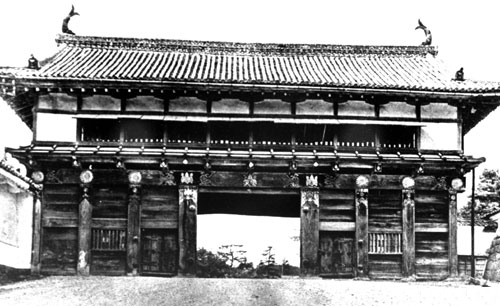
Roof ornaments offer a small-scale way into the history of Sendai Castle in Miyagi. Fragments recovered by archaeologists, together with photographs of the former Ōtemon gate, invite us to look closely at a roofscape that no longer survives intact.
Excavated evidence: gold and roof ornaments
Sendai City records 56 gilded tile pieces, including a chrysanthemum onigawara, and more than 200 shachi-tile fragments from the main enclosure. These are different kinds of roof ornament. The city associates onigawara and shachi with decoration and fire-averting symbolism. It also cautions that the purpose of gilded tiles at early-Edo Sendai Castle requires further research.
A gate recovered through archaeology
The city’s report on investigations in 2023–2024 records an onigawara from the Ōtemon area. It also describes tiles reddened by the 1945 air raid. Such finds connect architectural history with the physical traces of the gate’s destruction.
Putting the fragments in context
A municipal excavation leaflet describes Ōtemon as a special entrance used for the lord and ceremonial occasions. The gate measured approximately 12.5 metres high and 20 metres wide. The leaflet identifies the onigawara discovered in 2024 as evidence for understanding the roof before the war.

How to read a protective ornament
The historical belief that a roof ornament could avert fire should be understood as symbolism. Archaeological objects can document where ornament was used and what survived; they cannot demonstrate supernatural protection. Likewise, a gold surface alone does not settle the political meaning of a building. Here, the most revealing story lies in the relationship between the excavated fragments, the written interpretation and the surviving photograph.
Sources
- Sendai City: excavated roof tiles
- Sendai City: 2024 excavation report
- Sendai City: Ōtemon excavation leaflet
Explore onigawara and protective ornaments at Onikoubou, or discover a hands-on activity at Onigawara Experience.


.jpg)
Leave a Reply