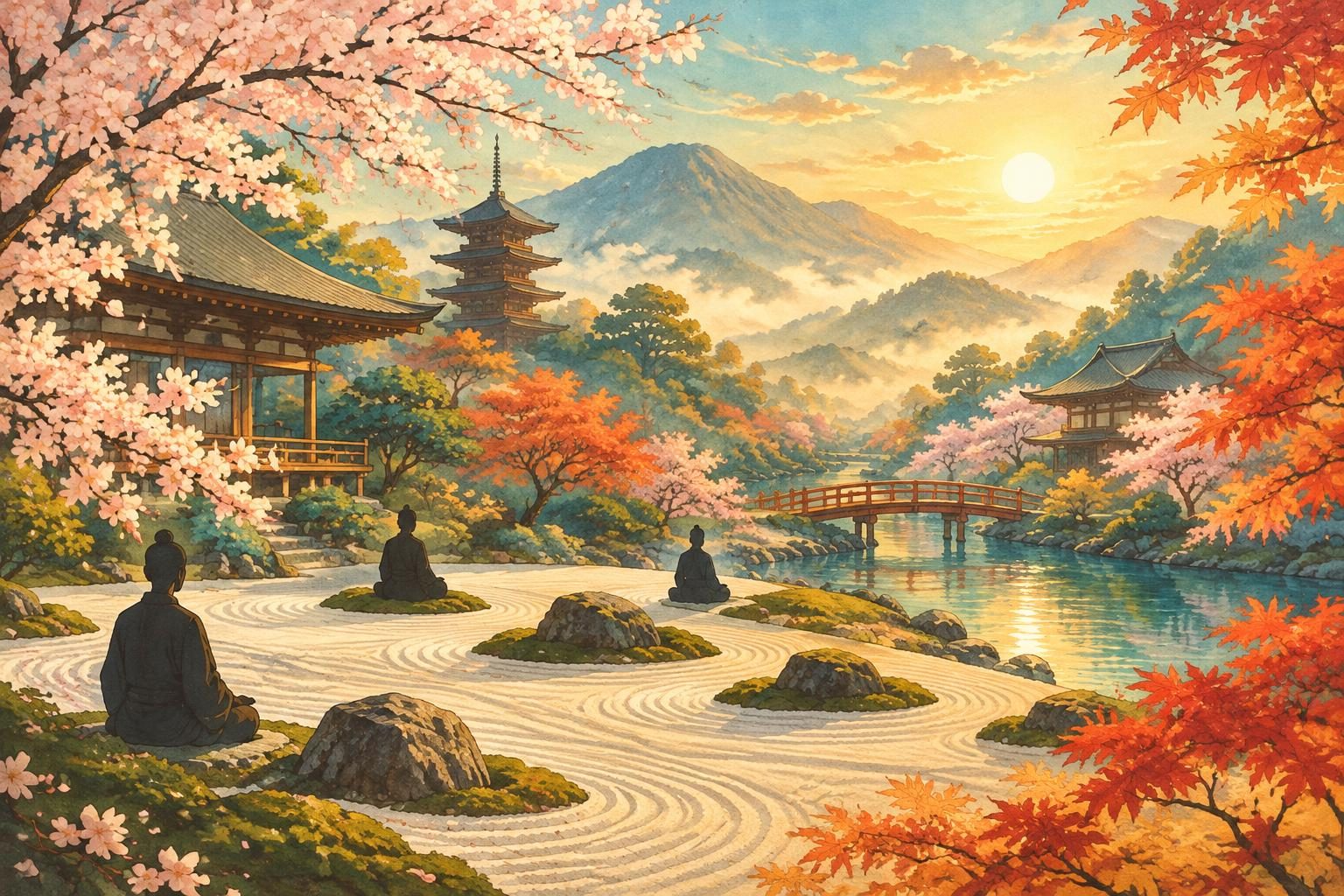
In the serene city of Fukuyama, Hiroshima Prefecture, lies the Shinshoji Zen Museum and Gardens, a tranquil retreat that offers visitors a unique blend of traditional Zen culture and contemporary art. This sanctuary invites travelers to explore its historic architecture, engage in Zen practices, and appreciate its stunning gardens.

Introduction to Shinshoji Zen Museum and Gardens
Shinshoji Zen Museum and Gardens in Fukuyama is a place where history and modernity coexist harmoniously. It is renowned for its peaceful environment and the opportunity it provides to experience Zen in a contemporary setting. The museum and gardens are not only a place of worship but also a cultural hub that attracts visitors from around the world. Here, one can find a serene escape from the hustle and bustle of daily life, immersing themselves in the tranquil beauty and profound teachings of Zen Buddhism.
The History and Vision of Shinshoji in Fukuyama
FACT: The Origins of Shinshoji Temple
Shinshoji Temple was established as a Zen Buddhist temple with the aim of promoting peace and mindfulness. Over the years, it has evolved into a museum and garden complex that reflects the Zen philosophy of simplicity and harmony. The temple’s historical significance and its role in the community have made it a cherished landmark in Fukuyama. Its evolution from a traditional temple to a modern cultural institution highlights its commitment to preserving the essence of Zen while adapting to contemporary needs.
Architectural Highlights: From 17th-Century Halls to Contemporary Art
FACT: Architectural Marvels at Shinshoji
The architectural design of Shinshoji Zen Museum and Gardens is a testament to the seamless integration of traditional and modern elements. The complex includes traditional 17th-century Zen halls alongside contemporary structures like the Kohtei art pavilion. This blend of old and new showcases the temple’s commitment to preserving its heritage while embracing innovation. Visitors can marvel at the intricate woodwork and classic Zen architecture of the older buildings, which stand in contrast yet in harmony with the sleek lines and modern aesthetics of the newer additions.
FACT: The Kohtei Art Pavilion
Kohtei was designed by Kohei Nawa and Sandwich. Inside the ship-shaped pavilion, an installation uses shimmering light on water to offer a meditative experience through contemporary art.
Immersive Zen Experiences: Meditation, Tea, and Sutra Copying
FACT: Engaging in Zen Practices
Visitors to Shinshoji can immerse themselves in various Zen practices that promote mindfulness and inner peace. The temple offers meditation sessions, tea ceremonies, and sutra copying, allowing guests to experience the essence of Zen Buddhism. These activities provide a unique opportunity to connect with the spiritual and cultural aspects of Zen. Participants in meditation sessions can experience the calming effects of focused breathing and mindfulness, while the tea ceremonies offer a glimpse into the ritualistic and meditative aspects of Zen culture.
FACT: The Art of Sutra Copying
Sutra copying, known as shakyo, is a meditative practice that involves transcribing Buddhist scriptures. This activity is believed to bring peace and clarity to the mind, as well as to deepen one’s understanding of Buddhist teachings. At Shinshoji, visitors can participate in this ancient practice, using traditional brushes and ink to copy sacred texts in a quiet and contemplative setting.


Shoshintei and the Tea Garden
FACT: The Gardens of Shinshoji
Shoshintei was created by Shiro Nakane and Yukihiro Nakane, with Shinji-ike pond at its center. The garden connects the experience of the temple’s architecture with its natural surroundings.
FACT: The Tea Garden at Shuroken
Shuroken recreates Omotesenke teahouses and their garden from before the 1788 fire. Masao Nakamura designed the building using historical records, while Kinsaku Nakane guided the recreation of its roji, or tea garden.
The Hakuin Collection at Shōgondō Gallery
FACT: Zen Art Collection
Shinshoji Zen Museum houses an impressive collection of Zen art, including works by the famous Zen master Hakuin. The Shōgondō Gallery within the complex displays these artworks, offering visitors an insight into the rich artistic heritage of Zen Buddhism. The collection is a testament to the enduring influence of Zen art in Japanese culture. Hakuin’s works, known for their bold brushstrokes and profound spiritual themes, provide a glimpse into the mind of one of Zen Buddhism’s most influential figures.
FACT: The Influence of Hakuin’s Art
Hakuin’s art is renowned for its ability to convey deep philosophical concepts through simple yet powerful imagery. His paintings and calligraphy often feature themes of enlightenment, impermanence, and the nature of the self, all central tenets of Zen Buddhism. Visitors to the Shōgondō Gallery can explore these themes through Hakuin’s works, gaining a deeper understanding of the spiritual and cultural significance of Zen art.
Practical Information: Access and Travel Tips from Osaka
For those traveling from Osaka, reaching Shinshoji Zen Museum and Gardens is convenient. Visitors can take a train to Fukuyama Station and then use local transportation to reach the temple. Check the official website for current opening dates, hours, fees and access information before visiting. The journey offers a glimpse into the scenic landscapes of Hiroshima Prefecture, setting the stage for a peaceful and enriching visit to the Zen museum and gardens.
Nearby Guide
Access
- Bus from Fukuyama Station — Use TOMOTETSU bus stop No. 6 at the South Exit. On weekdays, take a service bound for Chitosebashi, Abuto, Tsuneishi or Utsuminokyo and get off at Tenjinyama. On weekends and holidays, use the direct service bound for Mirokunosato and get off at Shinshoji. Check current operating dates and timetables. official access information
- By Car (Fukuyama) — Approximately a 30-minute drive from central Fukuyama. Parking is available on-site for about 30 cars, free of charge. official site
Nearby sights
- Shinshōji Zen Museum and Gardens (Fukuyama) — A Zen Buddhist temple featuring a vast collection of Zen art, including works by Zen master Hakuin, and beautifully landscaped gardens. Visitors can experience Zen practices like meditation and tea ceremonies. official site
Where to eat
- Shinshōji Udon (Fukuyama) — Shinshōji Udon is served at Gokando in bowls used for Zen monastic meals. Check current meal availability before visiting. official site


Related on JAPAN ESSENCE: Exploring the Sengoku Legacy: A Traveler’s Guide to Sekigahara and Gifu | Mount Daisen Winter Guide: Snowshoeing, Temples & Nature in Tottori
Sources
- Shinshoji Zen Museum and Gardens – Chugoku Region Tourism Guide
- Shinshoji Zen Temple, Hiroshima | Hey Japan!
- ARCHITECTURE | Shinshoji Zen Museum and Gardens
- Shinshoji Zen Museum and Gardens Access
- Shinshoji Zen Museum and Gardens About Us
To explore further, visit Onigawara Experience for hands-on onigawara experiences in Japan and Zenkei (禅景) for Zen-inspired onigawara art.
広島県福山市の静かな街にある神勝寺 禅と庭のミュージアムは、伝統的な禅文化と現代アートが融合した静かな隠れ家です。この聖域は、訪れる人々に歴史的な建築を探求し、禅の実践に参加し、美しい庭園を鑑賞する機会を提供します。
神勝寺 禅と庭のミュージアムの紹介
福山市にある神勝寺 禅と庭のミュージアムは、歴史と現代が調和して共存する場所です。ここは、静かな環境と現代的な設定で禅を体験できる機会を提供することで知られています。ミュージアムと庭園は、礼拝の場であるだけでなく、世界中から訪れる人々を引きつける文化の中心地でもあります。ここでは、日常生活の喧騒から逃れ、禅仏教の深遠な教えと美しい静寂に浸ることができます。
福山の神勝寺の歴史とビジョン
事実: 神勝寺の起源
神勝寺は、平和とマインドフルネスを促進することを目的として設立された禅仏教の寺院です。年月を経て、禅の哲学であるシンプルさと調和を反映したミュージアムと庭園の複合施設へと進化しました。寺院の歴史的な重要性と地域社会における役割は、福山で大切にされているランドマークとなっています。伝統的な寺院から現代的な文化施設へと進化したことは、禅の本質を守りつつ、現代のニーズに適応することへの取り組みを示しています。
建築の見どころ: 17世紀のホールから現代アートまで
事実: 神勝寺の建築の驚異
神勝寺 禅と庭のミュージアムの建築デザインは、伝統と現代の要素がシームレスに統合されていることを証明しています。複合施設には、17世紀の伝統的な禅のホールと、洸庭アートパビリオンのような現代的な構造が含まれています。この古いものと新しいものの融合は、遺産を守りながら革新を受け入れる寺院の取り組みを示しています。訪問者は、古い建物の精巧な木工と古典的な禅の建築に驚嘆し、同時に新しい追加部分の洗練されたラインと現代的な美学に調和を見出すことができます。
事実: 洸庭アートパビリオン
洸庭は名和晃平とSandwichによるアートパビリオンです。舟形の建物の内部では、水面の光を用いたインスタレーションを通じて、現代アートによる瞑想体験ができます。
没入型の禅体験: 瞑想、茶道、写経
事実: 禅の実践に参加する
神勝寺を訪れる人々は、マインドフルネスと内なる平和を促進するさまざまな禅の実践に没頭することができます。寺院では、瞑想セッション、茶道、写経を提供しており、訪問者は禅仏教の本質を体験することができます。これらの活動は、禅の精神的および文化的側面とつながるユニークな機会を提供します。瞑想セッションに参加する人々は、集中した呼吸とマインドフルネスの落ち着いた効果を体験でき、茶道は禅文化の儀式的で瞑想的な側面を垣間見ることができます。
事実: 写経の技法
写経は、仏教の経典を写す瞑想的な実践です。この活動は、心に平和と明晰さをもたらし、仏教の教えを深く理解するのに役立つと信じられています。神勝寺では、訪問者はこの古代の実践に参加し、伝統的な筆と墨を使って静かで瞑想的な環境で聖なるテキストを写すことができます。
賞心庭と茶庭
事実: 神勝寺の庭園
賞心庭は中根史郎と中根行宏による庭園で、中央に心字池があります。庭園や建築を巡りながら、境内の自然と禅の文化に触れることができます。
事実: 秀路軒の茶庭
茶室・秀路軒は、天明の大火以前の表千家の茶室と庭を資料に基づいて再現したものです。中村昌生が設計し、周囲の露地(茶庭)の再現には中根金作が指導にあたりました。
荘厳堂ギャラリーの白隠コレクション
事実: 禅アートコレクション
神勝寺 禅と庭のミュージアムには、有名な禅僧白隠による作品を含む印象的な禅アートのコレクションがあります。複合施設内の荘厳堂ギャラリーでは、これらのアート作品が展示されており、訪問者に禅仏教の豊かな芸術的遺産を垣間見る機会を提供しています。このコレクションは、日本文化における禅アートの持続的な影響を証明しています。白隠の作品は、その大胆な筆遣いと深遠な精神的テーマで知られており、禅仏教の最も影響力のある人物の一人の心を垣間見ることができます。
事実: 白隠のアートの影響
白隠のアートは、シンプルでありながら力強いイメージを通じて深い哲学的概念を伝える能力で知られています。彼の絵画や書道は、悟り、無常、自我の本質といった禅仏教の中心的な教義をテーマにすることが多いです。荘厳堂ギャラリーを訪れる人々は、白隠の作品を通じてこれらのテーマを探求し、禅アートの精神的および文化的な意義をより深く理解することができます。
実用情報: 大阪からのアクセスと旅行のヒント
大阪から神勝寺 禅と庭のミュージアムへのアクセスは便利です。訪問者は福山駅まで電車で行き、そこから地元の交通機関を利用して寺院に到着できます。開館日、営業時間、料金、アクセスの最新情報は、訪問前に公式サイトでご確認ください。この旅は、広島県の美しい風景を垣間見る機会を提供し、禅のミュージアムと庭園への平和で豊かな訪問の舞台を整えます。
周辺ガイド
アクセス
- 福山駅からのバス — 南口6番乗り場のトモテツバスを利用します。平日は千年橋・阿伏兎・常石・内海農協行きで天神山下車。土日祝日はみろくの里行き直行便で神勝寺下車。最新の運行日と時刻を確認してください。公式アクセス案内
- 車で(福山)— 福山市中心部から約30分のドライブ。敷地内に約30台分の無料駐車場があります。公式サイト
周辺の見どころ
- 神勝寺 禅と庭のミュージアム(福山)— 禅僧白隠による作品を含む広大な禅アートコレクションと、美しく造園された庭園を備えた禅仏教の寺院。訪問者は瞑想や茶道などの禅の実践を体験できます。公式サイト
食べる
- 神勝寺うどん(福山)— 五観堂では、禅僧の食事作法に触れながら神勝寺うどんをいただけます。提供内容や営業日は訪問前にご確認ください。公式サイト
Related on JAPAN ESSENCE: Exploring the Sengoku Legacy: A Traveler’s Guide to Sekigahara and Gifu | Mount Daisen Winter Guide: Snowshoeing, Temples & Nature in Tottori
Sources
- Shinshoji Zen Museum and Gardens – Chugoku Region Tourism Guide
- Shinshoji Zen Temple, Hiroshima | Hey Japan!
- ARCHITECTURE | Shinshoji Zen Museum and Gardens
- Shinshoji Zen Museum and Gardens Access
- Shinshoji Zen Museum and Gardens About Us
さらに楽しみたい方は、鬼瓦づくりを体験できるOnigawara Experienceや、禅の美意識を映す鬼瓦アートの禅景もご覧ください。
Leave a Reply