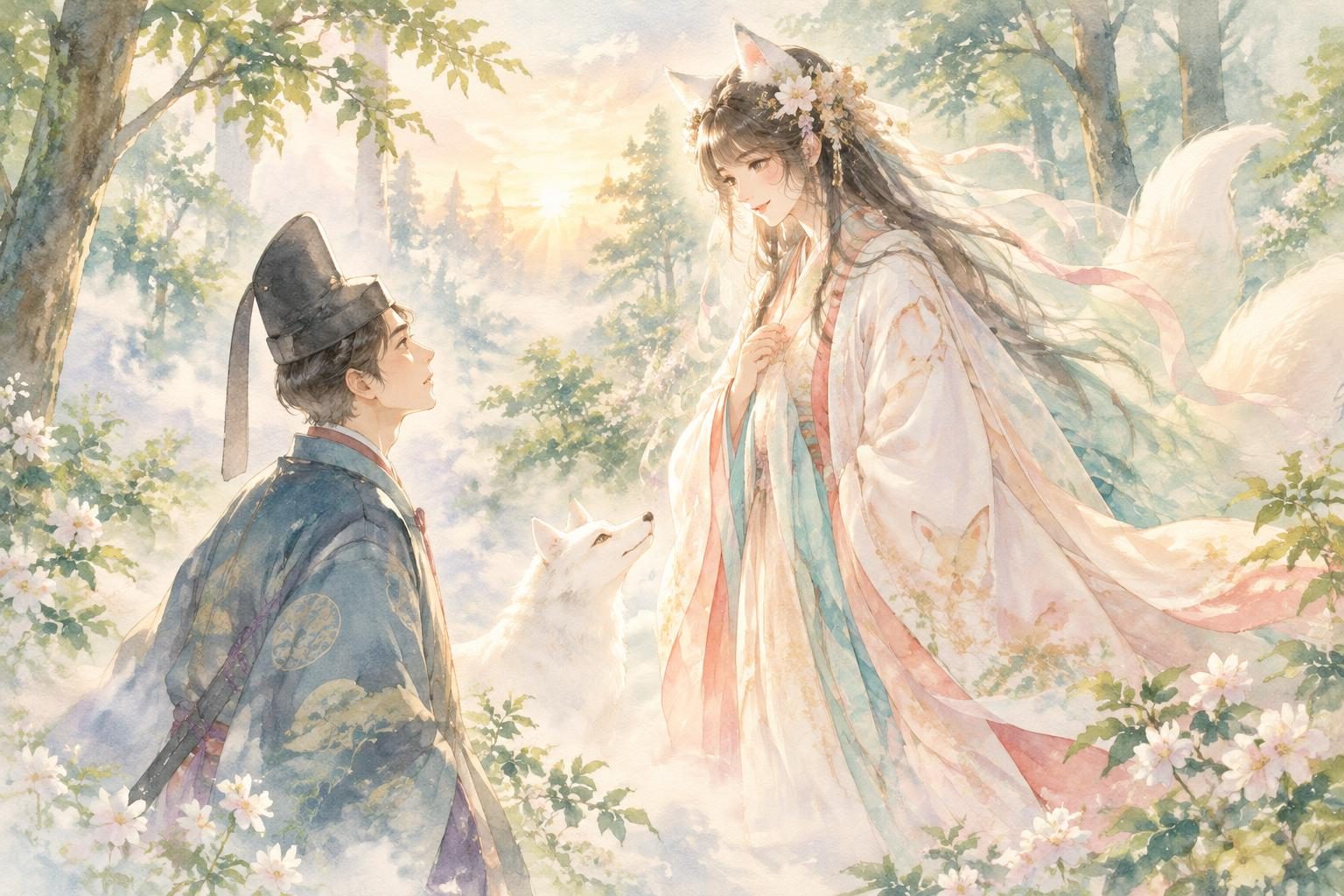
In Izumi, Osaka Prefecture, the legend of Kuzunoha, the fox-wife, weaves a tale of love, mystery, and supernatural transformation. This enchanting story is deeply rooted in the cultural landscape of the region, with Shinoda Forest and the Kuzunoha Inari Shrine serving as its focal points.


Introduction to the Legend of Kuzunoha
FACT: The Historical and Geographical Context
Shinoda-no-Mori, now part of Kuzunoha-cho in Izumi City, is the legendary forest associated with Kuzunoha. It is here that the Kuzunoha Inari Shrine stands, marking the site where the legendary fox-wife is said to have departed. The shrine, formally known as Shinoda-no-Mori Shrine, is recorded as founded in 708 according to local sources, underscoring its historical significance in the region. The forest and shrine are deeply intertwined with the legend, offering visitors a glimpse into the past where myth and history converge. Visitors to the shrine can sense the weight of history and the enduring power of the legend as they explore the serene grounds.

The Tale of Abe no Yasuna and the White Fox
LEGEND: The Rescue and Transformation
According to the legend, Abe no Yasuna, a nobleman, encountered a white fox in distress in Shinoda Forest. After rescuing the fox, it transformed into a beautiful woman named Kuzunoha. Grateful for his kindness, Kuzunoha married Yasuna, and together they had a son named Dōjimaru, who would later be known as the famed onmyoji, Abe no Seimei. This transformation from fox to human and the subsequent marriage highlight themes of gratitude and the mystical bond between humans and the supernatural. The story is often recounted during local festivals and gatherings, where the tale of Yasuna’s bravery and Kuzunoha’s gratitude is celebrated.
LEGEND: The Birth of Abe no Seimei
The birth of Dōjimaru, later known as Abe no Seimei, is a significant element of the legend. Seimei is celebrated in Japanese history as a master of onmyōdō, a traditional Japanese esoteric cosmology. The legend of his birth from a fox mother imbues his character with a mystical origin, suggesting that his supernatural skills were inherited from his mother, Kuzunoha. This aspect of the tale emphasizes the blend of human and supernatural worlds. The story of Seimei’s origins is a popular subject in local storytelling, with many believing that his abilities were a direct gift from his fox lineage.


The Heartbreaking Departure and Famous Farewell Poem
LEGEND: Kuzunoha’s Departure
The legend tells that when Dōjimaru accidentally saw Kuzunoha’s true fox form, she had to leave her family. Before departing, she left behind a poignant farewell poem: “If you yearn for me, come and seek me in Shinoda Forest of Izumi Province, where the leaves of kuzu hide my regret.” This poem is central to the legend, symbolizing her enduring love and sorrow. It encapsulates the themes of love, loss, and longing, leaving a lasting emotional impact on those who hear it. The poem is often recited at the shrine, with visitors reflecting on the themes of love and sacrifice that it conveys.
Visiting Kuzunoha Inari Shrine in Izumi, Osaka
FACT: Shrine Features and Cultural Significance
The Kuzunoha Inari Shrine is a place of deep cultural and spiritual importance. Visitors come to pray for children’s welfare and safe childbirth, reflecting the maternal aspect of the Kuzunoha legend. The shrine grounds are home to several significant landmarks, including a large camphor tree, known as Chie no Kusu, which is designated as a Natural Monument by Izumi City. Folklore suggests that this tree is where the white fox disappeared. The shrine’s connection to the legend makes it a poignant site for those seeking blessings related to family and fertility. The serene atmosphere and historical significance make it a popular destination for both locals and tourists.
FACT: Sacred Landmarks and Mystical Elements
Within the shrine grounds, visitors can find the Sugatami-no-Ido, or Mirror Well, where the fox is said to have seen her reflection. Additionally, there is a stone believed to be bewitched by a fox, adding to the mystical aura of the site. These elements not only enhance the legend but also provide tangible connections to the story. The presence of these landmarks allows visitors to physically engage with the legend, offering a unique and immersive experience. Many visitors leave offerings or prayers at these sites, hoping to connect with the spirit of Kuzunoha and seek her blessings.


The Legend’s Legacy in Kabuki and Japanese Theater
FACT: Theatrical Adaptations
The legend of Kuzunoha has been immortalized in Japanese theater, particularly in early modern puppet (bunraku) and kabuki performances. One notable adaptation is Chikamatsu’s Ashiya Dōman Ōuchi Kagami from 1734, which dramatizes the tale and highlights its enduring appeal in Japanese culture. These performances not only preserve the legend but also bring it to life, allowing audiences to experience the drama and emotion of Kuzunoha’s story through the art of theater. Theatrical adaptations continue to draw audiences, keeping the legend alive and relevant in contemporary culture.
Nearby Guide
Nearby sights
- Shinodanomori Furusato Museum (Izumi) — A local history museum and community center where you can see exhibits related to the legend and a statue of Lady Kuzunoha and her son, as well as a large pond purported to have once been used by Kuzunoha as a mirror. details
Where to eat
- Kuzunoha Inari Shrine’s Magatama Fox Charm (Izumi) — A unique charm inspired by the Kuzunoha legend, featuring a magatama in the shape of a white fox combined with a glass bead of a different color, created in collaboration with Satake Glass. details
- Shinodanomori Kuzunoha Inari Shrine’s Fox-themed Charms (Izumi) — The shrine office sells unique charms, including a fox holding a fortune slip in its mouth and votive plaques decorated with pictures of foxes. details


Related on JAPAN ESSENCE: Oji Fox Parade: Experiencing Tokyo’s Unique New Year’s Eve Kitsune Tradition | Susenoja Cave Toyohashi: Unveiling History and Legend
Regional guide
Location: Izumi, Osaka Prefecture
- Visiting spot: Shinoda-no-Mori Kuzunoha Inari Shrine (Izumi) — source
- Chie-no-Kusu (Large camphor tree) (Izumi) — source
- Sugatami-no-Ido (Mirror Well) (Izumi) — source
Sources
- Kuzunoha – Yokai Encyclopedia | YOKAI.JP
- Osaka Kuzunoha Legend|Legend from 怪異・妖怪伝承データベース/大阪府 葛の葉|IZANORA
- Shinoda-no-Mori shrine | Shinoda Area | Introduction of Cultural Properties | History and Cultural property in Izumi City
- Kuzunoha Inari Shrine — Field Notes Japan
- Discover Osaka Info
- Atlas Obscura
To explore further, visit Kawara Kobo (瓦工房) for a hands-on kawara experience and Oni Kobo (鬼工房) for onigawara demon-tile art and charms.
大阪府和泉市では、狐妻である葛の葉の伝説が愛と謎、そして超自然的な変身の物語を紡いでいます。この魅惑的な物語は地域の文化的景観に深く根付いており、信太の森と葛の葉稲荷神社がその中心となっています。
葛の葉伝説の紹介
事実: 歴史的および地理的背景
信太の森は、現在の和泉市葛の葉町の一部であり、葛の葉に関連する伝説の森です。ここには葛の葉稲荷神社があり、伝説の狐妻が去ったとされる場所を示しています。この神社は正式には信太の森神社として知られ、地元の資料によれば708年に創建されたと記録されており、地域における歴史的重要性を強調しています。森と神社は伝説と深く結びついており、訪れる人々に神話と歴史が交差する過去を垣間見せます。神社を訪れる人々は、静かな境内を探索しながら、歴史の重みと伝説の持続的な力を感じることができます。
安倍保名と白狐の物語
伝承: 救出と変身
伝説によれば、貴族の安倍保名は信太の森で困っている白狐に出会いました。狐を救った後、それは美しい女性、葛の葉に変身しました。彼の親切に感謝して、葛の葉は保名と結婚し、後に有名な陰陽師となる息子、童子丸をもうけました。この狐から人間への変身とその後の結婚は、感謝の気持ちと人間と超自然の絆を強調しています。この物語は地元の祭りや集まりでしばしば語られ、保名の勇気と葛の葉の感謝の物語が祝われます。
伝承: 安倍晴明の誕生
童子丸、後に安倍晴明として知られる人物の誕生は、伝説の重要な要素です。晴明は日本の歴史において陰陽道の達人として称賛されています。狐の母から生まれたという伝説は、彼のキャラクターに神秘的な起源を与え、彼の超自然的な能力が母である葛の葉から受け継がれたことを示唆しています。この物語のこの側面は、人間と超自然の世界の融合を強調しています。晴明の起源の物語は地元の語りの中で人気のあるテーマであり、多くの人が彼の能力が狐の血統からの直接の贈り物であると信じています。
心痛む別れと有名な別れの詩
伝承: 葛の葉の別れ
伝説によれば、童子丸が誤って葛の葉の本当の狐の姿を見てしまったとき、彼女は家族を去らなければなりませんでした。去る前に、彼女は「恋しくば尋ね来てみよ和泉なる信太の森のうらみ葛の葉」との感動的な別れの詩を残しました。この詩は伝説の中心であり、彼女の持続的な愛と悲しみを象徴しています。それは愛、喪失、そして切望のテーマを要約し、それを聞く人々に永続的な感情的影響を与えます。この詩は神社でしばしば朗読され、訪れる人々はそれが伝える愛と犠牲のテーマを反映します。
大阪・和泉の葛の葉稲荷神社を訪れる
事実: 神社の特徴と文化的意義
葛の葉稲荷神社は、深い文化的および精神的な重要性を持つ場所です。訪れる人々は、子供の福祉や安全な出産を祈るために訪れ、葛の葉伝説の母性的な側面を反映しています。神社の境内には、和泉市の天然記念物に指定されている大きなクスノキ「知恵の楠」を含むいくつかの重要なランドマークがあります。伝説によれば、この木は白狐が消えた場所とされています。伝説とのつながりがあるこの神社は、家族や出産に関連する祝福を求める人々にとって感動的な場所です。静かな雰囲気と歴史的な重要性により、地元の人々や観光客に人気のある目的地となっています。
事実: 神聖なランドマークと神秘的な要素
神社の境内には、狐が自分の姿を見たとされる「姿見の井戸」があります。また、狐に取り憑かれたとされる石もあり、場所の神秘的な雰囲気を高めています。これらの要素は伝説を強化するだけでなく、物語への具体的なつながりを提供します。これらのランドマークの存在により、訪れる人々は伝説と物理的に関わることができ、ユニークで没入感のある体験を提供します。多くの訪問者は、これらの場所で供物や祈りを捧げ、葛の葉の精神とつながり、彼女の祝福を求めます。
歌舞伎と日本の劇場における伝説の遺産
事実: 劇場の適応
葛の葉の伝説は、日本の劇場、特に近世の人形浄瑠璃(文楽)や歌舞伎の公演で不朽のものとなっています。1734年の近松の『芦屋道満大内鑑』は、この物語を劇化し、日本文化におけるその持続的な魅力を強調しています。これらの公演は伝説を保存するだけでなく、葛の葉の物語のドラマと感情を劇場芸術を通じて観客に体験させます。劇場の適応は観客を引き続き引きつけ、現代文化において伝説を生き生きとさせ、関連性を持たせています。
周辺ガイド
周辺の見どころ
- 信太の森ふるさと館(和泉) — 伝説に関連する展示や葛の葉とその息子の像、大きな池が見られる地元の歴史博物館兼コミュニティセンター。 詳細
食べる
- 葛の葉稲荷神社の勾玉狐のお守り(和泉) — 葛の葉伝説にインスパイアされたユニークなお守りで、白狐の形をした勾玉と異なる色のガラスビーズを組み合わせたもの。 詳細
- 信太の森葛の葉稲荷神社の狐をテーマにしたお守り(和泉) — 神社の社務所では、口におみくじをくわえた狐や狐の絵が描かれた絵馬など、ユニークなお守りを販売しています。 詳細
Related on JAPAN ESSENCE: Oji Fox Parade: Experiencing Tokyo’s Unique New Year’s Eve Kitsune Tradition | Susenoja Cave Toyohashi: Unveiling History and Legend
地域ガイド
場所: 大阪府和泉市
Leave a Reply