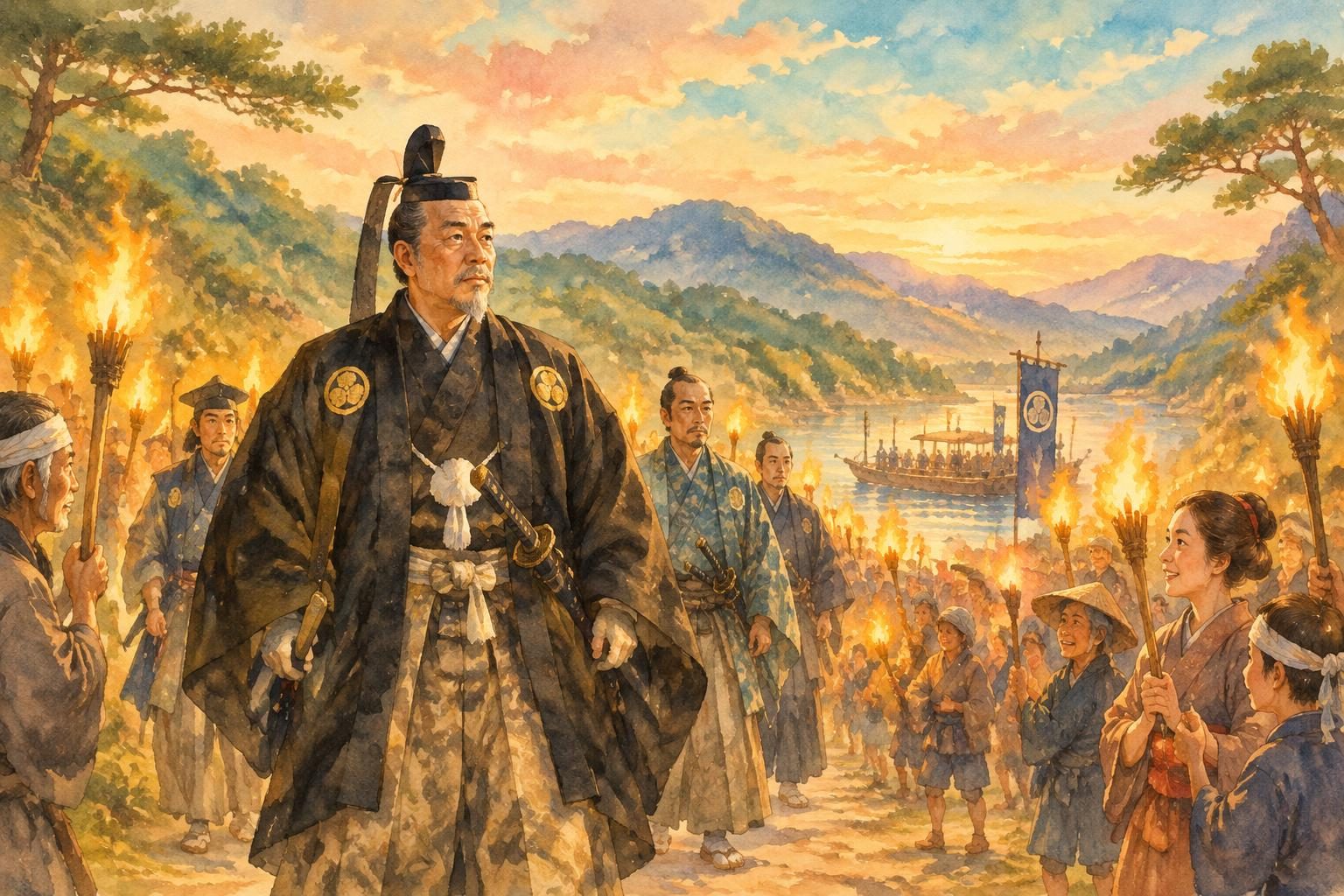
In Saitama City, Saitama Prefecture, the Hiruma Ferry crossing holds a legendary tale of Tokugawa Ieyasu, a key figure in Japanese history. This site, rich in historical significance, offers a glimpse into the past and the folklore surrounding one of Japan’s great unifiers.

Introduction to Hiruma Ferry and the Tokugawa Ieyasu Legend
FACT: The Historical Site of Hiruma Ferry
The Hiruma Ferry crossing, located at 495‑12 Iida‑Shinden in Nishi Ward, Saitama City, is a site steeped in history. This location was more than just a ferry crossing; it was a vibrant port known as Iida Riverbank from the Edo through the Taishō periods. The area was bustling with activity, featuring boatmen huts, raft lodgings, and teahouses, which marked it as a significant hub for river transport and trade in the region. The presence of these facilities indicates a thriving community that relied heavily on the river for economic activities, making it a critical point in the network of river transport during that era.
The Iida Riverbank served as a bustling port where goods and people flowed freely, contributing significantly to the local economy. The riverbank’s strategic location made it a focal point for trade, allowing for the exchange of goods and cultures. This vibrant scene of commerce and interaction paints a picture of a dynamic community that thrived on the river’s bounty, playing a crucial role in the connectivity and economic development of the region.
FACT: The Role of Iida Riverbank in Regional Trade
During its peak, the Iida Riverbank was not only a crossing point but also a lively port essential for the transportation of goods and people. The bustling activity at this port facilitated trade and communication across regions, highlighting its importance in the economic landscape of the time. The community that developed around the riverbank included various services and accommodations for travelers and traders, further emphasizing its role as a key node in the regional trade network.
The riverbank’s significance extended beyond mere trade; it was a cultural crossroads where travelers and traders could rest and exchange stories and ideas. The teahouses and lodgings provided not only rest but also a venue for social interaction, fostering a sense of community among the diverse people who passed through the area. This vibrant cultural exchange contributed to the rich tapestry of life along the river, making the Iida Riverbank a cornerstone of regional connectivity.
The Legend of the Torchlit Welcome in the Tenshō Era
LEGEND: The Story of Tokugawa Ieyasu’s Arrival
According to local tradition, during the Tenshō era in the late 16th century, Tokugawa Ieyasu arrived at the Hiruma Ferry after dark. The villagers, eager to welcome him, lit beacon fires and carried pine torches, creating an illumination so bright it seemed like daytime. This extraordinary welcome left a lasting impression on Ieyasu, who, in gratitude for their warm reception, granted the ferry keeper land and bestowed upon him the surname “Hiruma.” This story not only highlights the respect and admiration Ieyasu commanded but also reflects the villagers’ resourcefulness and hospitality.
The legend of Ieyasu’s arrival is more than just a tale of hospitality; it is a story of mutual respect and recognition. The villagers’ efforts to light the way for Ieyasu symbolize their loyalty and support, while Ieyasu’s gesture of granting land reflects his appreciation and acknowledgment of their allegiance. This exchange between the villagers and Ieyasu underscores the deep bonds of trust and cooperation that were crucial in the turbulent times of the late 16th century.
LEGEND: The Variant Tale of Strategic Illusion
A local oral variant of the legend holds that the villagers’ torchlight was not merely a welcoming gesture but a strategic maneuver. By lighting massive torches, they created the illusion of a large troop presence, deterring any remnants of the Hōjō clan who might have been pursuing Ieyasu as he moved into the Kanto region. This version of the legend underscores the tactical acumen attributed to Ieyasu and his supporters, suggesting that the villagers played a crucial role in ensuring the safety and success of Ieyasu’s journey.
This variant highlights the strategic ingenuity of the villagers, who used their resources to protect and aid Ieyasu. The story reflects the complex interplay of loyalty, strategy, and community effort in the face of potential threats. It adds a layer of depth to the legend, portraying the villagers not only as hospitable hosts but also as astute allies in Ieyasu’s campaign.


Tracing Old Roads: The Batō Kannon Stone Statue
FACT: The Significance of the Batō Kannon Statue
Located about 100 meters south of the Hiruma Ferry site within the Yakushidō precinct, a stone Batō Kannon statue bears inscriptions marking old road directions. These inscriptions reveal that the ferry was on an important east-west route, connecting various towns and facilitating travel and trade. The Batō Kannon, a deity often associated with protection and guidance, stands as a testament to the historical significance of the ferry crossing in regional transportation networks. The inscriptions on the statue provide valuable insights into the historical routes and the importance of the ferry as a link between different regions.
The Batō Kannon statue serves as a historical marker, offering a tangible connection to the past. Its inscriptions guide modern visitors through the ancient routes that once facilitated the movement of people and goods. The statue’s presence underscores the enduring legacy of the ferry site as a critical juncture in the region’s transportation history, inviting reflection on the journeys of those who traveled these routes centuries ago.
The Modern Era: From Meiji Relocation to the Annual Fire Festival
FACT: Changes and Continuities at the Ferry Site
At the end of the Meiji period, the construction of a prefectural road led to the relocation of the ferry crossing near the current Funato Bridge. This shift marked a new chapter in the site’s history, as the focus of transportation changed with the advent of modern infrastructure. Despite these changes, the legacy of the ferry and its legends continues to captivate visitors. Today, the area celebrates its rich history with an annual fire festival, echoing the torchlit welcome of Ieyasu and keeping the spirit of the legend alive. This festival serves as a reminder of the site’s historical and cultural significance, drawing visitors who wish to experience a piece of living history.
The annual fire festival is a vibrant celebration that brings the legend of Ieyasu’s arrival to life. It is a time when the community comes together to honor their heritage, with torchlight processions and reenactments that evoke the legendary welcome of the past. This festival not only preserves the memory of the historic events but also strengthens community bonds, ensuring that the story of Hiruma Ferry continues to inspire future generations.


Tips for Visiting the Hiruma Ferry Historic Site in Saitama
Visitors to the Hiruma Ferry site should respect the area’s historical significance and observe local customs. The municipal website provides guidance on how to visit without disturbing the site. For current hours, fees, and access, it is advisable to check the official website. The site offers a unique opportunity to connect with the past and explore the rich tapestry of history and legend that defines this region.


Related on JAPAN ESSENCE: Koshamain’s War: Exploring Hokkaido’s Medieval History in Kaminokuni | From Geological Birth to Meiji Pioneers: The Layered Timeline of Hokkaido and Sapporo
Regional guide
Location: Saitama, Saitama Prefecture
- Hiruma Ferry site and Batō Kannon statue (Saitama) — source
Sources
To explore further, visit Zenkei (禅景) for Zen-inspired onigawara art and Onigawara Experience for hands-on onigawara experiences in Japan.
埼玉県さいたま市にある比留間渡しは、日本史の重要人物である徳川家康の伝説を持つ場所です。この歴史的に重要な場所は、日本の偉大な統一者の一人にまつわる過去と民間伝承を垣間見ることができます。
比留間渡しと徳川家康伝承の紹介
事実: 比留間渡しの歴史的な場所
さいたま市西区の飯田新田495‑12に位置する比留間渡しは、歴史に彩られた場所です。この場所は単なる渡し場ではなく、江戸時代から大正時代にかけて飯田河岸として知られる活気ある港でした。この地域は、船頭小屋や筏宿、茶屋があり、地域の川運輸と貿易の重要な拠点として知られていました。これらの施設の存在は、経済活動に大きく依存していた繁栄するコミュニティを示しており、その時代の川運輸ネットワークの重要なポイントとなっていました。
飯田河岸は、物資と人々が自由に流れる活気ある港として、地域経済に大きく貢献しました。河岸の戦略的な位置は、物資と文化の交換を可能にし、貿易の焦点となりました。この活気ある商業と交流の場面は、川の恩恵を受けて繁栄したダイナミックなコミュニティの姿を描き、地域の接続性と経済発展において重要な役割を果たしました。
事実: 地域貿易における飯田河岸の役割
その最盛期には、飯田河岸は単なる渡し場ではなく、物資と人々の輸送に不可欠な活気ある港でした。この港での活発な活動は、地域間の貿易とコミュニケーションを促進し、その時代の経済的風景における重要性を際立たせました。河岸周辺に発展したコミュニティには、旅行者や商人のためのさまざまなサービスと宿泊施設が含まれており、地域貿易ネットワークの重要なノードとしての役割をさらに強調しています。
河岸の重要性は単なる貿易を超えて、旅行者や商人が休息し、物語やアイデアを交換する文化的な交差点でもありました。茶屋や宿泊施設は、休息だけでなく、社会的交流の場を提供し、地域を通過する多様な人々の間でコミュニティ意識を育みました。この活気ある文化交流は、川沿いの生活の豊かなタペストリーに貢献し、地域の接続性の礎となりました。
天正時代の松明の歓迎伝説
伝承: 徳川家康の到来の物語
地元の言い伝えによると、16世紀後半の天正時代に、徳川家康が日没後に比留間渡しに到着しました。村人たちは彼を歓迎するために、かがり火を灯し、松明を掲げ、昼間のように明るい光景を作り出しました。この特別な歓迎は家康に強い印象を残し、彼はその温かい歓迎に感謝して、渡し守に土地を与え、「比留間」という姓を授けました。この物語は、家康が持っていた尊敬と敬意を強調するだけでなく、村人たちの機知とおもてなしを反映しています。
家康の到来の伝説は、単なるおもてなしの物語以上のものであり、相互の尊敬と認識の物語です。村人たちが家康のために道を照らす努力は、彼らの忠誠と支持を象徴し、家康が土地を授ける行為は、彼らの忠誠を評価し認識したことを反映しています。この村人と家康の間の交流は、16世紀後半の激動の時代において重要な信頼と協力の絆を強調しています。
伝承: 戦略的錯覚の異説
地域の口承では、村人たちの松明の光は単なる歓迎のジェスチャーではなく、戦略的な策であったとされています。巨大な松明を灯すことで、大軍がいるように見せかけ、関東地方に移動する家康を追っていたかもしれない北条氏の残党を牽制しました。この伝説のバリエーションは、家康とその支持者に帰される戦術的な才覚を強調し、村人たちが家康の旅の安全と成功を確保する上で重要な役割を果たしたことを示唆しています。
この異説は、村人たちの戦略的な才覚を強調し、彼らが家康を守り支援するために資源を活用したことを示しています。この物語は、潜在的な脅威に直面した際の忠誠、戦略、コミュニティの努力の複雑な相互作用を反映しています。それは、村人たちを単なる親切なホストとしてだけでなく、家康の戦いにおける賢明な同盟者として描き、伝説に深みを加えています。
古道をたどる: 馬頭観音石像
事実: 馬頭観音像の意義
比留間渡しの場所から南に約100メートルの薬師堂境内に、古道の方向を示す碑文を持つ馬頭観音の石像があります。これらの碑文は、渡しが東西の重要なルート上にあり、さまざまな町を結び、旅行と貿易を促進していたことを示しています。馬頭観音は、しばしば保護と導きを象徴する神として、地域の交通ネットワークにおける渡しの歴史的重要性を証明しています。像の碑文は、歴史的なルートと、異なる地域を結ぶリンクとしての渡しの重要性について貴重な洞察を提供します。
馬頭観音像は、過去との有形のつながりを提供する歴史的なマーカーとして機能します。その碑文は、かつて人々と物資の移動を促進した古代のルートを現代の訪問者に案内します。像の存在は、地域の交通史における重要な交差点としての渡しの持続的な遺産を強調し、何世紀も前にこれらのルートを旅した人々の旅路を振り返る機会を提供します。
現代: 明治の移転から毎年の火祭りまで
事実: 渡し場の変化と継続
明治時代の終わりに、県道の建設により、渡し場は現在の船渡橋付近に移転しました。この移転は、現代のインフラの出現とともに、サイトの歴史に新たな章を刻みました。これらの変化にもかかわらず、渡しとその伝説の遺産は訪問者を魅了し続けています。今日、この地域は、家康の松明の歓迎を反映し、伝説の精神を生かし続ける毎年の火祭りでその豊かな歴史を祝います。この祭りは、サイトの歴史的および文化的な重要性を思い起こさせ、訪問者を引き寄せ、歴史の一部を体験したいと願う人々を魅了します。
毎年の火祭りは、家康の到来の伝説を生き生きとさせる活気ある祝祭です。コミュニティが集まり、松明の行列や過去の伝説的な歓迎を呼び起こす再現を行う時です。この祭りは、歴史的な出来事の記憶を保存するだけでなく、コミュニティの絆を強化し、比留間渡しの物語が未来の世代にインスピレーションを与え続けることを保証します。
埼玉の比留間渡し史跡を訪れるためのヒント
比留間渡しの場所を訪れる際には、地域の歴史的重要性を尊重し、地元の習慣を守るべきです。市のウェブサイトでは、サイトを乱さずに訪れる方法についてのガイダンスを提供しています。最新の営業時間、料金、アクセスについては、公式サイトでご確認ください。このサイトは、過去とつながり、この地域を定義する歴史と伝説の豊かなタペストリーを探求するユニークな機会を提供します。
Related on JAPAN ESSENCE: Koshamain’s War: Exploring Hokkaido’s Medieval History in Kaminokuni | From Geological Birth to Meiji Pioneers: The Layered Timeline of Hokkaido and Sapporo
地域ガイド
場所: 埼玉県さいたま市
- 比留間渡し跡と馬頭観音像(さいたま) — source
Sources
さらに楽しみたい方は、禅の美意識を映す鬼瓦アートの禅景や、鬼瓦づくりを体験できるOnigawara Experienceもご覧ください。
Leave a Reply