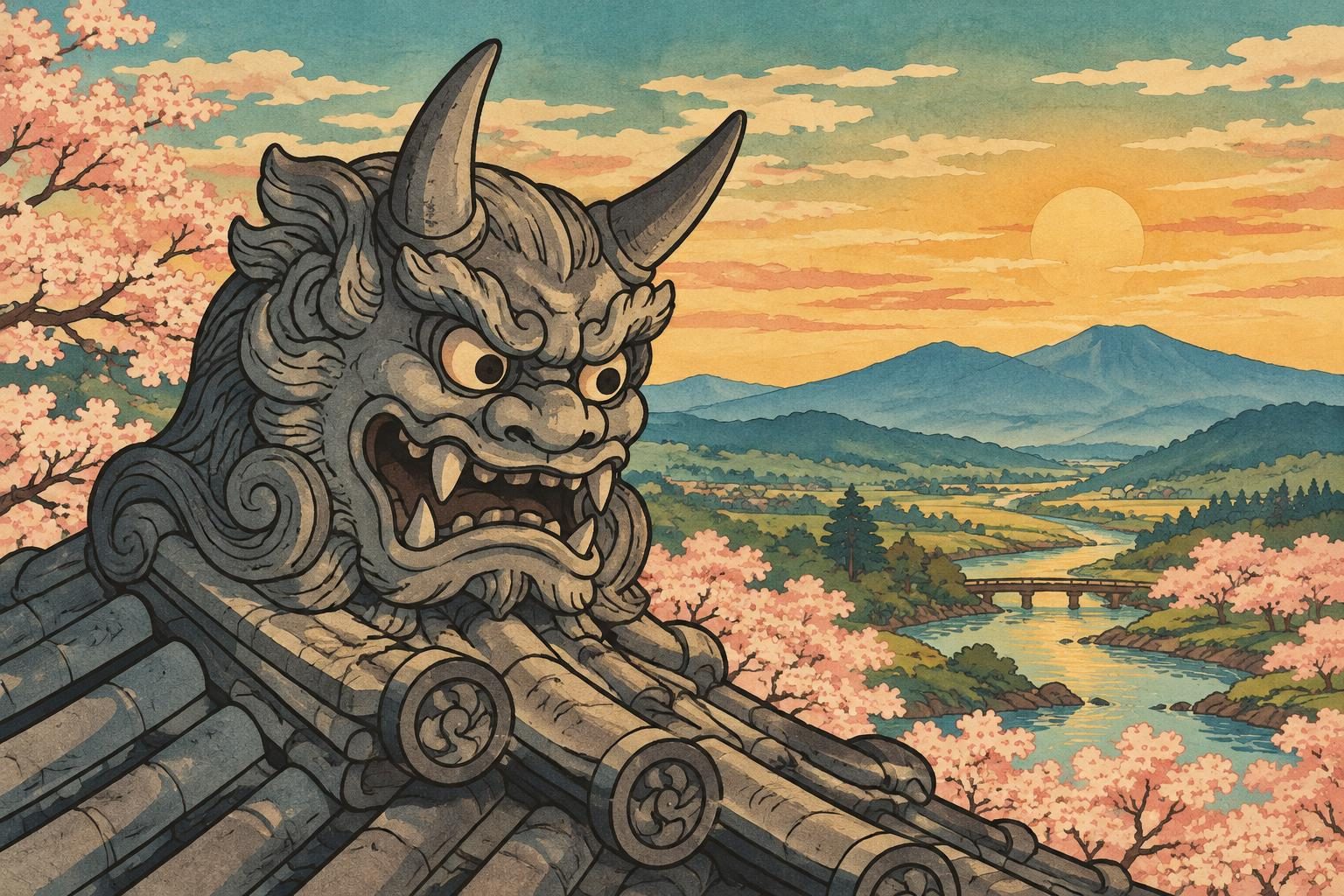
In Handa, Aichi Prefecture, the Sanshū Onigawara crafts represent a fascinating blend of artistry and tradition, encapsulating centuries of Japanese cultural heritage through their unique demon-faced roof tiles. These tiles, known for their intricate designs and symbolic meanings, are a testament to the region’s rich history and the enduring legacy of its craftsmanship.

What Are Onigawara? Japan’s Iconic Roof Guardians
FACT: The Role of Onigawara
Onigawara are decorative roof tiles traditionally used in Japanese architecture. These tiles, often featuring the fearsome visage of a demon, serve both aesthetic and symbolic purposes. Historically, they have been placed on roofs as talismans to ward off evil spirits and prevent misfortune, while also symbolizing prosperity and wealth. The tradition of using onigawara is deeply rooted in Japanese culture, reflecting a blend of religious and superstitious beliefs that have evolved over centuries.
These tiles are not just architectural elements but are imbued with cultural significance. The practice of placing onigawara on roofs can be traced back to the Nara period, where they were believed to protect sacred spaces. Over time, their use spread to residential buildings, signifying the widespread belief in their protective powers. The demon faces are often depicted with fierce expressions, intended to intimidate and repel malevolent forces, thus ensuring the safety and prosperity of the inhabitants.
FACT: Symbolism and Cultural Significance
The onigawara’s primary function is to act as a protective charm. The demon faces are believed to scare away evil spirits and protect the inhabitants of the building. Additionally, these tiles are seen as symbols of prosperity and wealth, reflecting the aspirations of those who commissioned them. This dual role underscores the deep cultural significance of onigawara in Japanese society, where they are not merely decorative elements but integral components of spiritual and cultural expression.
In addition to their protective role, onigawara are also considered a status symbol. The complexity and artistry of the tile designs often reflect the wealth and status of the building’s owner. As such, commissioning elaborate onigawara was a way for affluent individuals and families to display their prosperity and cultural sophistication. This tradition continues today, where the presence of onigawara on modern buildings serves as a nod to Japan’s rich cultural heritage.
The 300-Year History of Sanshū Onigawara in Aichi
FACT: Development of the Industry
The Sanshū Onigawara industry in the Nishi-Mikawa region of Aichi Prefecture experienced significant growth after 1720. This expansion was largely due to the encouragement of Tokugawa Yoshimune, the eighth shogun of the Tokugawa dynasty. The region’s access to high-quality clay from Mt. Sanage, transported via the Yahagi River, and its strategic location along sea shipping routes, facilitated the industry’s development. This historical context highlights the importance of geographical and political factors in the evolution of traditional crafts in Japan.
Tokugawa Yoshimune’s support was pivotal in transforming the local craft into a thriving industry. His policies aimed at promoting local industries helped in establishing a robust network for the distribution of these tiles, extending their reach to major cities like Edo (now Tokyo). This period marked the beginning of a golden era for Sanshū Onigawara, as demand for these tiles grew both domestically and internationally, cementing the region’s reputation as a center for high-quality roof tiles.
FACT: Influence of Geography and Politics
The growth of the Sanshū Onigawara industry was not merely a result of artistic endeavor but also a strategic response to the geographical and political landscape of the time. The availability of quality clay and the proximity to shipping routes allowed artisans to efficiently produce and distribute these tiles, making them a staple in Japanese architecture. This strategic advantage was crucial in establishing the region as a center for roof tile production.
The strategic location of the Nishi-Mikawa region, with its access to both land and sea routes, played a crucial role in the dissemination of Sanshū Onigawara. Artisans could easily transport their products to various parts of Japan, contributing to the widespread use of these tiles in traditional architecture. This accessibility also facilitated the exchange of ideas and techniques, enriching the craft and allowing it to evolve with changing architectural styles and preferences.


The Role of Sanshū Tiles in Japanese Architecture
FACT: Architectural Integration
Sanshū Onigawara tiles are a distinctive feature of traditional Japanese architecture, particularly in temples and shrines. Their integration into the architectural design is not only for protection but also for enhancing the aesthetic appeal of the structures. The craftsmanship involved in creating these tiles is highly specialized, requiring skilled artisans who can shape the clay into intricate designs that are both functional and beautiful. This blend of utility and artistry is a hallmark of Japanese architectural tradition.
In temples and shrines, onigawara are often placed at the ends of roof ridges, serving as both decorative elements and spiritual guardians. Their presence is believed to sanctify the space, providing a sense of peace and protection to worshippers. The artistic designs of onigawara often incorporate motifs from nature, such as dragons and phoenixes, symbolizing harmony and balance, which are central themes in Japanese spirituality and architecture.
FACT: Craftsmanship and Artistry
The creation of Sanshū Onigawara involves a meticulous process where artisans must possess a deep understanding of both the material and the cultural significance of their work. Each tile is a unique piece of art, reflecting the individual style of the craftsman while adhering to traditional designs that have been passed down through generations. This dedication to craftsmanship ensures that each piece not only serves its protective role but also contributes to the overall beauty and harmony of the structure it adorns.
Artisans often spend years mastering the techniques required to produce these tiles, learning to balance traditional methods with their own creative expressions. The result is a vibrant and dynamic craft that continues to evolve while maintaining its roots in traditional Japanese culture. Visitors to the region can witness this artistry firsthand, gaining insight into the dedication and skill that goes into each tile, making them cherished components of Japan’s architectural heritage.
Mikawa Clay and the Distinctive Silver Finish
FACT: Material and Craftsmanship
Sanshū Onigawara are crafted from Mikawa clay, known for its high quality and durability. This distinctive finish not only enhances the visual appeal of the tiles but also contributes to their longevity, making them a sustainable choice for roofing materials. The use of Mikawa clay and the specific firing techniques are essential aspects of the craftsmanship that define Sanshū Onigawara.
The high-quality Mikawa clay is sourced from the region, providing a strong and malleable base for the tiles. The firing process, which gives the tiles their characteristic ibushi-gin finish, is a carefully controlled technique that requires precision and expertise. This finish not only adds to the aesthetic charm of the tiles but also provides a layer of protection against the elements, ensuring that the tiles can withstand harsh weather conditions while retaining their beauty.
FACT: The Unique ‘Smoked-Silver’ Finish
The result is not just a visually striking tile but one that is highly durable, able to withstand the elements while maintaining its beauty over time. This combination of aesthetic appeal and practical functionality is what makes these tiles so valued in traditional Japanese architecture.
This finish is not only a testament to the skill of the artisans but also a reflection of the cultural importance of maintaining harmony between function and beauty in Japanese design. The ibushi-gin finish is celebrated for its ability to age gracefully, developing a patina over time that adds to the historical and cultural narrative of the buildings it adorns. As such, Sanshū Onigawara continue to be a symbol of enduring craftsmanship and cultural heritage.


Where to Experience Aichi’s Traditional Roof Tile Culture
FACT: Visiting the Production Areas
Visitors interested in experiencing the rich tradition of Sanshū Onigawara can explore the production areas in Hekinan, Anjō, and Takahama. These regions are renowned for their skilled artisans who continue to produce these traditional tiles using time-honored techniques. Check the official websites of these municipalities for current information on visiting hours and access to local crafts.
These areas are steeped in history, offering a unique opportunity to explore the origins and evolution of Sanshū Onigawara. Visitors can enjoy the scenic landscapes and traditional architecture that characterize these towns, providing a rich backdrop for understanding the cultural significance of the tiles. Engaging with the local community and artisans offers a deeper appreciation of the craftsmanship and dedication that go into preserving this important aspect of Japanese heritage.
FACT: Engaging with Local Artisans
In these production areas, visitors have the opportunity to engage with local artisans and observe the intricate process of creating Sanshū Onigawara. This interaction provides a deeper appreciation for the skill and dedication involved in this traditional craft. While exploring these regions, one can also enjoy the scenic beauty and cultural richness that Aichi Prefecture has to offer, making it a rewarding experience for those interested in Japanese culture and history.
Meeting the artisans and witnessing their work firsthand allows visitors to connect with the living tradition of Sanshū Onigawara. This experience not only highlights the technical skill required to produce these tiles but also emphasizes the cultural and historical narratives that these artisans carry forward. It is an enriching experience that offers insights into the enduring legacy of Japanese craftsmanship and the cultural importance of preserving traditional arts.


Related on JAPAN ESSENCE: Onigawara: The History and Meaning of Japan’s Demon Roof Tiles | Dazaifu-Style Onigawara: Ancient Kyushu’s Fierce Architectural Guardians
Regional guide
Location: Handa, Aichi Prefecture
- Sanshū roof tiles (including onigawara) (Handa) — source
Sources
To explore further, visit Zenkei (禅景) for Zen-inspired onigawara art and Oni Kobo (鬼工房) for onigawara demon-tile art and charms.
愛知県半田市では、三州鬼瓦の工芸品が芸術と伝統の魅力的な融合を表現しており、独特の鬼面の屋根瓦を通じて日本の文化遺産の何世紀にもわたる歴史を体現しています。これらの瓦は、その精巧なデザインと象徴的な意味で知られ、地域の豊かな歴史と職人技の永続的な遺産を証明しています。
鬼瓦とは?日本の象徴的な屋根の守護者
事実: 鬼瓦の役割
鬼瓦は、日本の建築に伝統的に使用される装飾的な屋根瓦です。これらの瓦は、しばしば恐ろしい鬼の顔を特徴としており、美的および象徴的な目的を果たします。歴史的に、鬼瓦は悪霊を追い払い、不幸を防ぐための護符として屋根に置かれ、繁栄と富を象徴してきました。鬼瓦を使用する伝統は日本文化に深く根ざしており、何世紀にもわたって進化してきた宗教的および迷信的な信念の融合を反映しています。
これらの瓦は単なる建築要素ではなく、文化的な意義を持っています。鬼瓦を屋根に置く習慣は奈良時代に遡り、神聖な場所を守ると信じられていました。時が経つにつれ、その使用は住宅建築にも広がり、保護力への広範な信仰を示しています。鬼の顔はしばしば恐ろしい表情で描かれ、悪意のある力を威嚇し追い払うことを意図しており、住民の安全と繁栄を確保します。
事実: 象徴と文化的意義
鬼瓦の主な機能は護符としての役割を果たすことです。鬼の顔は悪霊を追い払い、建物の住民を守ると信じられています。さらに、これらの瓦は繁栄と富の象徴と見なされ、依頼者の願望を反映しています。この二重の役割は、日本社会における鬼瓦の深い文化的意義を強調しており、単なる装飾要素ではなく、精神的および文化的表現の不可欠な要素です。
保護的な役割に加えて、鬼瓦はまたステータスシンボルと見なされています。瓦のデザインの複雑さと芸術性はしばしば建物の所有者の富と地位を反映しています。そのため、豪華な鬼瓦を依頼することは、裕福な個人や家族が繁栄と文化的洗練を示す方法でした。この伝統は今日も続いており、現代の建物に鬼瓦が存在することは、日本の豊かな文化遺産への敬意を示しています。
愛知における三州鬼瓦の300年の歴史
事実: 産業の発展
愛知県の西三河地域における三州鬼瓦産業は、1720年以降に大きな成長を遂げました。この拡大は、主に徳川吉宗、徳川家の第八代将軍の奨励によるものでした。山陰山から運ばれる高品質の粘土へのアクセスと海上輸送ルートに沿った戦略的な位置が、産業の発展を促進しました。この歴史的背景は、日本の伝統工芸の進化における地理的および政治的要因の重要性を強調しています。
徳川吉宗の支援は、地元の工芸を繁栄する産業に変える上で重要でした。彼の地元産業を促進する政策は、これらの瓦の流通のための強力なネットワークを確立し、江戸(現在の東京)などの主要都市にその範囲を広げました。この時期は、三州鬼瓦の黄金時代の始まりを示し、国内外でこれらの瓦の需要が増加し、高品質な屋根瓦の中心地として地域の評判を確立しました。
事実: 地理と政治の影響
三州鬼瓦産業の成長は、単なる芸術的努力の結果ではなく、当時の地理的および政治的状況への戦略的な対応でもありました。質の高い粘土の入手可能性と輸送ルートへの近接性により、職人たちはこれらの瓦を効率的に生産し、配布することができ、日本の建築における定番となりました。この戦略的な利点は、屋根瓦生産の中心地として地域を確立する上で重要でした。
西三河地域の戦略的な位置は、陸路と海路の両方へのアクセスがあり、三州鬼瓦の普及に重要な役割を果たしました。職人たちは日本各地に製品を簡単に輸送でき、伝統的な建築にこれらの瓦が広く使用されるようになりました。このアクセスのしやすさは、アイデアや技術の交換も促進し、工芸を豊かにし、変化する建築スタイルや好みに応じて進化させることを可能にしました。
日本建築における三州瓦の役割
事実: 建築への統合
三州鬼瓦は、特に寺院や神社において、伝統的な日本建築の独特な特徴です。これらの瓦の建築デザインへの統合は、保護のためだけでなく、構造の美的魅力を高めるためでもあります。これらの瓦を作成するために必要な職人技は非常に専門的であり、粘土を機能的で美しい複雑なデザインに形作ることができる熟練した職人が必要です。この実用性と芸術性の融合は、日本の建築伝統の特徴です。
寺院や神社では、鬼瓦はしばしば屋根の棟の端に配置され、装飾的な要素としてだけでなく、精神的な守護者としても機能します。その存在は空間を神聖化し、参拝者に平和と保護の感覚を提供すると信じられています。鬼瓦の芸術的なデザインは、しばしば自然からのモチーフ、例えば龍や鳳凰を取り入れており、調和とバランスを象徴しています。これらは日本の精神性と建築における中心的なテーマです。
事実: 職人技と芸術性
三州鬼瓦の作成は、職人がその素材と作品の文化的意義の両方を深く理解している必要がある綿密なプロセスを伴います。各瓦は、職人の個々のスタイルを反映しながら、何世代にもわたって受け継がれてきた伝統的なデザインに従うユニークな芸術作品です。この職人技への献身は、各作品がその保護的な役割を果たすだけでなく、それが飾る構造の全体的な美しさと調和に貢献することを保証します。
職人たちは、これらの瓦を生産するために必要な技術を習得するのに何年も費やし、伝統的な方法と自分自身の創造的な表現をバランスさせることを学びます。その結果、伝統的な日本文化に根ざしながらも進化し続ける活気に満ちた動的な工芸が生まれます。地域を訪れる人々は、この芸術性を直接目にすることができ、各瓦に込められた献身と技術を理解し、日本の建築遺産の大切な要素としての価値を実感することができます。
三河粘土と独特の銀仕上げ
事実: 材料と職人技
三州鬼瓦は、その高品質と耐久性で知られる三河粘土から作られています。この独特の仕上げは、瓦の視覚的な魅力を高めるだけでなく、その耐久性にも寄与し、屋根材として持続可能な選択肢となっています。三河粘土の使用と特定の焼成技術は、三州鬼瓦を定義する職人技の重要な側面です。
高品質の三河粘土は地域から供給され、瓦のための強くて柔軟な基盤を提供します。この仕上げは、瓦の美的魅力を高めるだけでなく、要素に対する保護層を提供し、厳しい気象条件に耐えながらその美しさを保つことを保証します。
事実: 独特の「いぶし銀」仕上げ
その結果は、視覚的に印象的な瓦であるだけでなく、時間が経ってもその美しさを保ちながら要素に耐えることができる非常に耐久性のあるものです。この美的魅力と実用的な機能性の組み合わせが、これらの瓦を伝統的な日本建築で高く評価される理由です。
この仕上げは、職人の技術の証であるだけでなく、機能と美しさの調和を維持することの文化的重要性を反映しています。いぶし銀の仕上げは、時間とともにパティーナを形成し、それが飾る建物の歴史的および文化的な物語を追加する能力で称賛されています。そのため、三州鬼瓦は、永続的な職人技と文化遺産の象徴であり続けています。
愛知の伝統的な屋根瓦文化を体験する場所
事実: 生産地を訪れる
三州鬼瓦の豊かな伝統を体験したい訪問者は、碧南、安城、高浜の生産地を探索することができます。これらの地域は、時代を超えた技術を用いてこれらの伝統的な瓦を生産し続ける熟練した職人で知られています。訪問時間や地元の工芸品へのアクセスについての最新情報は、これらの自治体の公式ウェブサイトでご確認ください。
これらの地域は歴史に満ちており、三州鬼瓦の起源と進化を探るユニークな機会を提供します。訪問者は、これらの町を特徴づける風光明媚な風景と伝統的な建築を楽しむことができ、瓦の文化的意義を理解するための豊かな背景を提供します。地元のコミュニティや職人との交流は、この重要な日本の遺産の保存にかける職人技と献身をより深く理解することができます。
事実: 地元の職人との交流
これらの生産地では、訪問者は地元の職人と交流し、三州鬼瓦を作成する精巧なプロセスを観察する機会があります。この交流は、この伝統的な工芸に関わる技術と献身をより深く理解することを提供します。これらの地域を探索する際には、愛知県が提供する風光明媚な美しさと文化的豊かさも楽しむことができ、日本の文化と歴史に興味のある人々にとって有意義な体験となります。
職人と直接会い、彼らの作品を目の当たりにすることで、訪問者は三州鬼瓦の生きた伝統とつながることができます。この体験は、これらの瓦を生産するために必要な技術的スキルを強調するだけでなく、これらの職人が受け継ぐ文化的および歴史的な物語を強調します。それは、日本の職人技の永続的な遺産と伝統的な芸術を保存することの文化的重要性についての洞察を提供する豊かな体験です。
Related on JAPAN ESSENCE: Onigawara: The History and Meaning of Japan’s Demon Roof Tiles | Dazaifu-Style Onigawara: Ancient Kyushu’s Fierce Architectural Guardians
地域ガイド
場所: 愛知県半田市
- 三州瓦(鬼瓦を含む)(半田) — source
Leave a Reply