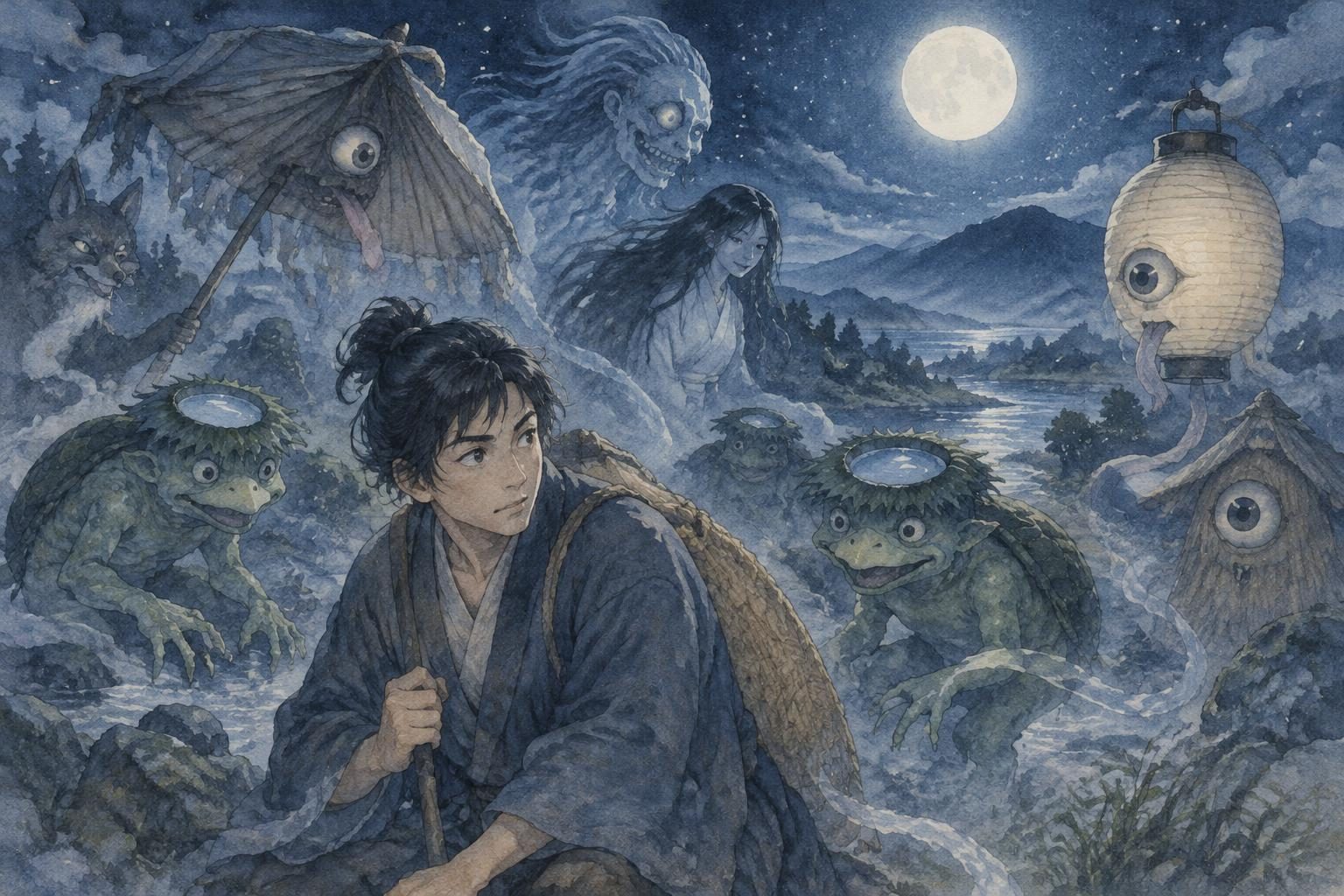
In the mist-shrouded Miyoshi Basin of Hiroshima Prefecture, the legend of the Inō Mononoke Roku captivates visitors with tales of ghostly encounters and supernatural intrigue. At the heart of this folklore is the story of Ino Heitaro, whose haunting experiences are immortalized in the local culture and celebrated at the Miyoshi Mononoke Museum.


Introduction to the Miyoshi Basin and Its Foggy Atmosphere
FACT: The Geography of Miyoshi
Miyoshi, located in Hiroshima Prefecture, is renowned for its picturesque landscapes, characterized by rolling hills and lush greenery. The dense fog that frequently envelops the area adds an air of mystery and enchantment, creating an ideal setting for tales of the supernatural. This atmospheric backdrop has contributed to the region’s rich folklore heritage, where stories of yokai and otherworldly beings have been passed down through generations. The fog not only enhances the mystique of the region but also plays a pivotal role in the storytelling traditions, where the unseen and the unknown are brought to life in the imaginations of the people.
The region’s natural beauty and its atmospheric conditions have long inspired local folklore, making Miyoshi a unique cultural hub for those interested in the supernatural. The interplay between the natural environment and the cultural narratives creates a compelling tapestry that draws both locals and tourists alike to explore its mysteries.

The 1749 Haunting: Ino Heitaro and the Thirty-Night Mononoke Legend
LEGEND: The Haunting of Ino Heitaro
According to local tradition, the haunting of Ino Heitaro began in 1749, marking a significant chapter in Miyoshi’s folklore. Ino Heitaro, a local resident, reportedly endured a series of eerie events over thirty consecutive nights. Each night, Heitaro was visited by different yokai, or supernatural creatures, which tormented him in various ways. These yokai are said to have taken on numerous forms, from mischievous spirits to terrifying apparitions, each bringing its own brand of chaos and fear. The story concerns Heitaro’s residence, but its precise site has not been confirmed, according to Hiroshima Prefecture’s history and culture portal.
The story of Heitaro’s haunting is often recounted in local festivals and storytelling sessions, where the vivid descriptions of the yokai encounters captivate audiences. These narratives serve as a reminder of the thin veil between the human world and the supernatural, a theme that resonates deeply within Japanese culture. The legend continues to be a source of fascination, inspiring various forms of artistic expression, from traditional paintings to modern adaptations in literature and media.


Sanmoto Gorozaemon and the Final Night Encounter
LEGEND: The Confrontation with Sanmoto Gorozaemon
The climax of Heitaro’s ordeal is marked by the appearance of Sanmoto Gorozaemon, a powerful yokai known for his malevolent nature. On the final night, Heitaro faced this fearsome entity in a dramatic encounter that has been recounted in various forms of storytelling, including oral traditions and written accounts. Sanmoto Gorozaemon is often depicted as a fearsome figure, embodying the very essence of the supernatural threats that plagued Heitaro. This confrontation not only highlights the enduring power of yokai in Japanese folklore but also underscores the bravery and resilience of those who face such otherworldly challenges.
In some versions of the story, Sanmoto Gorozaemon is portrayed as a shape-shifting demon, capable of manipulating the environment and instilling fear through illusions. This aspect of the legend emphasizes the psychological battle between Heitaro and the yokai, where courage and wit are as crucial as physical strength. The tale of this final encounter serves as a testament to the human spirit’s ability to confront and overcome the unknown, a theme that resonates across cultures and time periods.
Stepping into Japanese Folklore at the Miyoshi Mononoke Museum
FACT: Exhibits at the Museum
The Miyoshi Mononoke Museum offers visitors an immersive experience into the world of Japanese folklore. The museum showcases a variety of exhibits, including traditional scrolls depicting yokai, digital displays, and interactive installations. These exhibits provide insight into the cultural significance of yokai and their impact on Japanese art and literature. Visitors can explore the rich tapestry of stories and characters that make up this fascinating aspect of Japanese culture, gaining a deeper understanding of how these mythical creatures have shaped the collective imagination.
The museum’s collection includes rare artifacts and historical documents that trace the evolution of yokai depictions over the centuries. Through these exhibits, visitors can appreciate the artistic techniques and cultural contexts that have influenced the portrayal of these supernatural beings. The museum serves as a bridge between the past and the present, allowing contemporary audiences to engage with traditional folklore in a meaningful way.


Scrolls, Digital Displays, and teamLab Yokai Experiences
FACT: Interactive Elements
One of the highlights of the museum is the collaboration with teamLab, a renowned art collective known for their digital art installations. Visitors can engage with interactive displays that bring the stories of yokai to life, offering a modern twist on traditional folklore. These experiences are designed to educate and entertain, making the museum a must-visit for those interested in Japanese culture. The digital art installations allow visitors to interact with the exhibits in innovative ways, creating a dynamic and engaging environment that bridges the past with the present.
Through the use of cutting-edge technology, the museum offers a sensory experience that enhances the storytelling of yokai legends. Visitors can witness the transformation of traditional art into living, breathing narratives that respond to their presence and actions. This immersive approach not only captivates audiences but also fosters a deeper appreciation for the cultural heritage of Miyoshi and its enduring folklore.
Planning Your Visit to Miyoshi in Hiroshima Prefecture
FACT: Practical Information
The Miyoshi Mononoke Museum is located in Miyoshi, Hiroshima Prefecture. Visitors are encouraged to check the official website for current hours, fees, and access details. The museum is easily accessible from Miyoshi Station, by local bus in about 10 minutes or on foot in about 30 minutes. This accessibility makes it convenient for both local visitors and tourists to explore the rich cultural heritage of the region.
For those planning a visit, the museum offers a unique opportunity to delve into the world of Japanese folklore while enjoying the scenic beauty of the Miyoshi Basin. Whether you’re a folklore enthusiast or a casual traveler, the museum provides an enriching experience that highlights the intersection of tradition and modernity in Japanese culture.
Nearby Guide
Access
- Miyoshi Station (Miyoshi) — From Miyoshi Station, take a bus for about 10 minutes or walk approximately 30 minutes to reach the museum. official site
Nearby sights
- Hiroshima Miyoshi Winery (Miyoshi) — A local winery offering tours, tastings, and a barbecue garden. details
- Taishaku Gorge (Shobara and Jinsekikogen) — A gorge spanning Shobara City and Jinsekikogen Town. Plan it as a separate outing beyond Miyoshi. Official tourism information
Where to stay
- Hotel Route-Inn Miyoshi Ekimae (Miyoshi) — A hotel located near Miyoshi Station, offering free WiFi, free parking, and a 24-hour front desk. Rooms are equipped with modern amenities. details
- Kimita Onsen Mori no Izumi (Miyoshi) — A hot spring and lodging facility offering a relaxing stay with natural hot springs and comfortable accommodations. details
Where to eat
- Tamu Shoten Miyoshi Ekimae (Miyoshi) — An okonomiyaki restaurant near Miyoshi Station offering the local specialty Miyoshi karamen-yaki (三次唐麺焼). Official menu
- Robata Kaba Miyoshi (Miyoshi) — A seafood izakaya in Tokaichi-naka, about a five-minute walk from JR Miyoshi Station. Official site
- Miyoshi Winery Café (Miyoshi) — A café located within the Hiroshima Miyoshi Winery, offering wine tastings and light meals. details


Related on JAPAN ESSENCE: Exploring Tono: Japan’s Legendary Home of the Kappa | The Kudan of Iwakuni: The Wartime Prophetic Yokai of Yamaguchi
Sources
- Miyoshi Mononoke Museum – Wikipedia
- Hiroshima Prefecture Yokai Encyclopedia | YOKAI.JP
- Miyoshi Mononoke Museum (三次もののけミュージアム) | Yokai Night Parade
- 三次観光推進機構(みよしDMO) – 三次観光推進機構(みよしDMO)公式ウェブサイトです。 広島県の北部にある三次市のイベント、観光、宿泊、グルメ、モデルコースなどいろいろな情報をお伝えいたします。
- Sanmoto Gorozaemon (Hiroshima)|魔王 from 広島県|IZANORA
- official site
- details
- details
- details
- details
To explore further, visit Oni Kobo (鬼工房) for onigawara demon-tile art and charms and Zenkei (禅景) for Zen-inspired onigawara art.
広島県の霧に包まれた三次盆地では、『稲生物怪録』の伝説が、幽霊との遭遇や超自然的な興味を引く物語で訪問者を魅了します。この民話の中心には、地元の文化に刻まれ、三次もののけミュージアムで祝われている稲生平太郎の物語があります。
三次盆地とその霧の雰囲気の紹介
事実: 三次の地理
広島県に位置する三次は、丘陵地帯と豊かな緑に囲まれた美しい風景で知られています。頻繁にこの地域を包む濃い霧は、神秘と魅力を加え、超自然の物語に最適な舞台を作り出します。この雰囲気のある背景は、妖怪や異世界の存在の物語が世代を超えて伝えられてきた地域の豊かな民話遺産に貢献しています。霧は地域の神秘性を高めるだけでなく、見えないものや未知のものが人々の想像力の中で命を吹き込まれる物語の伝統において重要な役割を果たしています。
地域の自然美とその雰囲気は、長い間地元の民話にインスピレーションを与え、三次を超自然に興味を持つ人々にとってユニークな文化の中心地にしています。自然環境と文化的物語の相互作用は、地元の人々と観光客の両方がその謎を探求するために引き寄せられる魅力的なタペストリーを作り出しています。
1749年の怪異: 稲生平太郎と三十夜物の怪伝説
伝承: 稲生平太郎の怪異
地元の言い伝えによると、稲生平太郎の怪異は1749年に始まり、三次の民話における重要な章を刻みました。地元住民である稲生平太郎は、30夜連続で不気味な出来事に耐えたとされています。毎晩、平太郎は異なる妖怪、つまり超自然的な生き物に訪れられ、さまざまな方法で苦しめられました。これらの妖怪は、いたずら好きな霊から恐ろしい幻影まで、さまざまな形をとったと言われており、それぞれが独自の混乱と恐怖をもたらしました。物語の舞台は平太郎の屋敷ですが、その屋敷跡は確認されていないと広島県の歴史・文化ポータルサイトは説明しています。
平太郎の怪異の物語は、地元の祭りや物語のセッションでしばしば語られ、妖怪との遭遇の生々しい描写が観客を魅了します。これらの物語は、人間の世界と超自然の間の薄いベールを思い起こさせるものであり、日本文化に深く共鳴するテーマです。この伝説は、伝統的な絵画から現代の文学やメディアへの適応まで、さまざまな形の芸術表現にインスピレーションを与え続けています。
山本五郎左衛門と最終夜の遭遇
伝承: 山本五郎左衛門との対決
平太郎の試練のクライマックスは、悪意のある性質で知られる強力な妖怪、山本五郎左衛門の出現によって特徴づけられます。最終夜に、平太郎はこの恐ろしい存在と劇的な遭遇をし、口承や書かれた記録を含むさまざまな形で語られています。山本五郎左衛門はしばしば恐ろしい姿で描かれ、平太郎を悩ませた超自然の脅威の本質を体現しています。この対決は、日本の民話における妖怪の持続的な力を強調するだけでなく、そのような異世界の挑戦に立ち向かう人々の勇気とレジリエンスをも強調しています。
物語のいくつかのバージョンでは、山本五郎左衛門は環境を操作し、幻影を通じて恐怖を植え付けることができる変身する悪魔として描かれています。この伝説の側面は、平太郎と妖怪の間の心理的な戦いを強調し、勇気と機知が身体的な強さと同様に重要であることを示しています。この最終的な遭遇の物語は、未知のものに立ち向かい克服する人間の精神の能力を証明するものであり、文化や時代を超えて共鳴するテーマです。
三次もののけミュージアムで日本の民話に触れる
事実: 博物館の展示
三次もののけミュージアムは、訪問者に日本の民話の世界への没入体験を提供します。博物館は、妖怪を描いた伝統的な巻物、デジタルディスプレイ、インタラクティブなインスタレーションを含むさまざまな展示を紹介しています。これらの展示は、妖怪の文化的意義と日本の芸術や文学への影響を理解する手助けをします。訪問者は、この魅力的な日本文化の一部を構成する物語やキャラクターの豊かなタペストリーを探求し、これらの神話的な生き物がどのように集団的な想像力を形作ってきたかを深く理解することができます。
博物館のコレクションには、妖怪の描写の進化をたどる貴重なアーティファクトや歴史的文書が含まれています。これらの展示を通じて、訪問者はこれらの超自然的な存在の描写に影響を与えた芸術的技法や文化的背景を鑑賞することができます。博物館は過去と現在をつなぐ橋渡しの役割を果たし、現代の観客が伝統的な民話と意味のある方法で関わることを可能にしています。
巻物、デジタルディスプレイ、teamLab妖怪体験
事実: インタラクティブ要素
博物館のハイライトの一つは、デジタルアートインスタレーションで知られる著名なアートコレクティブ、teamLabとのコラボレーションです。訪問者は、妖怪の物語を現代的なひねりを加えて生き生きとさせるインタラクティブディスプレイに参加することができます。これらの体験は、教育と娯楽を目的としており、日本文化に興味のある人々にとって必見の博物館となっています。デジタルアートインスタレーションは、訪問者が革新的な方法で展示物と対話することを可能にし、過去と現在をつなぐダイナミックで魅力的な環境を作り出しています。
最先端の技術を駆使して、博物館は妖怪伝説の物語を強化する感覚的な体験を提供します。訪問者は、伝統的なアートが生き生きとした物語に変わり、彼らの存在や行動に反応する様子を目撃することができます。この没入型アプローチは、観客を魅了するだけでなく、三次の文化遺産とその持続的な民話に対する深い感謝を育みます。
広島県三次への訪問計画
事実: 実用情報
三次もののけミュージアムは、広島県三次に位置しています。訪問者は、最新の営業時間、料金、アクセスの詳細について公式サイトでご確認ください。博物館は三次駅から簡単にアクセスでき、路線バスで約10分、徒歩で約30分です。このアクセスの良さは、地元の訪問者や観光客が地域の豊かな文化遺産を探求するのに便利です。
訪問を計画している方にとって、博物館は日本の民話の世界に浸りながら、三次盆地の美しい景色を楽しむユニークな機会を提供します。民話愛好家でも、カジュアルな旅行者でも、博物館は日本文化における伝統と現代性の交差点を強調する豊かな体験を提供します。
周辺ガイド
アクセス
- 三次駅(三次) — 三次駅からバスで約10分、または徒歩で約30分で博物館に到着します。 公式サイト
周辺の見どころ
- 広島三次ワイナリー(三次) — ツアー、試飲、バーベキューガーデンを提供する地元のワイナリー。 詳細
- 帝釈峡(庄原市・神石高原町) — 庄原市東城町と神石高原町にまたがる峡谷です。三次市内の散策とは別の行程として計画してください。公式観光情報
泊まる
- ホテルルートイン三次駅前(三次) — 三次駅近くに位置し、無料WiFi、無料駐車場、24時間対応のフロントを提供するホテル。 詳細
- 君田温泉森の泉(三次) — 自然の温泉と快適な宿泊施設を提供する温泉と宿泊施設。 詳細
食べる
- たむ商店 三次駅前店(三次) — 三次駅近くのお好み焼き店で、ご当地料理の「三次唐麺焼」を提供しています。公式メニュー
- 山陰海鮮 炉端かば 三次店(三次) — 十日市中にある海鮮居酒屋で、JR三次駅から徒歩約5分です。公式サイト
- 三次ワイナリーカフェ(三次) — 広島三次ワイナリー内にあるカフェで、ワインの試飲と軽食を提供しています。 詳細
Related on JAPAN ESSENCE: Exploring Tono: Japan’s Legendary Home of the Kappa | The Kudan of Iwakuni: The Wartime Prophetic Yokai of Yamaguchi
Sources
- Miyoshi Mononoke Museum – Wikipedia
- Hiroshima Prefecture Yokai Encyclopedia | YOKAI.JP
- Miyoshi Mononoke Museum (三次もののけミュージアム) | Yokai Night Parade
- 三次観光推進機構(みよしDMO) – 三次観光推進機構(みよしDMO)公式ウェブサイトです。 広島県の北部にある三次市のイベント、観光、宿泊、グルメ、モデルコースなどいろいろな情報をお伝えいたします。
- Sanmoto Gorozaemon (Hiroshima)|魔王 from 広島県|IZANORA
- official site
- details
- details
- details
- details
Leave a Reply