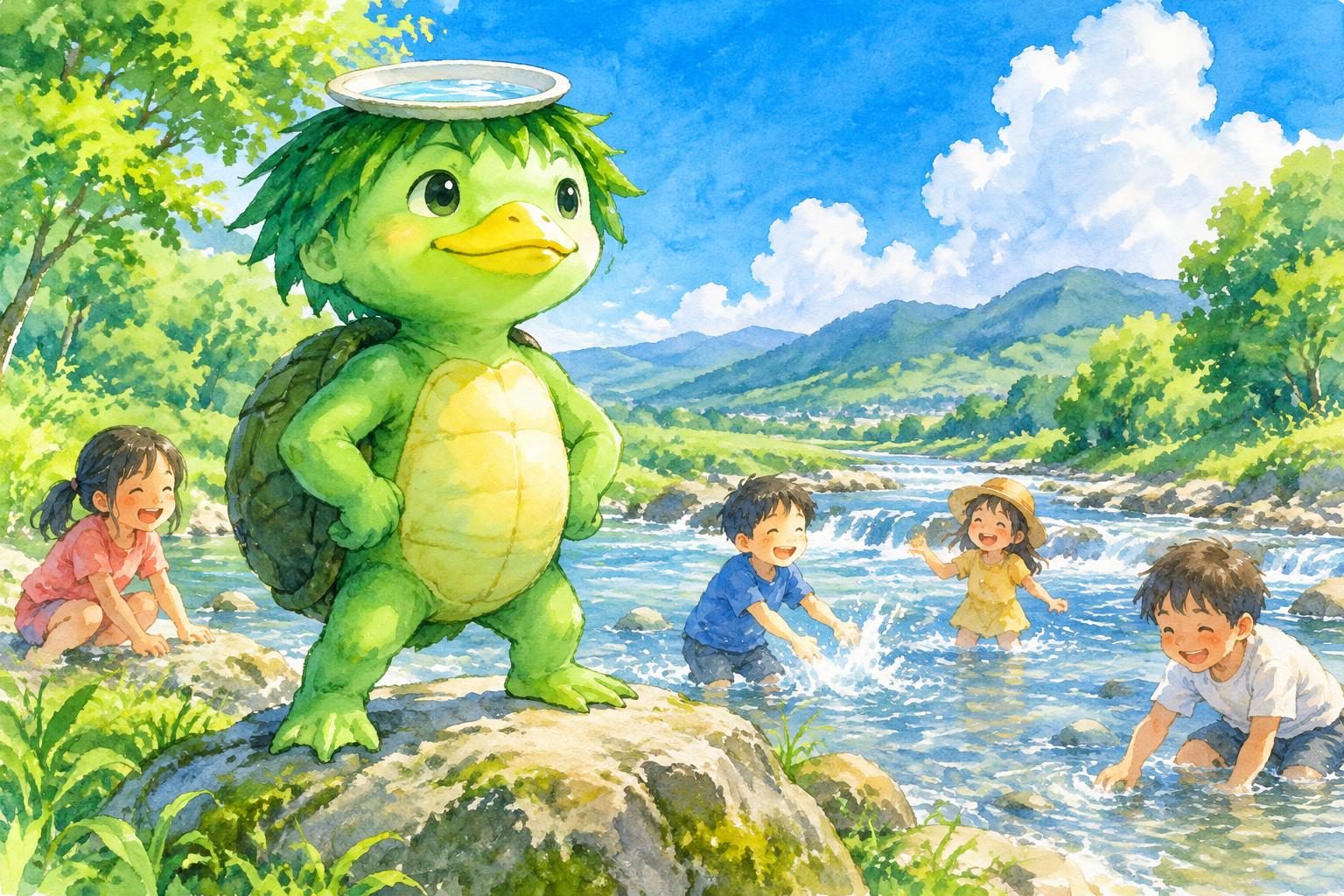
In Nagoya, Aichi Prefecture, a mysterious and benevolent figure from Japanese folklore once inhabited the waters of the Ōiseya River. This kappa, a mythical water creature, is celebrated for its good deeds and continues to inspire local traditions and landmarks.

Introduction to Japan’s Famous Water Spirits
FACT: What are Kappa?
Kappa are mythical creatures from Japanese folklore, often depicted as water-dwelling spirits with a penchant for mischief. They are typically portrayed with a humanoid form, webbed hands and feet, and a dish on their head that holds water, which is said to be the source of their power. Despite their mischievous nature, kappa are also known for their helpfulness and intelligence, traits that are celebrated in various regional legends across Japan. These creatures are believed to inhabit rivers and ponds, where they engage with humans in both playful and sometimes perilous ways. The kappa’s dual nature as both a trickster and a helper makes it a fascinating figure in Japanese mythology.
The Lost Ōiseya River of Central Nagoya
FACT: The Historical Path of the Ōiseya River
The Ōiseya River once flowed through what is now central Nagoya, originating from the Nishi-named areas and coursing through Nakamura and Nakagawa wards before joining Nagoya Port. This river played a significant role in the city’s history, shaping its landscape and serving as a backdrop for local legends. The river’s path is now largely buried beneath the bustling streets of modern Nagoya, but its legacy lives on through stories and monuments that remind us of its past presence. The transformation of the river into urban infrastructure reflects the dynamic changes in Nagoya’s development over the centuries.


The Legend of the Helpful Kappa and the Samurai
LEGEND: The Helpful Kappa of Ōiseya River
According to local tradition, a kappa inhabited the Ōiseya River, known for its ability to transform into a strong boy. This kappa was reputed to have saved drowning children, earning the moniker “helpful kappa.” The story highlights the creature’s benevolent nature and its role as a guardian of the river. It is said that the kappa’s transformation into a human form allowed it to interact more closely with the community, bridging the gap between the mystical and the mundane. This legend underscores the kappa’s protective instincts and its special connection to the children of Nagoya.
LEGEND: The Samurai’s Encounter
Another account from the Edo period, recorded in local history, tells of a samurai who encountered a kappa by the river. The kappa attempted to drag the samurai into the water but retreated when the samurai reprimanded it. This tale adds a layer of intrigue to the kappa’s character, showcasing its mischievous side. The samurai’s encounter reflects the kappa’s unpredictable nature and the tension between human courage and supernatural forces. Such stories were often shared to teach lessons about respect and caution when dealing with the unknown.
Finding the Kappa Statues Near Nagoya Station
FACT: Marking the Former River Site
Near Nagoya Station, at the Ōise-dōri intersection, two kappa statues stand as a tribute to the river’s past and its legendary inhabitant. Erected about 30 years ago by local volunteers, these statues face downstream, symbolizing the flow of the former Ōiseya River. They serve as a reminder of the area’s rich folklore and are easily accessible to visitors exploring the city. The statues capture the playful essence of the kappa, inviting passersby to pause and reflect on the stories that once flowed with the river. These artistic representations are not only cultural markers but also a celebration of community spirit and historical preservation.


Shiogama Shrine and the Kappa Deity of Musando-sha
FACT: The Kappa Deity at Shiogama Shrine
In Nakagawa Ward, Shiogama Shrine houses a small subsidiary shrine called Musando-sha, where a kappa is enshrined as a deity. This kappa is believed to protect children, bring business prosperity, and cure hemorrhoids. Visitors to the shrine can participate in a ritual by pouring water over the kappa’s head dish to make prayers, a practice that keeps the legend alive. This ritual is a unique way for visitors to engage with the spiritual heritage of the area, offering a tangible connection to the mythical past. The shrine serves as a sanctuary for those seeking blessings and healing, embodying the kappa’s role as a benevolent force.
Celebrating Local Folklore: The August Kappa Festival
FACT: The Annual Kappa Festival
Every August, Shiogama Shrine hosts a kappa festival, celebrating the folklore associated with the former Ōiseya River. This event draws locals and tourists alike, offering a glimpse into the cultural significance of the kappa legend and its enduring impact on the community. The festival features various activities and performances that honor the kappa’s legacy, fostering a sense of continuity and cultural pride. Participants can enjoy traditional music, dance, and storytelling, all centered around the theme of the kappa. The festival is a vibrant expression of Nagoya’s rich cultural tapestry, where ancient myths meet modern festivities.
Tips for Travelers Exploring Nagoya’s Folklore Sites
Visitors interested in exploring Nagoya’s rich folklore can start at the Ōise-dōri intersection to view the kappa statues, then proceed to Shiogama Shrine to experience the rituals and learn more about the kappa deity. These sites provide a unique opportunity to connect with the city’s cultural heritage and the intriguing legends that have shaped it. Travelers can immerse themselves in the stories of the past while enjoying the vibrant urban landscape of modern Nagoya. Whether you’re a history enthusiast or a curious explorer, these folklore sites offer a fascinating journey into the heart of Japanese mythology.
Nearby Guide
Access
- Nagoya Station (Nagoya) — Nagoya Station is the central transportation hub of Nagoya, offering extensive connections to various parts of the city and beyond. It serves multiple railway lines, including JR Central, Meitetsu, Kintetsu, and the Nagoya Municipal Subway. official site
Nearby sights
- Nagoya Castle (Nagoya) — Nagoya Castle is a historic landmark known for its impressive architecture and beautiful gardens. Visitors can explore the reconstructed Hommaru Palace and enjoy seasonal events like cherry blossom viewing in spring. details
- Toyota Commemorative Museum of Industry and Technology (Nagoya) — This museum showcases the history of Toyota’s development, featuring exhibits on the evolution of the automobile industry and technological advancements. details
Where to stay
- Nagoya Marriott Associa Hotel (Nagoya) — Located within the JR Central Towers, this hotel offers luxurious accommodations with convenient access to Nagoya Station’s facilities and transportation options. details
Where to eat
- Hitsumabushi (Nagoya) — A local specialty consisting of grilled eel served over rice, which can be enjoyed in various ways, including with condiments or in a broth. details


Related on JAPAN ESSENCE: Exploring Tono: Japan’s Legendary Home of the Kappa | Exploring Amano Iwato Shrine & the Myth of the Sun Goddess in Takachiho
Regional guide
Location: Nagoya, Aichi Prefecture
- Kappa statues at Ōise-dōri intersection (Nagoya) — source
- Musando-sha (subsidiary shrine at Shiogama Shrine) (Nagoya) — source
- Ōise-dōri (former Ōiseya River path) near Nagoya Station (Nagoya) — source
- Shiogama Shrine, Nakagawa Ward (Nagoya) — source
Sources
- 地元で語り継がれる 笈瀬川のかっぱ伝説 | なごや環境大学(名古屋市・圏域)
- Nagoya Station Map: Finding Your Way
- Top Things to Do Near Nagoya Station: A Complete Travel Guide
- Taiko-dori Station
- Nagoya Buzz
To explore further, visit Zenkei (禅景) for Zen-inspired onigawara art and Onigawara Experience for hands-on onigawara experiences in Japan.
愛知県名古屋市には、日本の民間伝承からの神秘的で慈悲深い存在がかつて大井瀬川の水域に住んでいました。このカッパは、善行で知られる神話上の水の生き物であり、地元の伝統やランドマークに今も影響を与え続けています。
日本の有名な水の精霊の紹介
事実: カッパとは何か?
カッパは日本の民間伝承に登場する神話上の生き物で、いたずら好きな水の精霊として描かれることが多いです。通常は人間の形をしており、手足に水かきがあり、頭に水を保持する皿を持っているとされ、それが彼らの力の源とされています。いたずら好きな性格にもかかわらず、カッパは助けることや知恵に優れていることでも知られ、日本各地のさまざまな伝説で称賛されています。これらの生き物は川や池に住んでいると信じられており、人間と遊び心のある、時には危険な方法で関わることがあります。カッパのいたずら者としての側面と助ける者としての側面の両方を持つ性質は、日本の神話において魅力的な存在となっています。
名古屋中心部の失われた大井瀬川
事実: 大井瀬川の歴史的な流れ
大井瀬川はかつて現在の名古屋中心部を流れており、西区から始まり、中村区と中川区を通って名古屋港に合流していました。この川は市の歴史において重要な役割を果たし、地元の伝説の背景としてその風景を形作りました。川の流れは現在、現代の名古屋の賑やかな通りの下にほとんど埋もれていますが、その遺産は過去の存在を思い起こさせる物語や記念碑を通じて生き続けています。川が都市インフラに変わる過程は、名古屋の発展の動的な変化を反映しています。
助けるカッパと侍の伝説
伝承: 大井瀬川の助けるカッパ
地元の言い伝えによると、大井瀬川には強い少年に変身できるカッパが住んでいました。このカッパは溺れる子供たちを救ったことで知られ、「助けるカッパ」としての名声を得ました。この物語は、カッパの慈悲深い性質と川の守護者としての役割を強調しています。カッパが人間の姿に変身することで、コミュニティとより密接に関わることができ、神秘的なものと日常的なものの間の橋渡しをしました。この伝説は、カッパの保護本能と名古屋の子供たちとの特別なつながりを強調しています。
伝承: 侍との遭遇
江戸時代の地元の歴史に記録された別の話では、侍が川でカッパに遭遇したとされています。カッパは侍を水に引きずり込もうとしましたが、侍が叱ったため退散しました。この物語は、カッパのいたずら好きな側面を示し、そのキャラクターに興味を引きます。侍との遭遇は、カッパの予測不可能な性質と人間の勇気と超自然的な力との緊張を反映しています。このような物語は、未知のものに対する尊敬と注意を教えるためによく共有されました。
名古屋駅近くのカッパ像を探す
事実: かつての川の場所を示す
名古屋駅近くの大井瀬通り交差点には、川の過去とその伝説的な住人を称えるために2つのカッパ像が立っています。これらの像は約30年前に地元のボランティアによって建てられ、かつての大井瀬川の流れを象徴するように下流を向いています。これらの像は、地域の豊かな民間伝承を思い起こさせ、都市を探索する訪問者にとってアクセスしやすい場所にあります。像はカッパの遊び心を捉え、通行人に川と共に流れた物語を振り返るよう招いています。これらの芸術的な表現は、文化的なマーカーであるだけでなく、コミュニティの精神と歴史的保存の祝福でもあります。
塩釜神社と武三堂社のカッパの神
事実: 塩釜神社のカッパの神
中川区にある塩釜神社には、武三堂社という小さな末社があり、そこにカッパが神として祀られています。このカッパは子供を守り、商売繁盛をもたらし、痔を治すと信じられています。神社を訪れる人々は、カッパの頭の皿に水を注いで祈りを捧げる儀式に参加することができ、この伝説を生き続けさせています。この儀式は、訪問者が地域の精神的遺産と関わるユニークな方法であり、神話的な過去との具体的なつながりを提供します。神社は、祝福と癒しを求める人々のための聖域として機能し、カッパの慈悲深い力を体現しています。
地元の民間伝承を祝う: 8月のカッパ祭り
事実: 年に一度のカッパ祭り
毎年8月、塩釜神社では、かつての大井瀬川に関連する民間伝承を祝うカッパ祭りが開催されます。このイベントは地元の人々や観光客を引き寄せ、カッパの伝説の文化的意義とそのコミュニティへの永続的な影響を垣間見ることができます。祭りでは、カッパの遺産を称えるさまざまな活動やパフォーマンスが行われ、継続性と文化的誇りの感覚を育みます。参加者は、カッパをテーマにした伝統的な音楽、ダンス、物語を楽しむことができます。祭りは、古代の神話が現代の祝祭と出会う名古屋の豊かな文化の織物を鮮やかに表現しています。
名古屋の民間伝承の場所を探索する旅行者へのヒント
名古屋の豊かな民間伝承を探索したい訪問者は、大井瀬通り交差点からカッパ像を見て、次に塩釜神社に進んで儀式を体験し、カッパの神について学ぶことができます。これらの場所は、市の文化遺産とそれを形作った興味深い伝説とつながるユニークな機会を提供します。旅行者は、現代の名古屋の活気ある都市景観を楽しみながら、過去の物語に没頭することができます。歴史愛好家でも好奇心旺盛な探検家でも、これらの民間伝承の場所は、日本の神話の中心への魅力的な旅を提供します。
周辺ガイド
アクセス
- 名古屋駅(名古屋) — 名古屋駅は名古屋の中心的な交通ハブであり、市内およびその周辺のさまざまな場所への広範な接続を提供しています。JR中央、名鉄、近鉄、名古屋市営地下鉄などの複数の鉄道路線が利用可能です。 公式サイト
周辺の見どころ
- 名古屋城(名古屋) — 名古屋城はその印象的な建築と美しい庭園で知られる歴史的なランドマークです。訪問者は再建された本丸御殿を探索し、春の桜の花見などの季節のイベントを楽しむことができます。 詳細
- トヨタ産業技術記念館(名古屋) — この博物館はトヨタの発展の歴史を展示し、自動車産業の進化と技術の進歩に関する展示を行っています。 詳細
泊まる
- 名古屋マリオットアソシアホテル(名古屋) — JRセントラルタワーズ内に位置するこのホテルは、名古屋駅の施設や交通手段への便利なアクセスを提供する豪華な宿泊施設を提供しています。 詳細
食べる
- ひつまぶし(名古屋) — ご飯の上に乗せた焼きうなぎを、薬味やお茶漬けなどさまざまな方法で楽しむことができる地元の名物料理です。 詳細
Related on JAPAN ESSENCE: Exploring Tono: Japan’s Legendary Home of the Kappa | Exploring Amano Iwato Shrine & the Myth of the Sun Goddess in Takachiho
地域ガイド
場所: 名古屋市、愛知県
- 大井瀬通り交差点のカッパ像(名古屋) — 出典
- 武三堂社(塩釜神社の末社)(名古屋) — 出典
- 名古屋駅近くの大井瀬通り(かつての大井瀬川の道)(名古屋) — 出典
- 塩釜神社、中川区(名古屋) — 出典
Sources
- 地元で語り継がれる 笈瀬川のかっぱ伝説 | なごや環境大学(名古屋市・圏域)
- Nagoya Station Map: Finding Your Way
- Top Things to Do Near Nagoya Station: A Complete Travel Guide
- Taiko-dori Station
- Nagoya Buzz
さらに楽しみたい方は、禅の美意識を映す鬼瓦アートの禅景や、鬼瓦づくりを体験できるOnigawara Experienceもご覧ください。
Leave a Reply