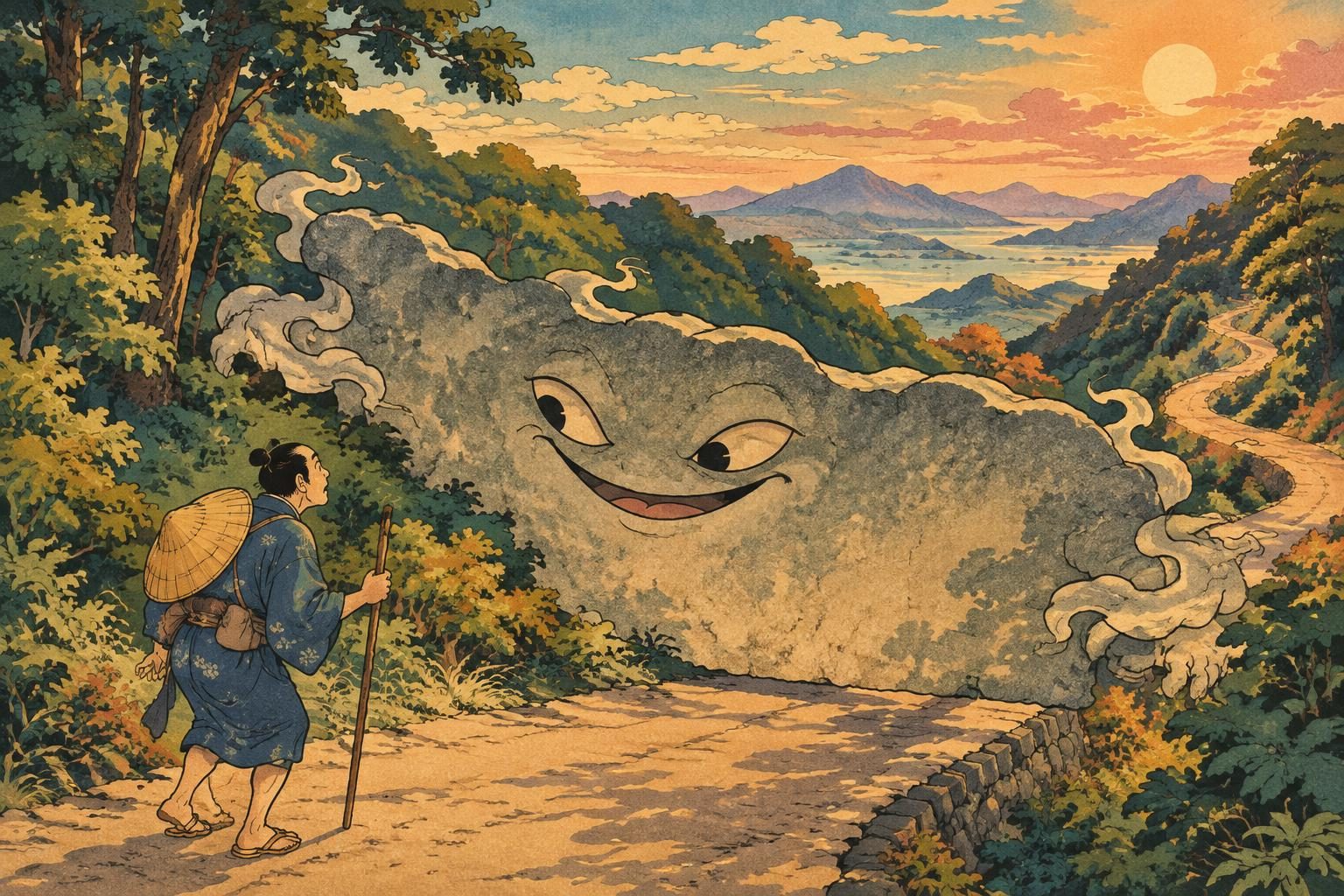
In the folklore-rich regions of Fukuoka and Oita Prefectures in Kyushu, Japan, tales of the Nurikabe—a mysterious invisible wall yokai—have intrigued and perplexed locals and visitors alike. This enigmatic entity is said to obstruct travelers at night, creating an impassable barrier that leaves them disoriented and lost.


Introduction to the Nurikabe Legend
LEGEND: The Invisible Wall of Kyushu
According to local tradition, the Nurikabe is an invisible wall that appears suddenly on roads, especially at night, to block the path of travelers. This yokai is often depicted as a mischievous spirit, playing tricks on those who wander the roads of Fukuoka and Oita. While the wall itself is invisible, its effects are very real, causing confusion and frustration for those who encounter it. The legend speaks to a deeper cultural understanding of the unpredictable nature of travel and the unseen forces that can influence one’s journey. The presence of such tales in local folklore highlights the importance of respecting the unknown and the supernatural in Japanese culture.
Travelers encountering the Nurikabe are often advised to change their path or wait for the obstacle to disappear, reflecting a cultural belief in patience and adaptability. This advice underscores the idea that sometimes the best way to deal with unseen challenges is to remain calm and flexible, a lesson that resonates with broader life philosophies in Japan.
LEGEND: Variations in the Story
In some stories, the Nurikabe is not just a simple wall but a sentient entity capable of moving and adapting to thwart any attempt to bypass it. This adds a layer of complexity to the legend, suggesting that the yokai is not merely an obstacle but a cunning adversary. The tales often emphasize the futility of trying to outsmart the Nurikabe, as it seems to anticipate and counteract every move a traveler might make. This portrayal of the Nurikabe as an intelligent force highlights the theme of humility before nature’s mysteries, a common motif in Japanese folklore.
These variations in the story also reflect the rich oral tradition of the region, where each retelling can bring new elements or interpretations. This dynamic storytelling tradition ensures that the legend remains vibrant and relevant to each new generation, adapting to the cultural and social contexts of the time.

Kunio Yanagita and the Onga District Coast
FACT: Documenting Folklore
Kunio Yanagita, a renowned Japanese folklorist, played a significant role in documenting the tales of the Nurikabe. His work in the Onga District of Fukuoka Prefecture helped preserve these stories for future generations. Yanagita’s dedication to collecting and recording oral traditions has been instrumental in keeping the legend of the Nurikabe alive. His meticulous documentation provides a window into the cultural landscape of the time, offering insights into how these stories were shared and adapted across generations. Yanagita’s efforts highlight the importance of preserving intangible cultural heritage, ensuring that these stories continue to be a source of cultural identity and pride.
FACT: Yanagita’s Influence
Yanagita’s influence extends beyond mere documentation; he helped elevate the status of folklore as an important cultural and academic pursuit. By treating these stories with the same respect as historical texts, he ensured that the voices and beliefs of rural Japan were not lost to modernization. His work in the Onga District is a testament to his commitment to preserving the intangible cultural heritage of Japan. Through his writings, Yanagita not only preserved the stories themselves but also fostered a greater appreciation for the cultural and historical contexts in which these legends were born.


Formless Spatial Anomaly vs. Modern Depictions
LEGEND: Traditional vs. Modern Interpretations
While traditional accounts describe the Nurikabe as an invisible barrier, modern depictions often give it a more tangible form. In some interpretations, it is portrayed as a creature with a face and limbs, adding a visual element to the otherwise formless yokai. This evolution reflects the changing ways in which folklore adapts to contemporary culture. The shift from an abstract concept to a more defined character illustrates how modern storytelling techniques influence the portrayal of ancient myths. This transformation is indicative of a broader trend in folklore, where stories are reimagined to resonate with contemporary audiences, bridging the gap between past and present.
LEGEND: Cultural Adaptation
The transformation of the Nurikabe from an invisible wall to a creature with distinct features highlights the dynamic nature of folklore. As society changes, so too do the stories that it tells. This adaptation is not only a testament to the enduring nature of the Nurikabe legend but also to the creativity and imagination of those who continue to share these tales. The reinterpretation of the Nurikabe in modern media, such as anime and manga, demonstrates the ongoing relevance of these legends in popular culture, allowing them to reach new audiences and maintain their place in the cultural consciousness.
Oita Prefecture Variants: Tanuki and Weasel Legends
LEGEND: Shape-Shifting Tricksters
In Oita Prefecture, variations of the Nurikabe legend include shape-shifting animals such as tanuki (raccoon dogs) and weasels. These creatures are believed to transform into the invisible wall, using their cunning to deceive travelers. Such stories highlight the rich tapestry of yokai folklore in the region, where animals often play pivotal roles in supernatural tales. The inclusion of these animals adds a layer of trickery and mischief, as tanuki and weasels are traditionally seen as clever and elusive creatures. This aspect of the legend underscores the theme of nature’s unpredictability and the belief in the supernatural abilities of animals in Japanese culture.
LEGEND: Animal Influence in Folklore
The presence of shape-shifting animals in the Nurikabe legend underscores the importance of animals in Japanese folklore. These creatures often serve as intermediaries between the human and supernatural worlds, embodying traits that are both familiar and otherworldly. The stories of tanuki and weasels transforming into the Nurikabe reflect a broader cultural fascination with the boundaries between the natural and supernatural realms. This fascination is evident in the way these legends are woven into the fabric of local culture, influencing art, literature, and even local customs.


Historical Scrolls and Early Depictions of the Wall
FACT: Artistic Representations
Historical scrolls and artworks provide glimpses into how the Nurikabe has been perceived over time. Early depictions often show a simple wall or barrier, emphasizing its role as an obstacle. These artistic interpretations serve as valuable records of the cultural significance of the Nurikabe in Japanese folklore. The simplicity of these early representations highlights the yokai’s primary function as an impediment, leaving much to the imagination regarding its true nature. These artworks not only document the visual history of the Nurikabe but also offer insights into the artistic conventions and cultural values of the periods in which they were created.
FACT: Evolution of Depictions
As artistic styles evolved, so too did the representations of the Nurikabe. Later artworks began to incorporate more elaborate and imaginative elements, reflecting the changing perceptions of the yokai. These depictions not only illustrate the artistic trends of their time but also provide insight into how the legend of the Nurikabe has been reinterpreted and reimagined throughout history. This evolution showcases the interplay between art and folklore, where each influences the other, resulting in a rich tapestry of cultural expression that continues to evolve.
Exploring the Folklore Roots in Modern Kyushu
FACT: Cultural Influence and Legacy
The legend of the Nurikabe continues to influence cultural expressions in Kyushu today. From local festivals to storytelling events, the invisible wall yokai remains a beloved and enduring symbol of the region’s rich folkloric heritage. Its presence in popular culture underscores the timeless appeal of yokai stories in Japan. These events not only celebrate the Nurikabe but also serve as a means of preserving and promoting the cultural identity of Kyushu. By engaging with these traditions, both locals and visitors can experience the living history of the region, gaining a deeper understanding of its cultural roots.
FACT: Modern Celebrations
Modern celebrations of the Nurikabe legend often incorporate elements of traditional performance, art, and storytelling. These events provide an opportunity for locals and visitors alike to engage with the region’s folklore in a dynamic and interactive way. By participating in these celebrations, individuals can gain a deeper appreciation for the cultural heritage of Kyushu and the enduring legacy of its yokai tales. These festivities not only keep the legend alive but also foster a sense of community and continuity, ensuring that the stories of the Nurikabe remain a vibrant part of Kyushu’s cultural landscape.


Related on JAPAN ESSENCE: The Kudan of Iwakuni: The Wartime Prophetic Yokai of Yamaguchi | Shidaidaka: The Ever-Rising Roadside Yokai of Shimane
Sources
To explore further, visit Onigawara Experience for hands-on onigawara experiences in Japan and Zenkei (禅景) for Zen-inspired onigawara art.
日本の九州地方、福岡県と大分県の民話豊かな地域では、謎の見えない壁の妖怪「ぬりかべ」の話が地元の人々や訪問者を魅了し、困惑させてきました。この不可解な存在は、夜に旅人を妨げ、通れない障壁を作り出し、彼らを混乱させ迷わせると言われています。
ぬりかべ伝承の紹介
伝承: 九州の見えない壁
地元の言い伝えによると、ぬりかべは道に突然現れる見えない壁で、特に夜に旅人の道を塞ぐと言われています。この妖怪は、福岡県と大分県の道をさまよう人々にいたずらを仕掛けるいたずら好きな霊として描かれることが多いです。壁自体は見えませんが、その影響は非常に現実的で、遭遇した人々に混乱と苛立ちを引き起こします。この伝説は、旅の予測不可能な性質と、旅路に影響を与える見えない力についての深い文化的理解を語っています。地元の民話にこのような話が存在することは、日本文化における未知と超自然への敬意の重要性を強調しています。
ぬりかべに遭遇した旅人は、道を変えるか障害が消えるのを待つようにしばしば勧められます。これは、忍耐と適応力を信じる文化的信念を反映しています。このアドバイスは、見えない挑戦に対処する最良の方法は、冷静で柔軟であることだという考えを強調しており、日本の広範な人生哲学と共鳴します。
伝承: 物語のバリエーション
ある物語では、ぬりかべは単なる壁ではなく、移動して迂回しようとする試みを阻止する能力を持つ知覚的な存在として描かれています。これは伝説に複雑さを加え、妖怪が単なる障害ではなく、狡猾な敵であることを示唆しています。物語はしばしば、ぬりかべを出し抜こうとする試みの無駄さを強調しており、旅人が行うあらゆる動きを予測し、対抗するように見えます。このぬりかべの知的な力としての描写は、自然の神秘に対する謙虚さというテーマを強調しており、日本の民話に共通するモチーフです。
これらの物語のバリエーションは、地域の豊かな口承伝統を反映しており、各再話が新しい要素や解釈をもたらすことができます。この動的な物語伝統は、伝説が各新世代に対して活気に満ち、関連性を持ち続けることを保証し、文化的および社会的文脈に適応しています。
柳田國男と遠賀郡の海岸
事実: 民話の記録
著名な日本の民俗学者である柳田國男は、ぬりかべの物語を記録する上で重要な役割を果たしました。彼の福岡県遠賀郡での活動は、これらの物語を後世に残すのに役立ちました。柳田の口承伝統の収集と記録への献身は、ぬりかべの伝説を生き続けさせるのに不可欠でした。彼の綿密な記録は、当時の文化的風景への窓を提供し、これらの物語がどのように共有され、世代を超えて適応されてきたかについての洞察を提供します。柳田の努力は、無形文化遺産を保存することの重要性を強調し、これらの物語が文化的アイデンティティと誇りの源であり続けることを保証しています。
事実: 柳田の影響
柳田の影響は単なる記録を超えており、民話を重要な文化的および学術的追求としての地位を高めるのに役立ちました。これらの物語を歴史的文書と同じ敬意を持って扱うことで、彼は農村日本の声と信念が近代化によって失われないようにしました。遠賀郡での彼の活動は、日本の無形文化遺産を保存することへの彼のコミットメントの証です。彼の著作を通じて、柳田は物語自体を保存しただけでなく、これらの伝説が生まれた文化的および歴史的文脈へのより深い理解を促進しました。
形のない空間異常と現代の描写
伝承: 伝統的 vs. 現代の解釈
伝統的な記述では、ぬりかべは見えない障壁として描かれていますが、現代の描写ではより具体的な形を持たせることがよくあります。ある解釈では、顔や手足を持つ生き物として描かれ、形のない妖怪に視覚的要素を加えています。この進化は、民話が現代文化に適応する方法の変化を反映しています。抽象的な概念からより明確なキャラクターへの移行は、現代の物語技法が古代の神話の描写にどのように影響を与えるかを示しています。この変容は、過去と現在の間のギャップを埋めるために、物語が現代の聴衆に共鳴するように再構築されるという、民話におけるより広範な傾向を示しています。
伝承: 文化的適応
ぬりかべが見えない壁から特徴的な姿を持つ生き物に変わることは、民話の動的な性質を強調しています。社会が変わるにつれて、語られる物語も変わります。この適応は、ぬりかべの伝説の持続的な性質だけでなく、これらの物語を共有し続ける人々の創造性と想像力の証でもあります。アニメやマンガなどの現代メディアにおけるぬりかべの再解釈は、これらの伝説がポップカルチャーにおいて持続的な関連性を持ち、新しい聴衆に届き、文化的意識における地位を維持することを示しています。
大分県のバリエーション: タヌキとイタチの伝説
伝承: 変身するトリックスター
大分県では、ぬりかべの伝説のバリエーションとして、タヌキやイタチのような変身する動物が含まれています。これらの生き物は、見えない壁に変身し、旅人を欺くためにその狡猾さを利用すると信じられています。このような物語は、地域の妖怪民話の豊かな織り成す物語を強調しており、動物が超自然的な物語で重要な役割を果たすことが多いです。これらの動物の含有は、タヌキやイタチが伝統的に賢く捉えにくい生き物と見なされているため、トリックといたずらの層を追加します。この伝説の側面は、自然の予測不可能性と日本文化における動物の超自然的能力への信念を強調しています。
伝承: 民話における動物の影響
ぬりかべの伝説における変身する動物の存在は、日本の民話における動物の重要性を強調しています。これらの生き物はしばしば人間と超自然の世界の仲介者として機能し、親しみやすくもあり、他世界的でもある特性を体現しています。タヌキやイタチがぬりかべに変身する物語は、自然界と超自然界の境界に対する文化的な魅力を反映しています。この魅力は、これらの伝説が地元文化の織物にどのように織り込まれ、芸術、文学、さらには地元の習慣に影響を与えているかに明らかです。
歴史的な巻物と壁の初期の描写
事実: 芸術的表現
歴史的な巻物や芸術作品は、ぬりかべがどのように認識されてきたかを垣間見ることができます。初期の描写はしばしば単純な壁や障壁を示し、その役割を障害として強調しています。これらの芸術的解釈は、日本の民話におけるぬりかべの文化的意義の貴重な記録として機能します。これらの初期の表現のシンプルさは、妖怪の主な機能が障害であることを強調し、その真の性質については多くを想像に委ねています。これらの芸術作品は、ぬりかべの視覚的歴史を記録するだけでなく、それらが作成された時代の芸術的慣習と文化的価値についての洞察を提供します。
事実: 描写の進化
芸術的スタイルが進化するにつれて、ぬりかべの表現も変化しました。後の芸術作品は、より精巧で想像力豊かな要素を取り入れ始め、妖怪の認識の変化を反映しています。これらの描写は、その時代の芸術的傾向を示すだけでなく、ぬりかべの伝説がどのように再解釈され、再構築されてきたかについての洞察を提供します。この進化は、芸術と民話の相互作用を示しており、両者が互いに影響を与え合い、進化し続ける豊かな文化的表現の織り成す物語を生み出しています。
現代九州における民話のルーツを探る
事実: 文化的影響と遺産
ぬりかべの伝説は、今日の九州の文化的表現に影響を与え続けています。地元の祭りから物語のイベントまで、見えない壁の妖怪は地域の豊かな民話遺産の愛される持続的なシンボルであり続けています。ポップカルチャーにおけるその存在は、日本における妖怪物語の時を超えた魅力を強調しています。これらのイベントは、ぬりかべを祝うだけでなく、九州の文化的アイデンティティを保存し促進する手段としても機能しています。これらの伝統に関与することで、地元の人々と訪問者は地域の生きた歴史を体験し、その文化的ルーツについてより深い理解を得ることができます。
事実: 現代の祝祭
ぬりかべ伝説の現代の祝祭は、伝統的なパフォーマンス、芸術、物語の要素を取り入れることがよくあります。これらのイベントは、地元の人々と訪問者が地域の民話に動的でインタラクティブな方法で関与する機会を提供します。これらの祝祭に参加することで、個人は九州の文化遺産とその妖怪物語の持続的な遺産に対するより深い感謝を得ることができます。これらの祝祭は、伝説を生き続けさせるだけでなく、コミュニティと連続性の感覚を育み、ぬりかべの物語が九州の文化的風景の活気ある一部であり続けることを保証しています。
Related on JAPAN ESSENCE: The Kudan of Iwakuni: The Wartime Prophetic Yokai of Yamaguchi | Shidaidaka: The Ever-Rising Roadside Yokai of Shimane
Sources
さらに楽しみたい方は、鬼瓦づくりを体験できるOnigawara Experienceや、禅の美意識を映す鬼瓦アートの禅景もご覧ください。
Leave a Reply