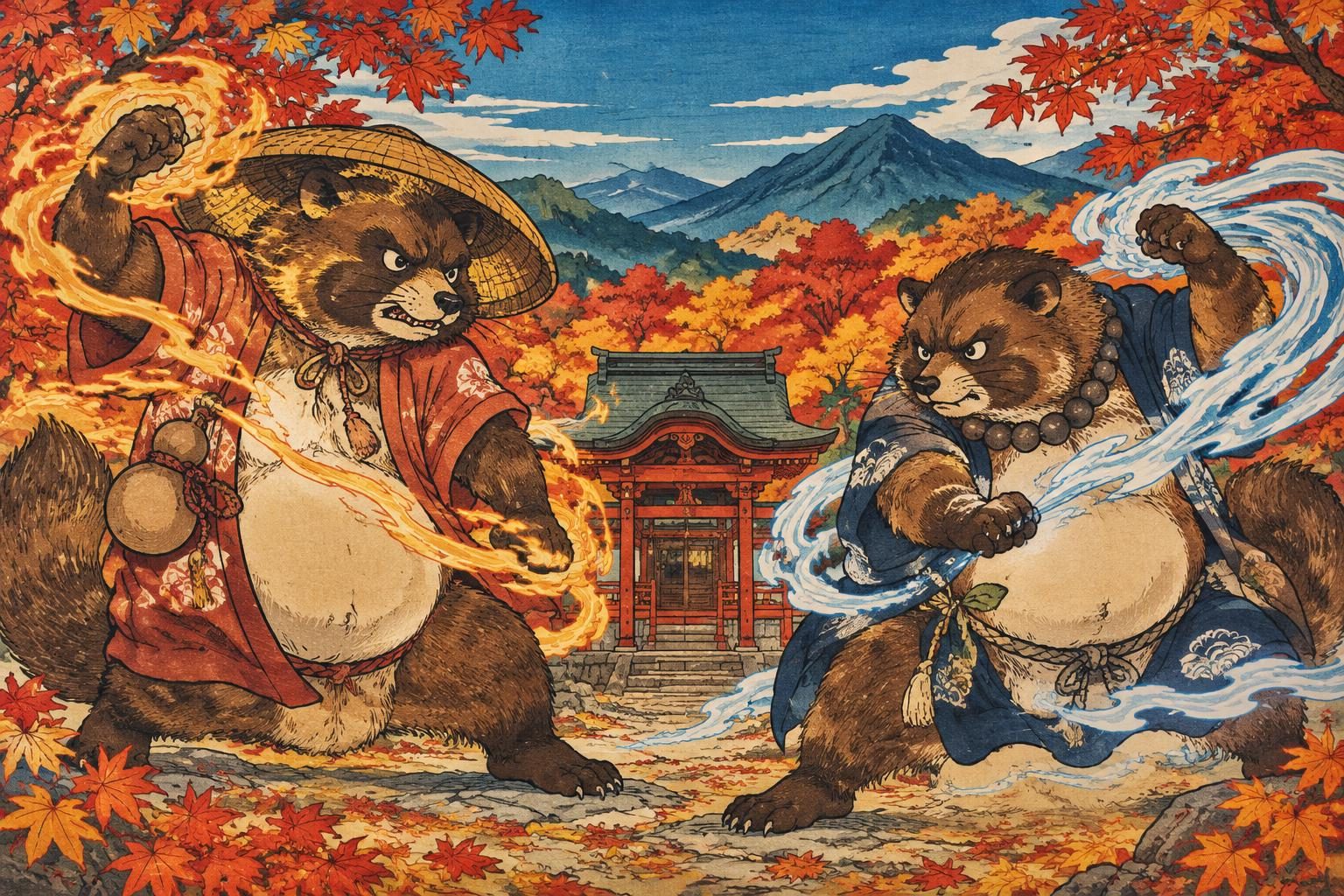
In the heart of Tokushima Prefecture, the city of Komatsushima is home to one of Japan’s most intriguing legends: the Awa Tanuki War. This captivating tale of shape-shifting tanuki (raccoon dogs) has left a lasting mark on the cultural landscape of the region, drawing visitors to explore its storied past.


Introduction to the Awa Tanuki War and Tokushima Lore
FACT: The Cultural Significance of Tanuki in Japan
Tanuki, or raccoon dogs, are a staple of Japanese folklore, often depicted as mischievous creatures with the ability to shape-shift. These mythical animals are celebrated for their cunning and playful nature, appearing in countless stories and legends across Japan. Their reputation as tricksters is well-documented in various folktales, where they are often portrayed outsmarting humans or other animals. In Tokushima, the Awa Tanuki War is a prominent example of tanuki folklore, highlighting the cultural importance of these creatures in the region. This tale not only entertains but also serves as a vehicle for exploring themes of rivalry, loyalty, and the supernatural.
The tanuki’s role in Japanese culture is multifaceted. They are often associated with prosperity and good fortune, and statues of tanuki are commonly found outside homes and businesses as symbols of luck. In literature and art, they are depicted with exaggerated features and whimsical expressions, embodying the playful spirit that defines their mythical persona. This cultural backdrop enriches the Awa Tanuki War narrative, providing a deeper understanding of why these creatures hold such a special place in the hearts of the Japanese people.
LEGEND: The Legend of Kinchō and Rokuemon’s Clash
According to local tradition, the Awa Tanuki War centers around a fierce battle between two powerful tanuki clans led by Kinchō and Rokuemon. The conflict is said to have erupted over territorial disputes and personal grievances, culminating in a dramatic showdown at Kincho Shrine in Komatsushima. This legendary battle is a testament to the enduring allure of tanuki folklore in Tokushima. The story, as recounted by locals, paints a vivid picture of the tanuki’s world, where magical abilities and animal instincts intertwine in a struggle for dominance.
In the tales told by the people of Komatsushima, the tanuki are not just animals but beings with complex emotions and motivations. The rivalry between Kinchō and Rokuemon is often depicted as a saga of pride and honor, with each leader striving to protect their clan’s legacy. This narrative adds layers of depth to the legend, transforming it from a simple animal fable into a rich tapestry of mythical storytelling. The vivid imagery and dramatic tension of the tanuki war continue to captivate audiences, ensuring the legend’s place in the cultural memory of the region.

Visiting Kinchō Shrine at the Foot of Mount Hinomine
FACT: Kinchō Shrine’s Historical and Cultural Role
Kinchō Shrine, located in Komatsushima, Tokushima Prefecture, is dedicated to the legendary tanuki Kinchō. Established in 1956, the shrine serves as a focal point for the Awa Tanuki War legend, attracting visitors interested in exploring this unique aspect of Japanese folklore. The shrine’s connection to the tanuki legend has even inspired scenes in Studio Ghibli’s film ‘Pom Poko.’ Visitors to the shrine can appreciate its serene setting at the foot of Mount Hinomine, where the natural beauty complements the mystical atmosphere of the legend.
The shrine itself is a place of tranquility and reflection, offering a peaceful retreat for those seeking to connect with the spiritual essence of the tanuki legend. The architecture and layout of the shrine are designed to harmonize with the surrounding landscape, creating an immersive experience for visitors. As they explore the grounds, visitors can feel the presence of the tanuki spirits, a testament to the enduring power of the legend and its impact on the local culture.
LEGEND: The Shrine’s Role in the Awa Tanuki War
Local tradition holds that Kinchō Shrine was the site of the final confrontation between the tanuki clans. It is said that the spirits of the tanuki still linger in the area, adding an air of mystery and enchantment to the shrine. Visitors to the shrine can immerse themselves in the legend, experiencing the mystical atmosphere that surrounds this storied location. The shrine itself is a testament to the enduring power of folklore, where stories of old continue to captivate the imagination of those who visit.
The legend of the Awa Tanuki War is deeply intertwined with the identity of Kinchō Shrine. As visitors walk through the shrine, they are invited to reflect on the stories of bravery and cunning that define the tanuki’s legacy. The shrine’s role as a custodian of this legend ensures that the tales of Kinchō and Rokuemon will continue to inspire future generations, preserving the cultural heritage of Tokushima for years to come.


Komatsushima Station Park’s Giant Tanuki Statue
FACT: The World’s Largest Bronze Tanuki Statue
Komatsushima Station Park is home to the world’s largest bronze tanuki statue, a striking tribute to the Awa Tanuki War legend. Standing at an impressive 5 meters tall and weighing 5 tons, the statue is a popular attraction for those visiting Tokushima. The park also features an interactive element: clapping near the statue activates a 10-meter artificial waterfall, adding to the whimsical charm of the site. This playful interaction with the statue reflects the tanuki’s mischievous nature, inviting visitors to engage with the legend in a fun and memorable way.
The statue is not only a symbol of the tanuki’s playful spirit but also a celebration of the local culture and its connection to the legend. Visitors to the park can enjoy the whimsical atmosphere created by the statue and its interactive features, making it a favorite spot for families and tourists alike. The presence of the statue in Komatsushima Station Park underscores the importance of the Awa Tanuki War in the cultural landscape of Tokushima, offering a tangible link to the region’s mythical heritage.
Connecting Tokushima’s Mythical Heritage to Shikoku Travel
FACT: Tokushima’s Place in Shikoku’s Cultural Landscape
Tokushima’s rich folklore, exemplified by the Awa Tanuki War, is an integral part of Shikoku’s cultural heritage. The region’s unique blend of myth and history offers travelers a chance to delve into Japan’s storied past, exploring the legends that have shaped its cultural identity. From the enchanting tales of tanuki to the serene beauty of the surrounding landscape, Tokushima provides a captivating glimpse into the heart of Japanese folklore. Visitors to the area can explore not only the legends but also the natural and cultural landmarks that make Tokushima a unique destination.
The cultural significance of Tokushima extends beyond its legends, as the region is home to a variety of traditional arts and crafts that reflect its rich history. Travelers can experience the local customs and traditions that have been passed down through generations, gaining a deeper appreciation for the cultural tapestry of Shikoku. By connecting with the mythical heritage of Tokushima, visitors can embark on a journey of discovery that celebrates the timeless stories and traditions of Japan.


Nearby Guide
Access
- Minami-Komatsushima Station (Komatsushima) — From Minami-Komatsushima Station, it’s a 20-minute walk to Kincho Shrine. details
Nearby sights
- Kincho Shrine (Komatsushima) — Dedicated to Kincho Daimyojin, this shrine honors the legendary tanuki Kincho, central to the Awa Tanuki War. Built in 1956, it inspired scenes in Studio Ghibli’s ‘Pom Poko’. official site
- Komatsushima Station Park (Komatsushima) — Features the world’s largest bronze tanuki statue, standing 5 meters tall and weighing 5 tons. Clapping near the statue activates a 10-meter artificial waterfall. official site
Where to eat
- Yamatoya Dye Shop (Komatsushima) — The historic shop where the tanuki Kincho was rescued, now a local landmark. details
- Kinchō Café (Komatsushima) — A café themed around the tanuki legend, offering local specialties and tanuki-themed décor. official site


Related on JAPAN ESSENCE: Hibagon: Exploring Hiroshima’s Legendary Mount Hiba Bigfoot | Exploring Amano Iwato Shrine & the Myth of the Sun Goddess in Takachiho
Sources
- Awa Tanuki Gassen – Wikipedia
- Heike Yashiki Museum of Folklore|What to See & Do|Tourism SHIKOKU
- Kincho Shrine (The Awa Tanuki War): Bake-danuki (Shapeshifting Tanuki) Legend Site (Komatsushima, Tokushima) | NazoMap
- Step Back in Time at the Heike Yashiki Folk Museum – Part 1 | まるごと三好観光ポータルメディア
- komatsushima Station Park – 小松島市観光サイト「小松島ナビ」
- 金長たぬき – 小松島市観光サイト「小松島ナビ」
- Yokai Database
- Screen Pilgrimage
To explore further, visit Oni Kobo (鬼工房) for onigawara demon-tile art and charms and Onigawara Experience for hands-on onigawara experiences in Japan.
徳島県の中心に位置する小松島市は、日本の最も興味深い伝説の一つ、阿波狸合戦の舞台です。この魅力的な化け狸(タヌキ)の物語は、地域の文化的景観に永続的な影響を与え、訪問者をその歴史を探る旅に誘います。
阿波狸合戦と徳島の伝承の紹介
事実: 日本における狸の文化的意義
狸、またはタヌキは、日本の民話において重要な存在で、しばしば変身能力を持ついたずら好きな生き物として描かれます。これらの神話的な動物は、その狡猾さと遊び心で称賛され、日本中の無数の物語や伝説に登場します。彼らのトリックスターとしての評判は、多くの民話でよく知られており、しばしば人間や他の動物を出し抜く姿が描かれます。徳島では、阿波狸合戦が狸の民話の代表的な例であり、この地域におけるこれらの生き物の文化的重要性を強調しています。この物語は、楽しませるだけでなく、競争、忠誠心、超自然のテーマを探求する手段としても機能します。
狸の日本文化における役割は多面的です。彼らはしばしば繁栄と幸運と関連付けられ、狸の像は幸運の象徴として家やビジネスの外に一般的に見られます。文学や芸術では、誇張された特徴と風変わりな表情で描かれ、彼らの神話的なペルソナを定義する遊び心を体現しています。この文化的背景は、阿波狸合戦の物語を豊かにし、なぜこれらの生き物が日本人の心に特別な場所を占めているのかをより深く理解させます。
伝承: 金長と六右衛門の衝突の伝説
地元の言い伝えによると、阿波狸合戦は金長と六右衛門に率いられた二つの強力な狸の一族の間の激しい戦いを中心に展開されます。この争いは領土の争いと個人的な不満から勃発したとされ、小松島の金長神社での劇的な対決に至りました。この伝説的な戦いは、徳島における狸の民話の魅力を証明しています。地元の人々によって語られるこの物語は、魔法の能力と動物の本能が絡み合う狸の世界を鮮やかに描写しています。
小松島の人々によって語られる物語では、狸は単なる動物ではなく、複雑な感情と動機を持つ存在として描かれます。金長と六右衛門のライバル関係は、しばしば誇りと名誉の物語として描かれ、各リーダーが一族の遺産を守ろうと奮闘します。この物語は伝説に深みを加え、単なる動物の寓話から神話的な物語の豊かなタペストリーへと変貌させます。狸合戦の鮮やかなイメージと劇的な緊張感は、観客を魅了し続け、地域の文化的記憶にその伝説の地位を確保しています。
日の峰山麓の金長神社を訪れる
事実: 金長神社の歴史的および文化的役割
徳島県小松島に位置する金長神社は、伝説の狸金長に捧げられています。1956年に設立されたこの神社は、阿波狸合戦の伝説の中心地として、訪問者を日本のユニークな民話を探求するために引き寄せます。神社の狸伝説とのつながりは、スタジオジブリの映画『平成狸合戦ぽんぽこ』のシーンにもインスピレーションを与えました。訪問者は、日の峰山の麓にある神社の静かな環境を楽しむことができ、自然の美しさが伝説の神秘的な雰囲気を引き立てます。
神社自体は、狸伝説の精神的な本質とつながることを求める人々にとって、静けさと反省の場です。神社の建築とレイアウトは、周囲の景観と調和するように設計されており、訪問者に没入型の体験を提供します。境内を探索する中で、訪問者は狸の霊の存在を感じることができ、伝説の持続的な力と地元文化への影響を証明しています。
伝承: 阿波狸合戦における神社の役割
地元の伝承では、金長神社は狸の一族の最終対決の場であったとされています。狸の霊が今もこの地に漂っていると言われ、神社に神秘と魅惑の空気を加えています。訪問者はこの伝説に浸り、この歴史ある場所を取り巻く神秘的な雰囲気を体験することができます。神社自体は、古い物語が訪れる人々の想像力を引き続き魅了する民話の持続的な力を証明しています。
阿波狸合戦の伝説は、金長神社のアイデンティティと深く結びついています。訪問者が神社を歩く中で、狸の遺産を定義する勇気と狡猾さの物語を振り返ることができます。この伝説の守護者としての神社の役割は、金長と六右衛門の物語が将来の世代にインスピレーションを与え続け、徳島の文化遺産を長年にわたり保存することを保証します。
小松島駅公園の巨大狸像
事実: 世界最大のブロンズ製狸像
小松島駅公園には、阿波狸合戦の伝説に敬意を表した世界最大のブロンズ製狸像があります。高さ5メートル、重さ5トンのこの像は、徳島を訪れる人々にとって人気のあるアトラクションです。公園にはインタラクティブな要素もあり、像の近くで拍手をすると10メートルの人工滝が作動し、サイトの風変わりな魅力を増しています。この像との遊び心のある交流は、狸のいたずら好きな性質を反映し、訪問者に楽しく記憶に残る方法で伝説と関わることを招きます。
この像は、狸の遊び心の象徴であるだけでなく、地元文化と伝説とのつながりを祝うものでもあります。公園を訪れる人々は、像とそのインタラクティブな特徴が作り出す風変わりな雰囲気を楽しむことができ、家族や観光客にとってお気に入りのスポットとなっています。小松島駅公園にあるこの像の存在は、徳島の文化的景観における阿波狸合戦の重要性を強調し、地域の神話的遺産への具体的なリンクを提供します。
徳島の神話的遺産を四国旅行に結びつける
事実: 四国の文化的景観における徳島の位置
阿波狸合戦に代表される徳島の豊かな民話は、四国の文化遺産の重要な部分です。地域の独自の神話と歴史の融合は、旅行者に日本の歴史ある過去を探求し、その文化的アイデンティティを形作ってきた伝説を探る機会を提供します。狸の魅惑的な物語から周囲の風景の静かな美しさまで、徳島は日本の民話の中心にある魅力的な一瞥を提供します。訪問者は、伝説だけでなく、徳島をユニークな目的地にしている自然と文化のランドマークも探索できます。
徳島の文化的意義は、その伝説を超えて広がり、地域はその豊かな歴史を反映するさまざまな伝統的な芸術と工芸の本拠地です。旅行者は、世代を超えて受け継がれてきた地元の習慣と伝統を体験し、四国の文化的タペストリーへのより深い理解を得ることができます。徳島の神話的遺産とつながることで、訪問者は日本の時を超えた物語と伝統を祝う発見の旅に出ることができます。
周辺ガイド
アクセス
- 南小松島駅(小松島)— 南小松島駅から金長神社まで徒歩20分です。詳細
周辺の見どころ
- 金長神社(小松島)— 金長大明神に捧げられたこの神社は、阿波狸合戦の中心である伝説の狸金長を称えています。1956年に建てられ、スタジオジブリの『平成狸合戦ぽんぽこ』のシーンにインスピレーションを与えました。公式サイト
- 小松島駅公園(小松島)— 世界最大のブロンズ製狸像があり、高さ5メートル、重さ5トンです。像の近くで拍手をすると10メートルの人工滝が作動します。公式サイト
食べる
- 大和屋染物店(小松島)— 狸の金長が救われた歴史的な店で、現在は地元のランドマークです。詳細
- 金長カフェ(小松島)— 狸伝説をテーマにしたカフェで、地元の名物料理や狸をテーマにした装飾を提供しています。公式サイト
Related on JAPAN ESSENCE: Hibagon: Exploring Hiroshima’s Legendary Mount Hiba Bigfoot | Exploring Amano Iwato Shrine & the Myth of the Sun Goddess in Takachiho
Sources
- Awa Tanuki Gassen – Wikipedia
- Heike Yashiki Museum of Folklore|What to See & Do|Tourism SHIKOKU
- Kincho Shrine (The Awa Tanuki War): Bake-danuki (Shapeshifting Tanuki) Legend Site (Komatsushima, Tokushima) | NazoMap
- Step Back in Time at the Heike Yashiki Folk Museum – Part 1 | まるごと三好観光ポータルメディア
- komatsushima Station Park – 小松島市観光サイト「小松島ナビ」
- 金長たぬき – 小松島市観光サイト「小松島ナビ」
- Yokai Database
- Screen Pilgrimage
さらに楽しみたい方は、鬼瓦や魔除けの品に出会える鬼工房や、鬼瓦づくりを体験できるOnigawara Experienceもご覧ください。
Leave a Reply