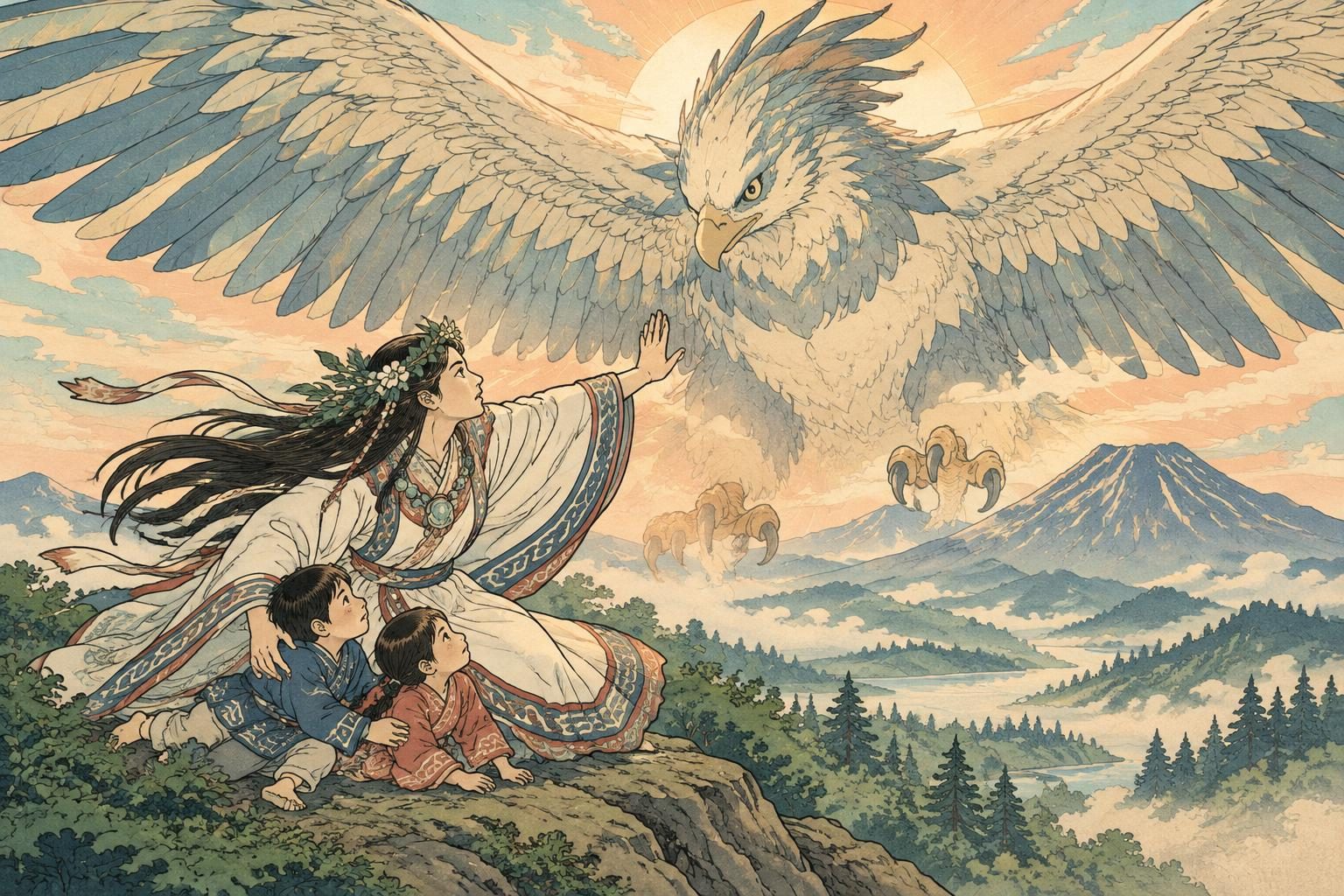
In Yūbari, Hokkaido Prefecture, the legend of Huri, a giant bird from Ainu folklore, continues to captivate imaginations. This mythical creature, said to have wings so vast they could block out the sun, is an integral part of the cultural tapestry of the region.

Introduction to Huri: The Mythical Giant Bird of Ainu Lore
LEGEND: The Story of Huri and Kamuy Kakkemat
According to Ainu legend, the goddess Kamuy Kakkemat arrived at Mount Yūbari and encountered the giant bird Huri. This bird, with wings so immense that they darkened the land, had pinned two children underfoot. Kamuy Kakkemat rescued these children, who would later become the ancestors of the Sumunkur Ainu. This tale is a vivid part of the oral traditions of the Ainu people, illustrating the interplay between divine intervention and the natural world.
The legend of Kamuy Kakkemat and Huri is not merely a story of rescue and heroism; it is a narrative that underscores the Ainu’s deep spiritual connection to their environment. The mountain setting provides a dramatic backdrop for the encounter, emphasizing the power and mystery of nature as perceived by the Ainu.
FACT: The Characteristics of Huri
In Ainu oral tradition, Huri is depicted as a giant bird, sometimes described as eagle-like. Its name, derived from the Ainu word for a red or reddish bird, is rendered as huri or furi in different dialects. One of the most striking features attributed to Huri is its wingspan, which is said to measure about 28 kilometers (7 ri). This immense size underscores the bird’s mythical status and its ability to influence the natural environment, such as blocking the sun.
The description of Huri as eagle-like suggests a creature of great majesty and power, characteristics that are often associated with birds of prey. This portrayal aligns with the bird’s role in the legend as a formidable force that the goddess Kamuy Kakkemat must confront.
The Legend of Mount Yūbari and Kamuy Kakkemat
LEGEND: Variants Across Hokkaido
While the legend of Huri has various localized versions across Hokkaido, the encounter at Mount Yūbari is explicitly tied to the Sumunkur Ainu. This specific version highlights the cultural significance of the mountain within the Ainu community and its role as a setting for divine and mythical narratives. The story of Kamuy Kakkemat and Huri is not just a tale of heroism but also a reflection of the Ainu’s deep connection to their natural surroundings.
According to local tradition, the mountain is more than just a geographical feature; it is a sacred space where the divine and the earthly intersect. This belief imbues the landscape with a spiritual dimension, making it a place of reverence and storytelling.


Who Were the Sumunkur Ainu?
FACT: The Ancestral Lineage
The Sumunkur Ainu are said to be descendants of the children rescued by Kamuy Kakkemat in the legend of Huri. This lineage is an important aspect of Ainu identity, linking the people to their mythological past and reinforcing their cultural heritage. The story serves as a reminder of the Ainu’s historical presence in Hokkaido and their enduring traditions.
This ancestral connection is not just a matter of lineage but also one of cultural continuity. The Sumunkur Ainu, through their stories and traditions, maintain a living link to their ancestors, ensuring that the lessons and values of the past continue to inform their present.
Etymology and Meaning of the Name Huri
FACT: The Linguistic Roots
The name “Huri” is derived from the Ainu language, referring to a red or reddish bird. This etymology reflects the bird’s symbolic significance and its vivid portrayal in Ainu folklore. The variations in the name, such as furi, highlight the linguistic diversity within Ainu dialects and the adaptability of oral traditions.
The color red in Ainu symbolism often represents vitality and life force, suggesting that Huri is not only a creature of legend but also a symbol of life and power. The linguistic nuances in the name reflect the rich tapestry of Ainu language and culture.


Mount Yūbari: Geography and Natural Setting in Hokkaido
FACT: The Natural Landscape
Mount Yūbari, located in Yūbari City, Hokkaido, is a prominent feature of the region’s geography. It is part of a mountain range that offers breathtaking views and diverse ecosystems. The mountain’s natural beauty and its cultural significance make it a popular destination for hikers and those interested in exploring Ainu folklore.
The mountain’s rugged terrain and lush surroundings provide a perfect setting for the legends that surround it. Visitors can experience the same natural beauty that inspired the Ainu’s stories, making it a place where the past and present coexist.
Exploring Ainu Culture and Folklore in Modern Hokkaido
FACT: The Cultural Heritage
Ainu culture and folklore continue to be celebrated in Hokkaido, with efforts to preserve and promote these traditions. Festivals, museums, and cultural centers provide insights into the rich heritage of the Ainu people, allowing visitors to engage with their stories and traditions. The legend of Huri is just one example of the vibrant mythology that forms an integral part of Ainu cultural identity.
These cultural initiatives not only preserve the past but also enrich the present, offering both locals and visitors a deeper understanding of the Ainu’s unique worldview and their contributions to Japan’s cultural mosaic.
Nearby Guide
Access
- Daiyubari Trailhead (Yūbari) — To reach the Daiyubari Trailhead, drive from the Yūbari Interchange on the Hokkaido Expressway along National Routes 274 and 452. The trailhead is located on the west side of Mount Yūbari, where a small parking area and the Yūbari-dake Hyutte mountain hut serve hikers. Public transportation options details.
Nearby sights
- Shūparo Lake Reservoir (Yūbari) — Shūparo Lake Reservoir is a scenic spot near Mount Yūbari, offering picturesque views and a tranquil environment. It’s a great place to relax and enjoy nature after a hike. details.
- Mount Ashibetsu (Ashibetsu) — Mount Ashibetsu is a dramatic peak in the same mountain range as Mount Yūbari. It’s known for its rugged terrain and offers challenging hiking opportunities for adventure enthusiasts. details.
Where to stay
- Yūbari Onsen (Yūbari) — Yūbari Onsen is a hot spring resort known for its highly alkaline waters that leave the skin feeling exceptionally smooth. It’s a perfect place to relax after a day of hiking. details.
Where to eat
- Yūbari Melon (Yūbari) — Yūbari is famous for its sweet and juicy melons. Visitors can purchase fresh melons or melon-flavored products like smoothies and doughnuts at local shops and roadside stations. details.


Related on JAPAN ESSENCE: Daidarabocchi: Discover Tokyo’s Legendary Giant and the Ponds He Shaped | Daidarabotchi: Discover Tokyo’s Mythical Giant Footprint Ponds
Sources
- Huri (Ainu legendary bird) – Wikipedia
- Alpine Plant Communities and Serpentine Melange Zones on Mt. | Hokkaido | Explore Japan’s Cultural Heritage | National Treasures Database with Stories & Travel
- Yubari Meroad Roadside Station | Melons, Local Produce and Nearby Sights | Michi-no-Eki Journal
- Yubari Onsen (夕張温泉) | japan onsengai guide
To explore further, visit Onigawara Experience for hands-on onigawara experiences in Japan and Oni Kobo (鬼工房) for onigawara demon-tile art and charms.
北海道夕張市では、アイヌの伝承に登場する巨大な鳥フリの伝説が人々の想像力をかき立て続けています。この神話的な生き物は、その翼があまりにも広大で太陽を遮ることができると言われており、この地域の文化的な織物の一部として重要な役割を果たしています。
フリの紹介: アイヌ伝承の神話的な巨大鳥
伝承: フリとカムイカケマトの物語
アイヌの伝承によると、女神カムイカケマトが夕張山に現れ、巨大な鳥フリに遭遇しました。この鳥は、その翼があまりにも巨大で土地を暗くするほどで、2人の子供を足元に押さえつけていました。カムイカケマトはこれらの子供たちを救出し、後に彼らはスムンクルアイヌの祖先となりました。この物語は、神の介入と自然界の相互作用を描写するアイヌの口承の鮮やかな一部です。
カムイカケマトとフリの伝説は、単なる救出と英雄の物語ではなく、アイヌの自然環境への深い精神的なつながりを強調する物語です。山の背景は、アイヌが感じる自然の力と神秘を強調し、劇的な舞台を提供します。
事実: フリの特徴
アイヌの口承では、フリは巨大な鳥として描かれ、時にはワシのようだと言われています。その名前は、赤または赤みを帯びた鳥を指すアイヌ語に由来し、異なる方言ではフリまたはフリと表現されます。フリに帰される最も印象的な特徴の1つは、その翼幅で、約28キロメートル(7里)とされています。この巨大なサイズは、鳥の神話的な地位と、太陽を遮るなどの自然環境に影響を与える能力を強調しています。
フリがワシのように描かれることは、偉大な威厳と力を持つ生き物を示唆しており、これはしばしば猛禽類に関連付けられる特徴です。この描写は、女神カムイカケマトが対峙しなければならない強大な力としての鳥の役割と一致しています。
夕張山とカムイカケマトの伝説
伝承: 北海道各地のバリエーション
フリの伝説は北海道各地でさまざまなローカライズされたバージョンがありますが、夕張山での遭遇はスムンクルアイヌに明確に結びついています。この特定のバージョンは、アイヌコミュニティ内での山の文化的な重要性と、神聖で神話的な物語の舞台としての役割を強調しています。カムイカケマトとフリの物語は、単なる英雄の物語ではなく、アイヌの自然環境への深い結びつきを反映しています。
地元の言い伝えによると、山は単なる地理的な特徴以上のものであり、神聖と地上が交差する場所です。この信念は、風景に精神的な次元を与え、敬意と物語の場としています。
スムンクルアイヌとは?
事実: 祖先の系譜
スムンクルアイヌは、フリの伝説でカムイカケマトによって救出された子供たちの子孫であると言われています。この系譜は、アイヌのアイデンティティの重要な側面であり、人々を神話的な過去に結びつけ、文化的遺産を強化します。この物語は、北海道におけるアイヌの歴史的な存在と彼らの持続的な伝統を思い出させるものです。
この祖先のつながりは、単なる系譜の問題ではなく、文化的な連続性の問題でもあります。スムンクルアイヌは、彼らの物語と伝統を通じて、祖先との生きたつながりを維持し、過去の教訓と価値観が現在に影響を与え続けるようにしています。
フリという名前の語源と意味
事実: 言語的なルーツ
「フリ」という名前は、赤または赤みを帯びた鳥を指すアイヌ語に由来しています。この語源は、鳥の象徴的な重要性とアイヌの伝承における鮮やかな描写を反映しています。フリのような名前のバリエーションは、アイヌ方言内の言語的多様性と口承の適応性を強調しています。
アイヌの象徴における赤色はしばしば活力と生命力を表し、フリは伝説の生き物であるだけでなく、生命と力の象徴でもあります。名前の言語的なニュアンスは、アイヌの言語と文化の豊かな織物を反映しています。
夕張山: 北海道の地理と自然環境
事実: 自然の風景
北海道夕張市に位置する夕張山は、地域の地理の顕著な特徴です。それは、息をのむような景色と多様な生態系を提供する山脈の一部です。山の自然の美しさとその文化的な重要性は、ハイカーやアイヌの伝承を探求したい人々に人気のある目的地となっています。
山の険しい地形と豊かな周囲は、それを取り巻く伝説に完璧な舞台を提供します。訪問者は、アイヌの物語にインスピレーションを与えた同じ自然の美しさを体験することができ、過去と現在が共存する場所となっています。
現代北海道におけるアイヌ文化と伝承の探求
事実: 文化遺産
アイヌ文化と伝承は北海道で引き続き祝われており、これらの伝統を保存し促進する努力がなされています。祭り、博物館、文化センターは、アイヌの人々の豊かな遺産への洞察を提供し、訪問者が彼らの物語と伝統に触れることを可能にしています。フリの伝説は、アイヌの文化的アイデンティティの不可欠な部分を形成する活気に満ちた神話の一例に過ぎません。
これらの文化的な取り組みは、過去を保存するだけでなく、現在を豊かにし、地元の人々と訪問者の両方にアイヌの独自の世界観と日本の文化的モザイクへの貢献についての深い理解を提供します。
周辺ガイド
アクセス
- 大夕張登山口(夕張)— 大夕張登山口に到達するには、北海道自動車道の夕張インターチェンジから国道274号線と452号線を進みます。登山口は夕張山の西側に位置し、小さな駐車場と夕張岳ヒュッテ山小屋がハイカーを迎えます。公共交通機関のオプション 詳細。
周辺の見どころ
- シューパロ湖貯水池(夕張)— シューパロ湖貯水池は、夕張山の近くにある景勝地で、絵のように美しい景色と静かな環境を提供します。ハイキングの後に自然を楽しむのに最適な場所です。 詳細。
- 芦別岳(芦別)— 芦別岳は、夕張山と同じ山脈にある劇的な峰です。その険しい地形で知られ、冒険愛好家にとって挑戦的なハイキングの機会を提供します。 詳細。
泊まる
- 夕張温泉(夕張)— 夕張温泉は、肌を非常に滑らかにする高アルカリ性の湯で知られる温泉リゾートです。ハイキングの一日を終えた後にリラックスするのに最適な場所です。 詳細。
食べる
- 夕張メロン(夕張)— 夕張は、その甘くてジューシーなメロンで有名です。訪問者は、新鮮なメロンやスムージーやドーナツなどのメロン風味の製品を地元の店や道の駅で購入できます。 詳細。
Related on JAPAN ESSENCE: Daidarabocchi: Discover Tokyo’s Legendary Giant and the Ponds He Shaped | Daidarabotchi: Discover Tokyo’s Mythical Giant Footprint Ponds
Sources
- Huri (Ainu legendary bird) – Wikipedia
- Alpine Plant Communities and Serpentine Melange Zones on Mt. | Hokkaido | Explore Japan’s Cultural Heritage | National Treasures Database with Stories & Travel
- Yubari Meroad Roadside Station | Melons, Local Produce and Nearby Sights | Michi-no-Eki Journal
- Yubari Onsen (夕張温泉) | japan onsengai guide
さらに楽しみたい方は、鬼瓦づくりを体験できるOnigawara Experienceや、鬼瓦や魔除けの品に出会える鬼工房もご覧ください。
Leave a Reply