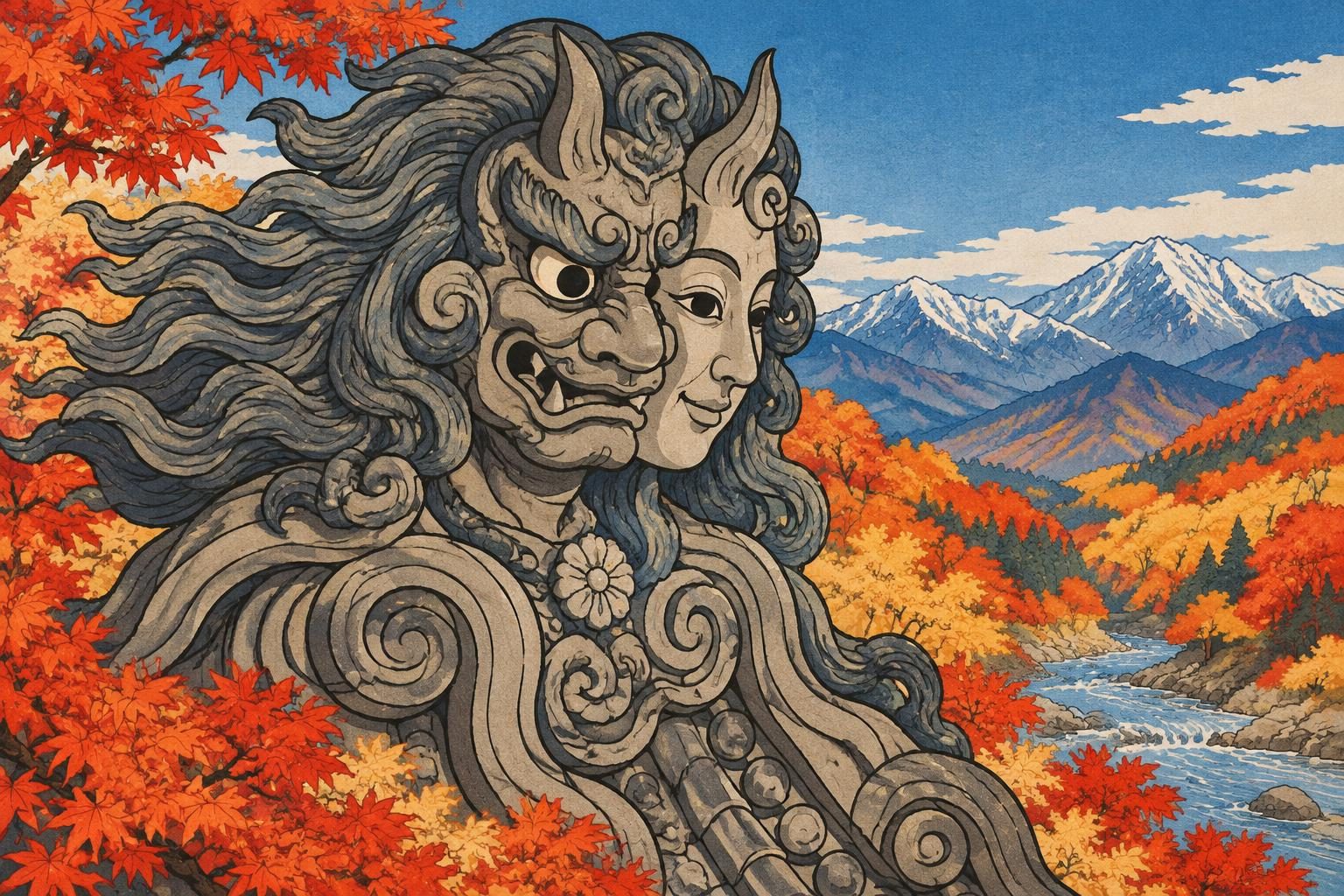
In Minami-Alps, Yamanashi Prefecture, the Koshu onigawara, or devil-face roof tiles, stand as a testament to the region’s rich cultural heritage. These unique tiles, with their distinctive mix of fierceness and gentle Noh-mask-like features, have been a part of Japanese architecture for centuries, serving as protective charms for households and businesses alike.

What Are Koshu Onigawara Devil-Face Roof Tiles?
FACT: What the records say
Koshu onigawara are traditional Japanese roof tiles, known for their devil-like faces. These tiles are crafted from fired clay and are typically placed at the ends of roofs to ward off evil spirits and protect the buildings they adorn. The tradition of using onigawara dates back to ancient Japan, where they were believed to offer protection and bring prosperity. The presence of these tiles on a building is not just a nod to tradition but a continuation of a cultural practice that emphasizes the importance of spiritual protection in everyday life.
These tiles are more than mere architectural elements; they are steeped in cultural significance. The fierce expressions carved into the tiles are intended to scare away malevolent forces, while their placement at strategic points on the roof enhances their protective capabilities. This practice reflects a broader Japanese cultural belief in the power of symbols and art to influence the spiritual realm.
LEGEND: The story behind the fierce yet gentle expressions
According to local tradition in Minami-Alps, the expression of Koshu onigawara is a unique blend of fierceness and the gentleness reminiscent of Noh masks. This combination is thought to enhance their protective qualities, making them popular as charms for household safety and prosperity. These tiles are not only functional but also hold significant cultural and symbolic value in the region. The duality in their design is said to represent the balance between strength and peace, a concept deeply rooted in Japanese aesthetics and philosophy.
In local folklore, the gentle features of the onigawara are believed to invite benevolent spirits, while the fierce aspects ward off evil. This dual purpose is reflected in the careful craftsmanship that goes into each tile, ensuring that they embody both protective and inviting qualities. Such beliefs highlight the cultural richness and spiritual depth that these tiles represent, making them cherished elements of regional heritage.
The 300-Year History of Tile Making in Yamanashi
FACT: The origins and evolution of tile making
Tile making in the Kagami area of Minami-Alps began in the mid-Edo period, around 1716. Techniques were brought from Mikawa, a region known for its skilled artisans. These craftsmen played a crucial role in the restoration of Kofu Castle during the late Edo period, supplying tiles that would become iconic in the region’s architectural landscape. The introduction of these techniques marked a significant development in the local craft, influencing the style and quality of tiles produced in Yamanashi.
The Edo period was a time of cultural flourishing in Japan, and the introduction of Mikawa techniques to Yamanashi contributed to this cultural exchange. The artisans from Mikawa not only brought their skills but also their artistic sensibilities, which were integrated into the local tile-making traditions. This blending of styles and techniques has resulted in the distinctive Koshu onigawara that we see today, a testament to the enduring legacy of these early craftsmen.
FACT: The influence of Mikawa artisans
The influence of Mikawa artisans on tile making in Yamanashi cannot be overstated. Their expertise not only helped in the restoration of Kofu Castle but also laid the foundation for a thriving tile-making industry in the region. The skills and techniques passed down through generations have ensured the survival and continued evolution of this traditional craft. The legacy of these artisans is evident in the meticulous craftsmanship and artistic flair that characterize Koshu onigawara.
The Mikawa artisans’ impact extended beyond mere technique; they also influenced the cultural appreciation of onigawara in Yamanashi. Their work contributed to a deeper understanding of the tiles’ symbolic meanings, enhancing their status as cultural artifacts. This appreciation has helped sustain the craft through changing times, ensuring that the tradition of onigawara making remains vibrant and relevant.


Symbolism and Design: Fierceness Meets Noh-Mask Gentleness
FACT: The artistic elements of Koshu onigawara
The design of Koshu onigawara is deeply rooted in Japanese artistic traditions. The fierce expressions are intended to scare away evil spirits, while the gentle features, inspired by Noh theater masks, add an element of tranquility and protection. This duality in design makes them unique among Japanese roof tiles. The artistic elements of these tiles reflect a harmonious blend of form and function, where aesthetic beauty serves a practical purpose.
Each Koshu onigawara is a work of art, meticulously crafted to embody the dual nature of protection and beauty. The influence of Noh masks is particularly significant, as these masks are known for their ability to convey complex emotions through subtle expressions. By incorporating these elements, the tiles not only serve as protective charms but also as artistic expressions of cultural values.
FACT: Cultural significance and modern appeal
Today, the Koshu onigawara continue to be celebrated not only for their protective qualities but also for their aesthetic appeal. They are often featured in cultural exhibitions and are sought after by collectors and enthusiasts of traditional Japanese art. Their enduring popularity is a testament to their cultural significance and the timeless appeal of their design. The tiles’ ability to resonate with both traditional and contemporary audiences underscores their versatility and enduring relevance.
In modern times, the appeal of Koshu onigawara extends beyond their traditional uses. They are appreciated as cultural icons that encapsulate the spirit and history of Yamanashi. This appreciation has led to a renewed interest in preserving and promoting the craft, ensuring that future generations can continue to enjoy and learn from these remarkable artifacts.
The Evolution of Devil-Face Tiles in Japanese Architecture
FACT: From protective charms to cultural icons
Over the centuries, onigawara have evolved from simple protective charms to cultural icons. They are often seen on temples, shrines, and traditional homes, symbolizing the enduring connection between architecture and spiritual beliefs in Japan. The Koshu style, in particular, is celebrated for its artistic merit and cultural significance. These tiles serve as a bridge between the past and present, linking contemporary architecture with ancient traditions.
The evolution of onigawara reflects broader changes in Japanese society, where traditional elements are continuously reinterpreted to fit modern contexts. This adaptability has allowed onigawara to remain relevant, serving as both historical artifacts and contemporary design elements. Their presence in modern architecture is a testament to their lasting impact and the continued importance of cultural heritage in shaping Japan’s built environment.
FACT: The role of onigawara in modern architecture
In modern times, onigawara have found a place in contemporary architecture, blending traditional aesthetics with modern design principles. Architects and designers are increasingly incorporating these tiles into new constructions, creating a fusion of old and new that respects tradition while embracing innovation. This integration highlights the versatility of onigawara, showcasing their ability to enhance both the visual appeal and cultural depth of modern buildings.
The use of onigawara in contemporary architecture is a reflection of a broader trend in Japan, where traditional elements are being reimagined to suit modern tastes. This trend not only preserves the cultural significance of onigawara but also revitalizes their role in the architectural landscape, ensuring that they continue to be a source of inspiration and protection.


Visiting the Wakakusa-Kawara Museum in Minami-Alps
FACT: What visitors can see and do
The Wakakusa-Kawara Museum, located in Minami-Alps, offers visitors a chance to explore the history and artistry of Koshu onigawara. The museum showcases a variety of tiles, providing insights into their design and cultural importance. Visitors can also learn about the tile-making process and the role these tiles have played in local architecture. The museum serves as a cultural hub, offering an immersive experience that connects visitors with the rich heritage of the region.
Through its exhibits, the museum not only educates visitors about the technical aspects of tile making but also highlights the cultural narratives that these tiles represent. This dual focus ensures that visitors gain a comprehensive understanding of onigawara, appreciating them as both craft and cultural symbol.
FACT: Educational exhibits and interactive displays
The museum features educational exhibits that delve into the history of tile making in the region, as well as interactive displays that allow visitors to engage with the craft. These exhibits provide a comprehensive overview of the cultural and historical context of Koshu onigawara, offering a deeper understanding of their significance. By engaging with these displays, visitors can appreciate the intricate craftsmanship and cultural depth that define these traditional tiles.
The interactive nature of the museum’s exhibits encourages visitors to actively participate in the learning process, fostering a deeper connection with the craft. This approach not only enhances the educational experience but also ensures that the cultural legacy of onigawara is passed on to future generations.
Trying Your Hand at Onimen Tile Making
FACT: Engaging with the craft
This interactive opportunity allows participants to connect with the craft and appreciate the skill and artistry involved in creating these traditional tiles.
By engaging directly with the materials and techniques, they can better understand the cultural and historical significance of these tiles, fostering a greater appreciation for this traditional craft.
FACT: Workshops and learning opportunities
These sessions are designed to be educational and enjoyable, providing a memorable experience for all who attend.
By offering these learning opportunities, it ensures that the skills and knowledge associated with this craft are passed on to future generations, safeguarding the cultural heritage of the region.
Nearby Guide
Access
- By Train and Taxi (Minami-Alps) — From JR Chuo Line Kofu Station, take a taxi for approximately 10 minutes to the facility. Alternatively, from JR Minobu Line Higashi Hanawa Station, it’s a 10-minute walk or a short taxi ride. details
Nearby sights
- Minami-Alps National Park (Minami-Alps) — A vast national park offering hiking trails, scenic views, and diverse flora and fauna. Accessible by car from Minami-Alps IC. official site
- Wakakusa Library (Minami-Alps) — A library featuring a distinctive dome and a warm wooden interior, located next to the Wakakusa Lifelong Learning Center. Closed on Mondays and holidays. details
Where to eat
- Tezuka Orchard (Minami-Alps) — An orchard offering cherry picking experiences, with 70 cherry trees of various varieties. Open seasonally during cherry blossom season. details


Related on JAPAN ESSENCE: Kyushu’s Onigawara: Japan’s Fierce Roof Guardians
Sources
To explore further, visit Onigawara Experience for hands-on onigawara experiences in Japan and Zenkei (禅景) for Zen-inspired onigawara art.
山梨県南アルプス市では、甲州鬼瓦、すなわち鬼面瓦が地域の豊かな文化遺産の証として立っています。これらの独特な瓦は、凶暴さと能面のような穏やかな特徴を兼ね備え、日本の建築に何世紀にもわたって取り入れられ、家庭や企業の守護として役立ってきました。
甲州鬼瓦とは何ですか?
事実: 記録が示すもの
甲州鬼瓦は、鬼のような顔で知られる伝統的な日本の屋根瓦です。これらの瓦は焼き粘土で作られ、通常は屋根の端に配置され、悪霊を追い払い、建物を守る役割を果たします。鬼瓦の使用は古代日本に遡り、保護と繁栄をもたらすと信じられていました。これらの瓦が建物に存在することは、単なる伝統への敬意ではなく、日常生活における精神的な保護の重要性を強調する文化的実践の継続です。
これらの瓦は単なる建築要素以上のものであり、文化的な意義に満ちています。瓦に刻まれた凶暴な表情は悪意のある力を追い払うことを意図しており、屋根の戦略的なポイントに配置されることでその保護能力が強化されます。この実践は、シンボルと芸術の力が精神的な領域に影響を与えるという日本の文化的信念を反映しています。
伝承: 凶暴でありながら穏やかな表情の背後にある物語
南アルプスの地元の言い伝えによると、甲州鬼瓦の表情は、凶暴さと能面を思わせる穏やかさの独特な組み合わせです。この組み合わせはその保護特性を高めると考えられ、家庭の安全と繁栄のための護符として人気があります。これらの瓦は機能的であるだけでなく、地域において重要な文化的および象徴的な価値を持っています。そのデザインの二重性は、強さと平和のバランスを表していると言われており、日本の美学と哲学に深く根付いています。
地元の伝承では、鬼瓦の穏やかな特徴は善良な霊を招き入れると信じられており、凶暴な側面は悪を追い払います。この二重の目的は、各瓦に込められた慎重な職人技に反映されており、保護的でありながら招く性質を具現化しています。このような信念は、これらの瓦が表す文化的豊かさと精神的深さを強調し、地域の遺産として大切にされています。
山梨における瓦製作の300年の歴史
事実: 瓦製作の起源と進化
南アルプス市の鏡地区での瓦製作は、江戸時代中期の1716年頃に始まりました。技術は、熟練した職人で知られる三河からもたらされました。これらの職人は、江戸時代後期の甲府城の修復において重要な役割を果たし、地域の建築景観で象徴的となる瓦を供給しました。これらの技術の導入は、地元の工芸における重要な発展を示し、山梨で生産される瓦のスタイルと品質に影響を与えました。
江戸時代は日本の文化が繁栄した時期であり、三河の技術の山梨への導入はこの文化交流に寄与しました。三河の職人は技術だけでなく、芸術的感性も持ち込み、地元の瓦製作の伝統に統合されました。このスタイルと技術の融合は、今日見ることができる独特な甲州鬼瓦を生み出し、これらの初期の職人の永続的な遺産を証明しています。
事実: 三河職人の影響
山梨における瓦製作に対する三河職人の影響は計り知れません。彼らの専門知識は甲府城の修復を助けただけでなく、地域の瓦製作産業の繁栄の基盤を築きました。世代を超えて受け継がれた技術と技法は、この伝統的な工芸の生存と進化を保証しました。これらの職人の遺産は、甲州鬼瓦を特徴づける緻密な職人技と芸術的な flair に明らかです。
三河職人の影響は単なる技術を超えており、山梨における鬼瓦の文化的評価にも影響を与えました。彼らの作品は、瓦の象徴的な意味のより深い理解に貢献し、文化的遺物としての地位を高めました。この評価は、時代の変化を経ても工芸を支え続け、鬼瓦製作の伝統が活気に満ち、関連性を保つことを保証しています。
象徴とデザイン: 凶暴さと能面の穏やかさの融合
事実: 甲州鬼瓦の芸術的要素
甲州鬼瓦のデザインは、日本の芸術的伝統に深く根ざしています。凶暴な表情は悪霊を追い払うことを意図しており、能面に触発された穏やかな特徴は安らぎと保護の要素を加えています。このデザインの二重性は、日本の屋根瓦の中でユニークなものにしています。これらの瓦の芸術的要素は、形と機能の調和の取れた融合を反映しており、美的な美しさが実用的な目的を果たしています。
各甲州鬼瓦は、保護と美の二重の性質を具現化するために緻密に作られた芸術作品です。能面の影響は特に重要であり、これらの面は微妙な表情を通じて複雑な感情を伝える能力で知られています。これらの要素を取り入れることで、瓦は保護のお守りとしてだけでなく、文化的価値の芸術的表現としても機能します。
事実: 文化的意義と現代の魅力
今日、甲州鬼瓦はその保護特性だけでなく、その美的魅力でも称賛されています。文化的な展示会でしばしば取り上げられ、伝統的な日本の芸術の収集家や愛好家に求められています。その永続的な人気は、その文化的意義とデザインの時代を超えた魅力の証です。瓦が伝統的および現代の両方の観客に共鳴する能力は、その多様性と永続的な関連性を強調しています。
現代では、甲州鬼瓦の魅力は伝統的な用途を超えています。それらは、山梨の精神と歴史を体現する文化的アイコンとして評価されています。この評価は、工芸の保存と促進への新たな関心を生み出し、将来の世代がこれらの素晴らしい遺物を楽しみ、学ぶことができるようにしています。
日本建築における鬼面瓦の進化
事実: 保護のお守りから文化的アイコンへ
何世紀にもわたり、鬼瓦は単なる保護のお守りから文化的アイコンへと進化しました。寺院、神社、伝統的な家屋にしばしば見られ、日本の建築と精神的信念の永続的なつながりを象徴しています。特に甲州スタイルは、その芸術的価値と文化的意義で称賛されています。これらの瓦は、過去と現在をつなぐ橋渡しとして機能し、現代建築と古代の伝統を結びつけています。
鬼瓦の進化は、日本社会の広範な変化を反映しており、伝統的な要素が現代の文脈に適合するように再解釈されています。この適応性により、鬼瓦は歴史的遺物としてだけでなく、現代のデザイン要素としても関連性を保ち続けています。現代建築におけるその存在は、その持続的な影響と、日本の建築環境を形作る文化遺産の重要性を証明しています。
事実: 現代建築における鬼瓦の役割
現代では、鬼瓦は伝統的な美学と現代のデザイン原則を融合させた現代建築において位置を見つけています。建築家やデザイナーは、これらの瓦を新しい建築にますます取り入れ、伝統を尊重しながら革新を受け入れる古今の融合を生み出しています。この統合は、鬼瓦の多様性を強調し、現代の建物の視覚的魅力と文化的深みを高める能力を示しています。
現代建築における鬼瓦の使用は、日本の広範なトレンドを反映しており、伝統的な要素が現代の趣味に合わせて再構築されています。このトレンドは、鬼瓦の文化的意義を保存するだけでなく、その役割を建築の風景に活気を与え続け、インスピレーションと保護の源としての役割を保証しています。
南アルプスの若草瓦博物館を訪れる
事実: 訪問者が見て体験できること
南アルプスに位置する若草瓦博物館は、甲州鬼瓦の歴史と芸術性を探求する機会を訪問者に提供します。博物館はさまざまな瓦を展示し、そのデザインと文化的重要性についての洞察を提供します。訪問者はまた、瓦製作の過程やこれらの瓦が地元の建築に果たしてきた役割について学ぶことができます。博物館は文化的な中心地として機能し、訪問者を地域の豊かな遺産と結びつける没入型の体験を提供します。
その展示を通じて、博物館は瓦製作の技術的側面について訪問者を教育するだけでなく、これらの瓦が表す文化的な物語も強調しています。この二重の焦点は、訪問者が鬼瓦を工芸品としてだけでなく文化的シンボルとしても理解することを保証します。
事実: 教育的展示とインタラクティブディスプレイ
博物館は、地域における瓦製作の歴史を掘り下げる教育的展示や、訪問者が工芸に関与できるインタラクティブディスプレイを特徴としています。これらの展示は、甲州鬼瓦の文化的および歴史的な背景の包括的な概要を提供し、その重要性をより深く理解することができます。これらのディスプレイに関与することで、訪問者はこれらの伝統的な瓦を定義する緻密な職人技と文化的深みを評価できます。
博物館の展示のインタラクティブな性質は、訪問者が学習プロセスに積極的に参加することを奨励し、工芸とのより深い結びつきを促進します。このアプローチは、教育体験を強化するだけでなく、鬼瓦の文化的遺産が将来の世代に引き継がれることを保証します。
鬼面瓦作りに挑戦する
事実: 工芸に関与する
このインタラクティブな機会は、参加者が工芸とつながり、これらの伝統的な瓦を作成する際の技術と芸術性を評価することを可能にします。
材料と技術に直接関与することで、これらの瓦の文化的および歴史的な重要性をよりよく理解し、この伝統的な工芸に対するより大きな評価を育むことができます。
事実: ワークショップと学習の機会
これらのセッションは、教育的で楽しいものになるように設計されており、参加者全員にとって記憶に残る体験を提供します。
これらの学習機会を提供することで、この工芸に関連する技術と知識が将来の世代に引き継がれ、地域の文化遺産が保護されることを保証します。
周辺ガイド
アクセス
- 電車とタクシーで(南アルプス) — JR中央線甲府駅からタクシーで約10分で施設へ。または、JR身延線東花輪駅から徒歩10分または短いタクシー乗車で到着します。 詳細
周辺の見どころ
- 南アルプス国立公園(南アルプス) — ハイキングコース、景色の良い眺め、多様な動植物を提供する広大な国立公園。南アルプスICから車でアクセス可能。 公式サイト
- 若草図書館(南アルプス) — 独特なドームと温かみのある木製の内装を特徴とする図書館で、若草生涯学習センターの隣に位置しています。月曜日と祝日は休館。 詳細
食べる
- 手塚果樹園(南アルプス) — さくらんぼ狩り体験を提供する果樹園で、さまざまな品種の70本のさくらんぼの木があります。さくらんぼの季節に季節限定で営業。 詳細
Related on JAPAN ESSENCE: Kyushu’s Onigawara: Japan’s Fierce Roof Guardians
Sources
さらに楽しみたい方は、鬼瓦づくりを体験できるOnigawara Experienceや、禅の美意識を映す鬼瓦アートの禅景もご覧ください。
Leave a Reply