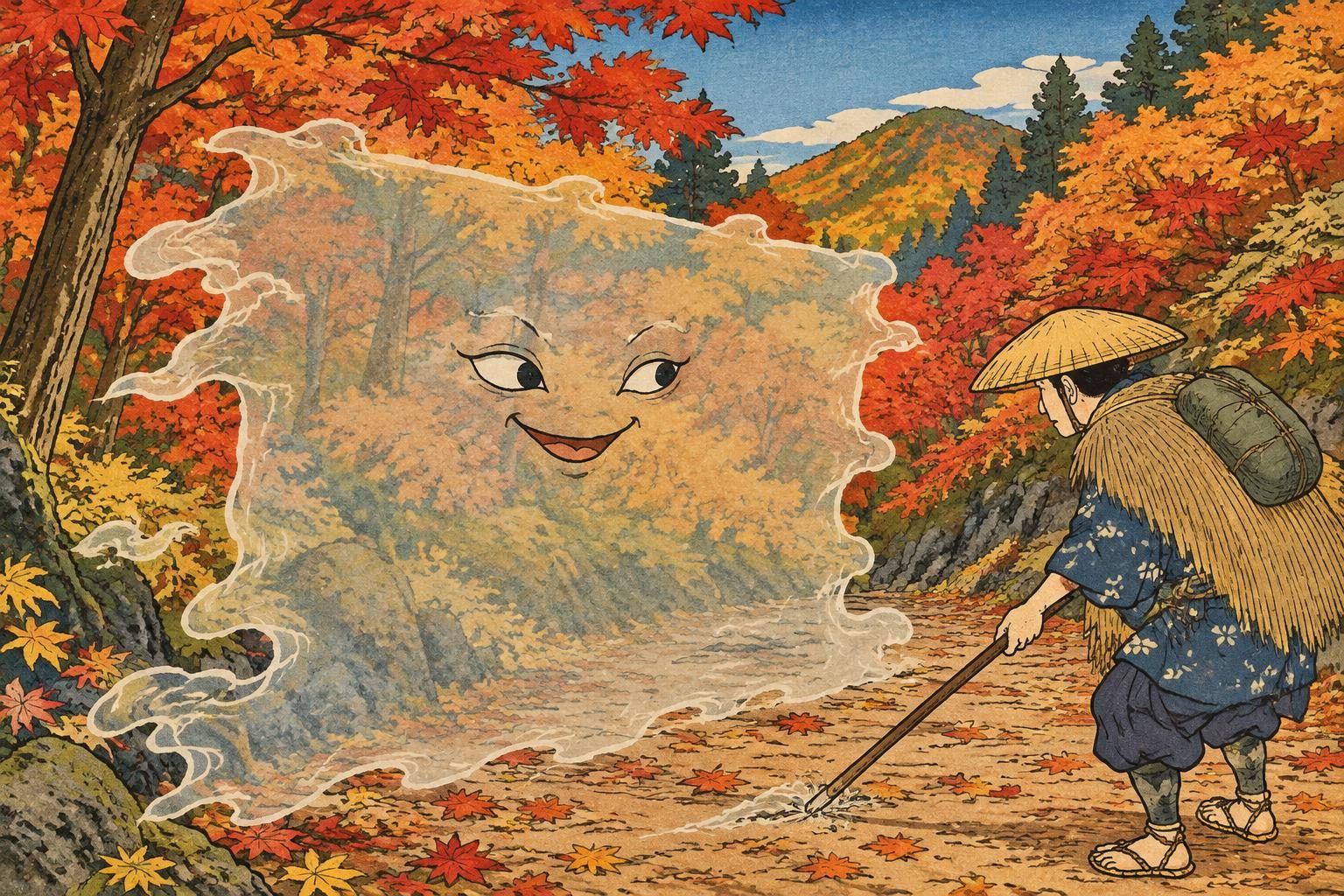
In the coastal roads of Onga, Fukuoka Prefecture, an enigmatic yokai known as Nurikabe is said to obstruct the paths of nighttime travelers. This mysterious entity, often described as an invisible wall, has intrigued both locals and yokai enthusiasts for generations.


Introduction to Nurikabe and Onga District
FACT: The Setting of the Legend
The legend of Nurikabe is deeply rooted in the coastal roads of Onga District, Fukuoka Prefecture. Historically, Onga was part of the larger Chikuzen Province, and today it remains a place where the whispers of this peculiar yokai continue to linger. The setting is crucial to the story, as the narrow, winding roads along the coast provide the perfect backdrop for an encounter with an unseen obstacle. These roads, often shrouded in mist and shadow, create an eerie atmosphere that heightens the tension of encountering the unknown.
Travelers navigating these coastal paths might feel an inexplicable presence, a sensation that something is blocking their way even though nothing is visible. This feeling of being stopped by an invisible force adds a layer of mystery to the journey, encouraging those who walk these roads to remain vigilant and respectful of the unseen world that folklore suggests exists alongside our own.

Kunio Yanagita and the Original Folklore of Fukuoka
FACT: Documenting the Legend
Kunio Yanagita, a renowned folklorist, played a pivotal role in documenting Japan’s rich tapestry of yokai tales, including that of Nurikabe. His work helped preserve the oral traditions of rural Japan, capturing the essence of stories that might otherwise have been lost to time. Yanagita’s records highlight the importance of these tales in understanding regional cultures and beliefs. His dedication to collecting and recording these stories has ensured that the legend of Nurikabe remains a vital part of Japan’s cultural heritage.
Yanagita’s efforts were instrumental in bringing attention to the diverse and rich folklore of regions like Onga. By compiling these narratives, he provided a window into the past, offering insights into how communities interacted with their environment and the supernatural elements they believed influenced their daily lives. His work continues to inspire both scholars and enthusiasts of Japanese folklore.
LEGEND: The Plastered Wall Yokai
According to local tradition, Nurikabe manifests as an invisible wall that blocks the path of travelers at night. The only way to dispel this obstruction is to sweep the base of the wall with a stick or your hand. The legend suggests that Nurikabe is not malevolent but rather a mischievous spirit testing the resolve and patience of those who encounter it. This playful nature of the yokai reflects a broader theme in Japanese folklore, where many supernatural beings are seen as tricksters rather than outright threats.
This element of the legend highlights a cultural understanding of the supernatural as a part of everyday life, where such entities are not necessarily feared but respected. The act of sweeping the ground to reveal the path is symbolic of the need to engage with the unknown, using wit and tradition to navigate the challenges posed by these mysterious forces.


How the Night Road Phenomenon Worked in Local Tradition
LEGEND: Navigating the Invisible Barrier
In the folklore of Onga, the Nurikabe is said to appear suddenly, leaving travelers bewildered as they attempt to find their way. The invisible nature of the yokai adds to its mystique, as it challenges the senses and forces individuals to rely on intuition and local knowledge to overcome the obstacle. This aspect of the legend emphasizes the importance of community wisdom and the shared experiences of those who traverse these roads. It is said that those who successfully navigate past the Nurikabe are rewarded with a deeper understanding of the local landscape and its hidden paths.
The shared stories of encounters with Nurikabe serve as a communal bond, reinforcing social ties through the shared experience of the supernatural. These tales are passed down through generations, each retelling adding layers to the communal understanding of the landscape and its spiritual inhabitants.
Edo-Period Depictions: Scrolls and Historical Imagery
FACT: Artistic Interpretations
During the Edo period, yokai like Nurikabe were often depicted in scrolls and other artworks. These visual representations varied, with some artists choosing to illustrate the yokai as a literal wall, while others opted for more abstract interpretations. Such depictions reflect the evolving nature of folklore and the ways in which stories adapt to cultural and artistic trends over time. The scrolls served not only as artistic expressions but also as educational tools, teaching viewers about the various yokai and their characteristics.
These artistic interpretations allowed for a visual exploration of the yokai, providing a tangible form to the otherwise invisible. The diversity in depiction underscores the flexibility of folklore, where stories can be molded to fit the artistic and cultural context of the time, ensuring their continued relevance and appeal.


From Invisible Force to Pop Culture Icon: The Shigeru Mizuki Legacy
FACT: Modern Adaptations
In the 20th century, the legendary Nurikabe gained new life through the works of Shigeru Mizuki, a manga artist renowned for his contributions to yokai culture. Mizuki’s portrayal of Nurikabe as an anthropomorphic creature introduced the yokai to a broader audience, transforming it into a recognizable figure in Japanese pop culture. This adaptation illustrates the enduring appeal of yokai and their ability to resonate with contemporary audiences. Mizuki’s work has been instrumental in popularizing yokai tales beyond Japan, making them accessible to a global audience.
Mizuki’s adaptations not only brought yokai to the forefront of modern storytelling but also highlighted the cultural significance of these entities. His works serve as a bridge between traditional folklore and modern media, ensuring that the stories of yokai continue to be told and appreciated by new generations.
Exploring the Cultural Roots of Northern Kyushu Yokai
FACT: The Role of Yokai in Regional Identity
Yokai like Nurikabe are more than just stories; they are integral to the cultural identity of regions like Onga. These tales offer insights into the values, fears, and imaginations of the communities that tell them. In Northern Kyushu, yokai serve as symbols of the natural and supernatural forces that shape the landscape and the lives of its inhabitants. The presence of yokai in local folklore underscores the deep connection between the people and their environment, highlighting the ways in which nature and the supernatural are intertwined in the cultural consciousness.
By understanding the role of yokai in regional identity, one gains a deeper appreciation for how these stories reflect the interaction between humans and their environment. The narratives of yokai are not static; they evolve with the culture, adapting to contemporary contexts while retaining their core significance.
Nearby Guide
Nearby sights
- Onga Shimazu-Maruyama Natural Park (Onga) — This riverside park serves as a conservation area for the region’s history and nature. It features ancient burial mounds, exhibition halls, and showcases seasonal flora, offering a serene environment for visitors. official site
- Onga River (Nakama) — Flowing along the eastern edge of Onga Town, the Onga River is a popular spot for relaxation and nature observation. Walking paths and small bridges connect both sides, allowing visitors to enjoy the gentle flow of the river. official site
- Onga-Munakata Bicycle Trail (Onga) — This 34 km cycling route runs along the seaside, offering cyclists beautiful ocean vistas and the opportunity to enjoy the changing scenery. The trail is known for its stunning sunsets over the water. official site


Related on JAPAN ESSENCE: Exploring Yakushiji Temple in Nara: History and Legend | Exploring Ibigawa’s Folklore: The Legend of the Tsurube-otoshi
Sources
- Fukuoka Yokai Encyclopedia | YOKAI.JP
- Onga Shimazu-Maruyama Natural Park
- Onga-Munakata Bicycle Trail
- Onga River
To explore further, visit Zenkei (禅景) for Zen-inspired onigawara art and Kawara Kobo (瓦工房) for a hands-on kawara experience.
福岡県の遠賀の海岸沿いの道では、ぬりかべという謎の妖怪が夜間の旅行者の道を妨げると言われています。この神秘的な存在は、見えない壁としてしばしば描写され、地元の人々や妖怪愛好家の間で世代を超えて興味を引いてきました。
ぬりかべと遠賀地区の紹介
事実: 伝説の舞台
ぬりかべの伝説は、福岡県遠賀地区の海岸沿いの道に深く根付いています。歴史的に、遠賀はより大きな筑前国の一部であり、今日でもこの特異な妖怪のささやきが残る場所です。この舞台は物語にとって重要であり、海岸沿いの狭く曲がりくねった道が、見えない障害物との遭遇に最適な背景を提供します。これらの道は、しばしば霧や影に包まれ、未知のものに遭遇する緊張感を高める不気味な雰囲気を作り出します。
これらの海岸沿いの道を進む旅行者は、説明のつかない存在感を感じるかもしれません。何も見えないのに何かが道を塞いでいるような感覚です。この見えない力に止められる感覚は、旅に神秘の層を加え、これらの道を歩く人々に、私たちの世界と並行して存在するとされる見えない世界を尊重し、警戒することを促します。
柳田國男と福岡の元の民話
事実: 伝説の記録
著名な民俗学者である柳田國男は、ぬりかべを含む日本の豊かな妖怪物語の記録において重要な役割を果たしました。彼の仕事は、時の流れに埋もれてしまうかもしれない農村日本の口承を保存するのに役立ちました。柳田の記録は、地域の文化や信念を理解する上でこれらの物語の重要性を強調しています。彼の物語の収集と記録への献身は、ぬりかべの伝説が日本の文化遺産の重要な部分であり続けることを保証しました。
柳田の努力は、遠賀のような地域の多様で豊かな民話に注目を集めるのに役立ちました。これらの物語を編纂することにより、彼は過去への窓を提供し、コミュニティがどのように環境や日常生活に影響を与える超自然的な要素と関わっていたかについての洞察を提供しました。彼の仕事は、日本の民話の学者や愛好家にインスピレーションを与え続けています。
伝承: 塗り壁の妖怪
地元の言い伝えによると、ぬりかべは夜間に旅行者の道を塞ぐ見えない壁として現れます。この障害を取り除く唯一の方法は、棒や手で壁の基部を掃くことです。この伝説は、ぬりかべが悪意のあるものではなく、遭遇する人々の決意と忍耐を試すいたずら好きな精霊であることを示唆しています。この妖怪の遊び心は、日本の民話における広範なテーマを反映しており、多くの超自然的な存在が単なる脅威ではなく、いたずら者として見られていることを示しています。
この伝説の要素は、超自然的なものを日常生活の一部として理解する文化的理解を強調しています。こうした存在は必ずしも恐れられるものではなく、尊重されるべきものとされています。道を見つけるために地面を掃く行為は、未知のものに関与し、これらの神秘的な力がもたらす挑戦を知恵と伝統を使って乗り越える必要性を象徴しています。
地元の伝統における夜道現象の働き
伝承: 見えない障壁を乗り越える
遠賀の民話では、ぬりかべは突然現れ、旅行者が道を見つけようとする際に困惑させると言われています。妖怪の見えない性質はその神秘性を高め、感覚を試し、障害を克服するために直感と地元の知識に頼ることを強いるのです。この伝説の側面は、コミュニティの知恵と、これらの道を行く人々の共有体験の重要性を強調しています。ぬりかべを無事に通り過ぎた者は、地元の風景とその隠れた道についての深い理解を得ると言われています。
ぬりかべとの遭遇の共有された物語は、超自然的な体験を共有することによって社会的な絆を強化するコミュニティの絆として機能します。これらの物語は世代を超えて伝えられ、それぞれの再話が風景とその精神的住人に対する共同体の理解に層を加えます。
江戸時代の描写: 巻物と歴史的イメージ
事実: 芸術的解釈
江戸時代には、ぬりかべのような妖怪が巻物や他の芸術作品にしばしば描かれました。これらの視覚的な表現は多様で、一部の芸術家は妖怪を文字通りの壁として描写し、他の芸術家はより抽象的な解釈を選びました。このような描写は、民話の進化する性質と、物語が時代の文化的および芸術的なトレンドにどのように適応するかを反映しています。巻物は芸術的表現としてだけでなく、視聴者にさまざまな妖怪とその特徴を教える教育的なツールとしても機能しました。
これらの芸術的解釈は、妖怪を視覚的に探求することを可能にし、見えないものに具体的な形を提供しました。描写の多様性は、物語が時代の芸術的および文化的文脈に適合するように形作られることができる民話の柔軟性を強調し、その継続的な関連性と魅力を保証します。
見えない力からポップカルチャーのアイコンへ: 水木しげるの遺産
事実: 現代の適応
20世紀に入り、伝説のぬりかべは、妖怪文化への貢献で知られる漫画家水木しげるの作品を通じて新たな命を得ました。水木のぬりかべを擬人化した描写は、妖怪をより広い観客に紹介し、日本のポップカルチャーにおける認識可能な存在に変えました。この適応は、妖怪の持続的な魅力と、現代の観客と共鳴する能力を示しています。水木の作品は、妖怪物語を日本以外にも普及させ、それらを世界中の観客にアクセス可能にしました。
水木の適応は、妖怪を現代の物語の最前線に持ち込んだだけでなく、これらの存在の文化的意義を強調しました。彼の作品は、伝統的な民話と現代のメディアの橋渡しとして機能し、妖怪の物語が新しい世代によって語られ、評価され続けることを保証します。
北九州妖怪の文化的ルーツを探る
事実: 地域のアイデンティティにおける妖怪の役割
ぬりかべのような妖怪は単なる物語以上のものであり、遠賀のような地域の文化的アイデンティティに不可欠です。これらの物語は、それを語るコミュニティの価値観、恐れ、想像力についての洞察を提供します。北九州では、妖怪は風景とその住民の生活を形作る自然および超自然的な力の象徴として機能します。地元の民話における妖怪の存在は、人々とその環境との深い結びつきを強調し、自然と超自然が文化的意識の中でどのように絡み合っているかを示しています。
地域のアイデンティティにおける妖怪の役割を理解することにより、これらの物語が人間とその環境との相互作用をどのように反映しているかについての深い理解が得られます。妖怪の物語は静的ではなく、文化と共に進化し、現代の文脈に適応しながらもその核心的な意義を保持しています。
周辺ガイド
周辺の見どころ
- 遠賀島津丸山自然公園(遠賀)— この川沿いの公園は、地域の歴史と自然の保護区として機能しています。古代の墳墓や展示ホールがあり、季節の花々を展示し、訪問者に静かな環境を提供します。公式サイト
- 遠賀川(中間)— 遠賀町の東端に沿って流れる遠賀川は、リラクゼーションと自然観察の人気スポットです。歩道や小さな橋が両側をつなぎ、訪問者は川の穏やかな流れを楽しむことができます。公式サイト
- 遠賀宗像自転車道(遠賀)— この34 kmのサイクリングルートは海岸沿いを走り、美しい海の景色をサイクリストに提供し、変化する風景を楽しむ機会を提供します。この道は水上に沈む美しい夕日で知られています。公式サイト
Related on JAPAN ESSENCE: Exploring Yakushiji Temple in Nara: History and Legend | Exploring Ibigawa’s Folklore: The Legend of the Tsurube-otoshi
Leave a Reply