English | 日本語
At Dogo Onsen in Matsuyama, Ehime Prefecture, a white heron offers a memorable starting point for a visit. The bird belongs to a story about discovering warm water, but its presence also directs attention toward real places: a stone near the tram terminus, a historic public bathhouse, and streets connecting shrines and a former castle site. Following those connections makes a rewarding alternative to treating the bathhouse as a single photograph stop. Begin with the story, then give the district time to reveal its different layers.
LEGEND: the bird that found the spring
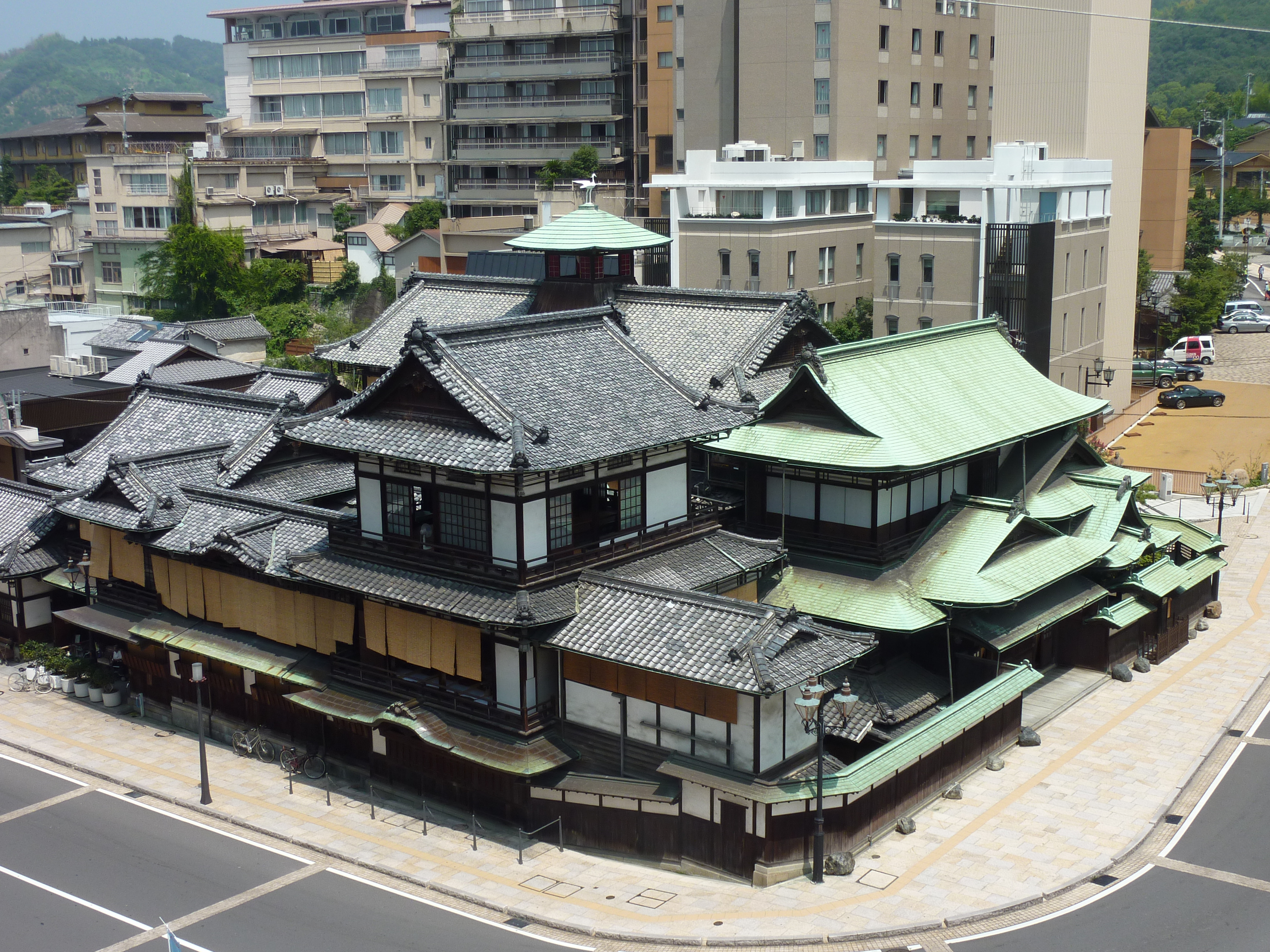
According to the official Dogo Onsen history, an injured white heron repeatedly dipped its leg into warm water emerging among rocks. Its wound healed, and it flew away. People who observed the bird then tried the water themselves. The official account attributes this narrative to the regional gazetteer Yoyō Gungō Rigenshū, completed in 1710. The healing and discovery belong to the legend; the date identifies a written account of the tradition, rather than dating the imagined event.
An independently authored 2025 lecture handout by Ehime University historian Hikaru Ebisu also discusses the heron account and identifies the same gazetteer on page 5. This scholarly treatment helps locate the story within historical writing. Both modern accounts ultimately refer to the same text, so their agreement should not be mistaken for two eyewitness testimonies. For visitors, the useful distinction is simple: a documented tradition can be culturally important without establishing a miraculous cure as historical fact.
FACT AND TRADITION: finding Sagiishi at Hojoen
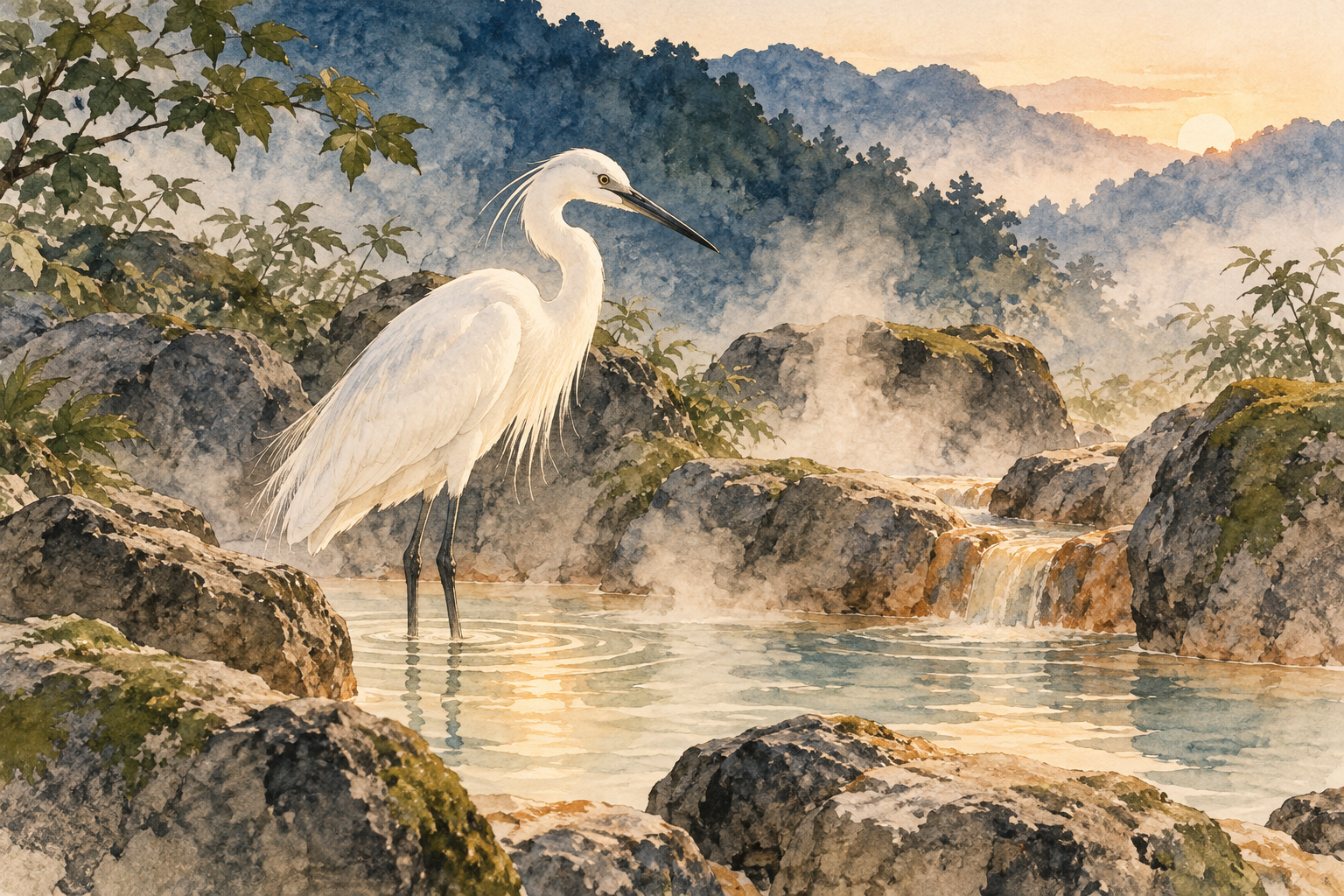
The physical place to start is Hojoen Square, beside Dogo Onsen Station at the entrance to the shopping street. Matsuyama City identifies the Sagiishi stone, a footbath and the Botchan Karakuri Clock here. The stone is associated with the heron and with marks traditionally described as its footprints. Its location is verifiable; the footprints’ legendary attribution is a different kind of claim. Read the on-site explanation with that distinction in mind, and treat the stone as a local memorial to the story.
Allow a little unhurried time here before continuing. A small detail such as the stone can easily disappear behind the more conspicuous clock and the movement of arriving passengers. Looking at all three together gives the story a human scale: a remembered bird, a shared place for warm water, and a meeting point in an active neighborhood. This is an editorial way of reading the square, not an assertion that every feature originated from the heron tale. Leave space for people using the footbath and keep paths clear while taking photographs.
FACT: a bathhouse built across several periods
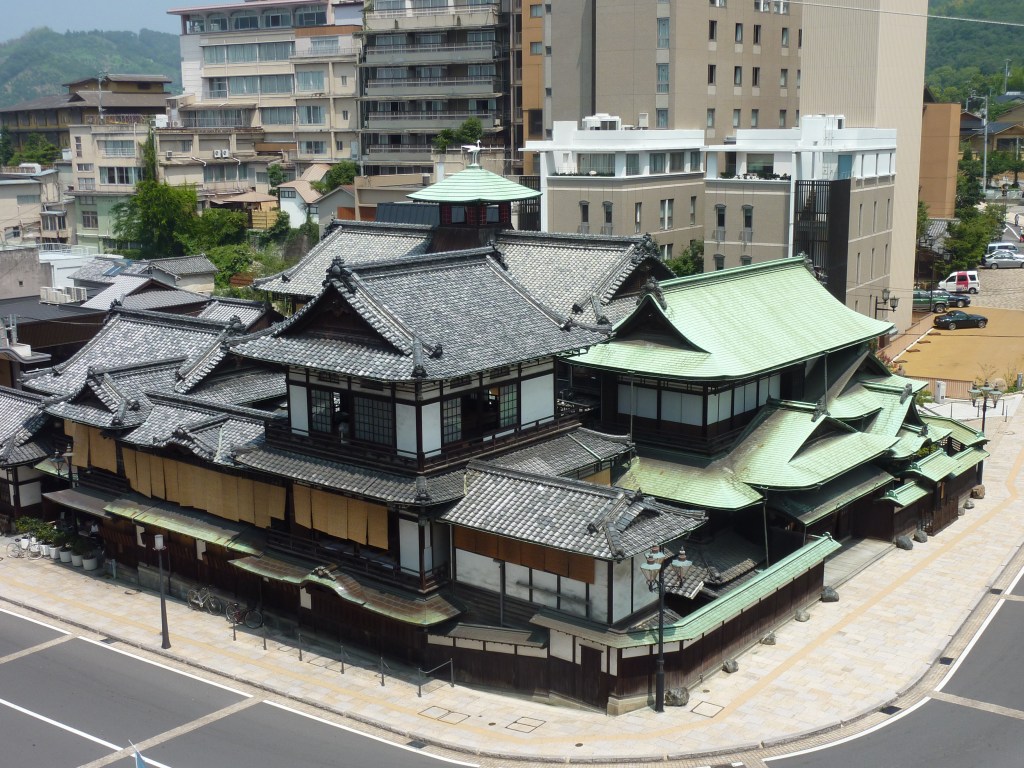
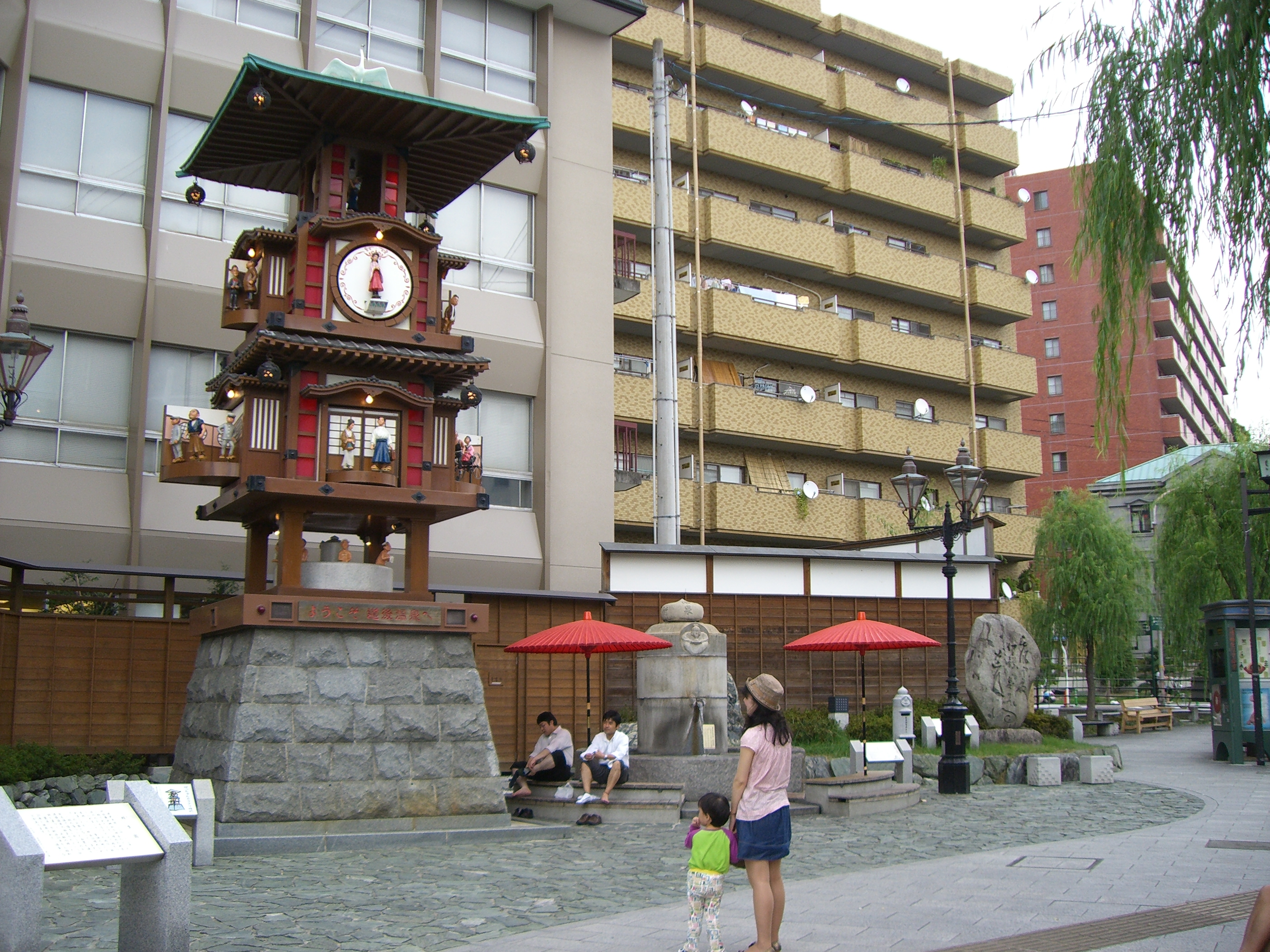
The present Honkan is a connected group of buildings. Ehime Prefecture’s cultural-property record dates Kami-no-Yu Honkan to 1894, the Yushinden and Tama-no-Yu wing to 1899, and the southern and entrance wings to 1924. The four buildings received national Important Cultural Property designation on December 27, 1994. These dates make the building’s history more interesting than a single construction year suggests. When walking around it, remember that its present form developed through additions, with different uses gathered into one bathing complex.
For the bird’s visible connection to the building, Matsuyama’s white-heron explanation points to the figure above the Honkan and other heron motifs. Take time to look upward from a safe public viewing position. The figure provides a visual bridge between the narrated animal and the town’s built identity. You can appreciate that association without assigning an undocumented ancient date to the ornament or assuming that the present bathhouse marks the precise spot where the legendary bird stood.
FACT: visiting the Honkan today
The Honkan’s current official guide says its conservation project ended in December 2024. It also makes an essential distinction for planning: the Honkan is a public bathhouse, with no overnight accommodation. Bathing options differ in the baths and rest areas they include; private rest rooms do not contain private baths. Before buying a ticket, check the official course details, current waiting information and reservation requirements for your chosen option. Older photographs in this article document earlier appearances and are not a promise of present-day conditions.
A respectful visit depends on ordinary bathing manners as much as historical curiosity. The operator’s rules ask visitors to wash before entering the bath, keep towels out of the water, and avoid photography and smartphone use in changing rooms and bathing areas. Tie back long hair and follow staff guidance. If you want to record the visit, make the exterior and public streets your photographic subjects. The heron’s recovery remains a story about the spring; it should not be read as a medical promise to modern bathers.
Two nearby places that broaden the walk
Isaniwa Shrine. Ehime’s heritage record dates the surviving shrine buildings to 1667 and identifies their national cultural-property status. This offers a separate historical destination close to the baths. The official district guide lists a five-minute walk from Dogo Onsen Station and an approach with 135 stone steps. Allow extra time for the climb and your own walking pace. If steps are difficult, keep the shrine as an optional stop rather than assuming a short distance means easy access.
Dogo Park and Yuzuki Castle ruins. The park adds an archaeological dimension. The prefectural account identifies a National Historic Site and describes excavations that revealed evidence of buildings, roads and other features of the former castle settlement. It also acknowledges uncertainty about the exact founding date. The park operator lists free admission, with exhibition facilities open 9 a.m. to 5 p.m. and normally closed on Mondays, or the following weekday after a holiday, plus December 29 through January 3. Check updates before a museum-focused visit.
Getting there and choosing your route
The official access page gives approximate tram journeys of 25 minutes from JR Matsuyama Station and 20 minutes from Matsuyama City Station to Dogo Onsen. These are different departure stations, so check the name carefully when planning a connection. The Honkan’s address is 5-6 Dogo Yunomachi, Matsuyama. Use the operator’s map or the Honkan location recorded on Ehime Prefecture’s heritage map. This pin locates the building; it is not a claim about the legendary spring’s original emergence point.
For a flexible half-day, our suggested sequence is the station, Hojoen and Sagiishi, the Honkan, then either Isaniwa Shrine or Dogo Park according to your interests and energy. Add the second stop if time allows. This is an editorial suggestion rather than a timed official tour. Keep the bathing visit flexible around the available course and queue, and use the official walking-map collection to adjust the order. A shorter walk with time to read signs is often more satisfying than a hurried attempt to include every attraction.
What the white heron leaves with us
The strongest way to carry the legend home is to remember its different forms. There is the written story, the stone that recalls it, the bird motif above a working bathhouse, and the everyday experience of visiting a town shaped around hot water. None needs to be forced into a single literal explanation. Give each its own place: folklore invites imagination, heritage records establish dates, and current operator guidance helps you visit well. Together they offer a richer encounter with Dogo than either a miraculous origin story alone or a list of architectural dates.
Related reading on JAPAN ESSENCE
Continue exploring animals in Japanese sacred stories with Yatagarasu and Kumano Hongu Taisha, or read another Shikoku tradition in the Emon Saburō pilgrimage story.
Sources and image notes
Historical and visitor-information sources are linked beside the relevant claims. The prefectural heritage records and the university historian’s lecture provide sources distinct from local operator guidance. The two modern heron accounts cite the same older text; neither verifies the legendary healing as an event. Visitor information checked October 8, 2026. Photo credits and reuse licenses appear under each real photograph. The watercolor is explicitly labeled as an AI-generated illustration.
To explore further, visit Zenkei (禅景) for Zen-inspired onigawara art and Oni Kobo (鬼工房) for onigawara demon-tile art and charms.


.JPG)
Leave a comment