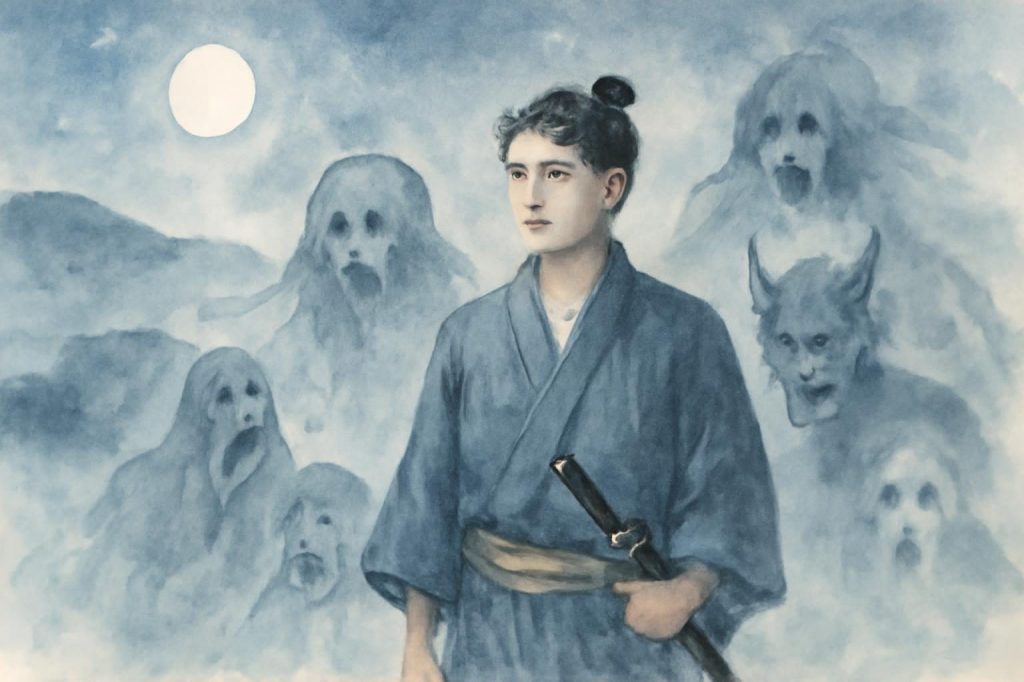
In the heart of Hiroshima Prefecture lies Miyoshi, a city steeped in history and mystery, known for the chilling Edo-period ghost story, the Ino Mononoke Roku. This tale of supernatural torment has captivated audiences for centuries, drawing them into a world where the line between reality and legend blurs.
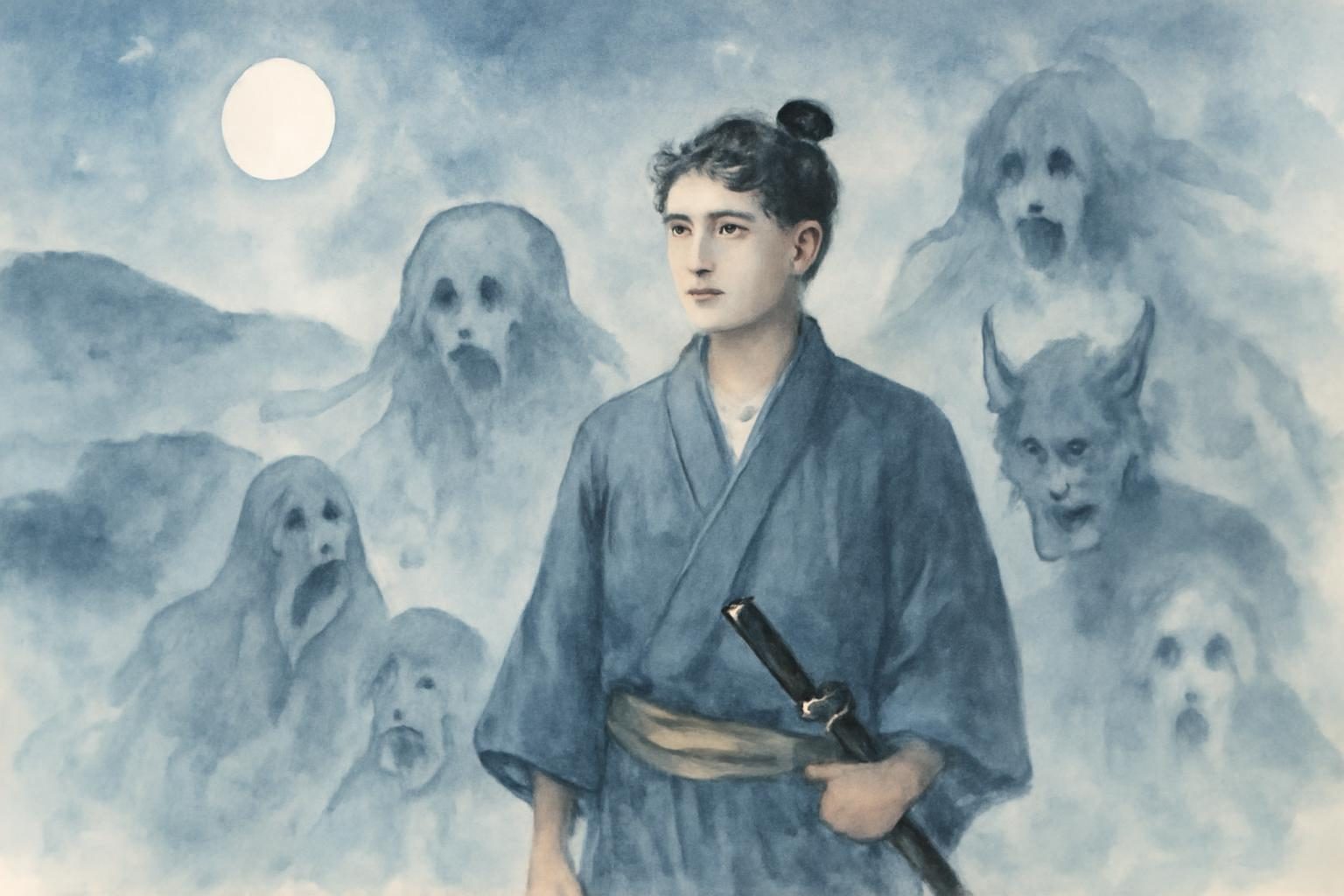
Introduction to the Ino Mononoke Roku in Miyoshi
FACT: The historical setting of the legend
The Ino Mononoke Roku is set in 1749, during the Kan’en era, in Miyoshi, Hiroshima Prefecture. This ghost story revolves around a sixteen-year-old boy named Ino Heitaro, later known as Ino Budayu, who reportedly endured thirty nights of mononoke, or spirit, attacks at his home. The Miyoshi Basin, known for its thick morning mist or “sea of mist,” provides an eerie backdrop that enhances the tale’s supernatural elements. The mist, often described as a “sea,” blankets the landscape with an ethereal quality, creating an atmosphere ripe for ghostly encounters. This natural phenomenon not only heightens the suspense of the legend but also serves as a metaphor for the blurred lines between reality and the supernatural.
The historical setting of the Ino Mononoke Roku is crucial to understanding the cultural context of the story. During the Edo period, ghost stories and supernatural tales were popular forms of entertainment, reflecting societal fears and beliefs. The Kan’en era, a time of relative peace and stability, allowed for the flourishing of such narratives, where the supernatural was often used to explore themes of morality, courage, and the human condition. The setting in Miyoshi, with its misty landscapes, adds a layer of authenticity and intrigue, drawing the audience into a world where the supernatural feels just within reach.
LEGEND: The story of Ino Heitaro’s ordeal
According to legend, Ino Heitaro faced nightly visits from malevolent spirits, known as mononoke, that tormented him for thirty consecutive nights. These spirits were said to be relentless, testing the young boy’s courage and resolve. Each night, Heitaro bravely confronted these apparitions, enduring their haunting presence in a battle of wills. The spirits, often described as shadowy figures and ghostly apparitions, would haunt the corners of his home, creating an atmosphere of dread and suspense. Despite the fearsome nature of these encounters, Heitaro’s courage never wavered, and he remained steadfast in his determination to withstand the mononoke’s torment.
The tale of Ino Heitaro is a testament to the enduring power of courage in the face of fear. The mononoke, representing the unknown and the terrifying, serve as a metaphor for the challenges and adversities one faces in life. Heitaro’s nightly battles with these spirits highlight the importance of bravery and resilience, qualities that are celebrated in Japanese folklore. The story’s enduring popularity speaks to its universal themes, resonating with audiences who admire the young hero’s unwavering spirit and determination.
The 1749 Legend: Sixteen-Year-Old Ino Heitaro’s Thirty Nights of Torment
LEGEND: The supernatural encounters
The legend recounts that the spirits took various forms, appearing as shadowy figures and ghostly apparitions that haunted Heitaro’s home. These entities, described in vivid detail, would emerge from the mist, their forms shifting and changing, adding to the terror of the nights. The mononoke’s relentless pursuit was a test of Heitaro’s mettle, pushing him to the limits of his endurance. Yet, despite the overwhelming fear, Heitaro stood his ground, a testament to his bravery and resilience.
The supernatural encounters in the Ino Mononoke Roku are rich with symbolic meaning. The shifting forms of the mononoke reflect the ever-changing nature of fear and the unknown. Each apparition represents a different aspect of the challenges Heitaro faces, requiring him to adapt and find inner strength. The vivid descriptions of these spirits not only enhance the story’s suspense but also serve as a reminder of the power of imagination and storytelling in shaping cultural narratives.
FACT: Historical elements and narrative embellishments
While the core elements of the story—Miyoshi as the setting, the year Kan’en 2, and the youthful protagonist—are considered historically probable, certain narrative details, such as the presence of a wooden mallet, are believed to be later embellishments. These additions have enriched the story, adding layers of intrigue and mystery. The wooden mallet, for instance, is a symbol of the supernatural, a tool supposedly used by the spirits, yet its origins and purpose remain shrouded in mystery, reflecting the enigmatic nature of the tale itself.
These narrative embellishments serve to enhance the story’s appeal, providing points of interest that captivate the audience’s imagination. The inclusion of such elements allows for creative interpretations and retellings, ensuring the legend’s continued relevance and allure. By distinguishing between historical facts and fictional embellishments, the story invites listeners to explore the boundaries between reality and imagination, a hallmark of enduring folklore.

Encounter with Yamamoto Gorozaemon: The Final Night
LEGEND: The appearance of Yamamoto Gorozaemon
On the thirtieth night, the legend reaches its climax with the appearance of a samurai-like figure named Yamamoto Gorozaemon. This mysterious figure is said to have appeared before Heitaro, praising his courage and revealing that the ordeal was a test to subjugate courageous youths. Acknowledging his defeat, Yamamoto Gorozaemon departed, leaving Heitaro as the victor of this supernatural contest. The appearance of Yamamoto Gorozaemon adds a layer of complexity to the tale, introducing themes of honor and valor that resonate deeply within the cultural context of the Edo period.
The encounter with Yamamoto Gorozaemon is a pivotal moment that underscores the cultural significance of honor and bravery. In the Edo period, samurai were revered figures, embodying the ideals of courage, loyalty, and honor. By having a samurai-like figure acknowledge Heitaro’s bravery, the story elevates the young protagonist’s status, aligning him with these esteemed values. This acknowledgment serves as a narrative device to highlight the triumph of personal integrity and courage over supernatural adversity.
FACT: The significance of the final encounter
The final encounter with Yamamoto Gorozaemon is a pivotal moment in the legend, symbolizing the triumph of courage over fear. It underscores the cultural value placed on bravery and resilience, traits that are celebrated in Japanese folklore and history. This encounter, while steeped in supernatural elements, reflects the societal ideals of the time, where personal honor and courage were held in the highest esteem. The acknowledgment of Heitaro’s bravery by a figure of authority, even if spectral, serves to validate his ordeal and elevate his status within the narrative.
This climactic moment in the story also serves as a moral lesson, emphasizing the rewards of steadfastness and the recognition of one’s inner strength. By overcoming the mononoke and earning the respect of Yamamoto Gorozaemon, Heitaro’s journey becomes a metaphor for personal growth and the enduring power of human spirit. This aspect of the legend continues to resonate with audiences, offering inspiration and a reminder of the virtues of courage and perseverance.
The Eerie Atmosphere of the Miyoshi Basin and Its Sea of Mist
FACT: The natural setting of Miyoshi
The Miyoshi Basin, with its renowned “sea of mist,” contributes significantly to the legend’s atmosphere. This natural phenomenon, where thick mist blankets the landscape, creates an otherworldly ambiance that is perfect for a ghost story. The mist not only adds to the eerie mood but also serves as a metaphor for the blurred boundaries between the natural and supernatural worlds. Visitors to Miyoshi can experience this hauntingly beautiful landscape firsthand, as the mist rolls in, enveloping the surroundings in a veil of mystery and intrigue.
The “sea of mist” is more than just a backdrop; it is an integral part of the story’s allure. The mist’s presence enhances the sense of mystery and suspense, inviting visitors to immerse themselves in the legend’s world. This atmospheric quality is a key reason why the Ino Mononoke Roku continues to captivate audiences, drawing them to Miyoshi to experience the legend’s setting firsthand. The interplay between the natural environment and the supernatural elements of the story creates a unique and unforgettable experience for those who venture into this mist-shrouded landscape.

Preserving the Tale: Edo-Period Scrolls and Cultural Properties
FACT: The Yumoto Koichi Memorial Japan Yōkai Museum
In April 2019, the Yumoto Koichi Memorial Japan Yōkai Museum, also known as the Miyoshi Mononoke Museum, opened in Miyoshi. This museum is built on the land tied to the legend and houses a collection of scrolls, broadsheets, toys, and paintings related to the Ino Mononoke Roku. It serves as a cultural hub, preserving the story and offering visitors a glimpse into the world of yokai and Edo-period folklore. The museum’s exhibits provide a tangible connection to the past, allowing visitors to explore the rich tapestry of Japanese ghost stories and the cultural context in which they arose. Through its displays and artifacts, the museum not only preserves the legend of Ino Heitaro but also celebrates the broader tradition of yokai in Japanese culture.
The museum is a testament to the enduring legacy of the Ino Mononoke Roku and its significance in Japanese cultural heritage. By showcasing artifacts and artworks related to the legend, the museum offers a unique opportunity for visitors to engage with the story in a meaningful way. It stands as a bridge between the past and present, ensuring that the tale of Ino Heitaro continues to inspire and intrigue future generations. The museum’s dedication to preserving and promoting yokai culture highlights the importance of folklore in understanding and appreciating Japan’s rich cultural history.

Related on JAPAN ESSENCE: Exploring Tōno: The Heart of Japanese Folklore and Yokai Legends | Discovering Tsurube-otoshi: The Bucket-Dropping Yokai of Tanba
Regional guide
Location: Miyoshi, Hiroshima Prefecture
- Yumoto Koichi Memorial Japan Yōkai Museum (Miyoshi) — source
Sources
To explore further, visit Zenkei (禅景) for Zen-inspired onigawara art and Onigawara Experience for hands-on onigawara experiences in Japan.


Leave a Reply