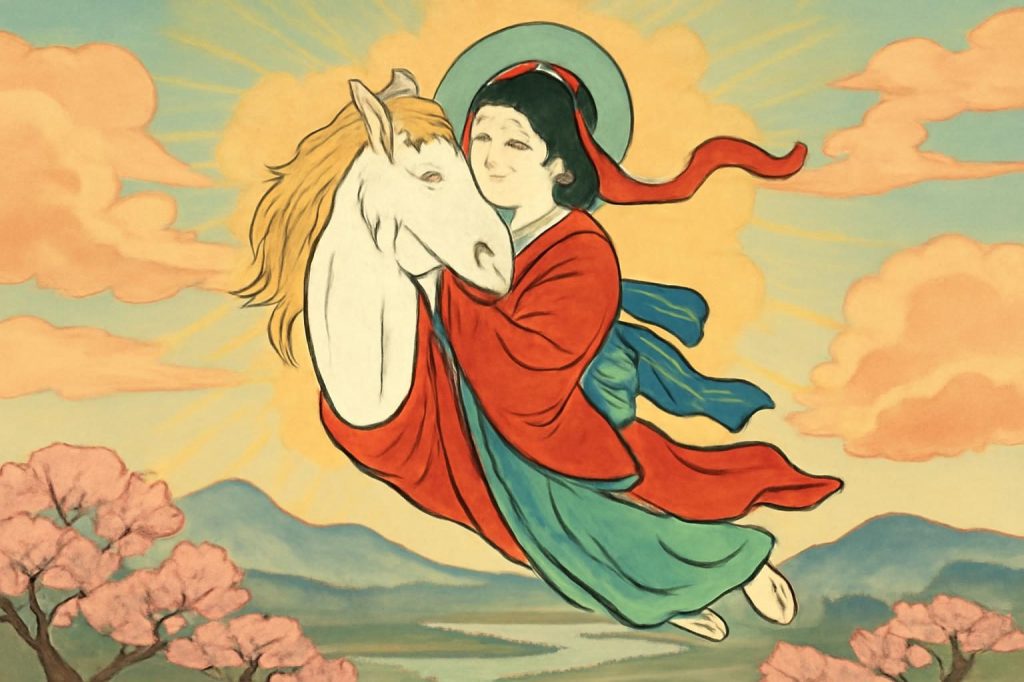
In the heart of Tōno, Iwate Prefecture, lies a tale that intertwines love, tragedy, and the supernatural. This is the story of Oshira-sama, a revered deity with roots deep in Japanese folklore, whose presence is still felt in the region today.

Introduction to Oshira-sama and Tono’s Rich Folklore
FACT: Oshira-sama in Tōno’s Cultural Landscape
Oshira-sama is a deity deeply embedded in the folklore of Tōno, a city in Iwate Prefecture known for its rich tapestry of myths and legends. The deity is often associated with agriculture and sericulture, symbolizing fertility and prosperity. Oshira-sama effigies, typically made from mulberry wood and adorned with layers of cloth, are a common sight in local households and shrines, embodying the spiritual connection between the people and their land. These effigies not only represent the deity’s protective nature but also serve as a reminder of the region’s reliance on agriculture and silkworm cultivation, which are central to its economy and cultural identity.
LEGEND: The Daughter and Horse in Tōno Monogatari, Tale 69
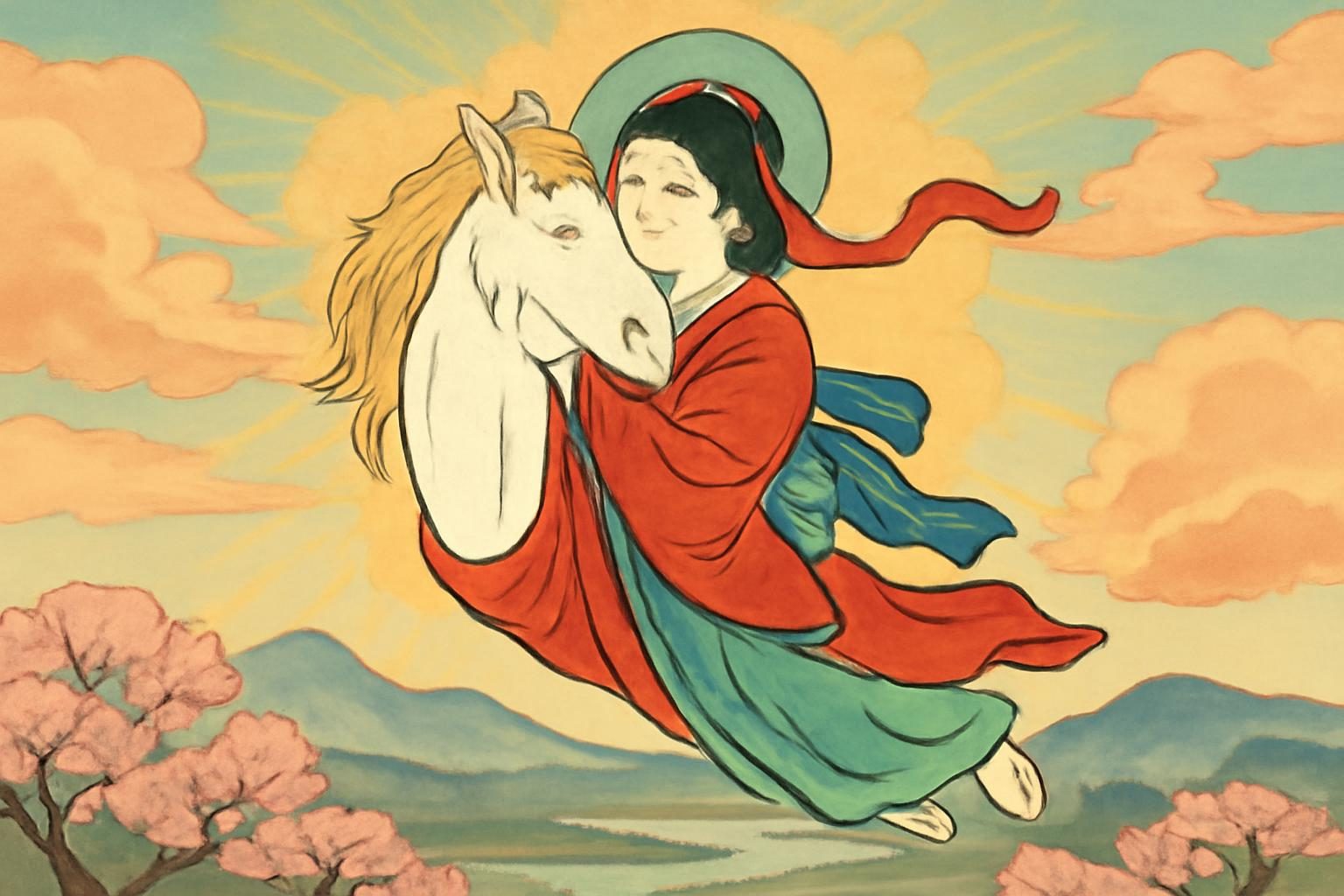
In tale 69 of Yanagita Kunio’s Tōno Monogatari, a father kills a horse by hanging it from a mulberry tree after learning of his daughter’s attachment to it. As she clings to its neck in grief, he cuts off the horse’s head; she and the head rise into the sky. The tale then describes divine images made from that mulberry tree, explaining Oshira-sama’s origin as a legend.
Who is Oshira-sama? Deities of Agriculture and Silkworms
FACT: The Role of Oshira-sama in Agriculture
In Tōno, Oshira-sama is venerated as a protector of agriculture and sericulture. Farmers and silk producers often pray to Oshira-sama for bountiful harvests and successful silk production. The deity’s connection to mulberry trees, which are crucial for silkworm cultivation, underscores its significance in local agricultural practices. Mulberry trees are not only vital for the sustenance of silkworms but also serve as a symbol of continuity and life, reflecting the cyclical nature of agricultural work and the community’s dependence on the land.
LIVING TRADITION: Osendaku
Tōno Municipal Museum’s exhibition guide describes a custom of dressing the figures in a new cloth called osendaku on festival days and praying for a good harvest and household safety.

Crafting the Deity: Mulberry Wood and Layered Cloth Rituals
FACT: Oshira-sama Effigies
Tōno Municipal Museum describes the sacred figures as a pair made from wood such as mulberry. These cloth-dressed wooden images are associated with a faith in Oshira-sama as a deity of the household, sericulture and eyes.
Visiting Denshōen Park and the Oshirado Hall
FACT: Denshōen Park as a Cultural Hub
Denshōen Park in Tōno is home to the Oshirado Hall, where visitors can see 1,000 Oshira-sama effigies. This open-air museum offers a glimpse into the region’s cultural heritage, showcasing the artistry and spiritual traditions associated with Oshira-sama. The park serves as a focal point for those interested in exploring Tōno’s rich folklore. It provides an immersive experience that allows visitors to connect with the historical and spiritual narratives that have shaped the region.

Experiencing Traditional Magariya Farmhouses in Iwate
FACT: The Architecture of Magariya Farmhouses
The magariya farmhouses, traditional to the Iwate region, offer a unique insight into the lifestyle and architectural ingenuity of the past. These L-shaped structures were designed to accommodate both living quarters and livestock, reflecting the agricultural heritage of the area. The design of these farmhouses is a practical solution to the harsh climate, providing warmth and shelter for both humans and animals, and highlighting the resourcefulness of the local people.
How Kunio Yanagita and Kizen Sasaki Preserved Tono’s Tales
FACT: The Role of Folklorists in Preserving Tono’s Legends
Kunio Yanagita and Kizen Sasaki played pivotal roles in documenting and preserving the folklore of Tōno through works like the Tono Monogatari. Their efforts ensured that stories like that of Oshira-sama were recorded for future generations, highlighting the cultural richness of the region. Their work was instrumental in bringing attention to the unique cultural narratives of rural Japan, which might have otherwise been lost to time.
CULTURAL HISTORY: The Impact of Tōno Monogatari
The publication of Tono Monogatari brought the legends of Tōno, including that of Oshira-sama, to a wider audience. This work not only preserved the tales but also sparked interest in Japan’s rural folklore, contributing to a broader understanding of the country’s cultural heritage. The stories captured in this collection continue to inspire and intrigue, offering a window into the spiritual and cultural life of a bygone era.

Related on JAPAN ESSENCE: Exploring Tōno: The Heart of Japanese Folklore and Yokai Legends | Exploring Oboke’s Yokai Village: Shikoku’s Hidden Valley of Japanese Folklore
Sources
- 柳田国男『遠野物語』第69話(青空文庫)
- 遠野市立博物館:オシラサマ信仰
- 伝承園:御蚕神堂と菊池家曲り家
- tohokukanko.jp
- brandeis.edu
- hiddenjapan-gems.com
- winninghorsemanship.com
- tokyopast3.com
To explore further, visit Oni Kobo (鬼工房) for onigawara demon-tile art and charms and Onigawara Experience for hands-on onigawara experiences in Japan.


.jpg)
.jpg)

Leave a Reply