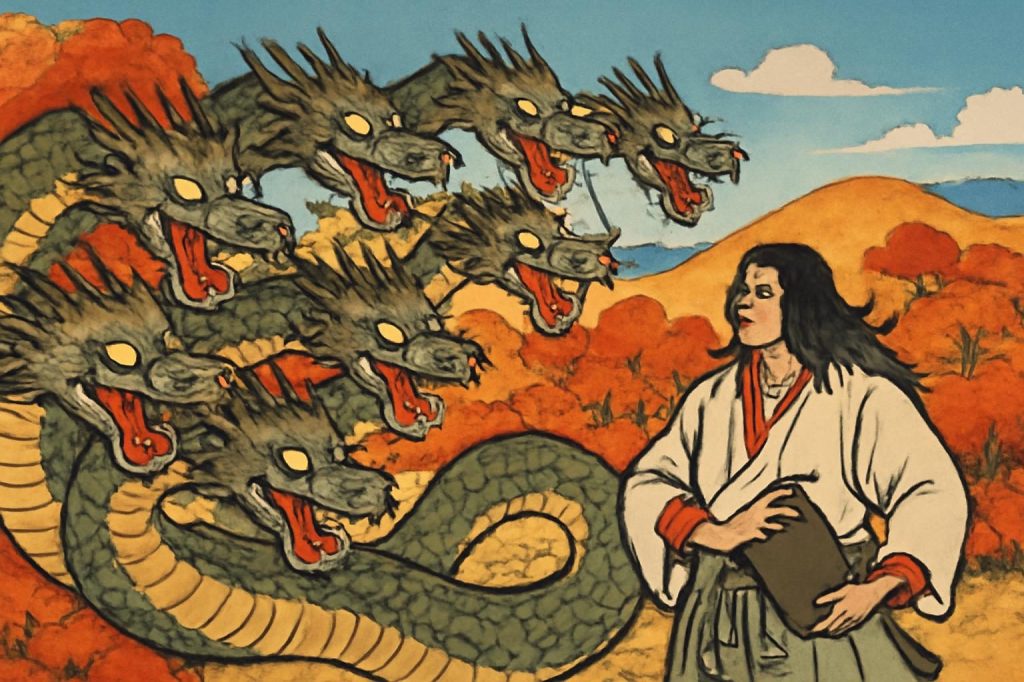
In the serene landscapes of Oku-Izumo, Shimane Prefecture, the legend of Yamata-no-Orochi, the fearsome eight-headed serpent, comes alive. This myth, deeply rooted in Japanese folklore, is intricately tied to the region’s geography and cultural heritage, offering a fascinating journey through time and myth.

Introduction to the Yamata-no-Orochi Legend and the Hii River Valley
FACT: What the Records Say
The Yamata-no-Orochi legend is one of Japan’s most enduring myths, chronicled in ancient texts such as the Kojiki and Nihon Shoki. According to these records, the serpent terrorized the land until it was slain by the storm god Susanoo. The Hii River Valley, stretching through Shimane Prefecture, is believed to be the setting of this legendary battle. The region’s lush landscapes and flowing rivers are thought to have inspired the myth’s vivid imagery. These texts are not just stories but are considered historical documents that provide insight into the spiritual and cultural life of early Japan. The depiction of Susanoo’s battle with the serpent symbolizes the triumph of order over chaos, a theme prevalent in many mythologies worldwide.
LEGEND: The Myth of Yamata-no-Orochi
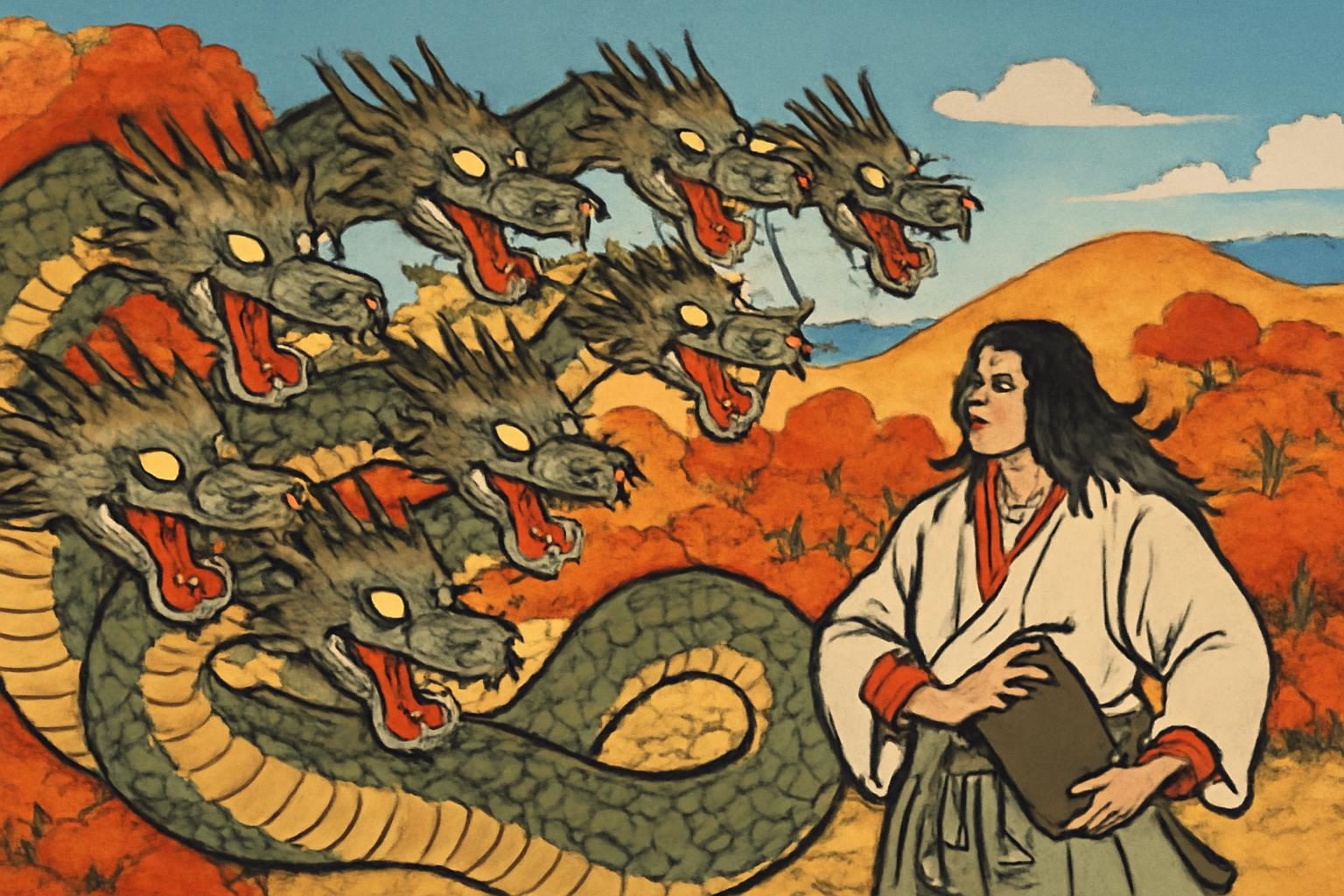
According to local tradition, Yamata-no-Orochi was a monstrous serpent with eight heads and eight tails, so large that its body stretched over eight valleys and eight hills. Each year, it demanded the sacrifice of a maiden from a local family. The legend tells of Susanoo’s cunning plan to defeat the beast by intoxicating it with sake, then slaying it as it lay in a drunken stupor. This tale is celebrated in various sites along the Hii River, where visitors can explore the myth’s rich heritage. The imagery of the serpent’s massive body sprawling across the landscape is believed to reflect the natural topography of the region, with its numerous hills and valleys. This connection between the physical environment and the myth enhances the story’s resonance with locals and visitors alike, inviting them to imagine the ancient battle unfolding in the very terrain they traverse.
The Descent at Torikami and Orochi Shrine in Oku-Izumo
FACT: The Significance of Orochi Shrine
Orochi Shrine, located within the precincts of Iwatsubo Shrine in Oku-Izumo, is a key site for those tracing the Yamata-no-Orochi legend. This shrine is dedicated to the serpent and serves as a cultural touchstone for the local community. Visitors can explore the shrine grounds, where traditional ceremonies and festivals keep the legend alive. The shrine’s architecture and artifacts offer insight into the region’s spiritual traditions and the enduring legacy of the Orochi legend. The shrine itself is a testament to the craftsmanship and religious devotion of the local people, with its structures designed to harmonize with the surrounding natural beauty. These elements reflect the deep-rooted belief in the protective and purifying powers of the deities enshrined there.
LEGEND: The Rituals of Torikami
Local accounts suggest that the area around Torikami was where Susanoo first descended to confront Yamata-no-Orochi. Rituals performed at Orochi Shrine are said to honor this divine intervention. These rituals, steeped in Shinto tradition, offer a glimpse into the spiritual practices that have preserved the legend through the ages. Visitors may witness these ceremonies, which often involve offerings and prayers, connecting the present to the mythic past. The rituals are not merely reenactments but are considered acts of reverence and communication with the divine, ensuring the continued protection and prosperity of the community. This spiritual continuity is a vital aspect of the local identity, linking past and present through shared cultural heritage.

The Serpent’s Lair: Ama-ga-fuchi Pool and the Eight Heads at Happon-sugi
FACT: Natural Landmarks
Ama-ga-fuchi Pool and Happon-sugi are natural landmarks associated with the Yamata-no-Orochi legend. The pool, with its mysterious depths, is said to be where the serpent hid its massive body. Happon-sugi, a cluster of ancient cedar trees, is believed to represent the serpent’s eight heads. These sites offer a tangible connection to the myth, drawing visitors into the story’s physical landscape. The natural beauty of these locations provides a serene backdrop for reflection on the ancient tales. The pool’s still waters and the towering presence of the cedar trees evoke a sense of timelessness, inviting contemplation of the legends that have shaped the cultural fabric of the region.
LEGEND: The Tales of Ama-ga-fuchi
According to legend, Ama-ga-fuchi Pool is a mystical place where the serpent’s spirit lingers. Local folklore speaks of eerie occurrences and sightings around the pool, adding an air of mystery to its tranquil beauty. The Happon-sugi trees, with their gnarled branches, are said to whisper the tales of old, inviting visitors to listen to the stories carried by the wind. These legends enhance the mystical atmosphere of the sites, making them enchanting destinations for those interested in Japan’s mythological history. The interplay between the natural environment and the supernatural narratives creates a unique experience, where visitors can feel the presence of the past in the rustling leaves and the gentle ripples of the pool.
Sake Vats and Divine Stones: Unnan City’s Tsubogami Pit
FACT: Historical Artifacts
In Unnan City, the Tsubogami Pit is a site of historical significance linked to the Yamata-no-Orochi legend. It is here that sake vats, used by Susanoo to intoxicate the serpent, are said to have been stored. The pit also contains stones believed to be imbued with divine power, remnants of the epic battle between god and serpent. These artifacts provide a fascinating glimpse into the past, offering a physical connection to the legendary events described in the myth. The presence of these artifacts underscores the belief in the tangible power of myth to influence and protect the community, serving as a reminder of the divine intervention that once saved the land from destruction.
LEGEND: The Power of Tsubogami
Local tradition holds that the stones of Tsubogami Pit possess protective qualities, a gift from Susanoo to the people of the region. Pilgrims often visit the site to seek blessings and protection, continuing a practice that has endured for centuries. The legend of Tsubogami underscores the deep spiritual connection between the land and its myths, highlighting the enduring influence of these stories on local culture and beliefs. The act of visiting the site is seen as a pilgrimage, a journey of faith and hope, where individuals can connect with the sacred and draw strength from the ancient tales that continue to inspire and guide them.

Hiding Places and New Beginnings: Yaegaki and Suga Shrines
FACT: Cultural Heritage Sites
Yaegaki Shrine and Suga Shrine are important cultural heritage sites linked to the Yamata-no-Orochi legend. These shrines commemorate the aftermath of the serpent’s defeat and the establishment of peace in the region. They are also associated with the marriage of Susanoo and Kushinada-hime, the maiden saved from the serpent’s clutches. The shrines’ historical and cultural significance make them key stops for those exploring the mythological landscape of Shimane. The architecture and layout of these shrines reflect traditional Japanese aesthetics, emphasizing harmony with nature and the spiritual world, providing a peaceful setting for reflection and worship.
LEGEND: The Love Story of Susanoo and Kushinada-hime
According to legend, after defeating Yamata-no-Orochi, Susanoo married Kushinada-hime, and the couple settled in the region. Yaegaki Shrine is said to have been built on the site of their home, while Suga Shrine marks the place where Susanoo composed a poem celebrating their union. These shrines are popular destinations for couples seeking blessings for a harmonious marriage. The romantic tale of Susanoo and Kushinada-hime adds a layer of human emotion to the myth, resonating with visitors who come to seek their own blessings of love and unity. The story of their love and triumph over adversity continues to inspire, offering a message of hope and enduring commitment that transcends time.
Practical Tips for Travelers Exploring Shimane’s Mythology Trail
Travelers interested in exploring the Yamata-no-Orochi legend sites should plan their journey along the Hii River Valley, visiting key locations such as Orochi Shrine, Ama-ga-fuchi Pool, and Tsubogami Pit. Each site offers a unique perspective on the myth, with local festivals and rituals providing additional cultural context. Check the official websites for current hours, fees, and access information.

Related on JAPAN ESSENCE: Tracing the Momotaro Legend at Kibitsu Shrine in Okayama | Tracing the Mythic Descent of Ninigi-no-Mikoto at Takachiho Gorge
Sources
To explore further, visit Oni Kobo (鬼工房) for onigawara demon-tile art and charms and Zenkei (禅景) for Zen-inspired onigawara art.


Leave a Reply