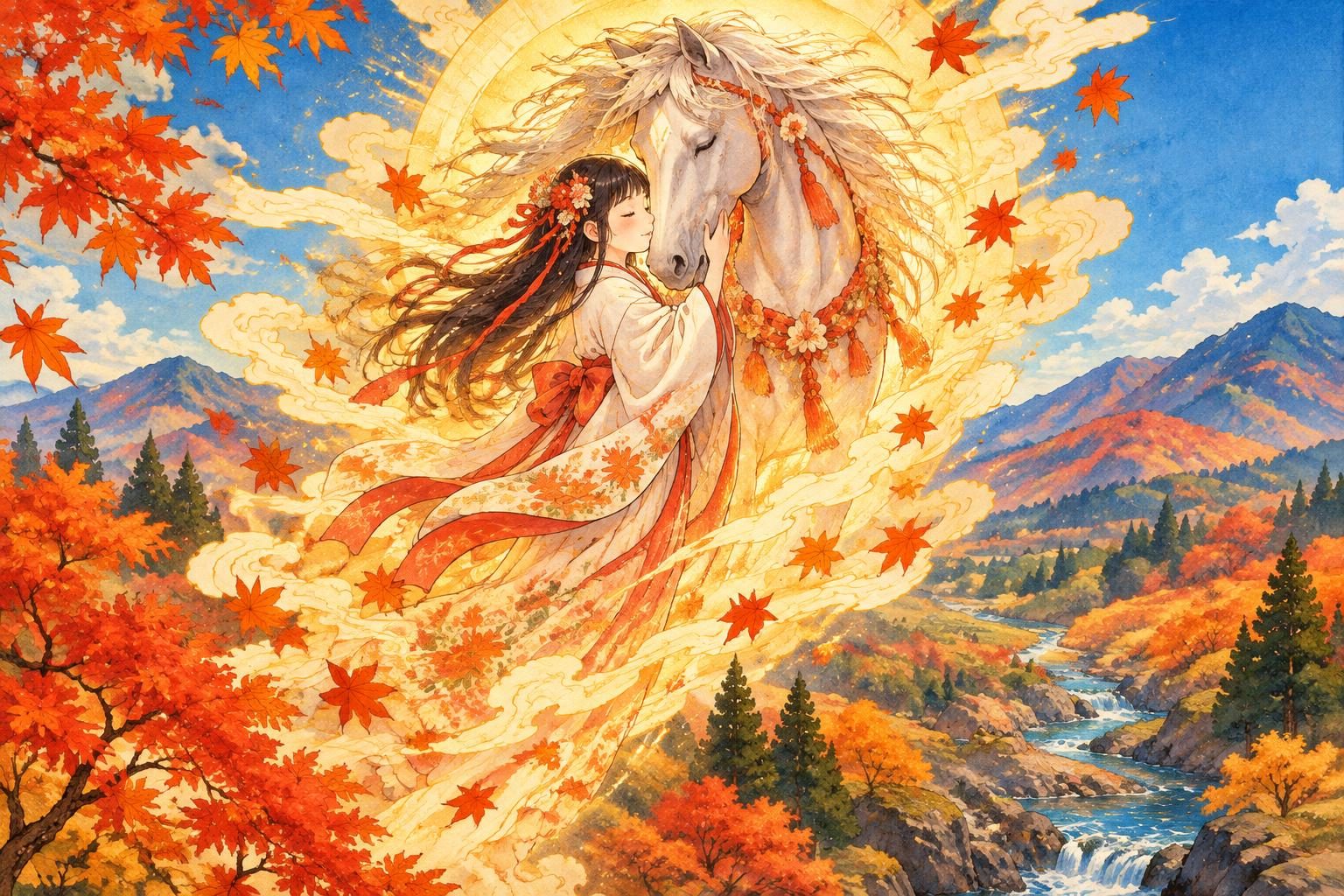
In Tōno, Iwate Prefecture, the legend of Oshirasama—a unique household deity—captures the imagination with its compelling narrative of love, loss, and transformation. This tale, deeply embedded in the cultural fabric of Tōno, offers a glimpse into the region’s rich folklore and traditions.

Introduction to Oshirasama and the Folklore of Tōno
FACT: What the records say
Tōno, located in Iwate Prefecture, is renowned for its rich tapestry of folklore, as chronicled in the famous “Tōno Monogatari” by Kunio Yanagita. This collection of stories serves as a cornerstone for understanding the region’s cultural heritage. The area is a treasure trove of narratives featuring yokai, spirits, and deities, with Oshirasama being one of the most prominent figures. This deity is often associated with sericulture and agriculture, reflecting the traditional livelihoods of the area. The tales of Tōno provide a fascinating insight into how the people of the region have historically interacted with the supernatural, blending their daily lives with the mystical.
The Legend of the Girl, the Horse, and Sericulture
LEGEND: The story of Oshirasama
According to local legend, Oshirasama is the spirit of a young girl who fell in love with a horse. Her father, disapproving of this union, killed the horse, and in grief, the girl climbed onto the horse’s body and ascended to the heavens. This poignant tale symbolizes themes of forbidden love and transformation, and it is said that the girl and the horse became deities, watching over households and sericulture. The legend reflects the deep emotional connections and the sometimes tragic intersections between human desires and societal norms. It also illustrates how such stories serve as moral and cultural lessons, teaching the values and beliefs of the community.
LEGEND: Variations in the tale
There are several variations of the Oshirasama legend, each adding a unique layer to the narrative. In some versions, the girl and the horse are transformed into mulberry trees, which are essential to sericulture, thereby linking the legend directly to the local economy and culture. Other accounts suggest that the girl and horse became stars in the sky, eternally watching over the earth. These variations highlight the flexibility of oral traditions and how they adapt to convey different messages or emphasize particular aspects of the culture and environment.


Understanding the Physical Form: Mulberry Wood and Layered Cloth
FACT: The Oshirasama figures
Oshirasama figures are typically crafted from mulberry wood, a material closely linked to sericulture, as mulberry leaves are the primary food source for silkworms. These figures are often draped in layers of cloth, representing the layered nature of tradition and the protective role of the deity. Each household in Tōno traditionally keeps these figures as guardians of the home. The use of mulberry wood is not just symbolic but also practical, as it connects the physical representation of the deity with the agricultural practices that sustain the community. The cloth layers, often added by family members over generations, serve as a tangible record of the family’s history and prayers.
Oshirasama as Protectors of the Household, Agriculture, and Eyesight
LEGEND: The protective powers
Local tradition holds that Oshirasama serves as a protector of households, ensuring prosperity and safety. The deity is also believed to oversee agriculture, particularly sericulture, and is invoked for the protection of eyesight. Rituals involving the Oshirasama figures often include prayers for these aspects of life, reflecting the deity’s multifaceted role in the community. The belief in Oshirasama’s protective powers is deeply ingrained in the local culture, and the rituals associated with the deity are seen as essential to maintaining harmony and balance in daily life.


The Living Faith: Rituals and the Oshira-Asobase Ceremony
FACT: Ritual practices
In Tōno, rituals dedicated to Oshirasama are a vibrant part of local culture. The Oshira-Asobase ceremony is a notable event where community members gather to honor the deity. During this ceremony, participants offer cloths to the Oshirasama figures, symbolizing prayers and wishes for the coming year. This practice underscores the enduring connection between the people of Tōno and their spiritual heritage. The ceremony is not only a religious observance but also a social event that strengthens community bonds and reaffirms shared cultural values.
FACT: The significance of offerings
The offerings made during the Oshira-Asobase ceremony are rich in symbolism. The cloths, often brightly colored, represent the hopes and aspirations of the individuals and families who present them. Each offering is a personal gesture, yet collectively, they form a tapestry of community faith and continuity. The act of offering is a way for participants to engage with their history and express gratitude and hope for the future.
Visiting Tōno Denshō-en and the Oshirado Hall
FACT: Where to see Oshirasama figures
Visitors to Tōno can explore the rich folklore of the area at Tōno Denshō-en, a folk museum that houses the Oshirado Hall. This hall displays around 1,000 Oshirasama figurines, providing a tangible connection to the legend and its cultural significance. The museum offers insights into the traditions and beliefs surrounding Oshirasama, making it a must-visit for those interested in Japanese folklore. The sheer number of figures on display is a testament to the enduring importance of Oshirasama in the local culture, and the museum provides a comprehensive overview of the deity’s role in Tōno’s folklore.
Nearby Guide
Access
- JR Tōno Station (Tōno) — The nearest railway station to Denshōen Park, where the Oshira-do hall is located, is JR Tōno Station. From the station, it’s approximately a 15-minute drive to the park. details
Nearby sights
- Denshōen Park (Tōno) — Denshōen Park houses the Oshira-do hall, which displays about 1,000 Oshirasama figurines. Visitors can participate in the tradition of placing their own prayer cloths on an Oshirasama. details
Where to eat
- Wanko Soba (Morioka) — A traditional dish from Morioka, consisting of small servings of soba noodles served in quick succession until the diner covers the bowl with a lid. details


Related on JAPAN ESSENCE: Oshirasama: Exploring the Tragic Horse-and-Girl Legend in Tōno, Iwate | Discover the Legend of Konaki-Jijii at Tokushima’s Oboke Gorge
Sources
- Tōno, Iwate – Wikipedia
- Oshirasama Legend|Legend from Tōno Monogatari/第六九話ほか|IZANORA
- Southern Ogamisama Customs | Iwate | Explore Japan’s Cultural Heritage | National Treasures Database with Stories & Travel
- Oshirasama: Meaning, Legend & Origin | NazoMap
- Yokai of Tono-go ── The Tales of Tono, Zashiki-warashi, and Oshirasama | YOKAI.JP
- Traveling in Tōno, Iwate: A Birthplace of Japanese Legends | Nippon.com
- Go Nippon Navi | Guide to Iwate
To explore further, visit Onigawara Experience for hands-on onigawara experiences in Japan and Zenkei (禅景) for Zen-inspired onigawara art.
岩手県遠野では、オシラサマという独特な家の神様の伝説が、愛と喪失、そして変容の魅力的な物語で人々の想像力をかき立てます。この物語は遠野の文化に深く根付いており、地域の豊かな民間伝承と伝統を垣間見ることができます。
オシラサマと遠野の民間伝承の紹介
事実: 記録が示すもの
岩手県に位置する遠野は、柳田國男の有名な「遠野物語」に記録された豊かな民間伝承で知られています。この物語集は、地域の文化遺産を理解するための基盤となっています。この地域は、妖怪や精霊、神々を特徴とする物語の宝庫であり、オシラサマはその中でも最も著名な存在の一つです。この神様はしばしば養蚕や農業と関連付けられ、地域の伝統的な生業を反映しています。遠野の物語は、地域の人々が歴史的にどのように超自然的なものと関わってきたかを示し、日常生活と神秘的なものを融合させています。
少女と馬と養蚕の伝説
伝承: オシラサマの物語
地元の言い伝えによると、オシラサマは馬に恋をした若い少女の霊です。父親はこの結びつきを認めず、馬を殺しました。悲しみに暮れた少女は馬の体に乗り、天に昇ったと言われています。この感動的な物語は、禁じられた愛と変容のテーマを象徴しており、少女と馬が神となり、家や養蚕を見守るようになったとされています。この伝説は、人間の欲望と社会の規範の間の深い感情的なつながりと、時には悲劇的な交差を反映しています。また、このような物語が道徳的かつ文化的な教訓として、地域社会の価値観や信念を教える役割を果たしていることを示しています。
伝承: 物語の変遷
オシラサマの伝説にはいくつかのバリエーションがあり、それぞれが物語に独自の層を加えています。あるバージョンでは、少女と馬が桑の木に変わり、養蚕に不可欠なものとなり、伝説が地域の経済と文化に直接結びついています。他の説では、少女と馬が空の星となり、永遠に地上を見守っているとされています。これらのバリエーションは、口承の伝統の柔軟性を強調し、異なるメッセージを伝えたり、文化や環境の特定の側面を強調したりする方法として適応していることを示しています。
物理的な形の理解: 桑の木と重ねられた布
事実: オシラサマの像
オシラサマの像は通常、桑の木で作られています。桑の葉は蚕の主な食料源であるため、養蚕と密接に関連しています。これらの像はしばしば布で覆われており、伝統の重層性と神様の保護的な役割を表しています。遠野の各家庭では、これらの像を家の守護者として伝統的に保持しています。桑の木の使用は象徴的であるだけでなく、地域社会を支える農業慣行と神様の物理的な表現を結びつける実用的なものでもあります。布の層は、しばしば家族のメンバーによって世代を超えて追加され、家族の歴史と祈りの具体的な記録として機能します。
家、農業、視力の守護者としてのオシラサマ
伝承: 守護の力
地元の伝統では、オシラサマは家の守護者として繁栄と安全を保証するとされています。この神様はまた、特に養蚕を監督し、視力の保護のために祈願されると信じられています。オシラサマの像を用いた儀式には、これらの生活の側面に対する祈りがしばしば含まれ、神様の地域社会における多面的な役割を反映しています。オシラサマの守護の力への信仰は地元文化に深く根付いており、神様に関連する儀式は日常生活の調和とバランスを維持するために不可欠とされています。
生きた信仰: 儀式とオシラ遊ばせの儀式
事実: 儀式の実践
遠野では、オシラサマに捧げる儀式が地元文化の活気ある一部です。オシラ遊ばせの儀式は、地域の人々が神様を敬うために集まる注目すべきイベントです。この儀式では、参加者がオシラサマの像に布を捧げ、来年の祈りと願いを象徴します。この実践は、遠野の人々と彼らの精神的遺産との永続的なつながりを強調しています。この儀式は宗教的な観察だけでなく、地域社会の絆を強化し、共有された文化的価値を再確認する社会的なイベントでもあります。
事実: 捧げ物の意義
オシラ遊ばせの儀式で捧げられる捧げ物は、象徴に富んでいます。布はしばしば鮮やかな色で、捧げる個人や家族の希望と願望を表しています。各捧げ物は個人的なジェスチャーですが、集団としては地域社会の信仰と継続性のタペストリーを形成します。捧げ物の行為は、参加者が自分たちの歴史と関わり、未来への感謝と希望を表現する方法です。
遠野伝承園とオシラ堂の訪問
事実: オシラサマの像を見る場所
遠野を訪れる人々は、遠野伝承園という民俗博物館で地域の豊かな民間伝承を探ることができます。この博物館にはオシラ堂があり、約1,000体のオシラサマの像が展示されています。これは伝説とその文化的重要性への具体的なつながりを提供します。博物館はオシラサマにまつわる伝統と信念についての洞察を提供し、日本の民間伝承に興味のある人にとって必見の場所です。展示されている像の数は、地元文化におけるオシラサマの持続的な重要性を証明しており、博物館は遠野の民間伝承における神様の役割を包括的に紹介しています。
周辺ガイド
アクセス
- JR遠野駅(遠野)— オシラ堂がある伝承園公園への最寄りの鉄道駅はJR遠野駅です。駅から公園までは車で約15分です。詳細
周辺の見どころ
- 伝承園公園(遠野)— 伝承園公園にはオシラ堂があり、約1,000体のオシラサマの像が展示されています。訪問者は自分の祈りの布をオシラサマに捧げる伝統に参加できます。詳細
食べる
- わんこそば(盛岡)— 盛岡の伝統料理で、小さなそばの盛りを次々と提供し、食べる人が蓋をするまで続けます。詳細
Related on JAPAN ESSENCE: Oshirasama: Exploring the Tragic Horse-and-Girl Legend in Tōno, Iwate | Discover the Legend of Konaki-Jijii at Tokushima’s Oboke Gorge
Sources
- Tōno, Iwate – Wikipedia
- Oshirasama Legend|Legend from Tōno Monogatari/第六九話ほか|IZANORA
- Southern Ogamisama Customs | Iwate | Explore Japan’s Cultural Heritage | National Treasures Database with Stories & Travel
- Oshirasama: Meaning, Legend & Origin | NazoMap
- Yokai of Tono-go ── The Tales of Tono, Zashiki-warashi, and Oshirasama | YOKAI.JP
- Traveling in Tōno, Iwate: A Birthplace of Japanese Legends | Nippon.com
- Go Nippon Navi | Guide to Iwate
さらに楽しみたい方は、鬼瓦づくりを体験できるOnigawara Experienceや、禅の美意識を映す鬼瓦アートの禅景もご覧ください。
Leave a Reply