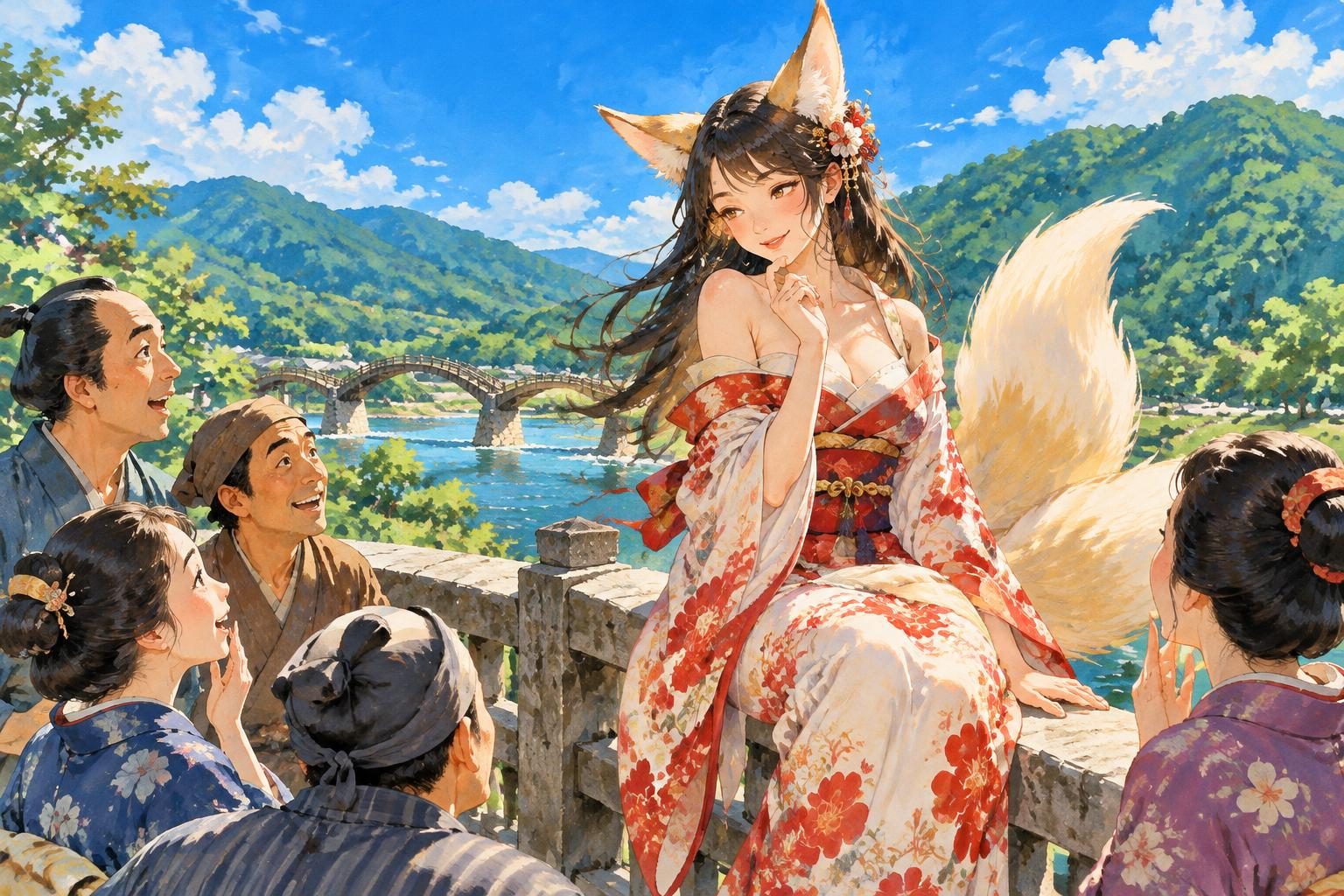
In Iwakuni, Yamaguchi Prefecture, the legend of Osan-gitsune—a mysterious fox-spirit woman—continues to captivate locals and visitors alike. This tale of transformation and trickery is a fascinating part of Japan’s rich tapestry of yokai folklore.

Who is Osan-Gitsune? The Fox-Spirit Woman of Yamaguchi
LEGEND: The story of Osan-Gitsune
According to local tradition, Osan-gitsune is a fox spirit that takes the form of a beautiful woman named Osan. She is said to have lived in Iwakuni, where she enchanted the townspeople with her charm and wit. The legend tells of how Osan, in her fox form, would play tricks on unsuspecting villagers, leading them astray or causing minor mischief. These antics, however, were not malicious; rather, they were seen as playful and a testament to her cleverness.
The tale of Osan-gitsune is a classic example of the kitsune mythos in Japanese folklore. Kitsune, or fox spirits, are known for their intelligence and ability to shapeshift into human form. They are often depicted as tricksters, but also as protectors and friends to humans. The dual nature of kitsune—both mischievous and benevolent—is a recurring theme in stories across Japan. This duality is reflective of the complex relationship humans have with nature and the supernatural, where the same entity can be both a source of fear and a symbol of protection.
The Encounter on the Stone Bridge: A Classic Iwakuni Legend
LEGEND: The bridge encounter
One popular story involving Osan-gitsune takes place on the famous Kintaikyo Bridge in Iwakuni. It is said that Osan, in her human guise, would often be seen crossing the bridge, captivating those who passed by with her beauty. One day, a young samurai, unaware of her true nature, fell in love with her. As the story goes, Osan revealed her fox identity to him, and although initially shocked, the samurai was so enamored that he accepted her true form. This tale highlights the themes of acceptance and understanding that are prevalent in many kitsune legends.
The Kintaikyo Bridge itself is a marvel of traditional Japanese architecture, with its five wooden arches spanning the Nishiki River. Walking across this historic bridge, visitors can imagine the enchanting presence of Osan-gitsune, adding a layer of mystique to the already picturesque setting.


Origins of the Name: Maid, Victim, or Three-Tails?
LEGEND: Variations of the Osan-gitsune story
There are several variations of the Osan-gitsune legend, each offering a different perspective on her character and origins. In one version, Osan is portrayed as a maid who was wronged and transformed into a fox spirit as a form of retribution. Another account suggests that she was a victim of circumstance, forced into her fox form to escape persecution. Yet another tale describes her as a three-tailed fox, a symbol of her power and wisdom. These differing stories reflect the rich oral tradition surrounding Osan-gitsune and the flexibility of folklore to adapt to different cultural contexts.
These variations underscore the multifaceted nature of folklore, where a single character can embody multiple narratives and meanings. The three-tailed fox, for instance, is a powerful symbol in Japanese mythology, often representing a higher level of spiritual power and enlightenment. This aspect of the legend enhances the mystical aura surrounding Osan-gitsune, inviting endless interpretations and discussions.
The Sacred Sword and Fox-Possession Beliefs in Yamaguchi
FACT: Cultural significance of fox spirits
In Yamaguchi and other parts of Japan, fox spirits are often associated with Inari, the Shinto deity of rice, fertility, and prosperity. Foxes are considered messengers of Inari, and shrines dedicated to this deity frequently feature statues of foxes. The belief in fox possession, where a person is thought to be inhabited by a fox spirit, is also a common theme in Japanese folklore. This belief underscores the cultural significance of foxes as both revered and feared entities, capable of influencing human affairs.
Visiting an Inari shrine in Yamaguchi, one can see the fox statues, often adorned with red bibs, symbolizing their role as divine messengers. These shrines are places of worship and reflection, where the presence of fox spirits is palpable, and the tales of Osan-gitsune resonate with the spiritual atmosphere.


Osan-Gitsune in Japanese Folklore Encyclopedias
FACT: Documentation of Osan-gitsune
The legend of Osan-gitsune is documented in various Japanese folklore encyclopedias, such as the Yokai Encyclopedia. These compilations serve as important resources for preserving and disseminating traditional stories. They provide insights into the cultural and historical contexts of these legends, ensuring that tales like Osan-gitsune continue to be shared and appreciated by future generations.
These encyclopedias not only catalog the legends but also offer scholarly interpretations and analyses, helping readers understand the broader cultural significance of yokai like Osan-gitsune. They are invaluable tools for anyone interested in delving deeper into Japan’s rich mythological heritage.
Exploring Chugoku Region Yokai Traditions Today
FACT: Yokai culture in modern times
Today, the Chugoku region, including Yamaguchi Prefecture, remains a vibrant center for yokai culture. Festivals, museums, and local events celebrate the rich folklore of the area, drawing visitors interested in Japan’s mythical creatures. The enduring popularity of yokai stories reflects their ability to resonate with contemporary audiences, offering a glimpse into the values and beliefs of past generations.
In Iwakuni, visitors can participate in local festivals that celebrate yokai culture, where traditional performances and storytelling bring legends like Osan-gitsune to life. These events not only entertain but also educate, fostering a deeper appreciation for the region’s cultural heritage.
Nearby Guide
Access
- Iwakuni Station (Iwakuni) — Iwakuni Station is the nearest railway station to the Kintaikyo Bridge and Iwakuni Castle. From the station, you can take a bus or taxi to reach these attractions. Alternatively, it’s a short walk from the station to the bridge and castle. details
Nearby sights
- Kintaikyo Bridge (Iwakuni) — Kintaikyo Bridge is a 17th-century timber bridge that spans the Nishiki River in five arches on four stone piers. First built in 1673, it is still made by hand from wood, and you can walk across it at any hour. official site
- Iwakuni Castle (Iwakuni) — Iwakuni Castle is a reconstructed mountain-top castle offering panoramic views of the city and the Seto Inland Sea. A ropeway ride from Kikko Park takes visitors up to the castle. official site
Where to eat
- Iwakuni Sushi (Iwakuni) — A local specialty featuring pressed sushi with various toppings, reflecting the region’s culinary heritage. official site


Related on JAPAN ESSENCE: Oji Fox Parade: Experiencing Tokyo’s Unique New Year’s Eve Kitsune Tradition | The True Legend of Nurikabe: Fukuoka’s Invisible Wall Yokai
Sources
- Memories of the Sunken Taira Clan | YOKAI.JP
- Osan-gitsune | Yokai Encyclopedia
- Iwakuni Destinations
- Japan Guide – Iwakuni
To explore further, visit Onigawara Experience for hands-on onigawara experiences in Japan and Zenkei (禅景) for Zen-inspired onigawara art.
山口県岩国では、オサン狐という謎めいた狐の霊の女性の伝説が地元の人々や訪問者を魅了し続けています。この変身といたずらの物語は、日本の豊かな妖怪民間伝承の一部として興味深いものです。
オサン狐とは?山口の狐の霊の女性
伝承: オサン狐の物語
地元の言い伝えによると、オサン狐は美しい女性の姿をした狐の霊で、オサンという名前で知られています。彼女は岩国に住んでいたと言われ、その魅力と機知で町の人々を魅了しました。伝説によれば、オサンは狐の姿で、何も知らない村人たちにいたずらを仕掛け、彼らを迷わせたり小さな悪戯をしたりしました。しかし、これらの行動は悪意のあるものではなく、彼女の賢さの証として遊び心のあるものと見なされていました。
オサン狐の物語は、日本の民間伝承における狐の神話の典型的な例です。狐、または狐の霊は、その知性と人間の姿に変身する能力で知られています。彼らはしばしばトリックスターとして描かれますが、人間の保護者や友人としても描かれます。狐の二面性—いたずら好きでありながら慈悲深い—は、日本中の物語で繰り返されるテーマです。この二面性は、自然や超自然との複雑な関係を反映しており、同じ存在が恐怖の源でありながら保護の象徴でもあることを示しています。
石橋での出会い: 岩国の古典的な伝説
伝承: 橋での出会い
オサン狐に関する人気のある物語の一つは、岩国の有名な錦帯橋で起こります。オサンは人間の姿で橋を渡る姿がよく見られ、その美しさで通行人を魅了しました。ある日、彼女の本当の姿を知らない若い侍が彼女に恋をしました。物語によれば、オサンは彼に狐の正体を明かし、最初は驚いたものの、侍は彼女の本当の姿を受け入れました。この物語は、多くの狐伝説に見られる受容と理解のテーマを強調しています。
錦帯橋自体は、日本の伝統的な建築の驚異であり、五つの木製アーチが錦川をまたいでいます。この歴史的な橋を歩くとき、訪問者はオサン狐の魅惑的な存在を想像し、すでに絵のように美しい風景に神秘的な層を加えます。
名前の由来: メイド、犠牲者、または三尾?
伝承: オサン狐の物語のバリエーション
オサン狐の伝説にはいくつかのバリエーションがあり、それぞれ彼女の性格と起源に異なる視点を提供しています。あるバージョンでは、オサンは不当に扱われたメイドとして描かれ、報復の形で狐の霊に変身しました。別の話では、彼女は迫害から逃れるために狐の姿に変えられた状況の犠牲者として描かれています。また、彼女を三尾の狐として描く話もあり、彼女の力と知恵の象徴とされています。これらの異なる物語は、オサン狐を取り巻く豊かな口承伝承と、民間伝承が異なる文化的文脈に適応する柔軟性を反映しています。
これらのバリエーションは、民間伝承の多面的な性質を強調しており、一つのキャラクターが複数の物語や意味を体現できることを示しています。例えば、三尾の狐は、日本神話においてしばしば高い霊的な力と啓示を表す強力なシンボルです。この伝説の側面は、オサン狐を取り巻く神秘的なオーラを高め、無限の解釈と議論を招きます。
山口における神聖な剣と狐憑きの信仰
事実: 狐の霊の文化的意義
山口県や日本の他の地域では、狐の霊はしばしば稲荷、すなわち米、豊穣、繁栄の神道の神と関連付けられています。狐は稲荷の使者とされ、この神に捧げられた神社にはしばしば狐の像があります。狐憑き、つまり人が狐の霊に取り憑かれていると考えられる信仰も、日本の民間伝承における共通のテーマです。この信仰は、狐が人間の事柄に影響を与えることができる、畏敬と恐れの対象としての文化的意義を強調しています。
山口の稲荷神社を訪れると、しばしば赤い前掛けを着せられた狐の像を見ることができ、彼らの神の使者としての役割を象徴しています。これらの神社は、狐の霊の存在が感じられる礼拝と反省の場であり、オサン狐の物語が霊的な雰囲気と共鳴しています。
日本の民間伝承百科事典におけるオサン狐
事実: オサン狐の記録
オサン狐の伝説は、『妖怪百科事典』などの日本の民間伝承百科事典に記録されています。これらの編纂物は、伝統的な物語を保存し、広めるための重要なリソースとして機能しています。これらは、これらの伝説の文化的および歴史的文脈への洞察を提供し、オサン狐のような物語が将来の世代に共有され、評価され続けることを保証します。
これらの百科事典は、伝説をカタログ化するだけでなく、学術的な解釈や分析も提供し、読者がオサン狐のような妖怪の文化的意義をより広く理解するのを助けます。日本の豊かな神話的遺産を深く掘り下げたい人にとって、これらは貴重なツールです。
今日の中国地方の妖怪伝統を探る
事実: 現代における妖怪文化
今日、中国地方、特に山口県は、妖怪文化の活気ある中心地であり続けています。祭り、博物館、地元のイベントは、この地域の豊かな民間伝承を祝し、日本の神話的な生き物に興味を持つ訪問者を引き付けています。妖怪物語の持続的な人気は、過去の世代の価値観や信念を垣間見ることができる現代の観客に共鳴する能力を反映しています。
岩国では、妖怪文化を祝う地元の祭りに参加でき、伝統的なパフォーマンスや物語がオサン狐のような伝説を生き生きとさせます。これらのイベントは、楽しませるだけでなく、地域の文化遺産への深い理解を育む教育的な役割も果たしています。
周辺ガイド
アクセス
- 岩国駅(岩国)— 岩国駅は錦帯橋と岩国城への最寄りの鉄道駅です。駅からはバスやタクシーでこれらの観光地に行くことができます。あるいは、駅から橋や城まで徒歩ですぐです。詳細
周辺の見どころ
- 錦帯橋(岩国)— 錦帯橋は17世紀の木製の橋で、五つのアーチが四つの石の橋脚にまたがって錦川を渡っています。1673年に初めて建てられ、今でも木で手作りされています。いつでも渡ることができます。公式サイト
- 岩国城(岩国)— 岩国城は再建された山頂の城で、市内と瀬戸内海のパノラマビューを提供しています。吉香公園からロープウェイで城まで行くことができます。公式サイト
食べる
- 岩国寿司(岩国)— 地域の料理遺産を反映した、さまざまなトッピングを施した押し寿司の地元の名物です。公式サイト
Related on JAPAN ESSENCE: Oji Fox Parade: Experiencing Tokyo’s Unique New Year’s Eve Kitsune Tradition | The True Legend of Nurikabe: Fukuoka’s Invisible Wall Yokai
Sources
- Memories of the Sunken Taira Clan | YOKAI.JP
- Osan-gitsune | Yokai Encyclopedia
- Iwakuni Destinations
- Japan Guide – Iwakuni
さらに楽しみたい方は、鬼瓦づくりを体験できるOnigawara Experienceや、禅の美意識を映す鬼瓦アートの禅景もご覧ください。
Leave a Reply