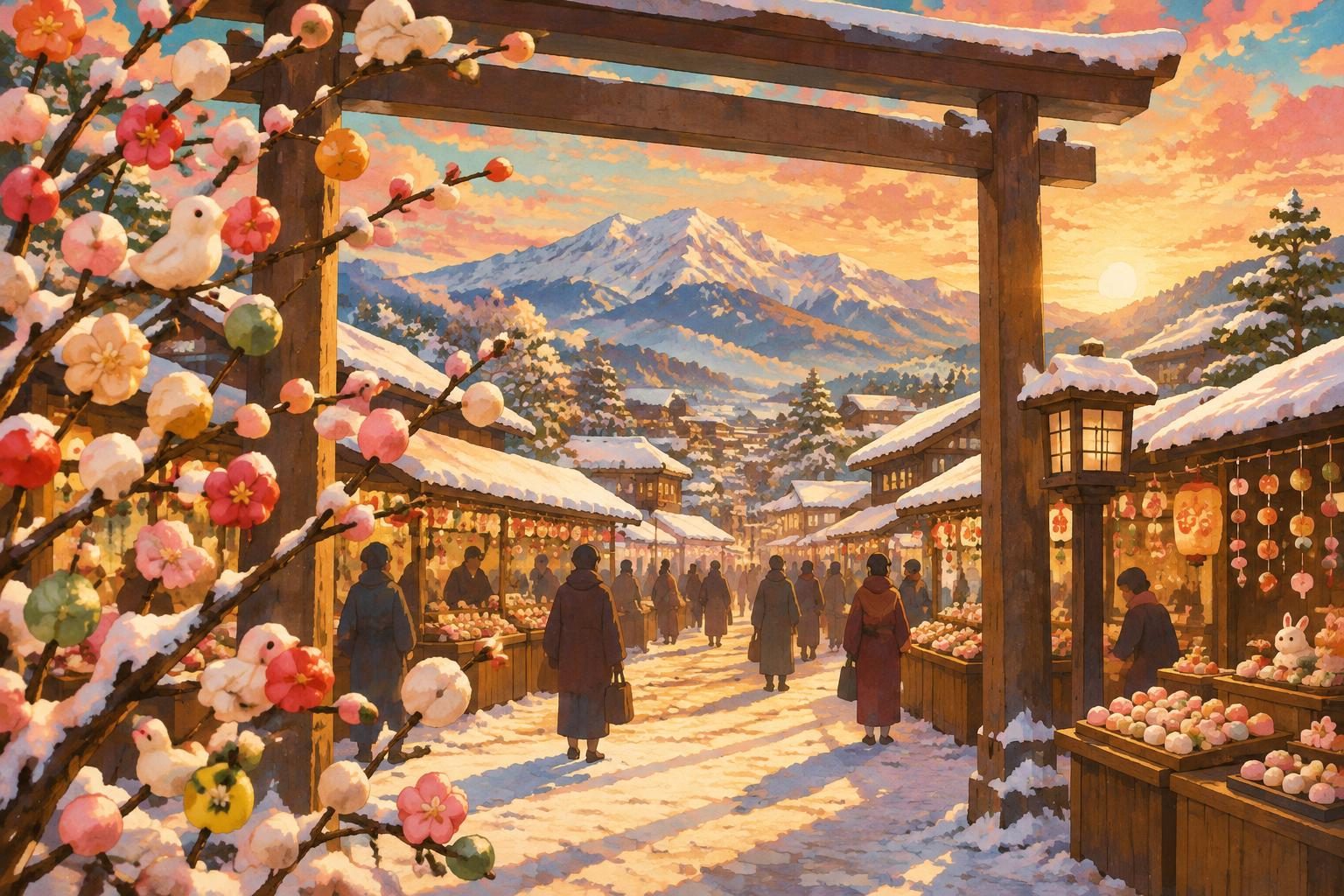
In the heart of Gifu Prefecture, the city of Takayama is renowned for its unique winter food traditions, including the celebrated hanamochi and goheimochi, which are deeply intertwined with local cultural customs.

Introduction to Winter in the Hida Region
FACT: The Significance of Winter Foods
Winter in the Hida region, particularly in Takayama, is a time when traditional foods take center stage. These foods are not just for sustenance but are also an integral part of cultural celebrations and rituals. The cold months bring a focus on hearty and warming dishes that are often tied to local festivals and customs. These culinary traditions serve as a bridge to the past, connecting current generations with their ancestors through shared tastes and experiences. The winter season in Takayama is marked by a sense of community and togetherness, where food plays a central role in bringing people together to celebrate the end of one year and the beginning of another.
In Takayama, the preparation and enjoyment of these traditional foods are seen as a way to honor the region’s heritage. The dishes are often prepared using age-old recipes passed down through generations, preserving the unique flavors and techniques that define the local cuisine. This connection to the past is not only a source of pride for the residents but also an attraction for visitors eager to experience authentic Japanese culture.
Hida Hanamochi: Centuries-Old New Year Flower-Mochi Traditions
FACT: The Tradition of Hanamochi
Hanamochi, or flower mochi, is a traditional decoration used during the New Year celebrations in the Hida region. These colorful rice cakes are often shaped into flowers and are believed to bring good fortune for the coming year. They are typically displayed alongside other New Year decorations such as pine branches and shimenawa (sacred ropes). The vibrant colors and delicate shapes of hanamochi make them a visually striking part of the New Year festivities, symbolizing the hope and renewal that the new year brings. The practice of displaying hanamochi is deeply rooted in the local culture, reflecting the community’s respect for tradition and the natural cycle of renewal.
In addition to their decorative use, hanamochi holds symbolic meaning. The flower shapes represent the beauty and transience of life, a concept that is central to many Japanese cultural practices. The use of rice, a staple food in Japan, underscores the importance of agriculture and the blessings of a good harvest. By incorporating hanamochi into New Year celebrations, the people of Takayama pay homage to these values, reinforcing their connection to nature and the cycles of life.
FACT: The Year-End Toshi-no-se-ichi Market in Front of Takayama Jinya
Every year, from December 27 to 31, the Toshi-no-se-ichi market is held in front of the Takayama Jinya. This market is a bustling hub where locals and visitors can purchase New Year decorations, including hanamochi. The market is a vibrant display of local culture and tradition, attracting people from all over the region. As you wander through the stalls, the air is filled with the lively chatter of vendors and the enticing aromas of seasonal foods, offering a sensory experience that is both delightful and immersive. The market serves as a gathering place for the community, where traditions are shared and celebrated.
Visitors to the Toshi-no-se-ichi market can also witness the craftsmanship involved in creating hanamochi. Artisans often demonstrate the techniques used to shape and color the mochi, providing insight into the skill and artistry that goes into these traditional decorations. This interaction between artisans and visitors fosters a deeper appreciation for the cultural heritage of the Hida region, making the market not just a place of commerce but also a venue for cultural exchange and education.


From Branch to Snack: Preparing and Eating Hanamochi
FACT: How Hanamochi is Made and Enjoyed
Hanamochi is crafted from glutinous rice that is pounded and shaped into delicate flower forms. These are then used as decorative elements in homes and shrines. After the New Year, the hanamochi is often consumed, symbolizing the transition from decoration to sustenance, and embodying the spirit of renewal and prosperity. This practice reflects a broader cultural appreciation for the cyclical nature of life, where the end of one phase naturally leads to the beginning of another. The act of consuming hanamochi after its decorative use is a way to bring the blessings of the New Year into one’s life, reinforcing the themes of renewal and continuity.
The process of making hanamochi is itself a communal activity, often involving family members and neighbors. This shared experience strengthens social bonds and ensures that the tradition is passed down to future generations. The enjoyment of hanamochi, whether as a decoration or a snack, is a reminder of the interconnectedness of the community and the importance of preserving cultural practices.
Goheimochi: The History of Hida’s Signature Grilled Skewered Rice
FACT: Origins and Preparation of Goheimochi
Goheimochi is another beloved winter specialty in Takayama. This dish consists of skewered rice cakes that are grilled and coated with a savory-sweet sauce made from ingredients like miso, sesame, and walnuts. It is a popular snack during winter festivals and is deeply rooted in the region’s culinary history. The combination of flavors in goheimochi, with its rich and nutty sauce, offers a comforting taste that is perfect for the cold winter months. The dish is often enjoyed at outdoor events, where the warmth of the grilled rice provides a welcome contrast to the chilly weather.
The preparation of goheimochi involves a careful balance of flavors, with each ingredient contributing to the overall taste profile. The use of miso, a fermented soybean paste, adds depth and umami, while the sesame and walnuts provide a nutty richness. This harmonious blend of flavors is a testament to the culinary ingenuity of the Hida region, where local ingredients are used to create dishes that are both delicious and culturally significant.


Experiencing Takayama’s Seasonal Winter Food Culture
FACT: Embracing Local Traditions
Visitors to Takayama during the winter months can immerse themselves in the local food culture by attending the Toshi-no-se-ichi market and trying traditional dishes like hanamochi and goheimochi. These experiences offer a glimpse into the rich cultural tapestry of the Hida region, where food and tradition are closely linked. Engaging with these traditions provides an opportunity to connect with the local community and understand the deep cultural significance of these culinary practices. The act of participating in these traditions allows visitors to experience the warmth and hospitality of Takayama, making their visit both memorable and meaningful.
For those interested in learning more about the cultural context of these foods, guided tours and workshops are often available, providing deeper insights into the history and significance of Takayama’s culinary traditions. These educational opportunities enhance the visitor experience, offering a comprehensive understanding of the region’s unique food culture and the role it plays in the community’s identity.
Nearby Guide
Access
- Takayama Station (Takayama) — Approximately a 10-minute walk from Takayama Station to Takayama Jinya. official site
- Takayama Nohi Bus Center (Takayama) — Approximately a 10-minute walk from Takayama Nohi Bus Center to Takayama Jinya. official site
Nearby sights
- Sanmachi Suji Old Town (Takayama) — A beautifully preserved Edo-period merchant district, approximately a 12-minute walk from Takayama Station. details
- Miyagawa Morning Market (Takayama) — A riverside market offering fresh local produce and artisanal goods, about a 15-minute walk from Takayama Station. details
Where to stay
- Hida Takayama Onsen Machiyado Ichiryu (Takayama) — Located just a 3-minute walk from the Miyagawa Morning Market and historic streets, and 5 minutes to Takayama Jinya. official site
- Ryokan Asunaro (Takayama) — Traditional kaiseki dining served in a beamed-ceiling dining room, part of an 18-room ryokan with onsens. details
Where to eat
- Hisadaya (Takayama) — A restaurant in a townhouse from the late Edo period, serving Hida beef in miso and mountain vegetables. Lunch only. details
- Ohnoya Jozo (Takayama) — Makers of miso and soy sauce with no sweeteners or food coloring. The business started as a koji maker in the middle of the 18th century. In the shop, you can taste miso soup every day. details
- Sakaguchiya (Takayama) — A Hida beef restaurant founded in the middle of the Meiji period, serving Hida beef nigiri on a rice cracker, and sit-down meals. details


Related on JAPAN ESSENCE: Experiencing Hokkaido’s Winter New Year Rituals in Sapporo | Tokyo Winter Craft Traditions: Kumade Rakes & Edo Treasures
Sources
- 年の瀬市|イベント|【公式】飛騨高山旅ガイド|岐阜県高山市の観光・イベント情報!
- Access|Takayama Jinya – An Unmissable Classic Spot for Sightseeing in Hida|Gifu Prefecture
- Takayama Guide: Old Town, Morning Markets and Takayama Jinya – Central Japan Guide
- Takayama Jinya area, Takayama — Neighborhood Guide | AVARA
- Sightseeing / LUUP [Official] Hida Takayama Onsen Machiyado Ichiryu
- Takayama Jinya, Takayama: what to know and what is nearby | Yalla Japan
To explore further, visit Zenkei (禅景) for Zen-inspired onigawara art and Oni Kobo (鬼工房) for onigawara demon-tile art and charms.
岐阜県の中心に位置する高山市は、地元の文化的習慣と深く結びついた独特の冬の食文化で知られています。その中でも特に有名なのが、花餅と五平餅です。
飛騨地方の冬の紹介
事実: 冬の食の重要性
飛騨地方、特に高山では、冬は伝統的な食べ物が主役となる季節です。これらの食べ物は単なる栄養源ではなく、文化的な祝祭や儀式の重要な一部でもあります。寒い季節には、地元の祭りや習慣と結びついた、心温まる料理に焦点が当てられます。これらの料理の伝統は、過去と現在の世代を共有の味覚と体験を通じて結びつける架け橋となっています。高山の冬の季節は、コミュニティと一体感を感じる時期であり、食べ物が人々を集めて一年の終わりと新しい年の始まりを祝う中心的な役割を果たします。
高山では、これらの伝統的な食べ物の準備と楽しみ方が地域の遺産を称える方法と見なされています。料理はしばしば世代を超えて受け継がれてきた古いレシピを使用して準備され、地元の料理を定義する独特の風味と技術を保存しています。この過去とのつながりは、住民にとって誇りの源であるだけでなく、本物の日本文化を体験したい訪問者にとっても魅力となっています。
飛騨の花餅: 何世紀にもわたる新年の花餅の伝統
事実: 花餅の伝統
花餅は、飛騨地方の新年の祝いで使用される伝統的な飾りです。これらのカラフルな餅はしばしば花の形に成形され、来る年の幸運をもたらすと信じられています。通常、松の枝やしめ縄(神聖な縄)などの他の新年の飾りと一緒に展示されます。花餅の鮮やかな色と繊細な形は、新年の祝祭の視覚的に印象的な部分を形成し、新年がもたらす希望と再生を象徴しています。花餅を飾る習慣は、地域文化に深く根ざしており、伝統と自然の再生サイクルに対するコミュニティの敬意を反映しています。
装飾的な使用に加えて、花餅には象徴的な意味があります。花の形は人生の美しさと儚さを表しており、多くの日本文化の実践において中心的な概念です。日本の主食である米の使用は、農業の重要性と豊作の恵みを強調しています。新年の祝いに花餅を取り入れることで、高山の人々はこれらの価値観を称え、自然と生命のサイクルへのつながりを強化しています。
事実: 高山陣屋前の年末市「歳の市」
毎年12月27日から31日まで、高山陣屋前で歳の市が開催されます。この市場は、地元の人々や訪問者が花餅を含む新年の飾りを購入できる賑やかな場所です。市場は地元の文化と伝統の活気ある展示であり、地域中から人々を引き寄せます。屋台を歩き回ると、出店者の活気ある会話と季節の食べ物の魅力的な香りが漂い、楽しく没入感のある感覚体験を提供します。市場はコミュニティの集まりの場として機能し、伝統が共有され祝われます。
歳の市を訪れる人々は、花餅の製作に関わる職人技を目の当たりにすることもできます。職人たちはしばしば餅を形作り色付けする技術を実演し、これらの伝統的な飾りに込められた技術と芸術性への洞察を提供します。この職人と訪問者の交流は、飛騨地方の文化遺産への深い感謝を育み、市場を単なる商業の場ではなく、文化交流と教育の場としています。
枝からおやつへ: 花餅の準備と食べ方
事実: 花餅の作り方と楽しみ方
花餅は、もち米をついて繊細な花の形に成形して作られます。これらは家庭や神社の装飾要素として使用されます。新年が過ぎると、花餅はしばしば食べられ、装飾から食糧への移行を象徴し、再生と繁栄の精神を体現しています。この習慣は、人生の循環的な性質に対する広範な文化的な感謝を反映しており、一つの段階の終わりが自然に次の段階の始まりにつながることを示しています。装飾として使用された後に花餅を食べる行為は、新年の祝福を生活に取り入れる方法であり、再生と継続のテーマを強化しています。
花餅作りの過程自体が、しばしば家族や近所の人々を巻き込む共同活動です。この共有体験は社会的な絆を強化し、伝統が将来の世代に受け継がれることを保証します。花餅を装飾やおやつとして楽しむことは、コミュニティのつながりと文化的実践を保存することの重要性を思い出させます。
五平餅: 飛騨の名物焼き串餅の歴史
事実: 五平餅の起源と準備
五平餅は高山で愛される冬の名物です。この料理は、串に刺した餅を焼き、味噌、ごま、くるみなどの材料で作られた甘辛いソースを塗ったものです。冬の祭りで人気のあるおやつであり、地域の料理の歴史に深く根ざしています。五平餅の風味の組み合わせは、リッチでナッツのようなソースとともに、寒い冬の月にぴったりの心地よい味を提供します。この料理はしばしば屋外イベントで楽しむことができ、焼き餅の温かさが寒い天候に対する歓迎の対比を提供します。
五平餅の準備には、風味の慎重なバランスが必要であり、各材料が全体の味のプロファイルに寄与しています。発酵大豆ペーストである味噌の使用は深みと旨味を加え、ごまとくるみはナッツのような豊かさを提供します。この調和のとれた風味のブレンドは、地元の食材を使用して美味しく文化的に重要な料理を作り出す飛騨地方の料理の創意工夫の証です。
高山の季節の冬の食文化を体験する
事実: 地元の伝統を受け入れる
冬の間に高山を訪れる人々は、歳の市に参加し、花餅や五平餅のような伝統的な料理を試すことで、地元の食文化に浸ることができます。これらの体験は、食と伝統が密接に結びついている飛騨地方の豊かな文化の織物を垣間見る機会を提供します。これらの伝統に関与することは、地元のコミュニティとつながり、これらの料理の実践の深い文化的意義を理解する機会を提供します。これらの伝統に参加する行為は、訪問者に高山の温かさとホスピタリティを体験させ、訪問を記憶に残るものにし、意味のあるものにします。
これらの食べ物の文化的背景についてもっと学びたい人のために、ガイド付きツアーやワークショップがしばしば利用可能で、高山の料理の伝統の歴史と意義についてのより深い洞察を提供します。これらの教育的な機会は訪問者の体験を向上させ、地域のユニークな食文化とそれがコミュニティのアイデンティティに果たす役割についての包括的な理解を提供します。
周辺ガイド
アクセス
周辺の見どころ
- 三町筋古い町並み(高山) — 江戸時代の商人街を美しく保存した地区で、高山駅から徒歩約12分。詳細
- 宮川朝市(高山) — 新鮮な地元産品や職人の品物を提供する川沿いの市場で、高山駅から徒歩約15分。詳細
泊まる
- 飛騨高山温泉町宿一龍(高山) — 宮川朝市や歴史的な通りから徒歩わずか3分、高山陣屋まで5分。公式サイト
- 旅館あすなろ(高山) — 梁のある食堂で伝統的な会席料理を提供する18室の旅館で、温泉もあります。詳細
食べる
- 久田屋(高山) — 江戸時代後期の町家にあるレストランで、味噌と山菜で飛騨牛を提供。ランチのみ。詳細
- 大野屋醸造(高山) — 甘味料や着色料を使わない味噌と醤油の製造者。18世紀中頃に麹屋として始まりました。店内では毎日味噌汁を試食できます。詳細
- 坂口屋(高山) — 明治時代中期に創業した飛騨牛レストランで、ライスクラッカーに乗せた飛騨牛握りや座って食べる食事を提供。詳細
Related on JAPAN ESSENCE: Experiencing Hokkaido’s Winter New Year Rituals in Sapporo | Tokyo Winter Craft Traditions: Kumade Rakes & Edo Treasures
Sources
- 年の瀬市|イベント|【公式】飛騨高山旅ガイド|岐阜県高山市の観光・イベント情報!
- Access|Takayama Jinya – An Unmissable Classic Spot for Sightseeing in Hida|Gifu Prefecture
- Takayama Guide: Old Town, Morning Markets and Takayama Jinya – Central Japan Guide
- Takayama Jinya area, Takayama — Neighborhood Guide | AVARA
- Sightseeing / LUUP [Official] Hida Takayama Onsen Machiyado Ichiryu
- Takayama Jinya, Takayama: what to know and what is nearby | Yalla Japan
Leave a Reply