Category: Customs

風習

  • Hiroshima’s Tondo Festival: Experiencing Chūgoku’s New Year Bonfire Tradition

    Hiroshima’s Tondo Festival: Experiencing Chūgoku’s New Year Bonfire Tradition

    In Hiroshima, Hiroshima Prefecture, the Tondo Festival is a beloved tradition that brings communities together to celebrate the New Year with towering bonfires and the roasting of mochi. Held annually around January 15, this event is a vibrant expression of local culture and spirituality.

    Ukiyo-e style scene with a vibrant bonfire festival by a shrine, mountains, and river; joyful gathering in lively colors.
    AI生成イメージ / AI-generated illustration (not a photograph of the actual place)

    What Is Hiroshima’s Tondo Festival?

    FACT: The New Year Bonfire Tradition

    The Tondo Festival, or Tondo Matsuri, is a New Year celebration in Hiroshima City where community members gather to burn New Year decorations and talismans in large bonfires. These bonfires, known as tondo, are typically held around January 15, often on the second or third weekend of January. The event is marked by communal gatherings at various urban and community sites, including parks, school grounds, riverbanks, and shrine courtyards, where residents come together to enjoy the spectacle and warmth of the fire.

    These gatherings are not only about the bonfire itself but also about the sense of community they foster. People of all ages participate, creating an atmosphere of camaraderie and shared joy. The fire serves as a focal point for social interaction, where stories are exchanged and new friendships are formed. The tradition of burning New Year decorations is both a symbolic and practical act, ensuring that the past year’s symbols are respectfully disposed of while paving the way for new beginnings.

    FACT: Hiroshima Gokoku Shrine’s Major Tondo Event

    One of the most significant Tondo Festivals in Hiroshima City takes place at the Hiroshima Gokoku Shrine, located next to Hiroshima Castle. This shrine hosts a major tondo event every January 15, regardless of the day of the week or the weather. The festival at this shrine is a major draw for locals and visitors alike, offering a chance to participate in this age-old tradition in a central and historic setting. The shrine’s location, adjacent to the historic Hiroshima Castle, adds a layer of cultural depth and historical resonance to the event. Visitors can experience the juxtaposition of ancient traditions against the backdrop of Hiroshima’s storied past.

    Attending the Tondo Festival at Hiroshima Gokoku Shrine provides an opportunity to witness the grandeur of the event firsthand. The shrine’s spacious grounds accommodate large crowds, and the sight of the towering bonfire against the backdrop of the castle is truly a spectacle to behold. This setting not only enhances the visual impact of the festival but also deepens the cultural experience, as participants are reminded of Hiroshima’s resilience and rich history.

    The Origins and Meaning of the Tondo Bonfire

    FACT: Cultural and Spiritual Significance

    The Tondo Festival is deeply rooted in Japanese culture and spirituality. The act of burning New Year decorations and talismans is not merely a way to dispose of these items but also a symbolic purification ritual. It is believed that by burning these items, the bad luck and misfortunes of the past year are dispelled, making way for good fortune in the coming year. This ritual is a poignant reminder of the cyclical nature of life and the importance of renewal and reflection. The festival is a time for communities to come together, reflect on the past year, and make wishes for health and prosperity in the new year.

    In addition to its spiritual significance, the festival serves as a cultural touchstone, connecting participants to a shared heritage. The act of purification through fire is a common theme in many cultures, but the Tondo Festival’s unique blend of local customs and communal involvement makes it a distinctive expression of Japanese tradition. Participants are encouraged to engage in the ritual with mindfulness and respect, acknowledging the deeper meanings behind the flames.

    FACT: Historical Roots and Community Involvement

    The roots of the Tondo Festival can be traced back to ancient Japanese traditions, including the Sagichō, a similar fire festival that was historically practiced in various regions of Japan. Over time, these traditions have evolved, but the core elements of fire and communal participation remain central. In Hiroshima, the festival serves as a vital cultural link, connecting modern residents with the practices of their ancestors. The communal aspect of the festival fosters a sense of unity and shared purpose, as participants engage in a collective act of renewal and hope.

    Community involvement is a hallmark of the Tondo Festival. Local residents, including children, elders, and entire families, actively participate in the preparations and festivities. This involvement strengthens community bonds and ensures the continuity of the tradition. The festival is a time for neighbors to come together, share stories, and celebrate their shared heritage. Through their participation, community members contribute to the preservation of this important cultural practice.

    Torii, Hiroshima Gokoku Shrine 20190417 1 - Hiroshima Gokoku Shrine
    “Torii, Hiroshima Gokoku Shrine 20190417 1” (Hiroshima Gokoku Shrine) by DXR, CC BY-SA 4.0, source, via Wikimedia Commons

    Key Locations: Where to Witness Tondo in Hiroshima

    FACT: Community Sites and Shrines

    In addition to the Hiroshima Gokoku Shrine, many other locations across Hiroshima City host Tondo Festivals. These include public spaces such as school grounds, parks, and along the city’s wide riverbanks. Each site offers its unique atmosphere and experience, allowing participants to choose a setting that resonates with them. The communal nature of these events fosters a sense of unity and shared purpose among participants. Whether in the heart of the city or along the serene riverbanks, the festival’s spirit of togetherness is palpable.

    Each location hosting a Tondo Festival provides its own distinct flavor of the event. Some sites may feature larger bonfires, while others offer more intimate settings. The choice of location often depends on personal preference, with some participants opting for the bustling energy of a central park, while others prefer the tranquil ambiance of a riverside gathering. Regardless of the setting, the essence of the festival remains the same: a celebration of community, culture, and renewal.

    The Tradition of Roasting Mochi and Wishing for Health

    FACT: Mochi Roasting and Community Bonding

    A highlight of the Tondo Festival is the roasting of mochi, or rice cakes, over the bonfires. This activity is not only a culinary delight but also a communal one, as families and friends gather to roast and share mochi while enjoying warm sake. The act of roasting mochi is steeped in tradition, symbolizing the hope for a healthy and prosperous year ahead. It is a time for laughter, storytelling, and strengthening community bonds. As the sweet aroma of roasting mochi fills the air, participants are reminded of the importance of community and the shared joys of simple pleasures.

    The tradition of mochi roasting is an integral part of the Tondo Festival experience. It provides an opportunity for participants to engage in a hands-on activity that is both enjoyable and meaningful. The simple act of roasting and sharing mochi becomes a metaphor for the warmth and support found within the community. As participants gather around the fire, they are enveloped in a sense of belonging and connectedness, reinforcing the festival’s themes of unity and renewal.

    Hiroshima Gokoku Jinja hdsr Shrine S5 26 - Hiroshima Gokoku Shrine
    “Hiroshima Gokoku Jinja hdsr Shrine S5 26” (Hiroshima Gokoku Shrine) by Hyppolyte de Saint-Rambert, CC BY 4.0, source, via Wikimedia Commons

    Tips for International Travelers Visiting in January

    FACT: Planning Your Visit

    For international travelers planning to experience the Tondo Festival, it is advisable to check the official website for current hours, fees, and access details. While the festival is a public event, specific sites may have their own guidelines and schedules. Visitors are encouraged to dress warmly, as the festival takes place outdoors in January, and to arrive early to secure a good spot near the bonfires. Experiencing the Tondo Festival offers a unique glimpse into local traditions and provides an opportunity to engage with the community in a meaningful way.

    Travelers should also consider exploring the surrounding areas of Hiroshima City, which offer a wealth of cultural and historical attractions. The proximity of the Hiroshima Gokoku Shrine to Hiroshima Castle makes it easy to combine a visit to the festival with a tour of the castle grounds. This allows visitors to immerse themselves in the rich history and culture of Hiroshima, enhancing their overall experience of the Tondo Festival.

    Locator map of Japan: Hiroshima, Hiroshima
    Legend site: Hiroshima, Hiroshima — Source: Map of Japan with highlight on 34 Hiroshima prefecture.svg; Map: Lincun, CC BY-SA 3.0, via Wikimedia Commons

    Sources

    About the author

    JAPAN ESSENCE Editorial Team
    Our mission is to bring you Japan’s legends, myths, festivals and living traditions, through both historical fact and the stories passed down over generations.

  • Guide to Akita’s Namahage: Tōhoku’s Fierce New Year Tradition

    Guide to Akita’s Namahage: Tōhoku’s Fierce New Year Tradition

    In Oga, Akita Prefecture, the Namahage tradition is an integral part of the New Year celebrations, where fierce demon-like figures visit homes to admonish laziness and bring good fortune for the coming year.

    Wood and straw namahage at Namahage Museum. Oga, Akita, Japan.
    “Straw namahage.2” by Douglas P Perkins ( Douglaspperkins ( talk )), CC BY 3.0, via Wikimedia Commons

    What Is the Namahage Ritual of Oga City?

    FACT: The Ritual’s Practice and Significance

    The Namahage ritual, recognized by UNESCO as an Intangible Cultural Heritage, is a unique tradition in Oga City, Akita Prefecture. Every New Year’s Eve, young men dress up as Namahage, wearing fearsome masks and straw capes, and visit homes throughout the community. These figures, with their terrifying appearance, serve a dual purpose: they admonish children and young adults, asking if they have been lazy or misbehaved over the past year. This ritual is not merely about inducing fear; it is a symbolic act meant to scare away laziness and bring good fortune, acting as both a moral lesson and a cultural celebration.

    FACT: Origins and Cultural Recognition

    The Namahage ritual is deeply rooted in the cultural fabric of Oga. It is believed to have originated from ancient agricultural practices, where the ritual was performed to ensure a bountiful harvest. The presence of Namahage was thought to cleanse the village of evil spirits and laziness, thus ensuring prosperity for the coming year. In 2018, it was inscribed on UNESCO’s Representative List of the Intangible Cultural Heritage of Humanity, highlighting its cultural significance and the community’s efforts to preserve this tradition. This recognition underscores the importance of the Namahage ritual not only as a local custom but as a cultural treasure of global interest.

    Namahage demons startled on stone steps in snowy Oga landscape.
    AI生成イメージ / AI-generated illustration (not a photograph of the actual place)

    The True Meaning Behind the Name: Etymology and Origins

    FACT: Etymology of ‘Namahage’

    The name is commonly traced to namomi-hagi: peeling away namomi, the heat marks caused by lingering at the hearth. It symbolically rebukes idleness. Oga City’s cultural-heritage account explains this origin.

    Straw namahage.1 - Interior of Namahage Museum
    “Straw namahage.1” (Interior of Namahage Museum) by Douglas P Perkins ( Douglaspperkins ( talk )), CC BY 3.0, source, via Wikimedia Commons

    Legends and Folklore: Demons, Ascetics, and Ancient Myths

    LEGEND: The Story of the Namahage

    In the stone-steps legend recorded by Oga City, villagers promise a girl each year if the demons build 1,000 steps to Akagami Shrine’s Goshadō before dawn. At 999 steps, a false rooster call tricks the demons into abandoning the task. This is an origin legend, not established history.

    LEGEND: Variants and Local Accounts

    Oga City’s account also presents an ascetic-origin theory: mountain practitioners descended from Honzan and Shinzan to pray at village homes, and their formidable appearance became associated with Namahage. This is one of several origin theories, not an established historical account.

    Visiting the Namahage Museum and Oga Shinzan Folklore Museum

    FACT: What to Expect at the Museums

    Located in the Kitaura Shinzan area of Oga City, the Namahage Museum and the Oga Shinzan Folklore Museum offer visitors an immersive experience into the world of Namahage. These museums house extensive collections of Namahage masks and costumes, providing insights into the craft and cultural significance of these items. Visitors can explore the intricate designs of the masks, each one unique and crafted to evoke fear and respect. Interactive exhibits allow visitors to try on Namahage costumes and participate in reenactments, offering a hands-on understanding of this vibrant tradition. This engagement provides a deeper appreciation of the skills and artistry involved in keeping this tradition alive.

    FACT: How to Visit

    The museums’ official access guide lists JR Oga Station and the advance-reservation Namahage Shuttle, taking approximately 25 minutes. Check current transport schedules, opening hours and fees before visiting.

    Thatched roof with snow in Oga City Akita Prefecture March 2017 - Oga, Akita
    “Thatched roof with snow in Oga City Akita Prefecture March 2017” (Oga, Akita) by ウィキ太郎 Wiki Taro, Public domain, source, via Wikimedia Commons

    Experiencing Namahage-Daiko and Local Cultural Displays

    FACT: Namahage-Daiko Performances

    Visitors to Oga can also experience Namahage-Daiko, a powerful drumming performance inspired by the Namahage tradition. These performances are often held at local festivals and events, showcasing the rhythmic and energetic spirit of the Namahage. The drumming is said to mimic the footsteps of the Namahage, adding an auditory layer to the visual spectacle of the tradition. The beats resonate with the energy of the Namahage, creating an immersive experience that captivates audiences and connects them to the cultural heartbeat of Oga.

    FACT: Local Festivals and Events

    Throughout the year, Oga hosts various festivals celebrating the Namahage tradition. These events feature parades, performances, and opportunities to engage with the local community. They provide a deeper understanding of how the Namahage ritual is woven into the cultural and social fabric of the region. Participating in these festivals offers a unique glimpse into the communal spirit and the enduring legacy of the Namahage tradition, fostering a sense of connection between visitors and the local culture.

    Nearby Guide

    Access

    • JR Oga Station (Oga, Akita) — Take the advance-reservation Namahage Shuttle to the Namahage Museum, approximately 25 minutes. official access guide

    Nearby sights

    • Shinzan Shrine (Oga, Akita) — Located a five-minute walk from the Namahage Museum, Shinzan Shrine is a significant site in the Namahage tradition. details
    • Oga Aquarium GAO (Oga, Akita) — Approximately a 30-minute drive from the Namahage Museum, Oga Aquarium GAO features marine life from Akita and polar bears, making it a popular spot for families. details
    • Nyūdōzaki Lighthouse (Oga, Akita) — Situated at the northern tip of the Oga Peninsula, Nyūdōzaki Lighthouse offers panoramic views, especially beautiful at sunset. details

    Where to stay

    • Oga Onsenkyo (Oga, Akita) — Located near the Namahage Museum, Oga Onsenkyo offers hot spring accommodations. At night, performances like the ‘Gofu Namahage Taiko Live’ may be held, featuring taiko drumming inspired by Namahage. details

    Where to eat

    • Local Seafood Restaurants (Oga, Akita) — Oga is renowned for its fresh seafood. Numerous local restaurants offer dishes featuring the day’s catch, providing an authentic taste of the region’s maritime offerings. details
    Locator map of Japan: Oga, Akita
    Legend site: Oga, Akita — Source: Map of Japan with highlight on 05 Akita prefecture.svg; Map: Lincun, CC BY-SA 3.0, via Wikimedia Commons

    Sources

    About the author

    JAPAN ESSENCE Editorial Team
    Our mission is to bring you Japan’s legends, myths, festivals and living traditions, through both historical fact and the stories passed down over generations.

  • Visiting Kozanji Temple: Shimonoseki’s Hidden Zen Masterpiece

    Visiting Kozanji Temple: Shimonoseki’s Hidden Zen Masterpiece

    In the heart of Shimonoseki, Yamaguchi Prefecture, lies Kōzan‑ji Temple, a hidden gem of Zen architecture and history. Known for its stunning autumn foliage and the oldest Zenshūyō-style Buddha Hall in Japan, Kōzan‑ji offers a serene escape into a world of spiritual and architectural beauty.

    城下町長府・功山寺の総門
    “Somon Gate of Kozanji Temple in Chofu, Shimonoseki, Yamaguchi” by そらみみ, CC BY-SA 4.0, via Wikimedia Commons

    Introduction to Kozanji Temple and Its Zen Heritage

    FACT: Historical Significance and Architecture

    Kōzan‑ji Temple, originally founded as Chōfuku‑ji, stands as a testament to the enduring legacy of Zen Buddhism in Japan. Renamed Kōzan‑ji, it is renowned for its Butsuden, a Buddha Hall completed in 1320, which is the oldest extant example of the Zen-style (Zenshūyō) architecture in the country. This architectural style is characterized by its simplicity and elegance, reflecting the Zen principles of harmony and balance. The Butsuden is not only a National Treasure but also a pivotal piece of Japan’s architectural history.

    The temple’s history is deeply intertwined with the development of Zen Buddhism, which emphasizes meditation and the direct experience of enlightenment. The architectural style of the Butsuden, known as Zenshūyō, was introduced from China during the Kamakura period, a time when Zen Buddhism flourished in Japan. This style is marked by its use of natural materials and minimalistic design, aiming to create a space that fosters meditation and reflection.

    Soft watercolor of a serene temple scene with trees, mountains, and a river on a bright summer day.
    AI生成イメージ / AI-generated illustration (not a photograph of the actual place)

    Japan’s Oldest Zenshūyō Buddha Hall: A National Treasure

    FACT: Architectural Masterpiece

    The Butsuden at Kōzan‑ji is a prime example of Zenshūyō architecture. This style, characterized by its understated elegance and use of natural materials, reflects the Zen philosophy of simplicity and tranquility. The hall’s designation as a National Treasure underscores its importance and the need for its preservation as a cultural asset. Visitors to the temple can admire the architectural details that have been preserved for centuries, offering a glimpse into the past and the enduring influence of Zen aesthetics.

    As one explores the Butsuden, the harmony between the architecture and the surrounding nature becomes evident. The building’s design encourages contemplation and introspection, embodying the Zen ideal of achieving enlightenment through direct experience. The simplicity of the structure, combined with the natural beauty of its setting, creates an atmosphere conducive to meditation and spiritual reflection.
    Sanmon Gate of Kozanji Temple in Chofu, Shimonoseki, Yamaguchi - Sanmon, Kōzan-ji (Shimonoseki)
    “Sanmon Gate of Kozanji Temple in Chofu, Shimonoseki, Yamaguchi” (Sanmon, Kōzan-ji (Shimonoseki)) by そらみみ (Soramimi), CC BY-SA 4.0, source, via Wikimedia Commons

    Autumn Foliage: When to Experience Kozanji in Peak Color

    FACT: Seasonal Beauty

    Autumn is a particularly enchanting time to visit Kōzan‑ji Temple. The temple grounds are adorned with vibrant hues of red, orange, and yellow as the leaves change, creating a breathtaking backdrop against the historic architecture. Visitors often time their trips to coincide with the peak foliage season, which typically occurs from mid-November to early December, offering a picturesque scene that enhances the temple’s tranquil ambiance.

    The changing colors of the leaves provide a stunning contrast to the temple’s traditional architecture, making it a popular destination for photographers and nature lovers alike. As you stroll through the temple grounds, the crisp autumn air and the rustling of leaves underfoot add to the sensory experience, creating a moment of peace and reflection.

    Samurai History: Takasugi Shinsaku and the Shimonoseki Uprising

    FACT: Historical Context

    Kōzan‑ji also holds historical significance due to its connection with Takasugi Shinsaku, a prominent samurai and revolutionary leader. Shinsaku played a key role in the Shimonoseki Uprising, a pivotal event in the late Edo period that contributed to the Meiji Restoration. The temple served as a strategic meeting place for Shinsaku and his allies, adding a layer of historical intrigue to its serene setting.

    Visitors interested in Japanese history will find the temple’s connection to Takasugi Shinsaku particularly fascinating. The Shimonoseki Uprising was a crucial moment in Japan’s transition from feudal rule to modern governance, and Kōzan‑ji’s role as a meeting place for revolutionary leaders highlights its importance beyond its religious significance. The temple stands as a silent witness to the events that shaped modern Japan, offering a unique perspective on the nation’s history.

    Kozanji Temple (Shimonoseki) - Taken with Sony DSC-P100, Buddha Hall, Kōzan-ji
    “Kozanji Temple (Shimonoseki)” (Taken with Sony DSC-P100, Buddha Hall, Kōzan-ji) by Wiki708 at Japanese Wikipedia, CC BY-SA 3.0, source, via Wikimedia Commons

    Pilgrimage and Spiritual Significance on the Chūgoku Route

    FACT: Spiritual Journey

    Kōzan‑ji is Temple No. 19 on the Chūgoku 33 Kannon Pilgrimage, a spiritual journey that takes pilgrims through 33 sacred sites dedicated to Kannon, the Buddhist deity of compassion. This pilgrimage route is a testament to the temple’s spiritual significance and its role in the broader tapestry of Japanese religious practice. Pilgrims and visitors alike are drawn to the temple for reflection and spiritual renewal.

    The Chūgoku 33 Kannon Pilgrimage is a journey that offers both physical and spiritual challenges, inviting participants to reflect on their lives and seek spiritual growth. As pilgrims make their way to Kōzan‑ji, they are encouraged to contemplate the teachings of Kannon and the principles of compassion and mercy. The temple provides a peaceful setting for meditation and prayer, allowing visitors to connect with their spiritual selves.

    Practical Visitor Information: Access, Hours, and Admission

    Visitors to Kōzan‑ji Temple can access the site via public transportation or by car. From JR Chofu Station on the Sanyo Main Line, take a bus to the “Jokamachi Chofu” bus stop, then walk approximately 10 minutes to the temple. Alternatively, from JR Shimonoseki Station, the same bus route can be taken. For those driving, the temple is about 15 minutes by car from the Chugoku Expressway Shimonoseki IC. Check the official website for current hours, fees, and access details.

    Nearby Guide

    Access

    • Chofu Station (Shimonoseki) — From JR Chofu Station on the Sanyo Main Line, take a bus to “Jokamachi Chofu” bus stop, then walk approximately 10 minutes to Kōzan-ji Temple. official site
    • Shimonoseki Station (Shimonoseki) — From JR Shimonoseki Station, take a bus to “Jokamachi Chofu” bus stop, then walk approximately 10 minutes to Kōzan-ji Temple. official site
    • By Car (Shimonoseki) — Approximately 15 minutes by car from Chugoku Expressway Shimonoseki IC to Kōzan-ji Temple. official site

    Nearby sights

    • Ruriko-ji Temple (Yamaguchi) — Located in Yamaguchi City, Ruriko-ji Temple is renowned for its five-story pagoda, a National Treasure of Japan, and is a prime example of Zen-style architecture. official site
    • Mimosusogawa Park (Shimonoseki) — A scenic park in Shimonoseki known for its cherry blossoms in spring and vibrant autumn foliage, offering a peaceful environment for visitors. details

    Where to eat

    • Karato Fish Market (Shimonoseki) — A bustling market known for fresh seafood, including fugu (pufferfish), offering a variety of local delicacies. details
    • Uomura (Shimonoseki) — A restaurant specializing in fugu dishes, providing a traditional Japanese dining experience. details
    Locator map of Japan: Shimonoseki, Yamaguchi
    Legend site: Shimonoseki, Yamaguchi — Source: Map of Japan with highlight on 35 Yamaguchi prefecture.svg; Map: Lincun, CC BY-SA 3.0, via Wikimedia Commons

    Sources

    About the author

    JAPAN ESSENCE Editorial Team
    Our mission is to bring you Japan’s legends, myths, festivals and living traditions, through both historical fact and the stories passed down over generations.

  • Hari-Kuyō in Kyoto: Inside Japan’s Unique Needle Memorial Festival

    Hari-Kuyō in Kyoto: Inside Japan’s Unique Needle Memorial Festival

    In Kyoto, a city renowned for its rich cultural heritage, the Hari-Kuyō festival offers a unique glimpse into Japan’s deep respect for everyday objects. Held annually at Hōrin-ji Temple in Arashiyama, this December event is a testament to the Japanese philosophy of ‘mottainai’—a sense of gratitude and respect for objects that have served their purpose.

    Illustration of Hari-Kuyō festival at a temple with torii gates and mountains in watercolour, focusing on the ambiance.
    AI生成イメージ / AI-generated illustration (not a photograph of the actual place)

    What Is Hari-Kuyō? Japan’s Tribute to Worn Tools

    FACT: The Festival’s Essence

    Hari-Kuyō, also known as the Needle Memorial Festival, is a traditional Japanese ceremony dedicated to honoring broken or worn-out needles. This event is typically observed on December 8th in Kyoto and other parts of the Kansai region. Participants bring their old needles to temples, where they are gently placed into soft materials like konnyaku (a type of jelly made from konjac) or tofu. This act symbolizes a peaceful rest for the needles, acknowledging their service and expressing gratitude. The choice of soft materials is significant as it provides a gentle resting place for the needles, a stark contrast to their hard, utilitarian life.

    The symbolism of using konnyaku or tofu goes beyond just providing a resting place. These materials, soft and yielding, are seen as a way to soothe the needles’ ‘spirits’ after a lifetime of hard work. The act of placing needles into these materials is both a literal and metaphorical gesture, reflecting the deep-seated cultural practice of showing respect and care for tools that have been part of daily life. This ritual underscores the broader Japanese cultural appreciation for the impermanence and transience of life, where even the most mundane objects are given a moment of reverence.

    The Cultural Philosophy: Animism and Mottainai

    FACT: The Underlying Beliefs

    The festival is deeply rooted in the Japanese concepts of animism and ‘mottainai.’ Animism is the belief that spirits inhabit all things, living and non-living. In this context, even inanimate objects like needles are thought to possess a spirit. ‘Mottainai’ is a term that embodies a sense of regret over waste and a respect for the intrinsic value of objects. Hari-Kuyō reflects these beliefs by acknowledging the spirit of the needles and expressing gratitude for their service. This philosophy is not only about reverence for objects but also about fostering a sustainable attitude towards consumption and waste.

    In the broader cultural context, animism and ‘mottainai’ encourage mindfulness in everyday life. The practice of showing gratitude to objects, as seen in Hari-Kuyō, serves as a reminder to appreciate the resources and tools we use. This mindset promotes a sustainable lifestyle, where the focus is on reducing waste and valuing what one has. It is a philosophy that extends beyond the festival, influencing how people interact with their environment and the objects they use daily.

    嵐山花灯路@法輪寺 (2098742973) - Hōrin-ji (Nishikyo-ku, Kyoto), Arashiyama Hanatōro
    “嵐山花灯路@法輪寺 (2098742973)” (Hōrin-ji (Nishikyo-ku, Kyoto), Arashiyama Hanatōro) by ketou-daisuki from Kyoto, japansko, CC BY-SA 2.0, source, via Wikimedia Commons

    History and Origins of the Needle Memorial Festival

    FACT: Historical Context

    The origins of Hari-Kuyō can be traced back to the Edo period (1603–1868). During this time, the festival was widely practiced among seamstresses and kimono makers, who relied heavily on needles for their craft. The ceremony provided an opportunity for these artisans to rest their tools and reflect on the past year’s work. While its popularity has waned in modern times, the festival continues to be celebrated, particularly in Kyoto, where traditional crafts are still highly valued. This historical context underscores the enduring importance of craftsmanship and the cultural heritage of textile arts in Japan.

    In the Edo period, the textile industry was a significant part of Japanese society, and the tools used in this craft were highly valued. Hari-Kuyō served as both a practical and spiritual practice, allowing craftsmen to honor their tools and seek blessings for future endeavors. The festival was not only a time for reflection but also a communal event, bringing together artisans to share in a collective expression of gratitude and respect for their craft.

    Experiencing Hari-Kuyō at Hōrin-ji Temple in Arashiyama

    FACT: A Visit to Hōrin-ji Temple

    Hōrin-ji Temple, located in the picturesque Arashiyama area of Kyoto, is one of the key sites for the Hari-Kuyō festival. Originally built as Kazunoidera in 713 and renamed Hōrin-ji in 868, the temple is dedicated to Kokūzō Bodhisattva. Visitors to the temple during the festival can witness the ceremonial placing of needles into konnyaku or tofu, accompanied by the chanting of sutras. The serene surroundings of Arashiyama, with its lush bamboo groves and scenic river views, provide a tranquil backdrop for this reflective ceremony. The temple’s historical significance and spiritual atmosphere make it an ideal location for such a meaningful event.

    Arashiyama itself is a locale that enhances the experience of Hari-Kuyō. Known for its natural beauty, the area offers a calming escape from the bustling city. The combination of the temple’s spiritual heritage and the natural landscape creates an environment that is conducive to contemplation and appreciation of the festival’s themes. Visitors can immerse themselves in the tranquil setting, allowing for a deeper connection to the cultural and spiritual aspects of the ceremony.

    FACT: The Temple’s Historical Significance

    Hōrin-ji Temple’s history adds depth to the Hari-Kuyō experience. As a site originally established in the early 8th century, it has witnessed centuries of cultural and religious evolution. The temple’s dedication to Kokūzō Bodhisattva, a figure associated with wisdom and memory, aligns well with the festival’s themes of reflection and gratitude. This connection enhances the visitor’s understanding of the cultural and spiritual layers that Hari-Kuyō embodies.

    The temple’s long-standing presence in Kyoto is a testament to its enduring role in the community. Over the centuries, it has served as a place of worship and reflection, drawing visitors who seek to engage with its rich history and spiritual significance. The Hari-Kuyō festival, held within this historic context, allows participants to connect with the past and appreciate the continuity of cultural traditions.

    嵐山花灯路@法輪寺 (2099516960) - Arashiyama Hanatōro
    “嵐山花灯路@法輪寺 (2099516960)” (Arashiyama Hanatōro) by ketou-daisuki from Kyoto, japansko, CC BY-SA 2.0, source, via Wikimedia Commons

    The Ceremony: Konnyaku, Sutras, and the Orihime Dance

    FACT: Rituals and Performances

    The Hari-Kuyō ceremony at Hōrin-ji Temple includes several traditional rituals. After the needles are placed into the soft material, prayers are offered to express gratitude for their service. The ceremony also features the Orihime dance, a performance that pays homage to the weavers and seamstresses of the past. This dance is a reminder of the cultural and historical significance of the textile industry in Japan. The Orihime dance, with its graceful movements, symbolizes the delicate art of weaving and the intricate work of those who have dedicated their lives to textile crafts.

    The Orihime dance is not just a performance but a cultural expression that ties the present to the past. It celebrates the skills and artistry of the textile workers, acknowledging their contributions to Japanese culture. Through this dance, the festival honors the craftsmanship that has been passed down through generations, keeping the spirit of the artisans alive.

    FACT: The Role of Sutras in the Ceremony

    The chanting of sutras during the Hari-Kuyō ceremony is an integral part of the ritual, serving to purify the space and honor the spirit of the needles. Sutras, which are Buddhist scriptures, are recited to invoke blessings and express gratitude. This spiritual dimension of the festival highlights the intersection of religious practice and cultural tradition, offering participants a moment of contemplation and connection with the past.

    The recitation of sutras adds a layer of solemnity to the ceremony, creating an atmosphere of reverence and introspection. It is a practice that reinforces the spiritual aspects of Hari-Kuyō, reminding participants of the deeper meanings behind the rituals. The sutras serve as a bridge between the physical act of honoring the needles and the spiritual reflection that the festival encourages.

    Planning Your Visit to Kyoto in December

    FACT: Practical Information

    For those planning to experience Hari-Kuyō, visiting Kyoto in December offers a unique cultural insight. The festival is held on December 8th at Hōrin-ji Temple. While the exact schedule of events may vary, visitors can expect to see the needle ceremony and enjoy the peaceful atmosphere of the temple grounds. As with many cultural events in Japan, it is advisable to check the official website for current hours, fees, and access information. The winter setting in Kyoto adds a serene and contemplative mood to the festival, making it a memorable experience for those who attend.

    Kyoto in December, with its crisp air and tranquil ambiance, provides an ideal setting for the Hari-Kuyō festival. The city’s rich history and cultural depth are reflected in the festival, offering visitors a chance to engage with traditional Japanese practices. Whether you’re a first-time visitor or a seasoned traveler, experiencing Hari-Kuyō at Hōrin-ji Temple can offer a profound insight into the values and traditions that continue to shape Japanese society.

    Locator map of Japan: Kyoto, Kyoto
    Legend site: Kyoto, Kyoto — Source: Map of Japan with highlight on 26 Kyoto prefecture.svg; Map: Lincun, CC BY-SA 3.0, via Wikimedia Commons

    Sources

    About the author

    JAPAN ESSENCE Editorial Team
    Our mission is to bring you Japan’s legends, myths, festivals and living traditions, through both historical fact and the stories passed down over generations.

  • Yokote Kamakura Festival: Experience Akita’s 450-Year-Old Snow Dome Tradition

    Yokote Kamakura Festival: Experience Akita’s 450-Year-Old Snow Dome Tradition

    In Yokote, Akita Prefecture, the Yokote Kamakura Festival stands as a testament to Japan’s rich winter traditions, celebrated annually in mid-February. This festival, with a history spanning approximately 450 years, transforms the city into a winter wonderland of snow domes and cultural festivities.

    横手の雪まつりのかまくら(秋田県横手市)。横手駅前、よこてイースト会場にて
    “Yokote Kamakura Festival at Yokote EAST” by 掬茶, CC BY-SA 4.0, via Wikimedia Commons

    Introduction to the 450-Year-Old Yokote Kamakura Festival

    FACT: Historical Roots of the Festival

    The Yokote Kamakura Festival is a time-honored event in Yokote, Akita Prefecture, with its origins tracing back about 450 years. Held every year in mid-February, this festival is a quintessential part of the region’s winter celebrations. The tradition involves the creation of kamakura, which are snow domes that serve as both a cultural symbol and a physical manifestation of the community’s spirit during the cold months.

    These kamakura are not merely decorative; they represent a deep connection to the past and the community’s resilience against harsh winter conditions. The festival’s long history reflects the enduring nature of these traditions, passed down through generations, keeping the spirit of camaraderie alive among the residents of Yokote.

    LEGEND: The Symbolism of Kamakura

    According to local tradition, the kamakura are more than just snow structures; they are believed to be a form of offering to water deities. Each dome contains a small Shintō altar, and children invite visitors inside to share amazake, a sweet rice drink, and grilled mochi, symbolizing hospitality and community warmth amidst the winter chill.

    This practice of offering amazake and mochi is steeped in symbolism. Amazake, being a warm and sweet beverage, represents the warmth of the community, while mochi, a staple in Japanese celebrations, signifies prosperity and good fortune. The act of sharing these with visitors is a gesture of goodwill, inviting outsiders to partake in the local culture and traditions.

    Water deity receiving amazake and mochi inside a kamakura in snowy Yokote setting.
    AI生成イメージ / AI-generated illustration (not a photograph of the actual place)

    What Is a Kamakura? Exploring Akita’s Traditional Snow Domes

    FACT: Construction and Evolution of Kamakura

    Modern kamakura in Yokote are impressive feats of snow engineering. Each dome is constructed by specialized artisans using approximately 20 metric tons of snow, forming structures that stand about 3 meters tall with thick walls. Historically, the form of kamakura has evolved from square, vault-like structures built by samurai children to the dome shapes standardized in 1959.

    This evolution in design reflects both practical and aesthetic considerations. The dome shape is more resilient to weather conditions, ensuring the structures can withstand the elements throughout the festival. The transition to dome shapes also marks a shift towards a more unified festival aesthetic, enhancing the visual impact of the event.

    LEGEND: Variations in Kamakura Design

    Local accounts suggest that the designs of kamakura varied significantly over the centuries. While samurai children constructed larger, more utilitarian structures, merchant families favored smaller, more decorative domes. This diversity in design reflects the social and economic differences within the community, a narrative still shared among locals today.

    These variations also highlight the adaptability of the tradition, as different segments of society contributed their unique styles and preferences to the festival. The stories of these different designs are often recounted by older generations, preserving the rich tapestry of Yokote’s cultural heritage.

    Yokote Castle mock keep tower 20130919-2 - Yokote Castle Keep Tower
    “Yokote Castle mock keep tower 20130919-2” (Yokote Castle Keep Tower) by 掬茶, CC BY-SA 3.0, source, via Wikimedia Commons

    Hospitality in the Snow: Children, Water Deities, and Amazake

    FACT: The Role of Children in the Festival

    During the festival, children play a pivotal role by inviting visitors into the kamakura. Inside, they offer amazake and grilled mochi, fostering a sense of community and warmth. This tradition underscores the festival’s emphasis on hospitality and the cultural significance of sharing food and drink as a gesture of goodwill.

    The involvement of children in this tradition is particularly significant. It not only ensures the continuation of the festival but also instills a sense of pride and responsibility in the younger generation. By participating, children learn about their cultural heritage and the importance of community engagement.

    From Full-Sized Domes to Thousands of Miniature Illuminated Kamakura

    FACT: The Spectacle of Miniature Kamakura

    The Yokote Kamakura Festival is renowned not only for its full-sized domes but also for the thousands of miniature kamakura that illuminate the riverbanks and school grounds. These small, glowing structures create a magical atmosphere, attracting visitors from across Japan and beyond to witness the enchanting display.

    The miniature kamakura are particularly captivating at night when they are lit from within, casting a warm glow across the snowy landscape. This sight is a photographer’s dream, offering countless opportunities to capture the beauty and serenity of the festival.

    Yokote Castle and Yokote River - Yokote River, Yokote Castle
    “Yokote Castle and Yokote River” (Yokote River, Yokote Castle) by 掬茶, CC BY-SA 3.0, source, via Wikimedia Commons

    The Grand Finale: The Colorful Bonden Procession to Asahiokayama Shrine

    FACT: The Bonden Procession

    On the final day of the festival, the Bonden procession adds a vibrant conclusion to the festivities. This event features large, decorated staves called bonden, which can reach up to 5 meters in height. These staves are carried to Asahiokayama-jinja Shrine in a community relay, symbolizing a collective offering to the gods and marking the festival’s end.

    The bonden are not only visually striking but also carry deep spiritual significance. Each stave is intricately decorated, often reflecting the local community’s hopes and prayers for the coming year. The procession itself is a lively affair, with participants dressed in traditional attire, creating a colorful and dynamic spectacle.

    Year-Round Winter: Visiting the Kamakurakan Hall

    FACT: Permanent Kamakura Display

    For those unable to visit during the festival, the Kamakurakan Hall in Yokote offers a unique opportunity to experience the kamakura year-round. This facility preserves several snow domes in a specially maintained -10°C chamber, allowing visitors to enjoy the winter tradition even in the warmer months.

    Visiting Kamakurakan Hall provides an insight into the meticulous care and craftsmanship involved in creating these snow structures. It also serves as an educational resource, offering information about the history and cultural significance of the kamakura, making it a must-visit for anyone interested in Japanese winter traditions.

    Practical Tips for International Travelers Visiting Yokote in Winter

    Travelers planning to visit the Yokote Kamakura Festival should prepare for cold weather and book accommodations in advance due to the festival’s popularity. The nearest railway station is Yokote Station, accessible via the JR Ou Main Line from Akita Station. Check the official website for current hours, fees, and access details.

    Nearby Guide

    Access

    • Yokote Station (Yokote) — Yokote Station is the nearest railway station to the Yokote Kamakura Festival. From Akita Station, take the JR Ou Main Line to Yokote Station (approximately 50 minutes). details

    Nearby sights

    • Yokote Castle (Yokote) — Yokote Castle is a modern reconstruction of a traditional Japanese castle, offering panoramic views of the city. details
    • Kamakurakan Hall (Yokote) — Kamakurakan Hall preserves kamakura all year round in a small -10°C room, allowing visitors to see these snow houses even during warmer months. details

    Where to stay

    • Hotel Plaza Yokote (Yokote) — Hotel Plaza Yokote offers comfortable accommodations with easy access to the festival sites. It is recommended to book in advance due to high demand during the festival. details

    Where to eat

    • Amazake (Yokote) — Amazake is a sweet, non-alcoholic rice drink traditionally served inside kamakura during the festival. Visitors are invited to enjoy this warm beverage offered by local children. details
    • Mochi (Yokote) — Mochi, grilled rice cakes, are also offered inside kamakura. They are a traditional treat enjoyed during the festival. details
    Locator map of Japan: Yokote, Akita
    Legend site: Yokote, Akita — Source: Map of Japan with highlight on 05 Akita prefecture.svg; Map: Lincun, CC BY-SA 3.0, via Wikimedia Commons

    Regional guide

    Location: Yokote, Akita Prefecture

    • Kamakurakan Hall (Yokote) — source

    Sources

    About the author

    JAPAN ESSENCE Editorial Team
    Our mission is to bring you Japan’s legends, myths, festivals and living traditions, through both historical fact and the stories passed down over generations.

  • Shoreisai: Mount Haguro’s Dramatic New Year’s Eve Fire Rite

    Shoreisai: Mount Haguro’s Dramatic New Year’s Eve Fire Rite

    Mount Haguro in Tsuruoka, Yamagata Prefecture, hosts one of Japan’s most dramatic New Year’s Eve traditions: the Shoreisai fire rite. This annual event, held from December 31 to January 1, is a captivating blend of spiritual ritual and cultural spectacle.

    Yamabushi with large torch in misty sunrise mountain scene, evoking spiritual festival.
    AI生成イメージ / AI-generated illustration (not a photograph of the actual place)

    What Is the Shoreisai Fire Rite on Mount Haguro?

    FACT: The Annual Tradition

    The Shoreisai is a New Year’s Eve fire rite that takes place annually atop Mount Haguro in Tsuruoka, Yamagata. This event has been a staple of local tradition since the Meiji era, marking the end of the year with a spectacular display of fire and spiritual contests. The rite is open to all visitors, who can participate in various ceremonies held in the main hall, courtyard, and the Matsuhijiri hall (kariya). This openness allows attendees to immerse themselves in the rich cultural and spiritual heritage of the region, offering a unique opportunity to witness and partake in age-old traditions.

    The event is not just a visual spectacle but a deeply spiritual experience, reflecting the community’s connection to the land and its history. The participation of visitors in the rituals symbolizes a shared hope for renewal and prosperity in the coming year, fostering a sense of unity and continuity.

    The Legend and History Behind Mount Haguro’s New Year Festival

    LEGEND: Origins of the Shoreisai

    According to local tradition, the Shoreisai’s origins are deeply rooted in the spiritual practices of the yamabushi, the mountain ascetics of Dewa Sanzan. The festival is said to embody the spiritual renewal and purification necessary for the coming year, with its rituals designed to cleanse participants and the community. These practices reflect the yamabushi’s deep connection to nature and their belief in the spiritual power of the mountains. The yamabushi’s lifestyle and beliefs are integral to the festival, as they emphasize harmony with nature and the pursuit of spiritual enlightenment.

    The legend holds that the festival’s rituals are a manifestation of the yamabushi’s spiritual journey, symbolizing the eternal cycle of death and rebirth. This connection to the natural world and the cycle of seasons is a recurring theme in the festival, underscoring the importance of maintaining balance and harmony in life.

    DSC 羽黒山城土塁 - Mount Haguro (Yamagata)
    “DSC 羽黒山城土塁” (Mount Haguro (Yamagata)) by つくつくば, CC BY-SA 4.0, source, via Wikimedia Commons

    Yamabushi Asceticism and the 100-Day Winter Retreat

    FACT: The Rigorous Preparation

    The Shoreisai is the culmination of a 100-day winter ascetic retreat known as “Fuyu-no-Mine,” undertaken by two senior yamabushi, called Matsuhijiri. These ascetics, Ijō and Sendo, undergo rigorous spiritual training, staying secluded for ninety-nine days. This period of isolation is marked by intense meditation and physical endurance, aimed at strengthening their spiritual resolve. On the hundredth day, New Year’s Eve, they emerge to demonstrate their spiritual power in a contest that is central to the festival. This retreat is a testament to the dedication and discipline required to attain spiritual enlightenment, reflecting the core values of the yamabushi tradition.

    FACT: The Role of the Matsuhijiri

    The Matsuhijiri, as senior yamabushi, hold a revered position within the spiritual hierarchy of the Dewa Sanzan. Their role in the Shoreisai is not only to lead the rituals but also to embody the spiritual ideals of the yamabushi. Their emergence from the retreat is a symbolic act, representing the transition from the old year to the new, and their contest is a demonstration of the spiritual power they have cultivated. This role highlights the importance of leadership and spiritual guidance within the community, as the Matsuhijiri serve as both mentors and symbols of spiritual strength.

    The Spectacular Otaimatsu Giant Torch Race and Kenkurabe Contest

    FACT: The Dramatic Events

    The Shoreisai features a series of dramatic events, including the Ōtaimatsu-biki, a giant torch race. Local young men drag and burn large torches, with the manner in which they burn believed to foretell the next year’s harvest and catch. This is preceded by the kenkurabe, a contest where the two Matsuhijiri, cast as crow and hare, match their spiritual powers. The crow and hare are symbolic representations, with the contest highlighting the balance of opposing forces and the harmony required for a prosperous year. These events are not only thrilling to watch but also serve as a reminder of the community’s dependence on the natural world for sustenance and prosperity.

    FACT: The Symbolism of the Torch Race

    The Ōtaimatsu-biki is more than just a physical spectacle; it is a deeply symbolic act. The torches, massive in size and weight, represent the burdens and challenges of the past year. As they are dragged and eventually set ablaze, the flames symbolize purification and renewal. The outcome of the race, determined by how the torches burn, is believed to predict the fortunes of the community, particularly in terms of agricultural and fishing yields. This ritual underscores the interconnectedness of the community’s spiritual beliefs and their daily lives, as the predictions made during the festival guide their hopes and efforts for the coming year.

    IMG 羽黒山 - Mount Haguro (Yamagata)
    “IMG 羽黒山” (Mount Haguro (Yamagata)) by つくつくば, CC BY-SA 4.0, source, via Wikimedia Commons

    Protective Talismans and the Torches’ Prophetic Flames

    FACT: The Significance of the Torches

    In the afternoon of December 31, pieces cut from the great torch are distributed among the crowd. These pieces, when hung from the eaves of homes, are said to act as talismans, providing protection from evil throughout the year. The burning of the torches not only serves as a spectacle but also carries spiritual significance, as the flames are believed to hold prophetic powers regarding the future. The community’s participation in this ritual underscores its collective hope for protection and prosperity. This practice of distributing torch pieces reflects the communal aspect of the festival, as each household becomes a part of the larger spiritual narrative.

    How Travelers Can Experience Shoreisai on Mount Haguro Safely

    FACT: Visitor Information

    Visitors to the Shoreisai can participate in the festival’s various rites and enjoy the vibrant atmosphere atop Mount Haguro. The event is accessible to all, with activities taking place in the main hall, courtyard, and Matsuhijiri hall. For current hours, fees, and access details, it’s best to check the official website. Attendees are encouraged to dress warmly and prepare for the mountain’s winter conditions, ensuring a safe and enjoyable experience. The festival offers a rare glimpse into the spiritual life of the yamabushi and the cultural traditions of the region, making it a must-see for anyone interested in Japan’s rich cultural heritage.

    Nearby Guide

    Access

    • Tsuruoka Station (Tsuruoka) — Tsuruoka Station is the main railway station in Tsuruoka, providing access to various parts of the city and surrounding areas. official site

    Nearby sights

    • Kamo Aquarium (Tsuruoka) — Kamo Aquarium is renowned for its extensive collection of jellyfish species and features the world’s largest jellyfish display. official site
    • Dewa Sanzan (Mounts Haguro, Gassan, and Yudono) (Tsuruoka) — Dewa Sanzan comprises three sacred mountains, each representing different stages of life, offering spiritual experiences and scenic beauty. official site

    Where to stay

    • Shonai Hotel Suiden Terrasse (Tsuruoka) — Shonai Hotel Suiden Terrasse offers eco-friendly accommodations with natural hot springs and scenic views. official site

    Where to eat

    • Shonai Fish Market Sakaba Shiosai (Tsuruoka) — Shonai Fish Market Sakaba Shiosai is a Japanese-style izakaya offering fresh, locally sourced seafood and vegetables. details
    Locator map of Japan: Tsuruoka, Yamagata
    Legend site: Tsuruoka, Yamagata — Source: Map of Japan with highlight on 06 Yamagata prefecture.svg; Map: Lincun, CC BY-SA 3.0, via Wikimedia Commons

    Sources

    About the author

    JAPAN ESSENCE Editorial Team
    Our mission is to bring you Japan’s legends, myths, festivals and living traditions, through both historical fact and the stories passed down over generations.

  • Umatsuri Ishikawa: Cormorant Festival at Keta Taisha

    Umatsuri Ishikawa: Cormorant Festival at Keta Taisha

    In Hakui, Ishikawa Prefecture, the Umatsuri, or Cormorant Festival, is a unique winter ritual held annually at Keta Taisha. This ancient ceremony, steeped in Shinto tradition, captivates with its mystical divination practices and rich cultural heritage.

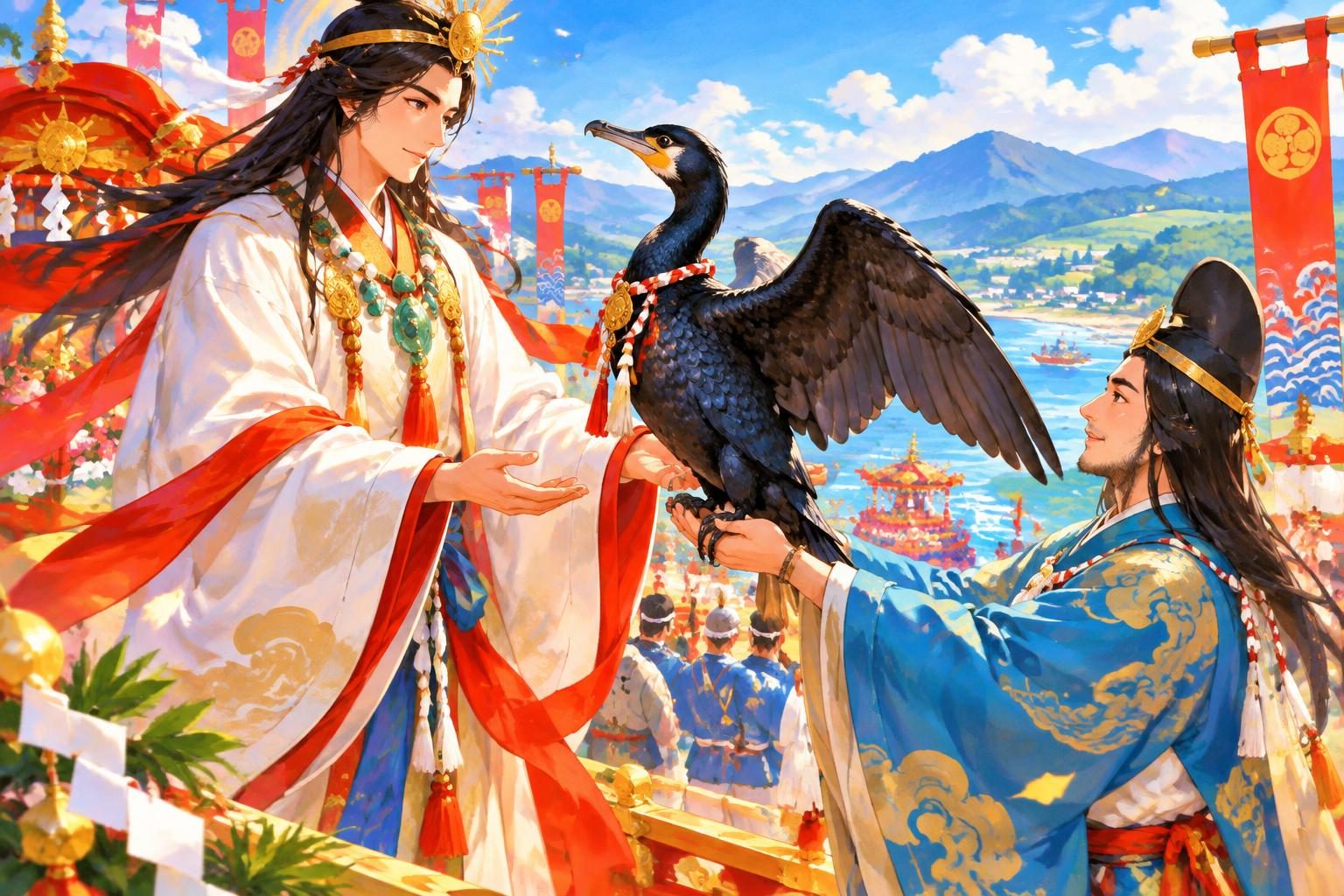
    Ōkuninushi receiving a cormorant from Mikadonushihiko in a vibrant festival setting.
    AI生成イメージ / AI-generated illustration (not a photograph of the actual place)

    Introduction to Ishikawa’s Umatsuri

    FACT: The Annual Event at Keta Taisha

    The Umatsuri is held every year on December 16 at Keta Taisha in Hakui, beginning at the early hour of 3 a.m. This event is recognized as a National Important Intangible Folk Cultural Property under the name “Keta no Umatsuri no Shūzoku.” The festival’s timing and designation highlight its cultural significance and the reverence with which it is regarded in Japan. The early morning start of the ceremony adds a mystical aura, as the gathering at this sacred shrine takes place under the cover of darkness, heightening the anticipation and spiritual atmosphere.

    Participants and visitors are drawn to the shrine’s serene environment, where the silence of the early hours is broken only by the sounds of the ritual. The timing of the festival is believed to enhance the connection with the spiritual world, as the veil between the human and divine realms is considered thinnest at this time. This creates a profound experience for those present, as they witness the unfolding of an ancient tradition that has been preserved through generations.

    The Mythological Origins at Keta Taisha

    LEGEND: Ōkuninushi and the Cormorant

    According to Shinto mythology, the origins of the Umatsuri are linked to the deity Ōkuninushi. When he arrived, a cormorant was presented to him by Mikadonushihiko, a deity associated with the area. This cormorant was used to divine future events, a practice that continues to this day during the festival. This legend underscores the deep spiritual roots of the Umatsuri and its connection to the divine. The story is a testament to the enduring power of myth in shaping cultural practices, where the cormorant serves as a bridge between the human and divine realms, offering insights into the future.

    In the context of the festival, the cormorant’s role is symbolic of guidance and prophecy. The mythological narrative enriches the cultural tapestry of the event, providing a backdrop that informs the ritual’s significance. The story of Ōkuninushi and the cormorant is often recounted by locals and shrine attendants, adding layers of meaning to the festival for both participants and observers.

    Keta-taisha torii (4989835388) - Keta-taisha
    “Keta-taisha torii (4989835388)” (Keta-taisha) by fredkatvox, CC BY 2.0, source, via Wikimedia Commons

    The Three-Day Journey of the Sacred Cormorant

    FACT: The Procession from Unoura to Hakui

    The festival begins with the capture of a cormorant in Unoura, Nanao. This bird is then carried by three “utoribe,” or cormorant bearers, on foot over a three-day journey to Keta Taisha in Hakui. This procession is a vital part of the ritual, symbolizing the connection between nature, the divine, and the community. The journey itself is a significant aspect of the festival, as it reflects the dedication and reverence of the participants who undertake this pilgrimage. The cormorant’s journey through the scenic landscapes of Ishikawa Prefecture is both a physical and spiritual passage, embodying the festival’s themes of endurance and faith.

    As the utoribe traverse the distance, they are often accompanied by local residents and visitors who join in the procession, creating a communal atmosphere. The journey is marked by moments of reflection and reverence, as the participants engage in chants and prayers, seeking blessings for the community. This shared experience fosters a sense of unity and continuity, linking the present with the past.

    The Pre-Dawn Ritual and Cormorant Divination

    FACT: The Ceremony at the Shrine

    Upon arrival at Keta Taisha, the cormorant is released before the altar. Its movements are closely observed to divine the fortune of the coming year. This divination process is a central element of the Umatsuri, reflecting the belief in the cormorant’s ability to communicate the will of the gods. After the divination, the cormorant is taken to the shore and released into the dark sky, symbolizing the return of the divine message to the heavens. This act of releasing the cormorant into the night sky is a symbolic gesture of letting go, trusting in the natural order and the guidance of the divine. The ceremony’s setting, amidst the tranquil and sacred environment of Keta Taisha, enhances the spiritual experience for both participants and observers.

    The ritual is conducted with great solemnity, as the gathered crowd watches in hushed anticipation. The movements of the cormorant are interpreted by the shrine priests, who offer insights into the community’s prospects for the coming year. This aspect of the festival is deeply rooted in tradition, with interpretations passed down through generations, maintaining a link to the past while looking to the future.

    Keta Taisha in Hakui, Ishikawa - Jan 2, 2015 - Snow in Ishikawa prefecture, Shinmon, Keta-taisha
    “Keta Taisha in Hakui, Ishikawa – Jan 2, 2015” (Snow in Ishikawa prefecture, Shinmon, Keta-taisha) by Haya_BS, CC BY-SA 2.0, source, via Wikimedia Commons

    Cultural Significance and National Designation

    FACT: Recognition as a Cultural Property

    The Umatsuri’s designation as a National Important Intangible Folk Cultural Property emphasizes its importance not only to the local community but also to Japan’s cultural heritage. This recognition ensures the preservation and continuation of the festival, allowing future generations to experience and appreciate this unique aspect of Japanese culture. The festival’s status as a cultural property highlights the value placed on traditional practices and the role they play in maintaining cultural identity and continuity. It also underscores the importance of safeguarding such traditions in the face of modernization and changing societal values.

    Efforts to preserve the Umatsuri involve collaboration between local authorities, cultural organizations, and the community. Educational programs and cultural exchanges are promoted to raise awareness and appreciation of the festival’s significance. This collective effort ensures that the Umatsuri remains a vibrant and integral part of Japan’s cultural landscape, celebrated and cherished by all who participate.

    Nearby Guide

    Access

    • Hakui Station (Hakui) — From JR Hakui Station, take a bus bound for Takahama or Togi. details
    Nearby sights

    • Irazu-no-Mori (Forbidden Forest) (Hakui) — A protected sacred forest behind the main shrine buildings, designated as a National Natural Monument. Visitors can view it from outside the shrine grounds, as entry is restricted to preserve its sanctity. details
    • Hakusan Shrine (Hakui) — A subsidiary shrine within the Keta Taisha complex, dedicated to the deity Kukurihime no Kami. It offers a serene environment for visitors seeking spiritual solace. details

    Ema wish plaques

    • Keta Taisha Shrine Ema (Hakui) — Traditional wooden plaques shaped like hearts and arrows, available at the shrine for visitors to write wishes, especially popular among those seeking love-related blessings. details
    Locator map of Japan: Hakui, Ishikawa
    Legend site: Hakui, Ishikawa — Source: Map of Japan with highlight on 17 Ishikawa prefecture.svg; Map: Lincun, CC BY-SA 3.0, via Wikimedia Commons

    Sources

    About the author

    JAPAN ESSENCE Editorial Team
    Our mission is to bring you Japan’s legends, myths, festivals and living traditions, through both historical fact and the stories passed down over generations.

  • Tracing Kusunoki Masashige: Exploring Kanshinji Temple in Kawachinagano

    Tracing Kusunoki Masashige: Exploring Kanshinji Temple in Kawachinagano

    In Kawachinagano, Osaka Prefecture, lies a historical treasure trove where the legendary samurai Kusunoki Masashige is said to have spent his formative years. This area, steeped in medieval history, offers visitors a glimpse into the past through its temples and legends.

    観心寺にて 楠木正成銅像 Figure of Kusunoki Masashige 2013.3.15
    “観心寺にて 楠木正成銅像 Figure of Kusunoki Masashige 2013.3.15 – panoramio” by Nankou Oronain (as36…, CC BY-SA 3.0, via Wikimedia Commons

    Introduction to Kawachinagano and Medieval Osaka

    Kawachinagano, located in Osaka Prefecture, is a city rich in history and cultural heritage. It is renowned for its association with Kusunoki Masashige, a revered samurai known for his loyalty and strategic prowess during Japan’s Kamakura period. The city’s historical sites, particularly Kanshinji Temple, offer a window into the life and times of this legendary figure. Visitors to Kawachinagano can immerse themselves in the stories and structures that have withstood the test of time, reflecting the city’s importance as a cultural and historical hub.

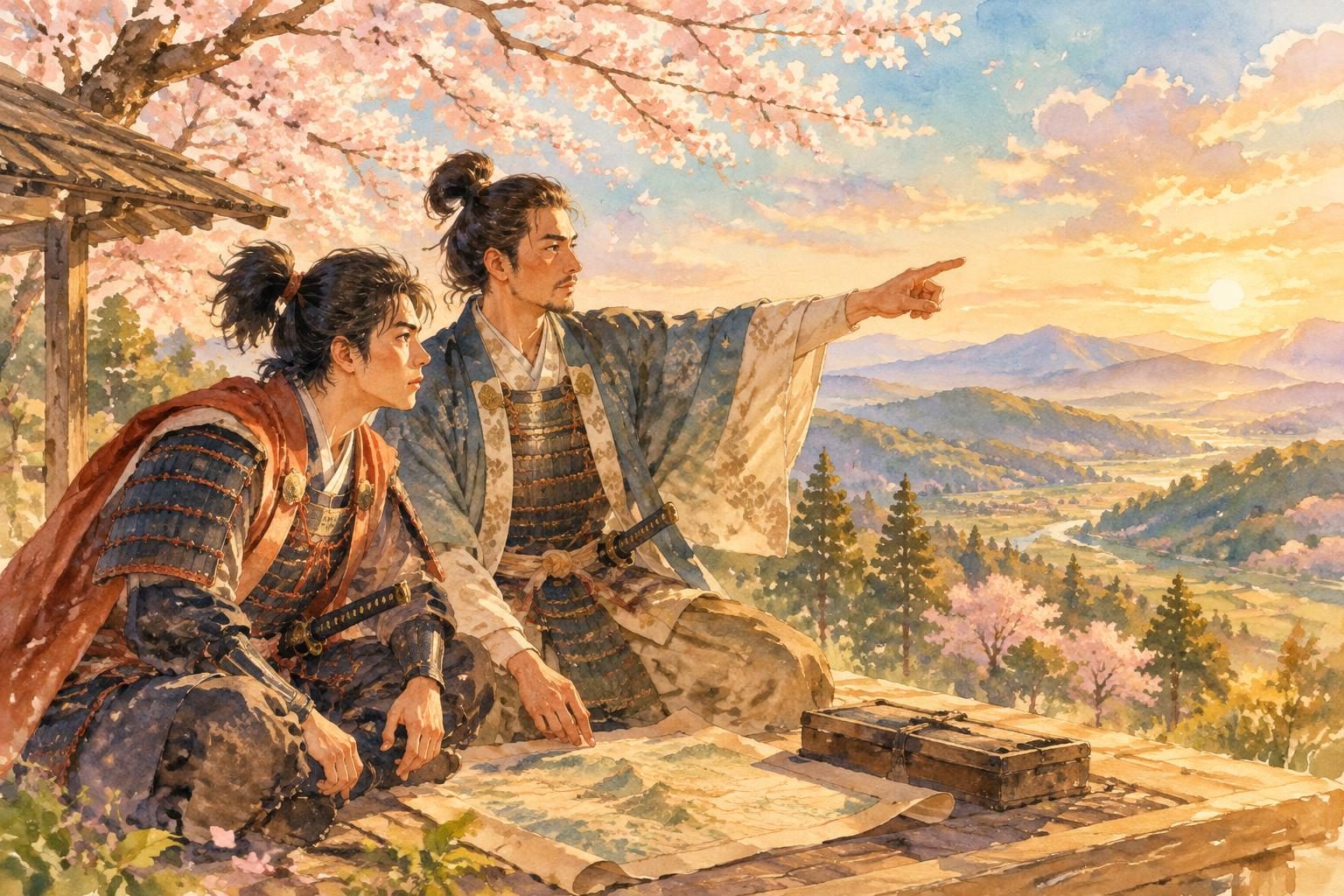
    Kusunoki Masashige training with Oe Tokichika in a serene, cherry-blossom-filled landscape.
    AI生成イメージ / AI-generated illustration (not a photograph of the actual place)

    Kusunoki Masashige: Childhood Studies at Kanshinji’s Chuin Sub-Temple

    FACT: Academic and Religious Education

    According to historical records, Kusunoki Masashige is said to have pursued his early education at Kanshinji’s Chuin sub-temple in Kawachinagano. From the ages of 8 to 15, he studied Buddhism and various academic disciplines, laying the foundation for his future as a strategic military leader. Kanshinji Temple, located at 475 Teramoto, remains a significant site for those interested in the samurai’s early life. The temple complex offers a serene environment where visitors can reflect on the intellectual and spiritual training that shaped Masashige’s character and destiny.

    The education Masashige received at Kanshinji was not merely academic; it was deeply intertwined with the spiritual teachings of Buddhism. This blend of intellectual and spiritual growth is believed to have instilled in him a profound sense of duty and honor, which later defined his actions on the battlefield. The temple’s tranquil setting, with its traditional architecture and peaceful gardens, provides a backdrop that allows visitors to imagine the young Masashige in his formative years, absorbing the teachings that would guide him throughout his life.

    FACT: The Significance of Kanshinji Temple

    Kanshinji Temple is not only a place of religious importance but also a cultural landmark that embodies the spirit of the era. The temple’s architecture and layout provide a glimpse into the design aesthetics of the time, characterized by simplicity and harmony with nature. As a family shrine for the Kusunoki lineage, Kanshinji serves as a living testament to the enduring legacy of one of Japan’s most celebrated samurai. Visitors can explore the temple grounds, which house several historical relics and offer a tangible connection to the past.

    The temple’s role as a family shrine underscores its importance in the narrative of Kusunoki Masashige. It serves as a reminder of the deep familial ties and the sense of lineage that were integral to the samurai identity. The relics housed within the temple, including artifacts and documents, provide insights into the life and times of Masashige, allowing visitors to engage with history on a personal level. The serene atmosphere of Kanshinji invites reflection and offers a space for contemplation, making it a meaningful stop for those interested in Japan’s rich cultural tapestry.

    Kanshinji temple003 - Taken with Sony DSC-P8, Buildings of Kanshinji
    “Kanshinji temple003” (Taken with Sony DSC-P8, Buildings of Kanshinji) by Morocco, CC BY-SA 4.0, source, via Wikimedia Commons

    Mastering Military Strategy at the Oe Tokichika Residence Site

    LEGEND: Training Under a Master Tactician

    Local legend holds that during his childhood, Kusunoki Masashige honed his military strategy skills under the guidance of Oe Tokichika, a famed tactician who resided in the Kagata area of Kawachinagano. This mentorship is said to have played a crucial role in shaping Masashige’s tactical acumen, which would later become legendary in battles against the Kamakura shogunate. According to the stories, Oe Tokichika’s teachings were instrumental in developing Masashige’s strategic mind, allowing him to devise innovative tactics that would eventually challenge and outsmart his adversaries.

    The stories of Masashige’s training with Tokichika emphasize the importance of mentorship in the samurai tradition. Tokichika’s influence is portrayed as pivotal, providing Masashige with not only the technical skills of warfare but also the strategic thinking necessary to outmaneuver opponents. The Kagata area, where these teachings are said to have occurred, remains a point of interest for those exploring the rich tapestry of Kawachinagano’s history. This narrative highlights the blend of intellect and martial skill that defined the samurai ethos.

    LEGEND: The Influence of Oe Tokichika

    The influence of Oe Tokichika on Masashige’s military education is a narrative that underscores the importance of mentorship in the samurai tradition. According to legend, Tokichika imparted not only strategic knowledge but also the values of loyalty and honor that Masashige would carry throughout his life. The Kagata area, where these teachings are said to have taken place, remains a point of interest for those exploring the rich tapestry of Kawachinagano’s history.

    These legends suggest that Tokichika’s teachings went beyond mere tactics, embedding in Masashige a code of ethics that would guide his decisions and actions. The emphasis on loyalty and honor reflects the broader cultural values of the samurai class, which prized these traits above all else. Visitors interested in the samurai legacy can explore the Kagata area, imagining the young Masashige absorbing these lessons that would later define his legendary status.

    Exploring Kanshinji Temple: Family Shrine and Historical Relics

    Kanshinji Temple, a key site in Kawachinagano, serves as a family shrine for the Kusunoki lineage. Visitors can explore the temple grounds, which house several historical relics and offer a serene environment for reflection. The temple’s architectural style reflects the period’s design, providing a tangible connection to the past. The temple complex invites visitors to wander through its peaceful gardens and halls, where the echoes of history are palpable in every corner.

    The temple’s gardens and halls are designed to evoke a sense of tranquility and introspection. The layout and design elements are intentionally crafted to harmonize with the natural surroundings, a hallmark of traditional Japanese architecture. As visitors walk through the temple grounds, they can sense the historical significance of the site and its role in the narrative of Kusunoki Masashige. The presence of historical relics further enriches the experience, offering a direct link to the past and the enduring legacy of the samurai era.

    Head Mound of Lord Kusunoki, Kanshin-ji temple - Mar 31, 2024 - Stone signs in Osaka prefecture
    “Head Mound of Lord Kusunoki, Kanshin-ji temple – Mar 31, 2024” (Stone signs in Osaka prefecture) by dlovins99, CC0, source, via Wikimedia Commons

    The Unfinished Tatekake-no-to Pagoda and Kubizuka Burial Mound

    Within the Kanshinji Temple complex, the Tatekake-no-to Pagoda stands as an unfinished testament to the area’s historical significance. This pagoda, although never completed, symbolizes the ambitions and challenges of the era. Nearby, the Kubizuka burial mound is said to hold the remains of Kusunoki Masashige, adding a layer of mystery and reverence to the site. These landmarks invite contemplation on the enduring legacy of the samurai era, offering a poignant reminder of the impermanence and resilience of human endeavors.

    The unfinished pagoda and the burial mound serve as powerful symbols of the historical and cultural narratives that define Kawachinagano. The pagoda’s incomplete state invites reflection on the ambitions and struggles of the past, while the burial mound connects visitors to the legendary figure of Masashige. These sites offer a unique opportunity to engage with the history and legends of the region, providing a deeper understanding of the samurai legacy and its impact on Japanese culture.

    Planning Your Visit to Kawachinagano’s Japan Heritage Sites

    Visitors to Kawachinagano can explore its rich history by visiting Kanshinji Temple and other nearby historical sites. While specific visiting hours and fees are not detailed in the current sources, it is advisable to check the official website for up-to-date information on access and any special events. The journey to Kawachinagano is not just a trip through space but a voyage through time, where the stories of the past come alive against the backdrop of the present.

    Nearby Guide

    Nearby sights

    • Nagano Park (Kawachinagano) — A park located at the foot of the Kongo mountain range, offering natural landscapes and recreational areas. details

    Where to stay

    • Natural Hot Spring Ikoi no Yado Kawachinaganoso (Kawachinagano) — A historic hot spring inn offering natural magnesium and sodium chloride spring baths, seasonal kaiseki cuisine, and various facilities for relaxation. official site

    Where to eat

    • Kawachinagano City Tourist Information Center (Kawachinagano) — Offers local products and information about local eateries and specialties. Bicycle rentals are also available for exploring the city. official site
    Locator map of Japan: Kawachinagano, Osaka
    Legend site: Kawachinagano, Osaka — Source: Map of Japan with highlight on 27 Osaka prefecture.svg; Map: Lincun, CC BY-SA 3.0, via Wikimedia Commons

    Sources

    About the author

    JAPAN ESSENCE Editorial Team
    Our mission is to bring you Japan’s legends, myths, festivals and living traditions, through both historical fact and the stories passed down over generations.

  • Awa Yoshikono: The Rhythm Behind Tokushima’s Awa Odori

    Awa Yoshikono: The Rhythm Behind Tokushima’s Awa Odori

    Every summer, the streets of Tokushima in Tokushima Prefecture come alive with the vibrant sounds and movements of the Awa Odori festival. At the heart of this celebration is the traditional dance-song known as ‘Awa Yoshikono’, a musical piece that has become synonymous with the festival itself.

    Awa Odori in Tokushima, Japan [2008].
    “Awa-odori 2008 Tokushima” by Rosino, CC BY-SA 2.0, via Wikimedia Commons

    What Is Awa Yoshikono?

    FACT: The Dance-Song Tradition

    Awa Yoshikono is a traditional dance-song that plays a central role in the Awa Odori festival, celebrated annually in Tokushima. This lively piece is characterized by its rhythmic two-beat pattern, which guides the dancers as they move through the streets. The song’s lyrics and melody are deeply rooted in the cultural heritage of Tokushima, reflecting the region’s historical and social narratives. This connection to the past is one reason why the song remains a beloved part of the festival, drawing both locals and tourists to participate in the joyous celebration.

    FACT: Cultural Significance

    The cultural significance of Awa Yoshikono extends beyond its role in the festival. It embodies the spirit of the Awa Odori, which is not only a dance but a communal experience that brings people together. The song’s enduring popularity highlights the importance of preserving traditional arts in modern society. Through Awa Yoshikono, the people of Tokushima continue to celebrate their history and cultural identity, passing it on to future generations.

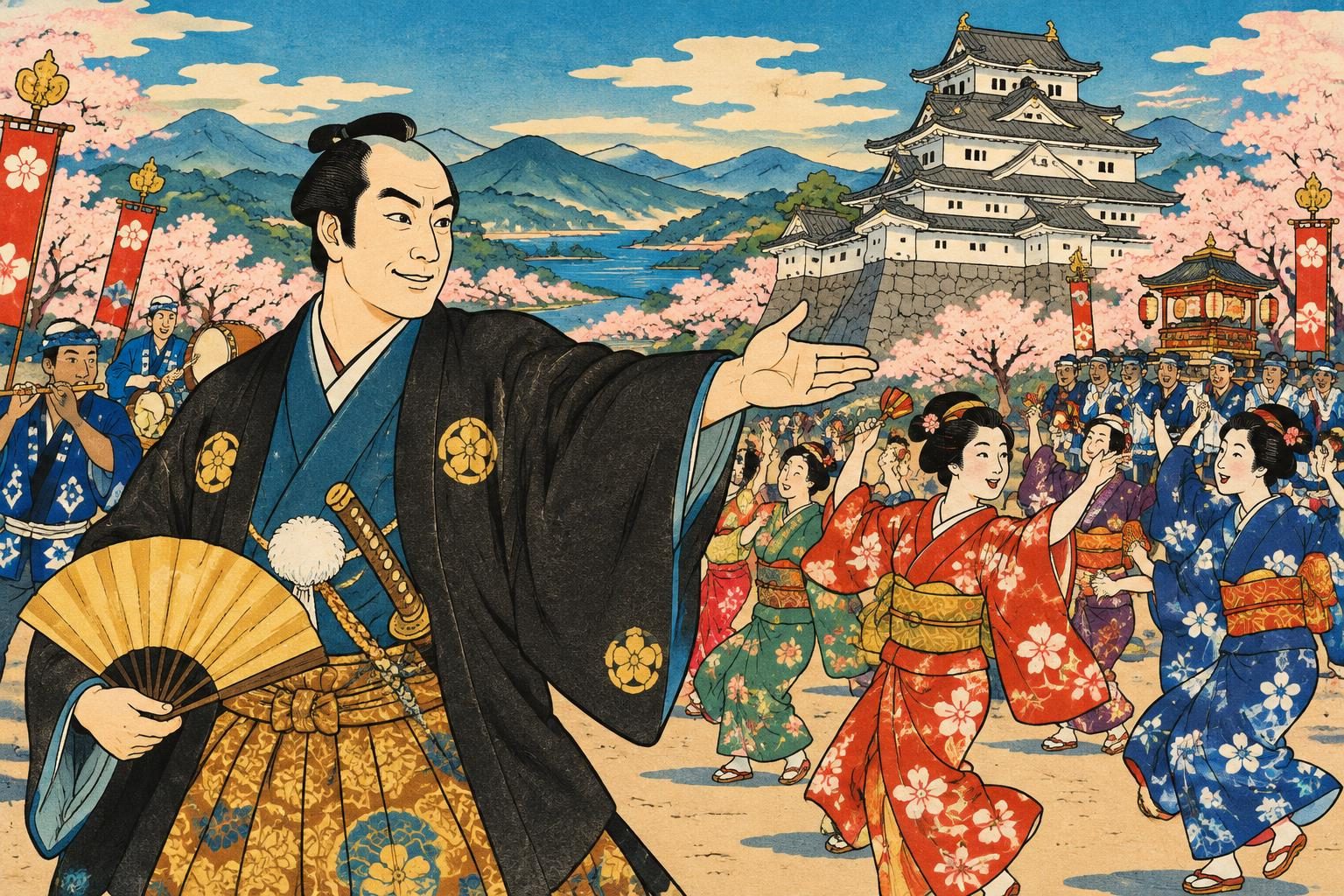
    Lord Hachisuka Iemasa invites townspeople to a festival dance, set in vibrant Tokushima with dancing figures under a clear sk
    AI生成イメージ / AI-generated illustration (not a photograph of the actual place)

    The Musical Instruments and Two-Beat Rhythm

    FACT: Instruments of Awa Odori

    The music of Awa Yoshikono is performed using traditional Japanese instruments, including the shamisen, taiko drums, and flutes. These instruments create a distinctive sound that is both energetic and inviting, encouraging participants and spectators alike to join in the festivities. The shamisen, a three-stringed instrument, adds a unique texture to the music, while the taiko drums provide a powerful, resonant beat that echoes through the streets. Flutes add a melodic layer, enhancing the overall harmony and creating a soundscape that is truly captivating.

    FACT: The Two-Beat Rhythm

    The two-beat rhythm is a hallmark of the Awa Odori, providing a simple yet infectious tempo that is easy to follow. This rhythm is integral to the dance, as it sets the pace for the dancers’ movements. The simplicity of the beat allows for a wide range of expressions, from the graceful to the exuberant, making it accessible to dancers of all skill levels. The rhythm’s repetitive nature also creates a trance-like state, drawing both participants and onlookers into the celebration.

    阿波おどり会館 (34947062726) - Awa Dance Memorial Hall, Benches with roofs in Japan
    “阿波おどり会館 (34947062726)” (Awa Dance Memorial Hall, Benches with roofs in Japan) by Wei-Te Wong from Taipei City, Taiwan, Republic of China, CC BY-SA 2.0, source, via Wikimedia Commons

    Edo-Period Roots: From Yoshikono Bushi to Awa Odori

    FACT: Historical Origins

    The origins of Awa Yoshikono can be traced back to the Edo period, when the Yoshikono Bushi folk song was first popularized. Over time, this song evolved into the Awa Odori festival music we know today. The transition from Yoshikono Bushi to Awa Yoshikono reflects the broader cultural shifts that occurred in Japan during this era, as local traditions were adapted to fit the changing social landscape. This evolution showcases the dynamic nature of cultural practices, which can transform and thrive even as societies change.

    FACT: Influence of the Edo Period

    During the Edo period, Japan experienced significant cultural and social developments, with the arts flourishing under the relatively peaceful conditions of the time. The Yoshikono Bushi, like many folk songs, served as a form of entertainment and storytelling, preserving local histories and customs. As the song evolved into Awa Yoshikono, it retained its narrative essence, continuing to tell the story of Tokushima’s people and their way of life.

    The Legend of Tokushima Castle and Lord Hachisuka Iemasa

    LEGEND: The Castle-Completion Story

    According to local legend, the origins of the Awa Odori festival are linked to the completion of Tokushima Castle by Lord Hachisuka Iemasa. It is said that upon the castle’s completion, Lord Iemasa invited the townspeople to celebrate with a grand dance party, which eventually evolved into the Awa Odori festival. This story, while not historically verified, is a cherished part of the festival’s lore and adds a layer of historical intrigue to the event. The tale captures the imagination of festival-goers, offering a romanticized view of the festival’s beginnings and highlighting the importance of community celebration in Tokushima’s history.

    LEGEND: Variations of the Story

    While the story of Lord Hachisuka Iemasa is the most popular, there are variations of the legend that add different perspectives to the festival’s origins. Some accounts suggest that the festival began as a spontaneous celebration by the townspeople, independent of any official decree. Others propose that the dance was originally a form of prayer for a bountiful harvest or good fortune. These variations illustrate the rich tapestry of oral tradition in Tokushima, where stories are passed down through generations, each adding its own flavor to the narrative.

    ヘンロ小屋 眉山 阿波おどり会館前 Oct 27, 2024 - Awa Dance Memorial Hall, Huts in Japan
    “ヘンロ小屋 眉山 阿波おどり会館前 Oct 27, 2024” (Awa Dance Memorial Hall, Huts in Japan) by mrpbps, CC BY 2.0, source, via Wikimedia Commons

    Experiencing the Tradition Year-Round in Tokushima

    FACT: Awa Odori Kaikan

    Visitors to Tokushima can experience the spirit of Awa Odori year-round at the Awa Odori Kaikan. This museum and performance hall offers exhibitions and live performances that showcase the rich history and vibrant energy of the festival. Located in central Tokushima, the Kaikan is a must-visit for anyone interested in learning more about this unique cultural tradition. The facility provides an immersive experience, allowing visitors to engage with the festival’s music and dance in an intimate setting. Check the official website for current hours, fees, and access information.

    Nearby Guide

    Access

    • JR Tokushima Station (Tokushima) — The main railway station in Tokushima City, approximately a 10-minute walk from the Awa Odori Kaikan. official site
    • Tokushima Bus Terminal (Tokushima) — Located near JR Tokushima Station, offering bus services to various destinations within Tokushima Prefecture. official site

    Nearby sights

    • Awa Odori Kaikan (Tokushima) — A museum and performance hall dedicated to the Awa Odori dance, offering year-round exhibitions and live performances. official site
    • Naruto Whirlpools (Naruto) — Natural tidal whirlpools in the Naruto Strait, best viewed from the Onaruto Bridge or via sightseeing boats. official site

    Where to stay

    • Hotel Sunroute Tokushima (Tokushima) — A hotel located near JR Tokushima Station, offering convenient access to the city’s attractions. official site
    • Hotel Clement Tokushima (Tokushima) — A hotel situated near JR Tokushima Station, providing comfortable accommodations for travelers. official site

    Where to eat

    • Tokushima Ramen (Tokushima) — A local specialty featuring a soy-based broth with a raw egg on top, often served with pork and green onions. official site
    • Katsuobushi (Dried Bonito) Products (Tokushima) — Tokushima is known for its high-quality katsuobushi, used in various dishes and available in local shops. official site
    Locator map of Japan: Tokushima, Tokushima
    Legend site: Tokushima, Tokushima — Source: Map of Japan with highlight on 36 Tokushima prefecture.svg; Map: Lincun, CC BY-SA 3.0, via Wikimedia Commons

    Sources

    About the author

    JAPAN ESSENCE Editorial Team
    Our mission is to bring you Japan’s legends, myths, festivals and living traditions, through both historical fact and the stories passed down over generations.

  • Oji Inari Fox Procession: Tokyo’s Mystical New Year’s Eve Tradition

    Oji Inari Fox Procession: Tokyo’s Mystical New Year’s Eve Tradition

    In Kita Ward, Tokyo, the Oji Inari Fox Procession transforms New Year’s Eve into a magical spectacle, where tradition, legend, and community spirit converge under the glow of lanterns and fox masks.

    A scene from the 32nd Kitsune no Gyōretsu parade in Ōji, Tokyo, about to reach Ōji Inari Shrine.
    “Kitsune no Gyoretsu (2024)” by Fred Cherrygarden, CC BY-SA 4.0, via Wikimedia Commons

    Introduction to Tokyo’s New Year’s Eve Fox Procession

    FACT: The Modern Event

    The Oji Inari Fox Procession is a captivating event held annually on New Year’s Eve in Kita Ward, Tokyo. Participants gather at Shozoku Inari Shrine and proceed to Oji Inari Shrine, donning fox masks and carrying lanterns. Kita Ward’s general event guide lists a midnight departure from Shozoku Inari Shrine. The organizer’s detailed timetable currently available is for the previous 2025–26 event, not the forthcoming 2026–27 event; check the official event website for this year’s departure and arrival times. The event is a vibrant celebration of cultural heritage, drawing locals and tourists alike to witness this unique spectacle.

    As the clock strikes midnight, the streets of Kita Ward come alive with the flickering lights of lanterns and the soft rustle of fox masks. The procession is not just a visual delight; it is a sensory experience that immerses participants and onlookers in the rich tapestry of Japanese folklore. The fox masks, a central element of the event, symbolize the mythical kitsune, or fox spirits, believed to be messengers of the deity Inari. The lanterns, glowing softly in the night, guide the way as participants make their pilgrimage to the shrine, echoing the spiritual journey of the foxes in the legend.

    Illustration of foxes in human form in traditional attire, walking through a vibrant festival in Kita Ward.
    AI生成イメージ / AI-generated illustration (not a photograph of the actual place)

    The Edo-Period Legend of the Kanto Fox Gathering

    LEGEND: The Foxes of Oji

    According to local legend, foxes from all over the Kanto region would gather at Oji on New Year’s Eve to pay homage to Inari, the deity of rice, fertility, and prosperity. These foxes, revered as messengers of Inari, were believed to disguise themselves as humans, wearing straw hats and cloaks to blend in with the villagers. The tale captures the imagination with its blend of mysticism and folklore, reflecting the deep cultural significance of foxes in Japanese mythology.

    The legend speaks of a time when the boundary between the human and spirit worlds was thin, allowing the foxes to mingle among people. This gathering was not only a tribute to Inari but also a celebration of the foxes’ cunning and intelligence, qualities highly esteemed in Japanese culture. The imagery of foxes donning human attire adds a whimsical element to the story, suggesting a world where the ordinary and the extraordinary coexist.

    Oji Inari Shrine 201712 - Haiden, Oji Inari Shrine
    “Oji Inari Shrine 201712” (Haiden, Oji Inari Shrine) by Tak1701d, CC BY-SA 3.0, source, via Wikimedia Commons

    Utagawa Hiroshige and the Foxfires of Oji

    FACT: Artistic Depiction

    The legend of the fox gathering was immortalized in the ukiyo-e woodblock print by Utagawa Hiroshige, titled “Foxfires on New Year’s Eve at Oji.” This artwork, part of his “One Hundred Famous Views of Edo” series, depicts the foxes gathering under the glow of mysterious foxfires, adding an artistic dimension to the folklore. Hiroshige’s depiction has played a significant role in popularizing the legend, ensuring its place in both cultural memory and visual art history.

    Hiroshige’s work is renowned for its ability to capture the essence of Edo-period Japan, and his portrayal of the foxfires at Oji is no exception. The print vividly illustrates the ethereal glow of the foxfires, believed to be the spiritual energy of the foxes, illuminating the night. This artistic representation not only preserves the legend but also invites viewers to explore the mystical aspects of Japanese culture, where nature and the supernatural are intricately intertwined.

    Shozoku Inari Shrine and Oji Inari Shrine: The Sacred Route

    FACT: Historical and Cultural Significance

    Shozoku Inari Shrine and Oji Inari Shrine are pivotal to the fox procession tradition. Shozoku Inari Shrine, located near the historical site of the ‘Shōzoku Enoki’ tree, serves as the starting point of the procession. Oji Inari Shrine, the procession’s destination, is one of the oldest Inari shrines in Tokyo, deeply rooted in the local community’s spiritual life. These shrines not only host the procession but also symbolize the enduring connection between the people and the divine, as mediated by the foxes.

    Visitors to these shrines can feel the weight of history and tradition that permeates the air. The Shozoku Inari Shrine, with its proximity to the legendary ‘Shōzoku Enoki’ tree, offers a glimpse into the past, where the foxes were said to have gathered. Oji Inari Shrine, with its ancient architecture and serene surroundings, stands as a testament to the enduring legacy of Inari worship in the region. Together, these shrines form a sacred route that not only guides the fox procession but also connects the community to its spiritual roots.

    Oji Inari Shrine 201802 - Oji Inari Shrine
    “Oji Inari Shrine 201802” (Oji Inari Shrine) by Tak1701d, CC BY-SA 3.0, source, via Wikimedia Commons

    The Modern Revival of the Kitsune no Gyoretsu

    FACT: Community and Celebration

    The modern Kitsune no Gyoretsu, or Fox Procession, was revived to celebrate and preserve the rich cultural heritage of the Kita Ward. The event is organized with the support of local communities and cultural organizations, aiming to foster a sense of unity and pride. Participants of all ages join the procession, embodying the spirit of the foxes with their masks and lanterns, creating a lively and inclusive celebration that bridges past and present.

    This revival is more than just a reenactment; it is a living tradition that breathes new life into the ancient legend. The procession serves as a reminder of the community’s resilience and commitment to preserving its cultural identity. Through the collective efforts of residents, cultural enthusiasts, and local authorities, the Kitsune no Gyoretsu has become a cherished event that not only entertains but also educates, offering a window into the spiritual and cultural dimensions of Japanese society.

    How Travelers Can Experience Oji’s Folklore in Kita Ward

    Travelers visiting Kita Ward during New Year’s Eve can immerse themselves in the mystical atmosphere of the Oji Inari Fox Procession. Watching the festivities and joining the organized procession are different. As of November 5, 2026, the organizer’s detailed participation rules are still labeled for the previous 2025–26 event. Before joining, check the organizer’s participation information for the applicable registration, fees, and clothing requirements; do not assume participation is free or available without an application. The procession offers a unique opportunity to experience Japanese folklore firsthand, surrounded by the vibrant community spirit of Tokyo.

    For those eager to delve deeper into the lore of the foxes, participating in the procession provides a rare chance to step into a world where myth and reality merge. As you walk alongside locals and fellow travelers, the stories of the foxes come alive, weaving a narrative that is both enchanting and enlightening. Whether you are a seasoned traveler or a first-time visitor, the Oji Inari Fox Procession promises an unforgettable journey into the heart of Japan’s cultural heritage.

    Nearby Guide

    Access

    • Ōji Station (Tokyo) — From Ōji Station (JR Keihin-Tohoku Line North Exit), it’s an 8-minute walk to the shrine. official site

    Nearby sights

    • Asukayama Park (Tokyo) — A historic park known for its cherry blossoms and three museums: the Kita City Asukayama Museum, the Paper Museum, and the Shibusawa Memorial Museum. Kita Ward tourism
    • Ōji Shrine (Tokyo) — A historic shrine established during the Kamakura period, known for its annual dengaku dance performances in August. official site

    Where to eat

    • Toden Arakawa Line Street Food Stalls (Tokyo) — Explore local street food vendors along the Toden Arakawa Line, offering a variety of traditional Japanese snacks. details
    Locator map of Japan: Kita Ward, Tokyo
    Legend site: Kita Ward, Tokyo — Source: Map of Japan with highlight on 13 Tokyo prefecture.svg; Map: Lincun, CC BY-SA 3.0, via Wikimedia Commons

    Sources

    About the author

    JAPAN ESSENCE Editorial Team
    Our mission is to bring you Japan’s legends, myths, festivals and living traditions, through both historical fact and the stories passed down over generations.