Hiroshima Castle, located in Hiroshima, Hiroshima Prefecture, stands as a testament to Japan’s rich history and cultural heritage. As autumn paints the landscape in vibrant hues, the castle becomes a focal point for visitors eager to explore its historical significance and seasonal events.


Introduction to Hiroshima Castle in Autumn
FACT: The Historical Significance of Hiroshima Castle
Hiroshima Castle, also known as the Carp Castle, was originally constructed in 1589 by Mōri Terumoto, a prominent daimyō of the Sengoku period. The castle was strategically built on the Ōta River Delta, which provided natural defenses and facilitated trade and communication. The castle served as the political and economic center of the Hiroshima Domain during the Edo period. Although the original structure was destroyed during World War II, the main keep was reconstructed in 1958 and now houses a museum dedicated to the history and culture of Hiroshima.

The Foundations: Mōri Terumoto and the Ōta River Delta
FACT: Mōri Terumoto’s Role in Establishing Hiroshima Castle
Mōri Terumoto, a member of the influential Mōri clan, played a crucial role in the establishment of Hiroshima Castle. His decision to build the castle on the Ōta River Delta was driven by the strategic advantages the location offered. The delta’s waterways provided natural protection and facilitated the movement of goods and troops, making it an ideal site for a castle. Under Terumoto’s leadership, Hiroshima Castle became a symbol of the Mōri clan’s power and influence in the region.
FACT: The Strategic Importance of the Ōta River Delta
The choice of the Ōta River Delta as the location for Hiroshima Castle was not merely a matter of convenience. The delta’s natural defenses were a significant factor in the decision. The waterways surrounding the delta acted as a moat, deterring potential invaders and providing a natural barrier against attacks. Additionally, the location facilitated trade and communication, allowing the Mōri clan to exert influence over the surrounding regions. This strategic positioning helped to establish Hiroshima as a vital hub during the Edo period.


The Annual Hiroshima Castle Chrysanthemum Exhibition
FACT: A Celebration of Autumn’s Beauty
Each autumn, Hiroshima Castle hosts the Chrysanthemum Exhibition, a vibrant display of chrysanthemums in various shapes and colors. This annual event attracts visitors from all over Japan and beyond, who come to admire the intricate floral arrangements and celebrate the beauty of the season. The exhibition is held within the castle grounds, providing a picturesque backdrop of historic architecture and autumn foliage. Visitors can enjoy the stunning displays while learning about the cultural significance of chrysanthemums in Japanese tradition.
FACT: The Cultural Significance of Chrysanthemums
Chrysanthemums hold a special place in Japanese culture, symbolizing longevity and rejuvenation. The flower is often associated with the Imperial Family and is a common motif in traditional Japanese art and design. During the Chrysanthemum Exhibition at Hiroshima Castle, visitors can witness the artistry involved in cultivating and arranging these flowers, which are displayed in elaborate forms and colors. The event not only highlights the beauty of the season but also offers a deeper appreciation of this iconic flower’s role in Japanese heritage.
The Legacy of Mōri Motonari and the Three Arrows Legend
LEGEND: The Tale of the Three Arrows
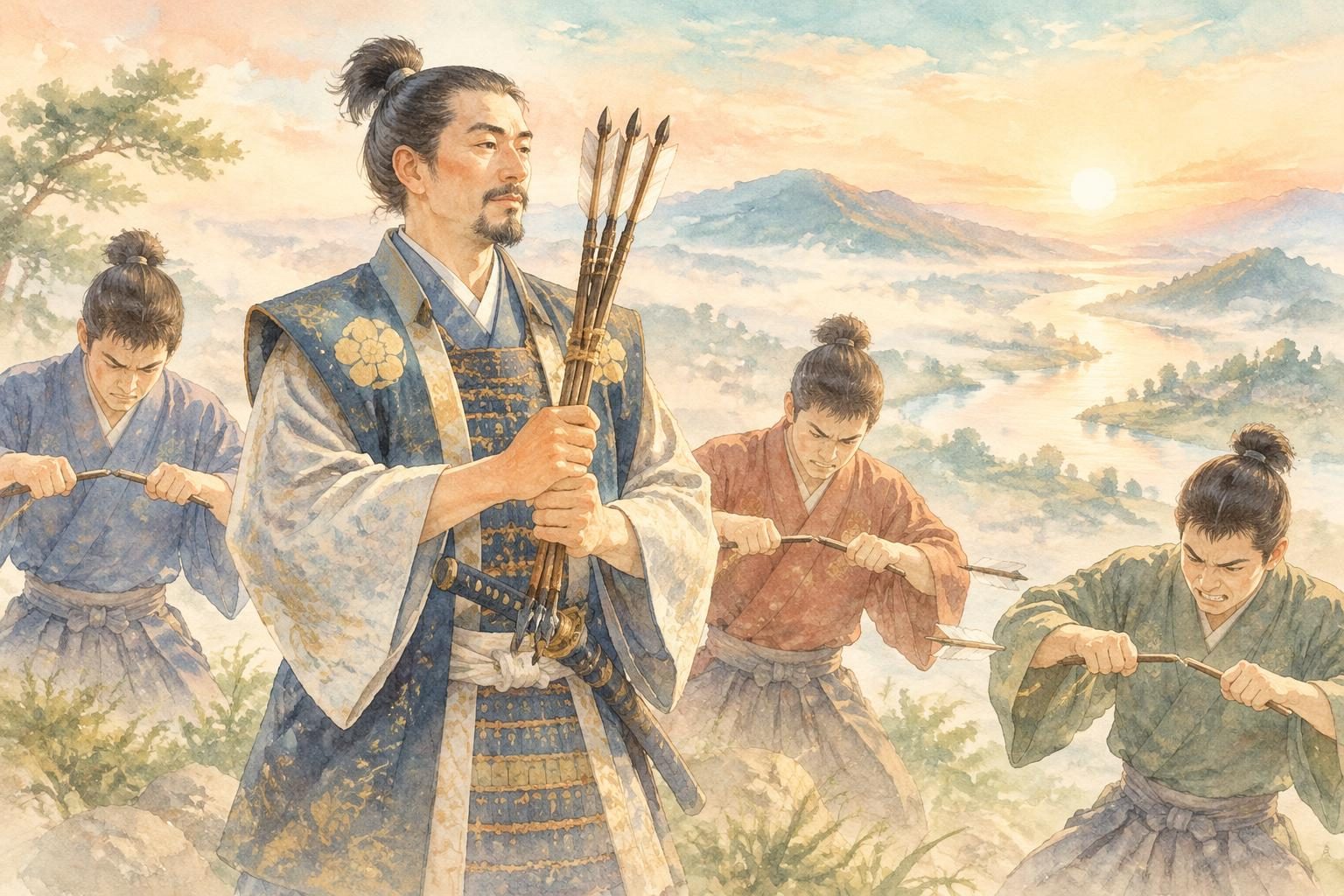
According to local tradition, Mōri Motonari, the grandfather of Mōri Terumoto, is famous for the legend of the Three Arrows. The story goes that Motonari, seeking to teach his sons the importance of unity, handed each of them an arrow and asked them to break it. Each son easily broke their single arrow. Motonari then handed them three arrows bundled together, which they could not break. This lesson in strength through unity became a guiding principle for the Mōri clan and is still recounted in the region today.
LEGEND: Variants of the Three Arrows Story
The legend of the Three Arrows has several variations, each emphasizing the theme of unity. In some versions, it is said that Motonari’s demonstration was not just a lesson for his sons but a strategic message to his retainers and allies. The story has been passed down through generations, often used to illustrate the power of collective strength in overcoming challenges. While the core message remains the same, these variations highlight different aspects of leadership and loyalty within the Mōri clan.


Inside the Reconstructed Keep and Museum
FACT: Exploring the Museum’s Exhibits
The reconstructed main keep of Hiroshima Castle serves as a museum that offers visitors a glimpse into the history and culture of the area. The museum’s exhibits include samurai armor, historical artifacts, and interactive displays that provide insight into the daily life of the castle’s inhabitants. Visitors can also enjoy panoramic views of the city and surrounding landscape from the top floor of the keep, making it a popular spot for photography enthusiasts.
FACT: Highlights of the Museum Experience
Among the museum’s highlights are the displays of samurai armor and weaponry, which offer a tangible connection to the warriors who once defended the castle. Interactive exhibits allow visitors to engage with the history of Hiroshima Castle, providing context and depth to the artifacts on display. The top floor of the keep offers breathtaking views of Hiroshima, especially during autumn when the city is awash with color. This combination of historical education and scenic beauty makes the museum a must-visit for those exploring Hiroshima Castle.
Planning Your Autumn Visit to Ninomaru and Beyond
FACT: Exploring the Castle Grounds
In addition to the main keep, the Hiroshima Castle grounds include the Ninomaru, or second circle of defense, which offers a peaceful setting for a leisurely stroll. The Ninomaru is home to a variety of trees and plants that showcase the beauty of each season, particularly in autumn when the leaves turn vibrant shades of red and gold. Visitors can also explore the surrounding area, which includes the Hiroshima Gokoku Shrine and various walking paths that provide a deeper understanding of the castle’s historical context.
FACT: Discovering the Ninomaru’s Natural Beauty
The Ninomaru area of Hiroshima Castle is a haven for nature lovers, especially during autumn. The vibrant foliage provides a stunning contrast to the historic stone walls and structures, creating a picturesque setting for photography and relaxation. Walking paths meander through the grounds, offering visitors a chance to immerse themselves in the tranquil beauty of the season. The Hiroshima Gokoku Shrine, located nearby, adds a spiritual dimension to the visit, with its serene atmosphere and historical significance.
Nearby Guide
Access
- Hiroshima Station (Hiroshima) — Hiroshima Station is the main railway station in Hiroshima, offering access to various local and regional destinations. From Hiroshima Station, you can take the Hiroshima Sightseeing Loop Bus (Meipuru-pu) to reach Hiroshima Castle. Alternatively, the castle is a ten-minute walk from Kamiyacho-nishi details.
Nearby sights
- Hiroshima Castle (Hiroshima) — Built in 1589 by Mōri Terumoto, Hiroshima Castle, also known as the Carp Castle, is a historic flatland castle constructed during the transition from the Azuchi-Momoyama to the Edo period. The main keep was rebuilt in 1958 and now serves as a museum dedicated to the history, folklore, and natural hi official site.
- Kōriyama Castle Ruins (Akitakata) — Kōriyama Castle, associated with Mōri Motonari, was constructed in the mid-14th century and expanded by Motonari in the 16th century. The castle ruins are located on Mount Kōriyama, offering scenic views and historical significance. official site.
Where to eat
- Okonomimura (Hiroshima) — Okonomimura is a food village specializing in Hiroshima’s soul-food: okonomiyaki. Initially filled with small street vendors, it now hosts around 25 restaurants in one location, each offering their own take on the dish. official site.
- Hiroshima-style Okonomiyaki (Hiroshima) — Hiroshima-style okonomiyaki is a savory pancake layered with ingredients like cabbage, noodles, and seafood or meat, cooked on a griddle. It’s a must-try local specialty when visiting Hiroshima. official site.


Related on JAPAN ESSENCE: Exploring Kochi Castle: The Samurai History of Chosokabe Motochika in Tosa | Exploring Oka Castle Ruins in Taketa, Oita: Legends of Minamoto no Yoshitsune
Sources
- Mohri Clan | Search Details | Japan Tourism Agency
- akitakata-kankou.jp
- akitakata-kankou.jp
- hiroshima.lg.jp
- wikipedia.org
- Hiroshima Castle: A Castle Town on the Delta | Hiroshima Historia
- Hiroshima in Autumn | Itineraries | Travel Japan – Japan National Tourism Organization (Official Site)
- Castle Sites of the Mori Clan, with the Sites of Tajihi Sarugake Castle and Koriyama Castle | Hiroshima | Explore Japan’s Cultural Heritage | National Treasures Database with Stories & Travel
- Hiroshima Castle Travel Guide | Sparkle
- Hiroshima Castle – Hiroshima Travel
To explore further, visit Onigawara Experience for hands-on onigawara experiences in Japan and Zenkei (禅景) for Zen-inspired onigawara art.
広島県広島市に位置する広島城は、日本の豊かな歴史と文化遺産を象徴しています。秋になると、鮮やかな色彩で風景が彩られ、城はその歴史的意義と季節のイベントを探求したい訪問者の焦点となります。
秋の広島城の紹介
事実: 広島城の歴史的意義
広島城は、別名「鯉城」としても知られ、戦国時代の著名な大名である毛利輝元によって1589年に建設されました。城は、自然の防御を提供し、貿易と通信を促進する太田川デルタに戦略的に建てられました。江戸時代には、広島藩の政治的および経済的中心地として機能しました。元の構造は第二次世界大戦中に破壊されましたが、1958年に天守が再建され、現在は広島の歴史と文化に捧げられた博物館が収められています。
基盤: 毛利輝元と太田川デルタ
事実: 広島城の設立における毛利輝元の役割
影響力のある毛利氏の一員である毛利輝元は、広島城の設立において重要な役割を果たしました。彼が太田川デルタに城を建てることを決定したのは、その場所が提供する戦略的な利点によるものでした。デルタの水路は自然の防御を提供し、物資や軍隊の移動を容易にし、城の理想的な場所となりました。輝元の指導の下、広島城は地域における毛利氏の力と影響力の象徴となりました。
事実: 太田川デルタの戦略的重要性
広島城の場所として太田川デルタを選んだのは、単なる便利さの問題ではありませんでした。デルタの自然の防御は、決定において重要な要素でした。デルタを囲む水路は堀として機能し、潜在的な侵略者を抑止し、攻撃に対する自然の障壁を提供しました。さらに、この場所は貿易と通信を促進し、毛利氏が周辺地域に影響力を及ぼすことを可能にしました。この戦略的な位置付けは、江戸時代に広島を重要な拠点として確立するのに役立ちました。
毎年恒例の広島城菊花展
事実: 秋の美しさの祝祭
毎年秋になると、広島城では菊花展が開催され、さまざまな形や色の菊が鮮やかに展示されます。この年次イベントは、日本全国および海外から訪れる人々を魅了し、精巧な花のアレンジメントを鑑賞し、季節の美しさを祝います。展示会は城内で開催され、歴史的な建築と秋の紅葉が絵のような背景を提供します。訪問者は、菊の文化的意義について学びながら、美しい展示を楽しむことができます。
事実: 菊の文化的意義
菊は日本文化において特別な地位を持ち、長寿と再生を象徴しています。この花は皇室と関連付けられることが多く、伝統的な日本の芸術やデザインにおける一般的なモチーフです。広島城の菊花展では、これらの花を育て、アレンジする芸術性を目の当たりにすることができ、華やかな形や色で展示されます。このイベントは、季節の美しさを強調するだけでなく、この象徴的な花が日本の遺産に果たす役割への深い理解を提供します。
毛利元就の遺産と三本の矢の伝説
伝承: 三本の矢の物語
地元の言い伝えによると、毛利輝元の祖父である毛利元就は、三本の矢の伝説で有名です。物語によれば、元就は息子たちに団結の重要性を教えるために、それぞれに一本の矢を渡し、それを折るように頼みました。各息子は簡単に一本の矢を折りました。元就は次に、三本の矢を束ねて渡し、それを折ることができませんでした。この団結による強さの教訓は、毛利氏の指針となり、今日でも地域で語り継がれています。
伝承: 三本の矢の物語の異説
三本の矢の伝説にはいくつかの異説があり、それぞれが団結のテーマを強調しています。あるバージョンでは、元就の実演は息子たちへの教訓だけでなく、家臣や同盟者への戦略的なメッセージであったと言われています。この物語は世代を超えて伝えられ、団結の力が挑戦を克服する力を持つことを示すためにしばしば使用されます。核心のメッセージは同じままですが、これらの異説は毛利氏内のリーダーシップと忠誠心の異なる側面を強調しています。
再建された天守と博物館の内部
事実: 博物館の展示を探索する
広島城の再建された天守は、地域の歴史と文化を垣間見ることができる博物館として機能しています。博物館の展示には、侍の鎧、歴史的な遺物、城の住民の日常生活を洞察するインタラクティブな展示が含まれています。訪問者はまた、天守の最上階から市内と周辺の風景を一望することができ、写真愛好家に人気のスポットとなっています。
事実: 博物館体験のハイライト
博物館のハイライトの中には、かつて城を守った武士たちと直接つながることができる侍の鎧や武器の展示があります。インタラクティブな展示は、広島城の歴史に関与することを可能にし、展示されている遺物に文脈と深みを提供します。天守の最上階からは、特に秋には色とりどりの広島の息をのむような景色を楽しむことができます。この歴史教育と景観の美しさの組み合わせは、広島城を探索する人々にとって必見の博物館となっています。
二の丸とその先の秋の訪問計画
事実: 城の敷地を探索する
天守に加えて、広島城の敷地には、第二の防御の円である二の丸があり、ゆったりとした散策に最適な静かな環境を提供します。二の丸には、特に秋には葉が鮮やかな赤や金色に変わる季節ごとの美しさを示すさまざまな木々や植物があります。訪問者はまた、広島護国神社や城の歴史的背景をより深く理解するためのさまざまな散策路を探索することができます。
事実: 二の丸の自然美を発見する
広島城の二の丸エリアは、特に秋に自然愛好家にとっての楽園です。鮮やかな紅葉は、歴史的な石壁や構造物と美しい対比を成し、写真撮影やリラクゼーションに最適な絵のような環境を作り出します。敷地内を曲がりくねる散策路は、訪問者に季節の静かな美しさに浸る機会を提供します。近くに位置する広島護国神社は、その静かな雰囲気と歴史的意義で訪問に精神的な次元を加えます。
周辺ガイド
アクセス
- 広島駅(広島) — 広島駅は広島の主要な鉄道駅で、さまざまな地元および地域の目的地へのアクセスを提供しています。広島駅からは、広島観光ループバス(めいぷる~ぷ)を利用して広島城に行くことができます。また、紙屋町西から徒歩10分です。詳細。
周辺の見どころ
- 広島城(広島) — 1589年に毛利輝元によって建てられた広島城は、安土桃山時代から江戸時代への移行期に建設された歴史的な平城です。天守は1958年に再建され、現在は歴史、民俗、自然の博物館として機能しています。公式サイト。
- 郡山城跡(安芸高田) — 毛利元就に関連する郡山城は、14世紀半ばに建設され、16世紀に元就によって拡張されました。城跡は郡山に位置し、景色と歴史的意義を提供します。公式サイト。
食べる
- お好み村(広島) — お好み村は、広島のソウルフードであるお好み焼きを専門とするフードビレッジです。もともとは小さな屋台でいっぱいでしたが、現在では約25のレストランが一か所に集まり、それぞれが独自のお好み焼きを提供しています。公式サイト。
- 広島風お好み焼き(広島) — 広島風お好み焼きは、キャベツ、麺、シーフードや肉などの具材を層にして鉄板で焼く、風味豊かなパンケーキです。広島を訪れる際にはぜひ試してみたい地元の名物です。公式サイト。
Related on JAPAN ESSENCE: Exploring Kochi Castle: The Samurai History of Chosokabe Motochika in Tosa | Exploring Oka Castle Ruins in Taketa, Oita: Legends of Minamoto no Yoshitsune
Sources
- Mohri Clan | Search Details | Japan Tourism Agency
- akitakata-kankou.jp
- akitakata-kankou.jp
- hiroshima.lg.jp
- wikipedia.org
- Hiroshima Castle: A Castle Town on the Delta | Hiroshima Historia
- Hiroshima in Autumn | Itineraries | Travel Japan – Japan National Tourism Organization (Official Site)
- Castle Sites of the Mori Clan, with the Sites of Tajihi Sarugake Castle and Koriyama Castle | Hiroshima | Explore Japan’s Cultural Heritage | National Treasures Database with Stories & Travel
- Hiroshima Castle Travel Guide | Sparkle
- Hiroshima Castle – Hiroshima Travel
さらに楽しみたい方は、鬼瓦づくりを体験できるOnigawara Experienceや、禅の美意識を映す鬼瓦アートの禅景もご覧ください。
Leave a Reply