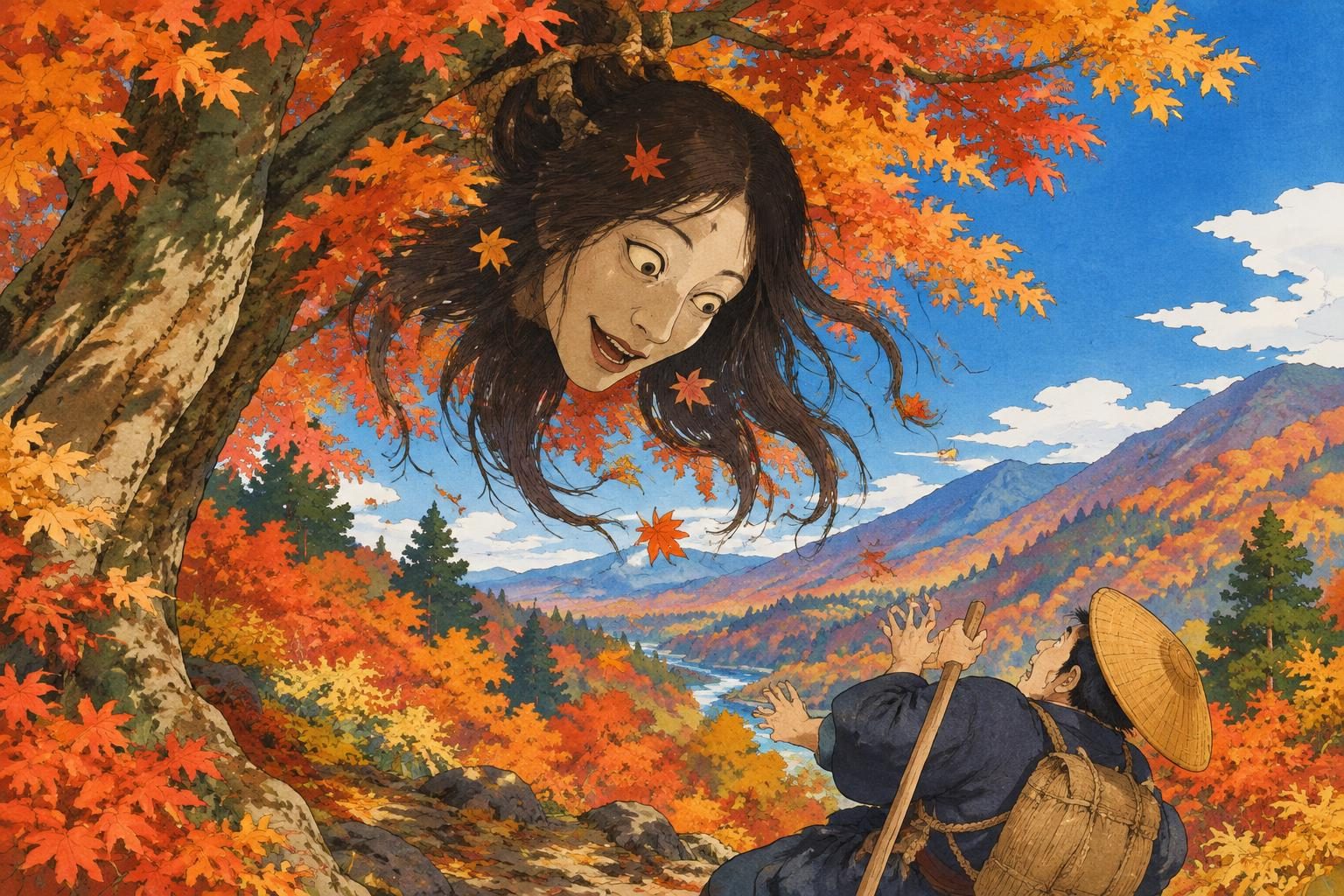
In the heart of Ibigawa, Gifu Prefecture, the dense Tsukumi woods are home to a chilling tale of a tree-dwelling yokai known as tsurube-otoshi. This eerie legend has captivated locals and visitors alike, drawing them into a world where the supernatural lurks just above the forest floor.

Introduction to Ibigawa’s Darkest Woodland Legend
LEGEND: The Severed-Head Yokai of Tsukumi
According to local tradition, in the Tsukumi part of the former Kuze Village, now part of Ibigawa Town, a mysterious creature known as a tsurube-otoshi hides in the canopy of a large tree. This tree is so dense that it remains dim even at noon. The yokai is said to drop down on unsuspecting passers-by like a well bucket, sometimes taking the terrifying form of a giant severed head.
This legend, steeped in the oral traditions of the region, describes the tsurube-otoshi as a purely threatening apparition. It is said to startle travelers and, in some accounts, even devour them. The story serves as a chilling reminder of the dangers that might lurk in the shadows of ancient woods, embodying the fear of the unknown that these dense forests could evoke.
Visitors to the Tsukumi area can still feel the eerie atmosphere that gave rise to such tales. The large tree, central to the legend, stands as a silent witness to the stories passed down through generations. Its dim canopy, even at the height of day, offers a glimpse into the world where the tsurube-otoshi might still dwell, waiting to surprise those who wander beneath its branches.
What Is a Tsurube-Otoshi? The Myth of the Tree-Dwelling Apparition
FACT: The Unique Tokai-Kinki Variant
The tsurube-otoshi of Tsukumi is an arboreal apparition unique to the Tokai and Kinki regions of Japan. Unlike other yokai that might be found in popular culture, this variant is not included in Toriyama Sekien’s famous works like the Konjaku Gazu Zoku Hyakki. Instead, it originates from local oral traditions that tie the yokai to specific trees in the area.
This regional uniqueness underscores the localized nature of Japanese folklore, where stories are often deeply connected to specific landscapes and communities. The Tsukumi variant’s absence from Sekien’s works highlights how certain legends remain preserved within their local contexts, maintaining their distinct identity apart from more widely recognized yokai.
FACT: The Distinctive Appearance
In the Mino region, particularly in Ibigawa’s Tsukumi, the tsurube-otoshi is known for its distinctive appearance as a giant severed head. This form is not only startling but also serves as a cautionary tale, warning travelers of the dangers of passing under old trees at dusk, when light drops as suddenly as a well bucket.
The imagery of the severed head is a powerful symbol within the legend, representing the abrupt and often frightening changes in nature. This form of the tsurube-otoshi is a reminder of the respect and caution required when navigating the natural world, where unexpected dangers can arise without warning.


The Tsukumi Variant: Gifu’s Unique Severed-Head Yokai
FACT: A Tradition of Cautionary Tales
The tsurube-otoshi legend in Tsukumi likely reflects a broader tradition of cautionary tales. These stories often warned villagers and travelers about the perils of the natural world, particularly the sudden darkness that could fall under dense canopies as the sun set. The name ‘tsurube-otoshi’ itself, which translates to ‘well bucket drop,’ evokes the abruptness with which night can descend in these wooded areas.
Such cautionary tales served an essential function in traditional societies, imparting wisdom and survival strategies through storytelling. By embedding practical advice within engaging narratives, these legends helped communities navigate the challenges of their environment.
FACT: Regional Distribution
This legend is part of a broader distribution of tree-dropping apparitions across adjacent provinces like Omi, Yamashiro, and Owari. Such tales are a testament to the shared cultural heritage of these regions, where nature and the supernatural are inextricably linked.
The spread of these stories across multiple provinces illustrates the interconnectedness of regional folklore in Japan. Despite variations in specific details, the core themes of caution and respect for nature remain consistent, reflecting the common experiences and values of the communities that share these tales.
Oral Traditions Versus Art: How Local Folklore Differs From Pop Culture
FACT: Distinction from Sekien’s Works
While many yokai have been popularized through the works of artists like Toriyama Sekien, the tsurube-otoshi of Tsukumi remains a creature of local folklore. It is not featured in Sekien’s Konjaku Gazu Zoku Hyakki, highlighting its roots in oral tradition rather than artistic representation. This distinction underscores the importance of local stories in preserving cultural identity and history.
The absence of the tsurube-otoshi from popular artistic catalogs like Sekien’s serves to emphasize the richness and diversity of Japan’s folk traditions. It highlights how oral storytelling continues to play a crucial role in maintaining the unique characteristics of regional legends, ensuring they remain vibrant and relevant to their communities.
FACT: The Value of Oral Tradition
The absence of the tsurube-otoshi from Sekien’s catalog does not diminish its significance. Instead, it emphasizes the value of oral traditions in maintaining the unique characteristics of regional folklore, distinct from the more widely recognized yokai of Japanese pop culture.
Oral traditions offer a dynamic and adaptable form of storytelling, allowing legends to evolve while retaining their core messages. This adaptability ensures that tales like the tsurube-otoshi continue to resonate with new generations, providing a living connection to the past.


The Meaning Behind the Monster: Cautionary Tales of Ancient Woods
FACT: Interpreting the Tsurube-Otoshi’s Significance
The tsurube-otoshi’s legend serves as a metaphor for the fears and uncertainties faced by those who lived close to nature. The sudden drop of the yokai, much like a well bucket, mirrors the unexpected dangers that can arise in the wilderness. This imagery is a powerful reminder of the respect and caution that the natural world demands.
In Ibigawa, the tsurube-otoshi continues to be a symbol of the mysterious and sometimes threatening aspects of the forest. Its story is a testament to the enduring power of folklore in shaping our understanding of the world around us, reminding us of the delicate balance between humanity and nature.
Exploring Ibigawa and Gifu’s Rich Mythological Landscape
Visitors to Ibigawa can explore the rich tapestry of folklore that defines this region. The Tsukumi woods, with their dense canopies and eerie ambiance, offer a glimpse into the world of the tsurube-otoshi. As you wander through these ancient trees, the legend of the severed-head yokai comes alive, inviting you to imagine the supernatural lurking just out of sight.
Nearby Guide
Access
- Ibi Station (Ibigawa Town) — From Ibi Station on the Yoro Railway, take the Ibigawa Town community bus for about 25 minutes to reach Tanigumisan Kegonji Temple. Alternatively, from JR Ogaki Station, transfer to Tanigumiguchi Station on the Tarumi Railway, then about 8 minutes on the Ibigawa Town community bus. By car, it’s appr details.
Nearby sights
- Tanigumisan Kegonji Temple (Ibigawa Town) — Tanigumisan Kegonji Temple, founded in 798, is the final stop of the Saigoku Thirty-Three Kannon pilgrimage. It’s known for its unique atmosphere, including the Oizuru-do where pilgrims offer their garments and the bronze carp symbolizing the return to ordinary life. The approach to the temple offer official site.
- Kamigare Tea Plantation (Ibigawa Town) — Known as ‘Gifu’s Machu Picchu,’ the Kamigare Tea Plantation offers breathtaking views of terraced tea fields at altitudes between 300–380 meters. Visitors can enjoy tea harvesting experiences and purchase locally produced tea leaves. The plantation is accessible by car or via public transportation w official site.
Where to stay
- Itsukian (Ibigawa Town) — Itsukian is a guesthouse located in Ibigawa Town, offering comfortable accommodations for travelers. It’s conveniently situated near Tanigumisan Kegonji Temple and other local attractions, making it an ideal base for exploring the area. details.


Related on JAPAN ESSENCE: The Kudan of Iwakuni: The Wartime Prophetic Yokai of Yamaguchi | Shidaidaka: The Ever-Rising Roadside Yokai of Shimane
Sources
- Tsurube-otoshi – Wikipedia
- Yokai of Gifu Prefecture: Ryomen Sukuna, Satori, and Sarugami | YOKAI.JP
- 旧久瀬村(揖斐川町)の妖怪 ─ 1 体の伝承 | YOKAI.JP
- details
- official site
- official site
- details
To explore further, visit Kawara Kobo (瓦工房) for a hands-on kawara experience and Onigawara Experience for hands-on onigawara experiences in Japan.
岐阜県揖斐川町の中心にある密集した津久見の森には、木に住む妖怪「つるべ落とし」の恐ろしい伝説があります。この不気味な伝承は地元の人々や訪問者を魅了し、超自然が森の床のすぐ上に潜んでいる世界へと引き込んでいます。
揖斐川の最も暗い森の伝説の紹介
伝承: 津久見の首なし妖怪
地元の言い伝えによると、かつての久瀬村の津久見地区、現在の揖斐川町の一部には、「つるべ落とし」と呼ばれる謎の生物が大きな木の樹冠に隠れていると言われています。この木は非常に密集しており、正午でも薄暗いままです。この妖怪は、井戸のバケツのように無防備な通行人に降りかかり、時には巨大な首なしの頭の恐ろしい姿をとることもあると言われています。
この伝説は地域の口承に深く根ざしており、つるべ落としを純粋に脅威的な幻影として描写しています。旅行者を驚かせ、ある口承では彼らを食べてしまうことさえあると言われています。この物語は、古代の森の影に潜むかもしれない危険を思い出させる冷ややかな警告であり、これらの密集した森が引き起こす未知の恐怖を体現しています。
津久見地区を訪れる人々は、こうした物語が生まれた不気味な雰囲気を今でも感じることができます。伝説の中心にある大きな木は、世代を超えて伝えられてきた物語の静かな証人として立っています。昼間でも薄暗いその樹冠は、つるべ落としがまだそこに住んでいるかもしれない世界を垣間見せ、枝の下を歩く人々を驚かせる準備をしています。
つるべ落としとは何か?木に住む幻影の神話
事実: 東海・近畿地方の独特な変種
津久見のつるべ落としは、日本の東海・近畿地方に特有の樹上の幻影です。人気のある文化に見られる他の妖怪とは異なり、この変種は鳥山石燕の有名な作品『今昔画図続百鬼』には含まれていません。代わりに、この妖怪は地域の口承から生まれ、特定の木に結びついています。
この地域の独自性は、日本の民話の地域性を強調しており、物語が特定の風景やコミュニティと深く結びついていることを示しています。津久見の変種が石燕の作品に含まれていないことは、特定の伝説がより広く認識されている妖怪とは異なり、地域の文脈内で保存され続けていることを示しています。
事実: 独特の外見
美濃地方、特に揖斐川の津久見では、つるべ落としは巨大な首なしの頭として知られています。この形は驚くべきだけでなく、夕暮れ時に古い木の下を通る危険性を警告する教訓的な物語としても機能しています。
首なしの頭のイメージは、伝説の中で強力なシンボルであり、自然界の突然の変化を表しています。このつるべ落としの形は、自然界を探索する際に必要な尊敬と注意を思い出させ、予期せぬ危険が警告なしに現れることがあることを示しています。
津久見の変種: 岐阜の独特な首なし妖怪
事実: 教訓的な物語の伝統
津久見のつるべ落としの伝説は、広範な教訓的な物語の伝統を反映している可能性があります。これらの物語はしばしば村人や旅行者に自然界の危険性、特に日が沈むときに密集した樹冠の下で突然暗くなることについて警告しました。『つるべ落とし』という名前自体が、これらの森の中で夜が突然降りる様子を想起させます。
このような教訓的な物語は、伝統的な社会において重要な役割を果たし、物語を通じて知恵と生存戦略を伝えました。実用的なアドバイスを魅力的な物語に組み込むことで、これらの伝説はコミュニティが環境の課題を乗り越えるのを助けました。
事実: 地域的な分布
この伝説は、近隣の近江、山城、尾張などの州にまたがる木から落ちる幻影の広範な分布の一部です。このような物語は、自然と超自然が切り離せないほど結びついているこれらの地域の共有文化遺産を証明しています。
これらの物語が複数の州に広がっていることは、日本の地域民話の相互接続性を示しています。特定の詳細には変化があるものの、自然に対する注意と尊敬という核心的なテーマは一貫しており、これらの物語を共有するコミュニティの共通の経験と価値観を反映しています。
口承と芸術: 地元の民話がポップカルチャーと異なる理由
事実: 石燕の作品との違い
多くの妖怪が鳥山石燕のようなアーティストの作品を通じて人気を博している一方で、津久見のつるべ落としは地元の民話の生き物として残っています。石燕の『今昔画図続百鬼』には登場しておらず、芸術的表現よりも口承に根ざしていることを強調しています。この違いは、文化的アイデンティティと歴史を保存する上で地元の物語の重要性を強調しています。
つるべ落としが石燕のような人気のある芸術カタログに含まれていないことは、日本の民話の豊かさと多様性を強調しています。口承が地域の伝説の独自の特徴を維持する上で重要な役割を果たし続けていることを示し、コミュニティにとってそれらが生き生きと関連性を持ち続けることを保証しています。
事実: 口承の価値
つるべ落としが石燕のカタログに含まれていないことは、その重要性を損なうものではありません。むしろ、地域の民話の独自の特徴を維持する上で口承の価値を強調しています。
口承は動的で適応可能な物語形式を提供し、伝説がその核心メッセージを保持しながら進化することを可能にします。この適応性は、つるべ落としのような物語が新しい世代と共鳴し続け、過去との生きたつながりを提供することを保証します。
怪物の背後にある意味: 古代の森の教訓的な物語
事実: つるべ落としの意義の解釈
つるべ落としの伝説は、自然に近い場所に住む人々が直面する恐怖と不確実性のメタファーとして機能します。井戸のバケツのように突然落ちる妖怪は、荒野で発生する予期せぬ危険を反映しています。このイメージは、自然界が要求する尊敬と注意を思い出させる強力なリマインダーです。
揖斐川では、つるべ落としは森の神秘的で時には脅威的な側面の象徴であり続けています。その物語は、私たちの周りの世界を理解する上で民話が持つ持続的な力を証明し、人間と自然の微妙なバランスを思い出させます。
揖斐川と岐阜の豊かな神話的風景を探る
揖斐川を訪れる人々は、この地域を定義する豊かな民話の織物を探ることができます。津久見の森は、その密集した樹冠と不気味な雰囲気で、つるべ落としの世界を垣間見ることができます。これらの古代の木々を歩くと、首なし妖怪の伝説が生き生きとし、超自然がすぐそばに潜んでいることを想像させます。
周辺ガイド
アクセス
- 揖斐駅(揖斐川町)— 養老鉄道の揖斐駅から揖斐川町コミュニティバスで約25分で谷汲山華厳寺に到着します。あるいは、JR大垣駅から樽見鉄道の谷汲口駅に乗り換え、揖斐川町コミュニティバスで約8分です。車では、詳細はこちら。
周辺の見どころ
- 谷汲山華厳寺(揖斐川町)— 798年に創建された谷汲山華厳寺は、西国三十三所巡礼の最終地点です。巡礼者が衣服を奉納するおいずる堂や、日常生活への復帰を象徴する青銅の鯉など、独特の雰囲気で知られています。寺への参道は、詳細は公式サイト。
- 上ヶ流茶園(揖斐川町)— 『岐阜のマチュピチュ』として知られる上ヶ流茶園は、標高300〜380メートルの段々畑の茶畑の絶景を提供します。訪問者は茶摘み体験を楽しみ、地元で生産された茶葉を購入することができます。茶園は車や公共交通機関でアクセス可能で、詳細は公式サイト。
泊まる
- いつき庵(揖斐川町)— いつき庵は揖斐川町にあるゲストハウスで、旅行者に快適な宿泊施設を提供しています。谷汲山華厳寺や他の地元の観光スポットの近くに位置しており、地域を探索するのに理想的な拠点です。詳細。
Related on JAPAN ESSENCE: The Kudan of Iwakuni: The Wartime Prophetic Yokai of Yamaguchi | Shidaidaka: The Ever-Rising Roadside Yokai of Shimane
Sources
- Tsurube-otoshi – Wikipedia
- Yokai of Gifu Prefecture: Ryomen Sukuna, Satori, and Sarugami | YOKAI.JP
- 旧久瀬村(揖斐川町)の妖怪 ─ 1 体の伝承 | YOKAI.JP
- details
- official site
- official site
- details
さらに楽しみたい方は、瓦にふれる体験ができる瓦工房や、鬼瓦づくりを体験できるOnigawara Experienceもご覧ください。
Leave a Reply