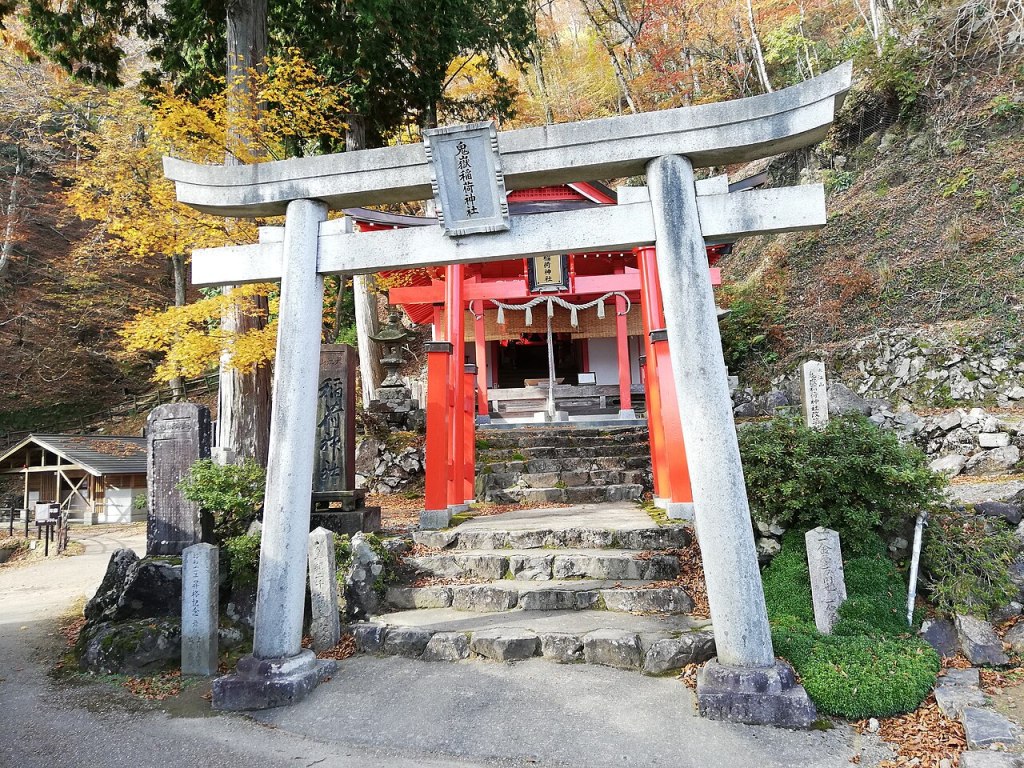
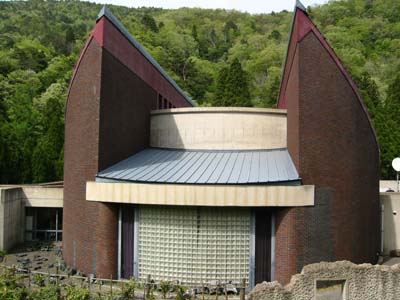
Where can you actually follow the Shuten-dōji legend on Mt. Ōe (大江山) today? The best starting point is the Japanese Oni Exchange Museum (日本の鬼の交流博物館) at the foot of the mountain in Ōe-chō, Fukuchiyama, Kyoto Prefecture, followed by a drive or hike up to Onitake Inari Shrine (鬼嶽稲荷神社) at about the eighth station, with a handful of small “Raikō sites” along the way that local tradition ties to the warrior Minamoto no Raikō’s campaign against the oni. This guide walks that route and separates what is documented from what is told as legend.
The Shuten-dōji Legend in Brief (Legend)
According to the legend, Shuten-dōji was the chief of a band of oni (or, in some readings, of bandits) who lived on Ōeyama and was named for his love of sake. In the version told in the picture scroll Ōeyama Ekotoba (大江山絵詞), the oldest surviving text of the story (14th century), young people were vanishing from the capital in the reign of Emperor Ichijō; the diviner Abe no Seimei traced the cause to the oni of Ōeyama, and Minamoto no Raikō and Fujiwara no Yasumasa were sent to subdue him. Disguised as yamabushi mountain ascetics, the party was received as guests, served the oni a divinely given drugged sake and defeated him. Raikō’s four retainers, the Shitennō (四天王), already appear in the Ōeyama Ekotoba itself (there named Watanabe no Tsuna, Sakata no Kintoki, Taira no Sadamichi/Tadamichi and Taira no Suetake; later tellings often call the last two Usui Sadamitsu and Urabe no Suetake), and later Otogi-zōshi versions also feature Shuten-dōji’s lieutenant Ibaraki-dōji. Details differ between texts, and there are several theories (諸説あり) about where the “Ōeyama” of the story was: this Ōeyama on the Tango–Tanba border, or the Ōeyama (大枝) at Oinosaka on the western edge of Kyoto. One group of texts even places the oni’s fortress on Mt. Ibuki.
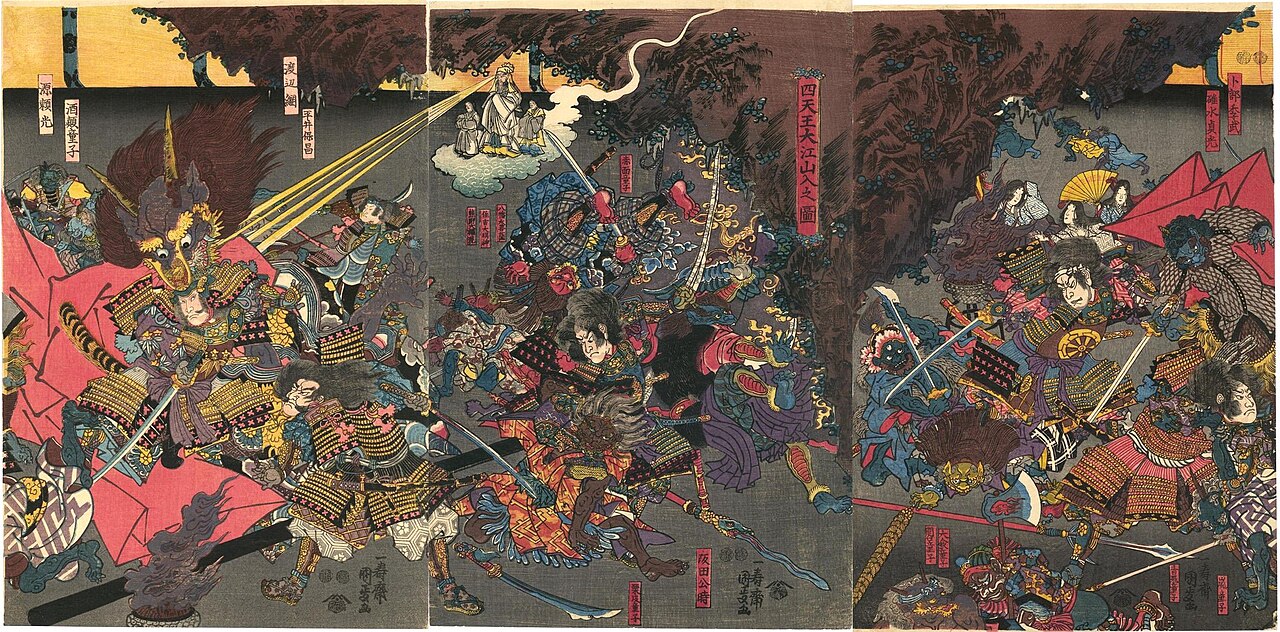
Ōeyama actually has three oni-subjugation legends: Prince Hikoimasu (日子坐王) and Kugamimi no Mikasa, Prince Maroko (麻呂子親王) and three oni, and the best-known Shuten-dōji tale. For the wider story and hiking, see our earlier articles Exploring Mount Oeyama: The Legend of Shuten-doji in Kyoto and Exploring the Oeyama Oni Legends: Myth and Hiking in Kyoto’s Fukuchiyama.
The Japanese Oni Exchange Museum: A Museum Devoted to Oni
The museum, nicknamed “Onihaku” (鬼博), opened in April 1993. The former town of Ōe built it on the site of the closed Kōmori copper mine to use the local oni legends for community revitalisation, and its collection now numbers about 3,000 items. Exhibits explore “who the oni are” through masks, folk performing arts and festival oni from across Japan and the world, introduce Ōeyama’s three oni legends with picture scrolls, and trace the history of onigawara (oni roof tiles) from ancient times to today. In the front garden stands a giant onigawara about 5 m tall and weighing 10 tonnes. The museum also runs seasonal special exhibitions and events, so it is worth checking its official site before you go.
Onitake Inari Shrine and the Sea of Clouds
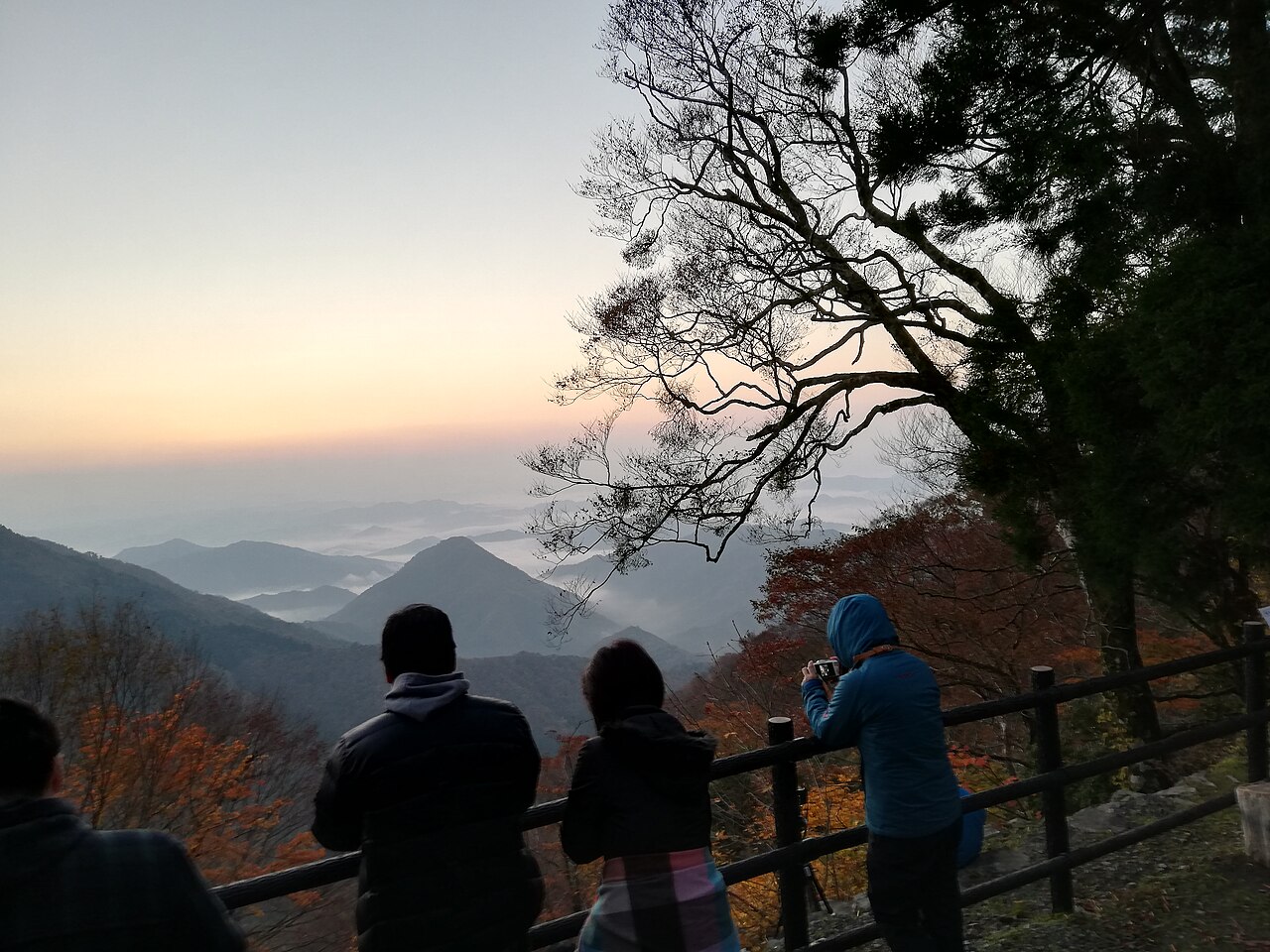
Onitake Inari Shrine stands at around 640 m on the Ōeyama range, at about the eighth station of the trail, surrounded by beech and oak forest within Tango-Amanohashidate-Ōeyama Quasi-National Park (designated 2007). According to the shrine’s traditions, a shrine was first founded here at an old site linked to Prince Hikoimasu, and in 1848 (Kōka 5) the spirit of Fushimi Inari was enshrined, giving the present name. Fukuchiyama’s legend map adds a Shuten-dōji connection: it is said (言い伝え) that when Raikō’s party lost its way on the mountain, Inari helped them find the path.
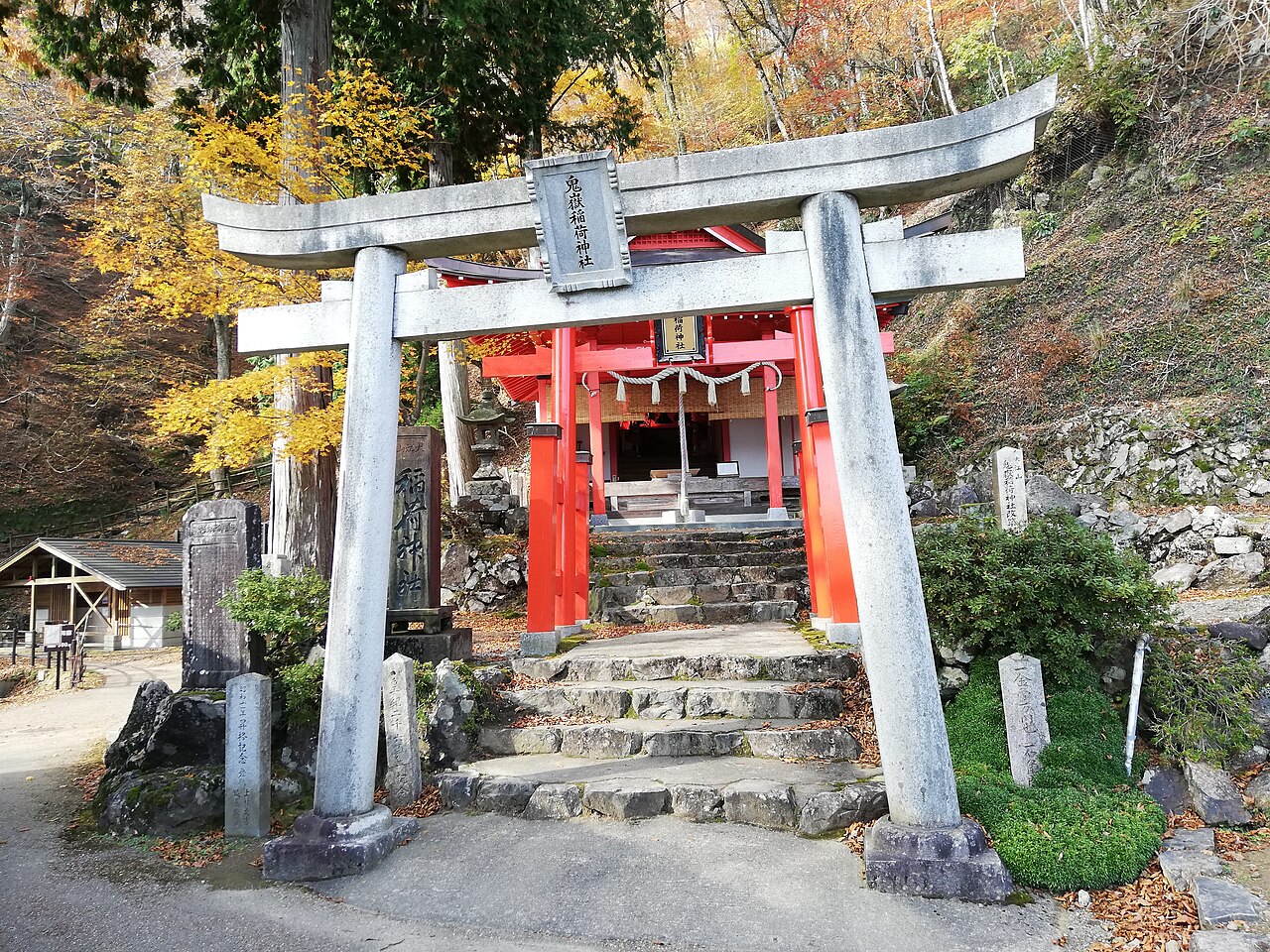
The shrine is also known as a viewpoint for unkai, the sea of clouds. Fukuchiyama’s official pages describe mountains floating like islands in milky white mist in autumn, with the best season given as mid-October to early November. Wikipedia explains that the fog forms from the temperature difference over the Yura River and tends to appear on clear, windless early mornings after rain.
Following Raikō’s Party: Legend Sites Around Ōe-chō (Legend)
Fukuchiyama City’s Ōeyama oni legend map and the museum’s area guide mark several small sites tied to the Shuten-dōji story. All of these are local legends (言い伝え), not historical records:
- Raikō’s Seat Rock (頼光の腰掛岩) – a large rock where Raikō is said to have sat after defeating the oni.
- Oni’s Footprint (鬼の足跡) – a stone said to bear the footprint left when an oni leapt down from the opposite mountain.
- Onimaru Inari (鬼丸稲荷) – near the eighth station, with a huge rock on which Raikō is said to have tested the sharpness of his famous sword Onikirimaru.
- Futase River gorge (二瀬川渓流) – the museum guide notes that sites linked to the legend are scattered along this valley on the old Miyazu road, with a suspension bridge, Shin-Dōji-bashi. The bridge is closed for repair from September to the end of December 2026 (planned); check the official page before visiting.
Notice (Shin-Dōji Bridge closed): According to Fukuchiyama City’s official Futase River gorge page, the Shin-Dōji-bashi suspension bridge (新童子橋) is closed for repair work from September to the end of December 2026 (planned). Please do not plan to cross it during this period, and check the official page for the latest status before visiting.
Two swords preserved today carry the tradition of having slain Shuten-dōji: the National Treasure “Dōjigiri” at the Tokyo National Museum and “Onikirimaru” at Tada Shrine in Kawanishi, Hyōgo.
Practical Information
According to the museum’s official information page, the Japanese Oni Exchange Museum (909 Busshōji, Ōe-chō, Fukuchiyama) is open 9:00–17:00 (last entry 16:30) and closed on Mondays (the following day if Monday is a holiday), the day after national holidays and 28 December–4 January. Admission is 330 yen for adults, 220 yen for high school students and 160 yen for elementary/junior high students. The official site notes that the city bus to the museum (Ōeyama-no-ie line) does not run on weekends and holidays, and a reservation-based “Oni-Taku” service is available instead. Onitake Inari Shrine is open to visit freely except when snow-bound in winter, per the Kyoto Prefecture tourism site; it can be reached by car (about 35–40 minutes from Ōe Station) or on foot from the Yama-no-ie bus stop (about 60–90 minutes; official materials vary). Hours, fares and bus services can change, so please check the official sites before visiting.
Related on JAPAN ESSENCE: Exploring Mount Oeyama: The Legend of Shuten-doji in Kyoto | Exploring the Oeyama Oni Legends: Myth and Hiking in Kyoto’s Fukuchiyama
Sources
- 日本の鬼の交流博物館 公式サイト(福知山市)
- 日本の鬼の交流博物館 ご利用案内(開館時間・入館料)
- 日本の鬼の交流博物館 周辺観光案内
- 福知山市 大江山鬼伝説マップ (PDF)
- 大江山連峰・ブナの原生林・雲海 – 福知山市オフィシャルホームページ
- 大江山連峰・ブナの原生林・雲海 – 福知山観光協会公式サイト
- 大江山鬼嶽稲荷神社 – 京都府観光連盟公式サイト
- 日本の鬼の交流博物館 – 京都府ミュージアムフォーラム
- 酒呑童子 – Wikipedia
- 大江山 – Wikipedia
- 日本の鬼の交流博物館 – Wikipedia
- 鬼嶽稲荷神社 – Wikipedia
- Shuten-dōji – Wikipedia
- 二瀬川渓流(新童子橋 通行止めのお知らせ) – 福知山市オフィシャルホームページ
- 千葉市・千葉大学公開市民講座 講演録「酒天童子の物語と千葉氏 〜逸翁本『大江山絵詞』をめぐって〜」(PDF)
- 大江山酒顚童子の里 – 福知山観光協会大江支部
To explore further, visit Onigawara Experience for hands-on onigawara experiences in Japan and Zenkei (禅景) for onigawara demon-tile art.


Leave a Reply