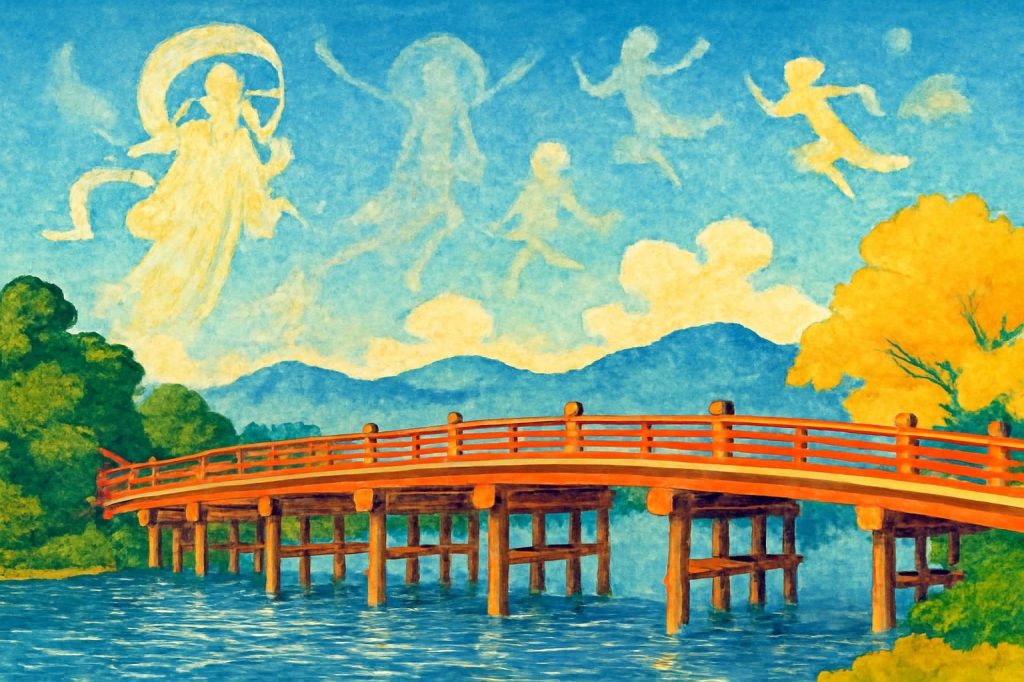
Ichijo Modoribashi, located in Kyoto’s Kamigyō Ward, is a site steeped in history and legend, known for its association with the Hyakki Yagyō, or the Night Parade of One Hundred Demons. This bridge, often referred to as Japan’s oldest haunted spot, offers a fascinating glimpse into the folklore and historical narratives that have shaped Kyoto’s cultural landscape.

Introduction to Ichijo Modoribashi in Kyoto
FACT: The Historical Significance of Ichijo Modoribashi
Ichijo Modoribashi is a bridge that spans the Horikawa River in Kamigyō Ward, Kyoto City. Historically, it marked the northern boundary of the ancient capital Heiankyo, serving as a demarcation line between the inner and outer city. This bridge has been a significant landmark since the medieval period, recognized for its cultural and historical importance. The bridge’s location at the boundary of the ancient capital not only made it a strategic point but also imbued it with a sense of transition between worlds, a theme that resonates in the legends associated with it.
LEGEND: The Bridge of Return
According to legend, the name ‘Modori-bashi’ or ‘Bridge of Return’ originates from a miraculous event in 918. It is said that a man named Miyoshi Kiyoyuki briefly came back to life when his son Jōzō prayed over his coffin as it crossed the bridge. This tale of resurrection imbues the bridge with an aura of mystery and supernatural significance. The story of Miyoshi Kiyoyuki’s return from the dead is a testament to the bridge’s reputation as a place where the boundaries between life and death blur, adding a layer of intrigue for visitors and locals alike.

The Legend of the Bridge of Return
FACT: The Bridge’s Rebuilding and Preservation Efforts
The current structure of Ichijo Modoribashi was rebuilt in 1995. To preserve its historical essence, the old bridge’s newel posts were saved and are now displayed at Seimei Shrine, which is located just a five-minute walk away. This preservation effort underscores the bridge’s enduring legacy in Kyoto’s cultural heritage. The careful preservation of these relics allows visitors to connect with the bridge’s storied past, offering a tangible link to the legends that have been passed down through generations.
LEGEND: Watanabe no Tsuna and the Demon Ibaraki-dōji
Another captivating legend associated with Ichijo Modoribashi involves Watanabe no Tsuna, a renowned warrior and one of Minamoto no Yorimitsu’s Four Heavenly Kings. It is said that Tsuna encountered the demon Ibaraki-dōji on this bridge. Disguised as a woman, the demon attacked Tsuna, who managed to cut off its arm, an event that has been immortalized in various artworks and stories. This tale not only highlights the bridge’s role as a site of supernatural encounters but also reflects the rich tapestry of folklore that characterizes Kyoto’s historical narrative.

Demons and Onmyoji: Watanabe no Tsuna and Abe no Seimei
FACT: Abe no Seimei’s Connection to the Bridge
Abe no Seimei, the legendary onmyōji or master of yin-yang divination, is also linked to Ichijo Modoribashi. It is believed that Seimei hid his shikigami, or spirit servants, beneath the bridge. This association with Seimei further enhances the bridge’s mystical reputation. As one of Japan’s most famous historical figures, Seimei’s connection to the bridge adds an element of historical depth, inviting visitors to explore the intersection of myth and reality.
LEGEND: The Hyakki Yagyō and the Haunted Bridge
Ichijo Modoribashi is famously known as the site where the Hyakki Yagyō, or the Night Parade of One Hundred Demons, is said to pass. This concept first appeared in the 12th-century Konjaku Monogatari-shū and was later visualized in the Muromachi-period Hyakki Yagyō Emaki and the Edo-period Gazu Hyakki Yagyō. The bridge’s connection to this legendary parade has earned it the title of ‘Japan’s oldest haunted spot’ in modern tourism. The vivid imagery of the Hyakki Yagyō, with its procession of supernatural creatures, captures the imagination and underscores the bridge’s role as a focal point of Japanese folklore.
Visiting Seimei Shrine and Old Bridge Relics
FACT: Seimei Shrine’s Role in Preserving History
Seimei Shrine, located near Ichijo Modoribashi, plays a crucial role in preserving the historical relics of the bridge. Visitors can view the old newel posts from the bridge, which are displayed within the shrine grounds. The shrine itself is dedicated to Abe no Seimei, adding another layer of historical and cultural significance to the area. The shrine offers a serene environment where visitors can reflect on the legends and history that permeate the region, providing a deeper understanding of Kyoto’s cultural heritage.

Practical Tips for International Travelers
When planning a visit to Ichijo Modoribashi and Seimei Shrine, it’s advisable to explore the surrounding Kamigyō Ward to fully appreciate the area’s rich history. The bridge and shrine are easily accessible by public transportation, making them convenient stops for those exploring Kyoto’s historical sites. Visitors are encouraged to take their time to absorb the atmosphere and consider the layers of history and legend that make this area a unique destination.


.jpg)
.jpg)

Leave a comment