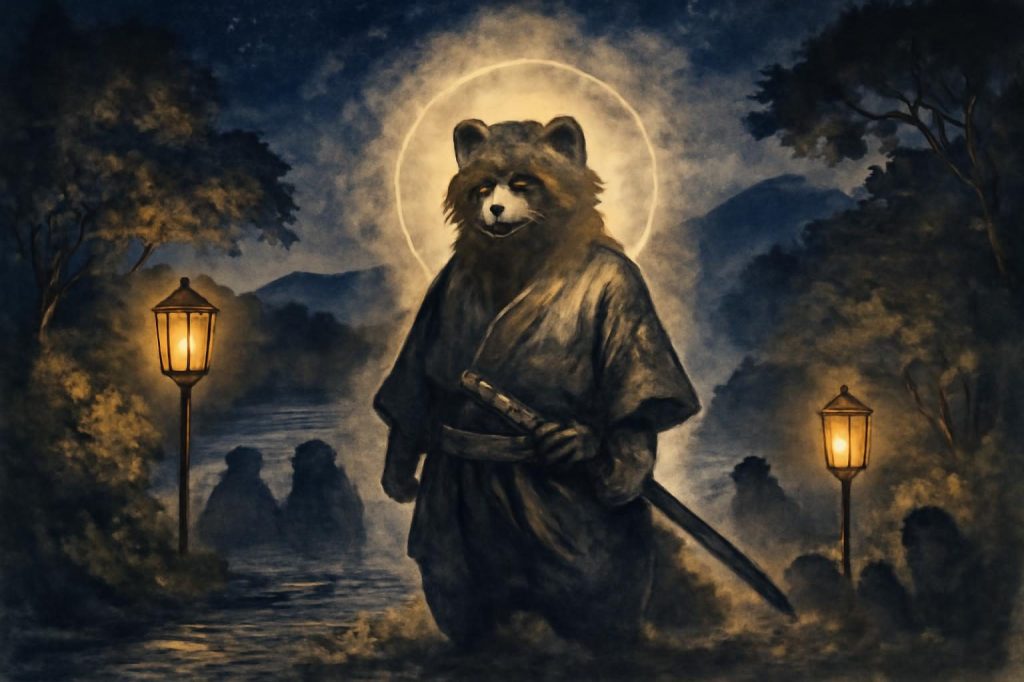
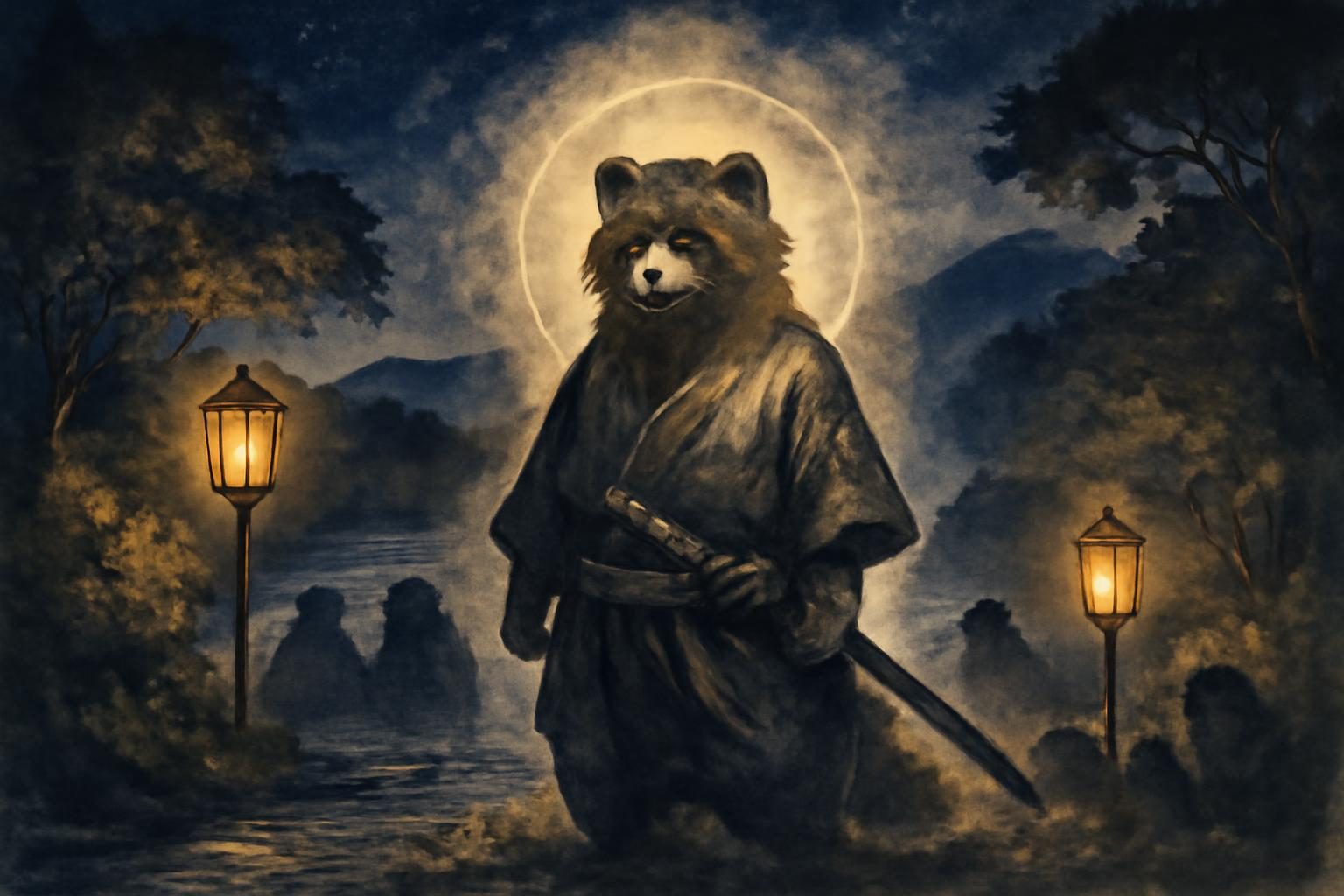
In the city of Komatsushima, Tokushima Prefecture, a legendary battle between mythical creatures known as tanuki (raccoon dogs) is said to have taken place. This is the story of the Great Tanuki War of Awa, a tale that continues to captivate the imagination of locals and visitors alike. The tanuki, often depicted in Japanese folklore as shape-shifters and tricksters, are believed to bring good fortune, adding a layer of cultural depth to this enduring legend.

Introduction to the Great Tanuki War of Awa
FACT: The historical setting of the legend
The legend of the Awa-Tanuki Gassen, or the Great Tanuki War of Awa, is set in the late Edo period in an area known as Higaino, which is now part of Komatsushima. It revolves around a tanuki named Kinchō who was rescued by a local dyer named Moemon. Kinchō became the guardian spirit of Moemon’s shop, bringing prosperity and protection. This tale is deeply rooted in the local culture and is celebrated throughout the city. The legend signifies the intertwining of human lives with mythical beings, highlighting the cultural significance of tanuki in Japanese folklore.
The relationship between humans and tanuki in this legend is emblematic of the broader Japanese cultural theme where nature and the supernatural are closely linked to everyday life. The tale of Kinchō and Moemon is a narrative that reflects the mutual respect and beneficial coexistence between humans and the mystical creatures of their folklore, which is a recurring motif in many Japanese legends.
LEGEND: The story of Kinchō and the battle
According to legend, Kinchō later became a disciple of Rokuemon, a powerful tanuki general from Tsuda. However, when Kinchō politely refused to marry Rokuemon’s daughter, it sparked a fierce conflict. The ensuing battle, known as the Awa-Tanuki Gassen, took place across the Katsuura River and lasted for three days and nights. The river, a natural boundary, became the stage for this epic confrontation. Despite being severely wounded, Kinchō emerged victorious but ultimately succumbed to his injuries after returning to Higaino, where he expressed his gratitude to Moemon before dying. This poignant moment underscores the themes of loyalty and sacrifice, which resonate deeply with the audience.
The battle itself is depicted as a grand and dramatic event, filled with the kind of mythical grandeur that characterizes many traditional Japanese tales. The three-day and night duration of the battle adds to the epic scale of the story, illustrating the intensity and significance of the conflict. This narrative not only entertains but also conveys moral lessons about honor, duty, and the consequences of choices, which are central to many Japanese folktales.
FACT: The legacy of Kinchō in local culture
The legacy of Kinchō is not only preserved through oral tradition but also through various cultural expressions in Komatsushima. The story of Kinchō’s bravery and the dramatic battle has been passed down through generations, becoming an integral part of the local identity. The narrative serves as a reminder of the values of courage and gratitude, which are celebrated in various local festivals and events.
Festivals and cultural events often feature reenactments or symbolic representations of the legend, allowing both locals and visitors to engage with the story in a communal setting. These events serve as a living testament to the enduring nature of the legend and its continued relevance in modern times, reinforcing community bonds and cultural heritage.
Komatsushima Station Park and the World’s Largest Bronze Tanuki
FACT: A monumental tribute to Kinchō
In Komatsushima Station Park, visitors can find a remarkable tribute to the legend of Kinchō. The park is home to a 5-meter-tall, 5-ton bronze statue of Kinchō, recognized as the world’s largest bronze tanuki statue. Unveiled in 1993, this statue has become a symbol of the city. A unique feature of the statue is that clapping hands near it triggers a waterfall behind the statue, adding to the magical atmosphere of the park. This interactive element invites visitors to engage with the legend in a tangible way, enhancing the experience of the folklore.
The statue’s presence in the park serves as a constant reminder of the legend’s significance to Komatsushima. It is not only a tourist attraction but also a place of reflection where the spirit of Kinchō is celebrated. The waterfall, activated by clapping, symbolizes the connection between visitors and the legend, creating a dynamic interaction that brings the story to life.
FACT: The significance of the bronze statue
The statue not only serves as a visual representation of the legend but also as a cultural landmark that attracts tourists and locals alike. It embodies the spirit of Kinchō and the values he represents, making it a focal point for cultural activities and gatherings. The unveiling of the statue in 1993 marked a significant moment for Komatsushima, reinforcing the city’s connection to its mythical past.
As a cultural landmark, the statue plays a crucial role in promoting local heritage and tourism. It stands as a testament to the artistic and cultural investment of the community in preserving and celebrating their unique folklore, drawing visitors from near and far who wish to experience the legend firsthand.

Paying Respects at Kincho Shrine
FACT: The establishment of Kincho Shrine
To honor Kinchō’s memory and his contributions as a guardian spirit, Moemon enshrined him as Shōichi-i Kinchō Daimyōjin. Kincho Shrine was built in Komatsushima to ensure that Kinchō would be remembered as a deity forever. The shrine stands as a testament to the enduring legacy of the tanuki and the cultural significance of the legend in the region. Visitors to the shrine can experience a sense of reverence and connection to the past, as they pay homage to Kinchō and the values he embodies.
Kincho Shrine is more than just a religious site; it is a cultural beacon that highlights the spiritual aspects of the tanuki legend. Visitors often leave offerings and prayers, seeking blessings and protection, much like Moemon did when he first enshrined Kinchō. The shrine thus serves as a bridge between the past and present, allowing the legacy of Kinchō to continue influencing contemporary life.
FACT: The role of Kincho Shrine in local culture
Kincho Shrine plays a pivotal role in the spiritual and cultural life of Komatsushima. It serves as a venue for various rituals and ceremonies that honor the memory of Kinchō and celebrate the values of protection and prosperity he brought to Moemon’s shop. The shrine is a place where the community gathers to reflect on the lessons of the past and to seek blessings for the future.
Throughout the year, the shrine hosts numerous events that draw participants from across the region, fostering a sense of unity and cultural pride. These gatherings not only keep the legend alive but also strengthen the community’s connection to their shared heritage, ensuring that the story of Kinchō remains a vibrant part of Komatsushima’s cultural landscape.
Tanuki-Themed Explorations Across Komatsushima
FACT: Tanuki motifs throughout the city
Komatsushima is adorned with tanuki-themed statues and motifs that celebrate the Awa-Tanuki Gassen legend. These can be found at various locations, including South Komatsushima Station, bus stops, mailboxes, and parks. The tanuki imagery serves as a constant reminder of the folklore that shapes the identity of the city. These artistic expressions provide a visual narrative of the legend, inviting residents and visitors to explore and engage with the story of Kinchō in everyday settings.
The abundance of tanuki imagery throughout the city creates a unique urban landscape where the legend is interwoven with daily life. This integration of folklore into the public space not only beautifies the city but also educates and entertains, making the legend accessible to all who pass by.
FACT: The cultural impact of tanuki art
The prevalence of tanuki-themed art throughout Komatsushima highlights the cultural impact of the Awa-Tanuki Gassen legend. These motifs not only beautify the city but also foster a sense of community and shared heritage. They serve as a daily reminder of the values and stories that have shaped the local culture, encouraging both residents and tourists to appreciate the rich tapestry of folklore that defines Komatsushima.
By incorporating these artistic elements into the city’s infrastructure, Komatsushima has effectively created an open-air museum of folklore. This approach not only preserves the legend but also promotes cultural tourism, inviting visitors to discover the stories behind each piece of art and to delve deeper into the rich history of the region.


Related on JAPAN ESSENCE: Visiting Jōren Falls: Shizuoka’s Legendary Spider Woman Waterfall | Shachihoko: The Fire-Guarding Sea Creatures on Japan’s Castle Roofs (and the Secret in Nagoya’s Golden Scales)
Regional guide
Location: Komatsushima, Tokushima Prefecture
- Tanuki mikoshi (portable shrine) parade at the annual Kinchō Festival (Komatsushima) — source
- Tanuki-themed street art and statues throughout Komatsushima (Komatsushima) — source
- Komatsushima Station Park (Tanuki Plaza) (Komatsushima) — source
- Kincho Shrine (Shōichi-i Kinchō Daimyōjin Shrine) (Komatsushima) — source
For centuries, onigawara (demon roof tiles) have guarded Japanese rooftops from evil. You can find onigawara pieces at Oni Koubou. To meet these guardian faces in person, try a hands-on onigawara experience with Onigawara Experience.


Leave a comment