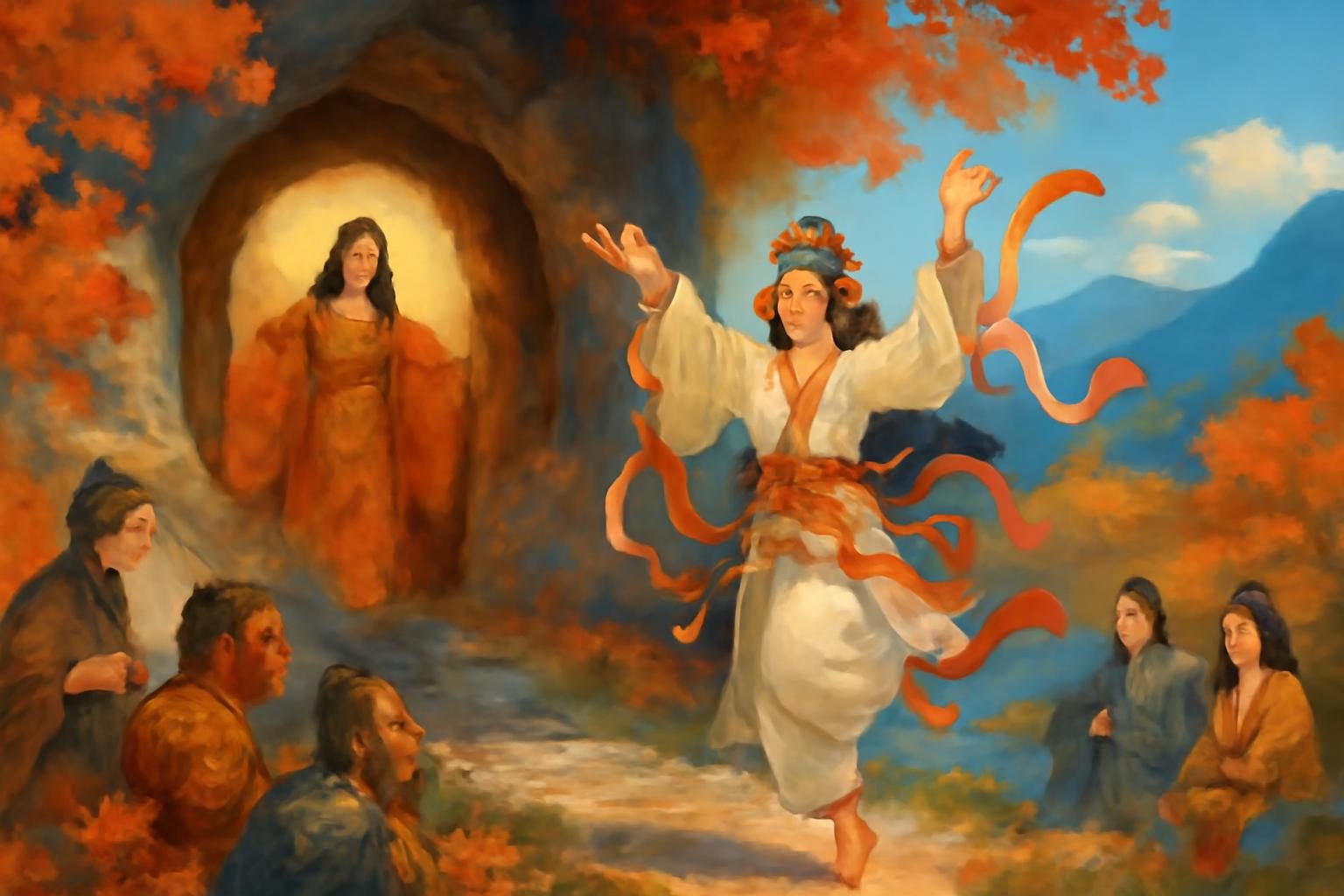
In Takachiho Town, Miyazaki Prefecture, lies a site steeped in myth and history, where the divine and the earthly intersect. Known as the Heavenly Rock Cave, this sacred place is said to be the hiding spot of the sun goddess Amaterasu, a legend that has shaped the cultural and spiritual landscape of Japan.


The Legend of Amaterasu and Takachiho’s Heavenly Rock Cave
LEGEND: The Sun Goddess’s Retreat
According to legend, the sun goddess Amaterasu, distressed by her brother Susanoo’s misbehavior, hid herself in a cave in Takachiho, plunging the world into darkness. The other gods, desperate to bring light back to the world, gathered outside the cave. Ame-no-Uzume, the goddess of dawn and revelry, performed a dance that caused the gods to laugh uproariously. Curious about the commotion, Amaterasu peeked out, and a mirror reflected her image, luring her out and restoring light to the world.
This story is not merely a myth but a reflection of the cultural values that emphasize the power of community and collective action. The gathering of the gods symbolizes the importance of unity and cooperation in overcoming challenges. Visitors to Takachiho can feel the weight of this legend as they explore the sites associated with it, each location a testament to the enduring power of these ancient stories.
LEGEND: The Role of Ame-no-Uzume
Ame-no-Uzume’s dance is a pivotal moment in the legend, showcasing the power of joy and laughter. Her performance was not just a simple dance but a divine act that brought the gods together in unity. The laughter and clamor outside the cave were so compelling that Amaterasu could not resist seeing what was happening, ultimately leading to her emergence and the return of light.
The dance of Ame-no-Uzume is celebrated in various cultural expressions, including the Yokagura dances, which are deeply rooted in the traditions of Takachiho. These performances highlight the role of art and festivity in spiritual practices, illustrating how creativity can bridge the gap between the human and the divine. As visitors witness these dances, they are reminded of the joyous spirit that Ame-no-Uzume embodies.

Exploring Amanoiwato Shrine and Viewing the Sacred Cave
FACT: Amanoiwato Shrine’s Sacred Grounds
Amanoiwato Shrine stands near the legendary cave in Takachiho Town, Miyazaki Prefecture. This shrine is a place of deep reverence, where visitors can connect with the myth of Amaterasu. The cave itself is considered the shrine’s divine body (go-shintai) and cannot be entered directly. Instead, visitors can view it from a distance, ensuring the sanctity of this sacred site is preserved.
The shrine’s location is steeped in natural beauty, with lush surroundings that enhance the spiritual atmosphere. As visitors approach the shrine, they are enveloped in a sense of tranquility and reverence, a reminder of the sacredness of the land and its connection to the divine. The careful preservation of the site reflects the community’s respect for its historical and spiritual significance.
FACT: Viewing the Cave
Visitors can view the sacred cave from a rear observation deck behind the West Main Shrine (Nishi Hongū) via free guided tours conducted by a Shinto priest. This unique experience allows visitors to appreciate the spiritual significance of the site while learning about its history and cultural importance. The guided tour provides insights into the rituals and traditions associated with the shrine, enhancing the visitor’s understanding of its sacred nature.
The observation deck offers a serene vantage point from which to contemplate the legend of Amaterasu. The guidance of a Shinto priest adds depth to the experience, as they share stories and rituals that have been passed down through generations. This connection to the past is palpable, providing a bridge between ancient traditions and modern visitors.
FACT: Etiquette and Reverence
When visiting Amanoiwato Shrine, it is important to observe proper etiquette. Visitors should remain quiet within the shrine precincts to maintain the sanctity of the environment. The guided tour to view the cave is free and conducted with a sense of reverence, emphasizing the spiritual significance of the site. At Amano Yasukawara, visitors are encouraged to avoid disturbing the stone stacks, which are offerings made by worshippers as acts of devotion.
Respectful behavior is essential to preserving the spiritual atmosphere of these sacred sites. Visitors are reminded that their presence is part of a long tradition of pilgrimage and worship. By honoring these customs, they contribute to the ongoing legacy of the shrine, ensuring that future generations can also experience its profound serenity.


The Mythic Cavern of Amano Yasukawara and Stone Offerings
FACT: Amano Yasukawara’s Sacred Gathering
A short 10-minute riverside path from Amanoiwato Shrine leads to Amano Yasukawara, a cavern where the gods are said to have held council to plan how to lure Amaterasu from hiding. This mystical site is marked by thousands of stone stacks along the riverbank, offerings made by worshippers over the years. These stone stacks are a testament to the enduring power of the legend and the devotion it inspires.
The path to Amano Yasukawara is a journey through nature, offering moments of reflection and connection with the divine. The cavern itself is a place where the boundaries between the human and the divine seem to blur, inviting visitors to contemplate the mysteries of the universe. The stone offerings are a physical manifestation of the prayers and hopes of countless pilgrims, each stack a silent witness to the faith and devotion that have characterized this site for centuries.
FACT: The Significance of Stone Offerings
The stone stacks at Amano Yasukawara are more than just physical structures; they represent the prayers and hopes of those who have visited this sacred place. Each stack is a personal offering, a symbol of connection between the worshipper and the divine. The practice of stacking stones is a way for visitors to leave a part of themselves at this holy site, contributing to the spiritual atmosphere that permeates the area.
These offerings are a testament to the enduring power of faith and the human desire to connect with something greater than oneself. As visitors add their own stones to the growing collection, they become part of a living tradition that transcends time and space. This act of devotion is a reminder that the legends of Takachiho continue to inspire and resonate with people from all walks of life.
Experiencing Takachiho’s Sacred Yokagura Dances
FACT: The Yokagura Tradition
Takachiho is also renowned for its Yokagura, a series of 33 mythic dances rooted in the Amano Iwato legend. Designated an Important Intangible Folk Cultural Property in 1978, these dances are performed to honor the gods and celebrate the rich tapestry of Japanese mythology. At Takachiho Shrine’s Kagura Hall, four representative dances from the 33-dance cycle are performed nightly by local residents known as hoshadon.
The Yokagura dances are a vibrant expression of Takachiho’s cultural heritage, blending music, movement, and storytelling to bring the legends to life. Each performance is a carefully choreographed ritual that conveys the essence of the myths, allowing audiences to experience the stories in a dynamic and engaging way. The dedication of the performers ensures that these traditions are preserved and passed down through generations.
FACT: Nightly Performances
The Yokagura performances are held nightly from mid-November to early February, with full all-night versions in village kagura lodgings. The Kagura Hall nightly shows begin at 8 PM and last about one hour, offering visitors a captivating glimpse into the spiritual and cultural heritage of Takachiho. These performances are not merely entertainment; they are a living tradition that connects the past with the present, allowing both locals and visitors to experience the power of myth through dance.
Attending a Yokagura performance is an immersive experience that transports audiences to a world where gods and humans coexist. The rhythmic drumming and vibrant costumes create an atmosphere of celebration and reverence, inviting spectators to participate in the timeless rituals that define Takachiho’s identity. These dances are a testament to the enduring power of myth and the role of art in preserving cultural heritage.
FACT: The Role of Hoshadon
The hoshadon, local residents who perform the Yokagura dances, play a crucial role in preserving this cultural heritage. Their dedication to the art form ensures that the stories and traditions of Takachiho continue to be passed down through generations. By participating in these performances, they help sustain the cultural identity of the region and keep the legend of Amaterasu alive in the hearts of all who witness the dances.
The hoshadon are not only performers but also cultural custodians, committed to maintaining the authenticity and integrity of the Yokagura tradition. Their involvement in the performances is a reflection of their deep connection to the community and its history. Through their efforts, the Yokagura dances remain a vibrant and essential part of Takachiho’s cultural landscape, inspiring both locals and visitors alike.


Related on JAPAN ESSENCE: Visiting Amano Iwato in Shima: Mie Prefecture’s Mythical Hiding Cave | Visiting Jōren Falls: Shizuoka’s Legendary Spider Woman Waterfall
Regional guide
Location: Takachiho, Miyazaki Prefecture
- Amanoiwato Shrine (West Main Shrine observation deck) (Takachiho Town) — source
- Takachiho Shrine Kagura Hall (Takachiho Town) — source
Sources
- 天岩戸神社 | 観光スポット | 宮崎県公式観光サイト「みやざき観光ナビ」
- 天安河原 | 観光スポット | 宮崎県公式観光サイト「みやざき観光ナビ」
- Tokyo to Takachiho: How to get to and around Takachiho – Access, Transport and Orientation
For centuries, onigawara (demon roof tiles) have guarded Japanese rooftops from evil. You can find onigawara pieces at Oni Koubou. Want to see Japanese roof tiles up close? Try a hands-on tile workshop at Kawara Koubou.
宮崎県高千穂町には、神話と歴史が交差する場所があります。天岩戸として知られるこの神聖な場所は、太陽の女神天照大神が隠れた場所とされ、日本の文化と精神的な風景を形作ってきた伝説です。
天照大神と高千穂の天岩戸の伝説
伝承: 太陽の女神の隠れ家
伝説によれば、太陽の女神天照大神は、弟の須佐之男の乱暴に心を痛め、高千穂の洞窟に隠れ、世界を暗闇に陥れました。他の神々は、世界に光を取り戻すために洞窟の外に集まりました。夜明けと宴の女神アメノウズメは、神々が大笑いする踊りを披露しました。騒ぎに興味を持った天照大神は外を覗き、鏡に映った自分の姿に引き寄せられ、外に出て世界に光を取り戻しました。
この物語は単なる神話ではなく、共同体と協力の力を強調する文化的価値観の反映です。神々の集まりは、困難を乗り越えるための団結と協力の重要性を象徴しています。高千穂を訪れる人々は、この伝説の重みを感じながら、それに関連する場所を探索し、それぞれの場所がこれら古代の物語の持続的な力を証明しています。
伝承: アメノウズメの役割
アメノウズメの踊りは伝説の中で重要な瞬間であり、喜びと笑いの力を示しています。彼女の踊りは単なる踊りではなく、神々を団結させる神聖な行為でした。洞窟の外の笑い声と騒ぎは非常に魅力的で、天照大神は何が起こっているのか見ずにはいられず、最終的に出現し、光が戻りました。
アメノウズメの踊りは、高千穂の伝統に深く根ざした夜神楽など、さまざまな文化的表現で祝われています。これらの公演は、芸術と祭りが精神的な実践においてどのように役割を果たすかを示し、創造性が人間と神聖なものの間のギャップを埋める方法を示しています。訪問者がこれらの踊りを目撃するとき、彼らはアメノウズメが体現する喜びの精神を思い出します。
天岩戸神社と神聖な洞窟を探索する
事実: 天岩戸神社の神聖な地
天岩戸神社は、宮崎県高千穂町の伝説の洞窟の近くにあります。この神社は、訪問者が天照大神の神話とつながることができる深い敬意の場所です。洞窟自体は神社の御神体(ごしんたい)とされ、直接入ることはできません。代わりに、訪問者は遠くからそれを見ることができ、この神聖な場所の神聖さが保たれています。
神社の場所は自然の美しさに満ちており、精神的な雰囲気を高めています。訪問者が神社に近づくと、静けさと敬意に包まれ、土地の神聖さと神聖なものとのつながりを思い出させます。サイトの慎重な保存は、その歴史的および精神的な重要性に対する地域社会の尊敬を反映しています。
事実: 洞窟を見る
訪問者は、神職による無料のガイドツアーを通じて、西本宮の裏の展望デッキから神聖な洞窟を見ることができます。このユニークな体験は、訪問者がその歴史と文化的重要性を学びながら、サイトの精神的な意義を理解するのに役立ちます。ガイドツアーは、神社に関連する儀式や伝統についての洞察を提供し、訪問者の神聖な性質の理解を深めます。
展望デッキは、天照大神の伝説を考えるための静かな視点を提供します。神職のガイドは、世代を超えて受け継がれてきた物語や儀式を共有し、体験に深みを加えます。この過去とのつながりは、古代の伝統と現代の訪問者の間の橋渡しを提供します。
事実: 礼儀と敬意
天岩戸神社を訪れる際には、適切な礼儀を守ることが重要です。訪問者は、環境の神聖さを維持するために、神社の境内では静かにするべきです。洞窟を見るためのガイドツアーは無料で、神聖な場所の精神的な意義を強調しながら、敬意を持って行われます。天安河原では、参拝者が奉納した石積みを乱さないようにすることが推奨されます。
敬意を持った行動は、これらの神聖な場所の精神的な雰囲気を保つために不可欠です。訪問者は、自分たちの存在が巡礼と礼拝の長い伝統の一部であることを思い出します。これらの習慣を尊重することで、彼らは神社の継続的な遺産に貢献し、将来の世代もその深い静けさを体験できるようにします。
天安河原の神話的な洞窟と石の奉納
事実: 天安河原の神聖な集まり
天岩戸神社から川沿いの道を10分ほど歩くと、天安河原に到着します。ここは、神々が天照大神を隠れ家から誘い出す計画を立てたとされる洞窟です。この神秘的な場所は、川岸に沿って積まれた何千もの石積みによって特徴付けられています。これらの石積みは、長年にわたって参拝者によって捧げられた奉納物であり、伝説の持続的な力とそれが呼び起こす信仰の証です。
天安河原への道は自然を通る旅であり、神聖なものとのつながりと反省の瞬間を提供します。洞窟自体は、人間と神聖なものの境界が曖昧になる場所であり、訪問者に宇宙の神秘を考えるよう招きます。石の奉納は、無数の巡礼者の祈りと希望の物理的な表現であり、それぞれの積み重ねが、何世紀にもわたってこの場所を特徴付けてきた信仰と献身の静かな証人です。
事実: 石の奉納の意義
天安河原の石積みは、単なる物理的な構造ではなく、この神聖な場所を訪れた人々の祈りと希望を表しています。それぞれの積み重ねは個人的な奉納であり、参拝者と神聖なものとのつながりの象徴です。石を積むという行為は、訪問者がこの聖地に自分の一部を残す方法であり、地域を満たす精神的な雰囲気に貢献しています。
これらの奉納は、信仰の持続的な力と、自分自身を超えた何かとつながりたいという人間の欲望の証です。訪問者が自分の石を増え続けるコレクションに加えるとき、彼らは時間と空間を超えた生きた伝統の一部になります。この献身の行為は、高千穂の伝説が人々にどのようにインスピレーションを与え、共鳴し続けているかを思い出させます。
高千穂の神聖な夜神楽を体験する
事実: 夜神楽の伝統
高千穂はまた、天岩戸の伝説に根ざした33の神話的な踊りからなる夜神楽でも有名です。1978年に重要無形民俗文化財に指定されたこれらの踊りは、神々を称え、日本の神話の豊かな織物を祝うために行われます。高千穂神社の神楽殿では、33の踊りのサイクルから4つの代表的な踊りが毎晩、ほしゃどんと呼ばれる地元住民によって演じられます。
夜神楽の踊りは、高千穂の文化遺産の鮮やかな表現であり、音楽、動き、物語を融合させて伝説を生き生きとさせます。それぞれの公演は、神話の本質を伝えるために慎重に振り付けられた儀式であり、観客が物語を動的で魅力的な方法で体験できるようにします。演者の献身は、これらの伝統が保存され、世代を超えて受け継がれることを保証します。
事実: 毎晩の公演
夜神楽の公演は、11月中旬から2月初旬まで毎晩行われ、村の神楽宿では一晩中の完全版が行われます。神楽殿の夜のショーは午後8時に始まり、約1時間続き、高千穂の精神的および文化的遺産を魅力的に垣間見ることができます。これらの公演は単なる娯楽ではなく、過去と現在を結びつける生きた伝統であり、地元の人々と訪問者の両方が踊りを通じて神話の力を体験できるようにします。
夜神楽の公演に参加することは、観客を神々と人間が共存する世界に運ぶ没入型の体験です。リズミカルな太鼓と鮮やかな衣装が祝祭と敬意の雰囲気を作り出し、観客を高千穂のアイデンティティを定義する時代を超えた儀式に参加させます。これらの踊りは、神話の持続的な力と文化遺産を保存する上での芸術の役割の証です。
事実: ほしゃどんの役割
夜神楽の踊りを演じる地元住民であるほしゃどんは、この文化遺産を保存する上で重要な役割を果たしています。彼らの芸術形式への献身は、高千穂の物語と伝統が世代を超えて受け継がれ続けることを保証します。これらの公演に参加することで、彼らは地域の文化的アイデンティティを維持し、天照大神の伝説をすべての観客の心に生き続けさせます。
ほしゃどんは単なる演者ではなく、夜神楽の伝統の真正性と完全性を維持することに専念する文化の守護者でもあります。彼らの公演への関与は、地域社会とその歴史への深いつながりを反映しています。彼らの努力を通じて、夜神楽の踊りは高千穂の文化的風景の鮮やかで不可欠な部分であり続け、地元の人々と訪問者の両方にインスピレーションを与えています。
Related on JAPAN ESSENCE: Visiting Amano Iwato in Shima: Mie Prefecture’s Mythical Hiding Cave | Visiting Jōren Falls: Shizuoka’s Legendary Spider Woman Waterfall
地域ガイド
所在地: 宮崎県高千穂町
Sources
- 天岩戸神社 | 観光スポット | 宮崎県公式観光サイト「みやざき観光ナビ」
- 天安河原 | 観光スポット | 宮崎県公式観光サイト「みやざき観光ナビ」
- Tokyo to Takachiho: How to get to and around Takachiho – Access, Transport and Orientation
屋根の上で魔除けとして家を守ってきた鬼瓦に興味のある方は、鬼工房もご覧ください。 日本の瓦を身近に感じたい方は、瓦工房の瓦づくり体験もどうぞ。
Leave a Reply