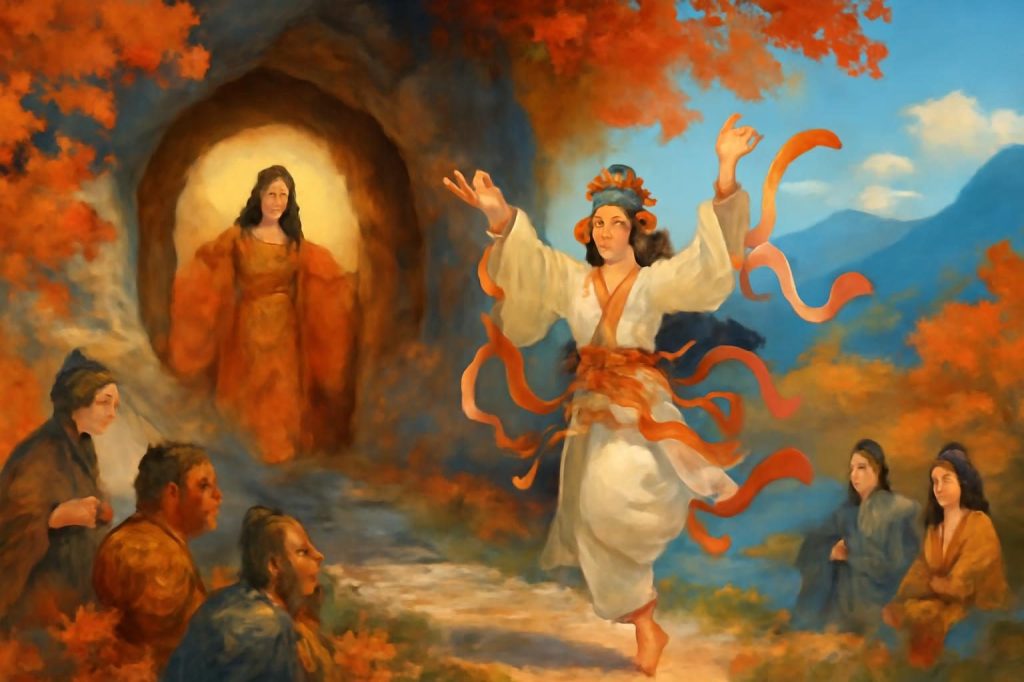
In Takachiho Town, Miyazaki Prefecture, lies a site steeped in myth and history, where the divine and the earthly intersect. Known as the Heavenly Rock Cave, this sacred place is said to be the hiding spot of the sun goddess Amaterasu, a legend that has shaped the cultural and spiritual landscape of Japan.

The Legend of Amaterasu and Takachiho’s Heavenly Rock Cave
LEGEND: The Sun Goddess’s Retreat
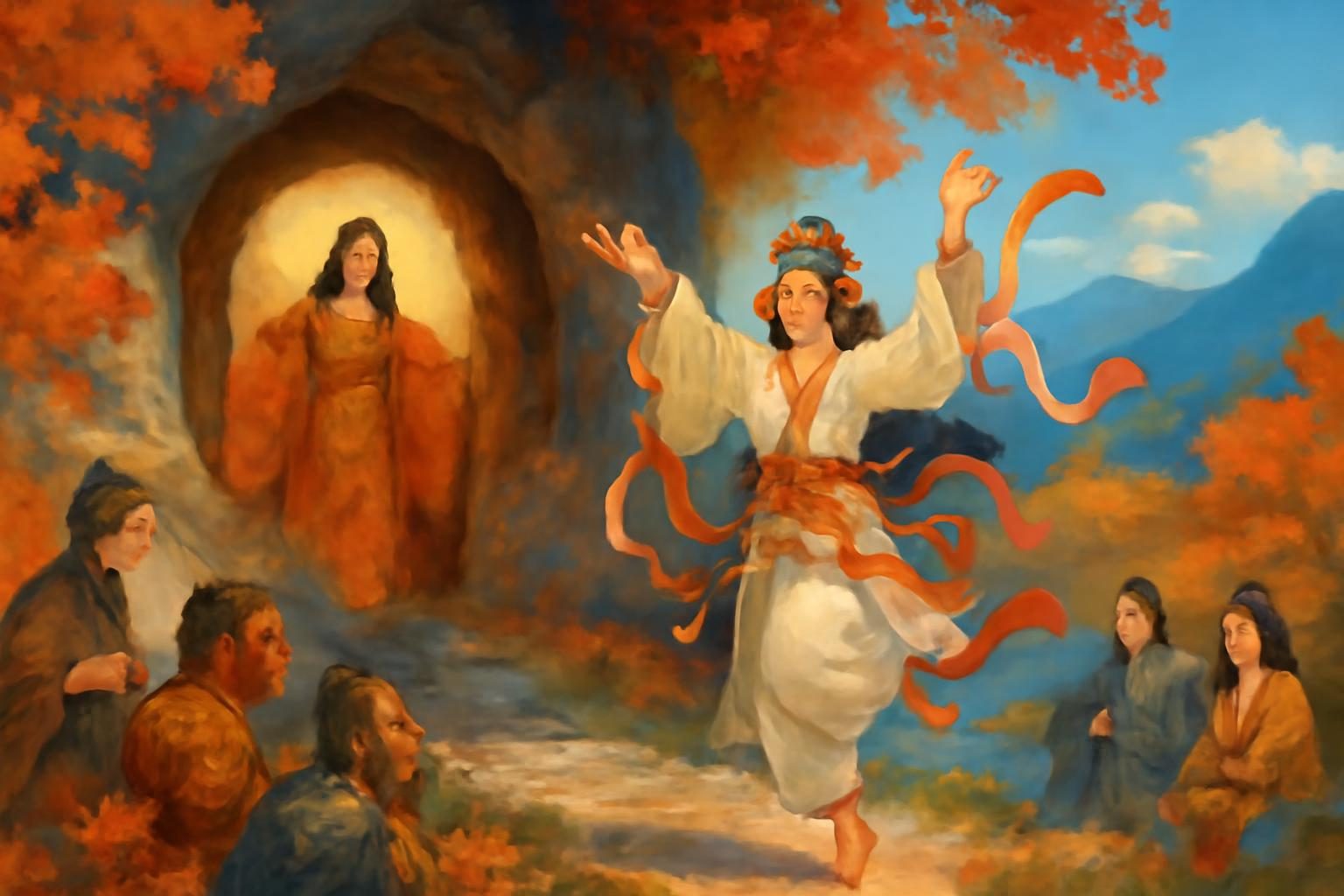
According to legend, the sun goddess Amaterasu, distressed by her brother Susanoo’s misbehavior, hid herself in a cave in Takachiho, plunging the world into darkness. The other gods, desperate to bring light back to the world, gathered outside the cave. Ame-no-Uzume, the goddess of dawn and revelry, performed a dance that caused the gods to laugh uproariously. Curious about the commotion, Amaterasu peeked out, and a mirror reflected her image, luring her out and restoring light to the world.
This story is not merely a myth but a reflection of the cultural values that emphasize the power of community and collective action. The gathering of the gods symbolizes the importance of unity and cooperation in overcoming challenges. Visitors to Takachiho can feel the weight of this legend as they explore the sites associated with it, each location a testament to the enduring power of these ancient stories.
LEGEND: The Role of Ame-no-Uzume
Ame-no-Uzume’s dance is a pivotal moment in the legend, showcasing the power of joy and laughter. Her performance was not just a simple dance but a divine act that brought the gods together in unity. The laughter and clamor outside the cave were so compelling that Amaterasu could not resist seeing what was happening, ultimately leading to her emergence and the return of light.
The dance of Ame-no-Uzume is celebrated in various cultural expressions, including the Yokagura dances, which are deeply rooted in the traditions of Takachiho. These performances highlight the role of art and festivity in spiritual practices, illustrating how creativity can bridge the gap between the human and the divine. As visitors witness these dances, they are reminded of the joyous spirit that Ame-no-Uzume embodies.
Exploring Amanoiwato Shrine and Viewing the Sacred Cave
FACT: Amanoiwato Shrine’s Sacred Grounds
Amanoiwato Shrine stands near the legendary cave in Takachiho Town, Miyazaki Prefecture. This shrine is a place of deep reverence, where visitors can connect with the myth of Amaterasu. The cave itself is considered the shrine’s divine body (go-shintai) and cannot be entered directly. Instead, visitors can view it from a distance, ensuring the sanctity of this sacred site is preserved.
The shrine’s location is steeped in natural beauty, with lush surroundings that enhance the spiritual atmosphere. As visitors approach the shrine, they are enveloped in a sense of tranquility and reverence, a reminder of the sacredness of the land and its connection to the divine. The careful preservation of the site reflects the community’s respect for its historical and spiritual significance.
FACT: Viewing the Cave
Visitors can view the sacred cave from a rear observation deck behind the West Main Shrine (Nishi Hongū) via free guided tours conducted by a Shinto priest. This unique experience allows visitors to appreciate the spiritual significance of the site while learning about its history and cultural importance. The guided tour provides insights into the rituals and traditions associated with the shrine, enhancing the visitor’s understanding of its sacred nature.
The observation deck offers a serene vantage point from which to contemplate the legend of Amaterasu. The guidance of a Shinto priest adds depth to the experience, as they share stories and rituals that have been passed down through generations. This connection to the past is palpable, providing a bridge between ancient traditions and modern visitors.
FACT: Etiquette and Reverence
When visiting Amanoiwato Shrine, it is important to observe proper etiquette. Visitors should remain quiet within the shrine precincts to maintain the sanctity of the environment. The guided tour to view the cave is free and conducted with a sense of reverence, emphasizing the spiritual significance of the site. At Amano Yasukawara, visitors are encouraged to avoid disturbing the stone stacks, which are offerings made by worshippers as acts of devotion.
Respectful behavior is essential to preserving the spiritual atmosphere of these sacred sites. Visitors are reminded that their presence is part of a long tradition of pilgrimage and worship. By honoring these customs, they contribute to the ongoing legacy of the shrine, ensuring that future generations can also experience its profound serenity.

The Mythic Cavern of Amano Yasukawara and Stone Offerings
FACT: Amano Yasukawara’s Sacred Gathering
A short 10-minute riverside path from Amanoiwato Shrine leads to Amano Yasukawara, a cavern where the gods are said to have held council to plan how to lure Amaterasu from hiding. This mystical site is marked by thousands of stone stacks along the riverbank, offerings made by worshippers over the years. These stone stacks are a testament to the enduring power of the legend and the devotion it inspires.
The path to Amano Yasukawara is a journey through nature, offering moments of reflection and connection with the divine. The cavern itself is a place where the boundaries between the human and the divine seem to blur, inviting visitors to contemplate the mysteries of the universe. The stone offerings are a physical manifestation of the prayers and hopes of countless pilgrims, each stack a silent witness to the faith and devotion that have characterized this site for centuries.
FACT: The Significance of Stone Offerings
The stone stacks at Amano Yasukawara are more than just physical structures; they represent the prayers and hopes of those who have visited this sacred place. Each stack is a personal offering, a symbol of connection between the worshipper and the divine. The practice of stacking stones is a way for visitors to leave a part of themselves at this holy site, contributing to the spiritual atmosphere that permeates the area.
These offerings are a testament to the enduring power of faith and the human desire to connect with something greater than oneself. As visitors add their own stones to the growing collection, they become part of a living tradition that transcends time and space. This act of devotion is a reminder that the legends of Takachiho continue to inspire and resonate with people from all walks of life.
Experiencing Takachiho’s Sacred Yokagura Dances
FACT: The Yokagura Tradition
Takachiho is also renowned for its Yokagura, a series of 33 mythic dances rooted in the Amano Iwato legend. Designated an Important Intangible Folk Cultural Property in 1978, these dances are performed to honor the gods and celebrate the rich tapestry of Japanese mythology. At Takachiho Shrine’s Kagura Hall, four representative dances from the 33-dance cycle are performed nightly by local residents known as hoshadon.
The Yokagura dances are a vibrant expression of Takachiho’s cultural heritage, blending music, movement, and storytelling to bring the legends to life. Each performance is a carefully choreographed ritual that conveys the essence of the myths, allowing audiences to experience the stories in a dynamic and engaging way. The dedication of the performers ensures that these traditions are preserved and passed down through generations.
FACT: Nightly Performances
The Yokagura performances are held nightly from mid-November to early February, with full all-night versions in village kagura lodgings. The Kagura Hall nightly shows begin at 8 PM and last about one hour, offering visitors a captivating glimpse into the spiritual and cultural heritage of Takachiho. These performances are not merely entertainment; they are a living tradition that connects the past with the present, allowing both locals and visitors to experience the power of myth through dance.
Attending a Yokagura performance is an immersive experience that transports audiences to a world where gods and humans coexist. The rhythmic drumming and vibrant costumes create an atmosphere of celebration and reverence, inviting spectators to participate in the timeless rituals that define Takachiho’s identity. These dances are a testament to the enduring power of myth and the role of art in preserving cultural heritage.
FACT: The Role of Hoshadon
The hoshadon, local residents who perform the Yokagura dances, play a crucial role in preserving this cultural heritage. Their dedication to the art form ensures that the stories and traditions of Takachiho continue to be passed down through generations. By participating in these performances, they help sustain the cultural identity of the region and keep the legend of Amaterasu alive in the hearts of all who witness the dances.
The hoshadon are not only performers but also cultural custodians, committed to maintaining the authenticity and integrity of the Yokagura tradition. Their involvement in the performances is a reflection of their deep connection to the community and its history. Through their efforts, the Yokagura dances remain a vibrant and essential part of Takachiho’s cultural landscape, inspiring both locals and visitors alike.


Related on JAPAN ESSENCE: Visiting Amano Iwato in Shima: Mie Prefecture’s Mythical Hiding Cave | Visiting Jōren Falls: Shizuoka’s Legendary Spider Woman Waterfall
Regional guide
Location: Takachiho, Miyazaki Prefecture
- Amanoiwato Shrine (West Main Shrine observation deck) (Takachiho Town) — source
- Takachiho Shrine Kagura Hall (Takachiho Town) — source
Sources
- 天岩戸神社 | 観光スポット | 宮崎県公式観光サイト「みやざき観光ナビ」
- 天安河原 | 観光スポット | 宮崎県公式観光サイト「みやざき観光ナビ」
- Tokyo to Takachiho: How to get to and around Takachiho – Access, Transport and Orientation
For centuries, onigawara (demon roof tiles) have guarded Japanese rooftops from evil. You can find onigawara pieces at Oni Koubou. Want to see Japanese roof tiles up close? Try a hands-on tile workshop at Kawara Koubou.


.jpg)


Leave a comment