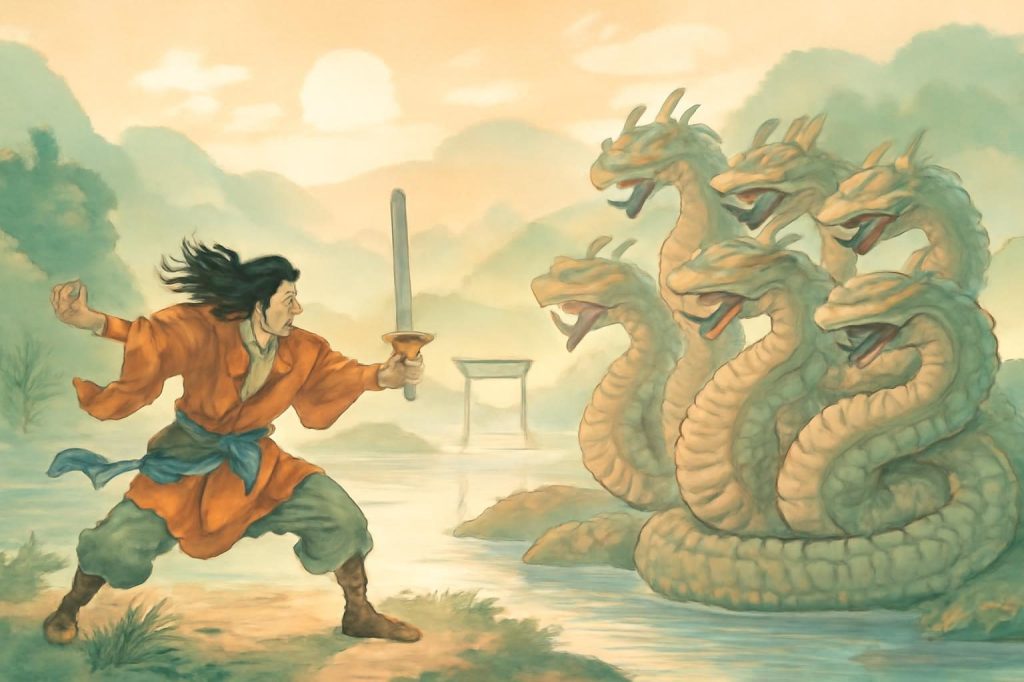
In Unnan City, Shimane Prefecture, the Hii River flows through a landscape steeped in myth and legend, where the storm god Susanoo is said to have vanquished the fearsome eight-headed serpent, Yamata no Orochi. This legendary tale is deeply woven into the cultural and historical fabric of the region, inviting visitors to explore its storied past.

Introduction to the Yamata no Orochi Legend in Shimane
FACT: The Myth’s Historical Roots
The Yamata-no-Orochi myth is one of Japan’s most famous legends, recounting the story of the storm god Susanoo who defeated an eight-headed serpent. This tale is not only a captivating story but also a reflection of the region’s historical and cultural landscape. The Hii River, a central element in the myth, has been associated with this legend for centuries, symbolizing both the natural beauty and the mythological richness of Shimane Prefecture. The river’s presence in the legend underscores its importance as a lifeline for the communities along its banks, providing sustenance and a setting for the unfolding of this dramatic tale.
In addition to its mythological significance, the Hii River has played a crucial role in the development of the region’s culture and economy. Its waters have supported agriculture and trade, and its banks have been the site of numerous historical events, further embedding the river into the cultural consciousness of the people of Shimane.
LEGEND: The Tale of Susanoo and the Serpent
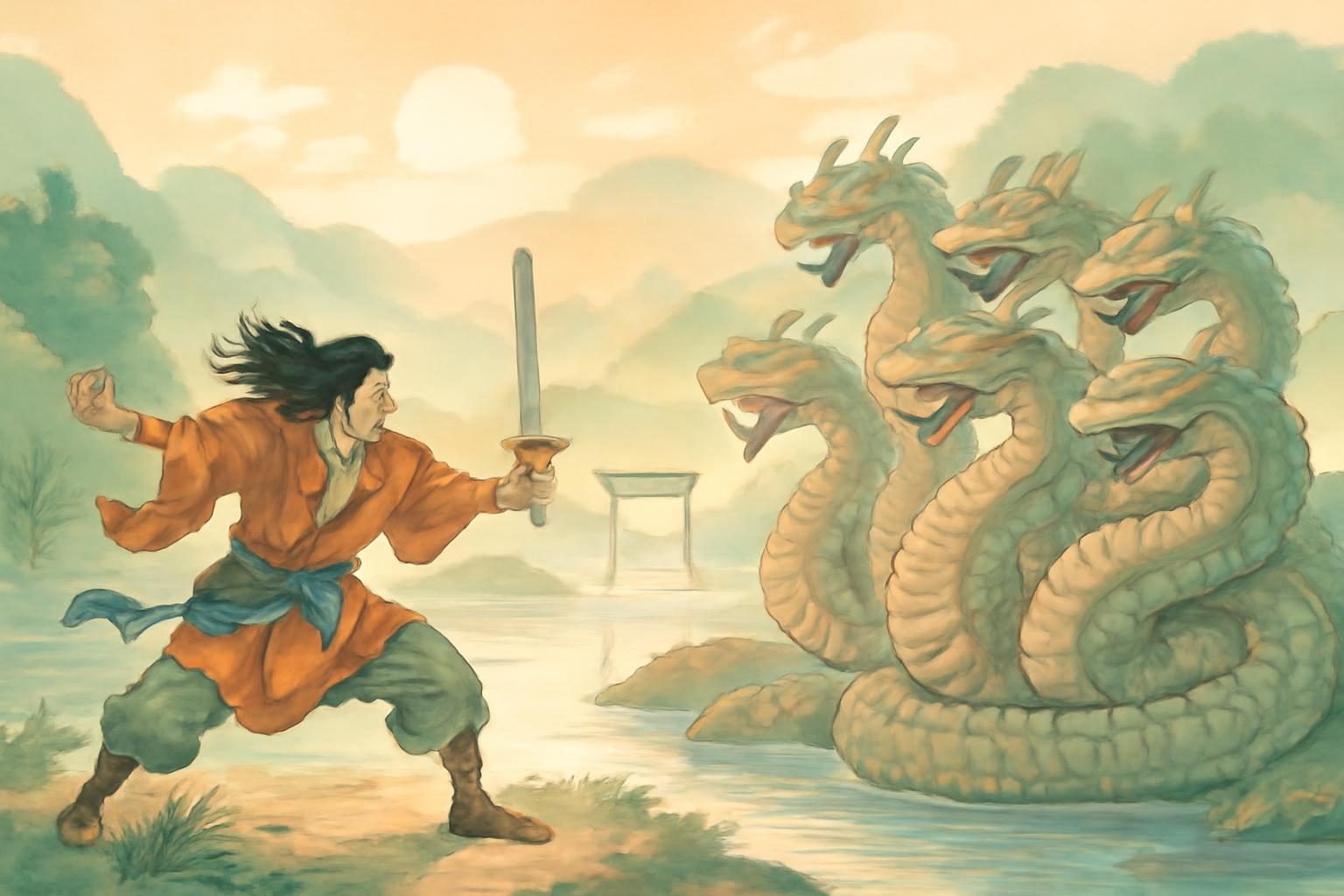
According to legend, Susanoo encountered a grieving family near the headwaters of the Hii River in Okuizumo Town. They told him of the monstrous Yamata-no-Orochi, which demanded the sacrifice of their daughters. Moved by their plight, Susanoo devised a plan to defeat the serpent. He prepared eight vats of sake and placed them around the serpent’s lair. When the serpent drank the sake and fell into a stupor, Susanoo seized the moment to slay it, cutting off its heads and tails.
This legendary encounter is celebrated in local festivals and cultural events, where the bravery and cunning of Susanoo are honored. The tale is often depicted in traditional art and performances, providing a vivid retelling of the hero’s triumph over the monstrous serpent. These cultural expressions keep the legend alive, allowing each generation to connect with the myth and its enduring themes of courage and sacrifice.
The Hii River: The Lifeline and Lair of the Serpent
FACT: The River’s Significance
The Hii River flows through Unnan City, and it is here that Susanoo is said to have encountered the serpent. This river is not only a geographical landmark but also a symbolic one, representing the lifeblood of the region and a key element in the myth of Yamata-no-Orochi. Scholars often interpret the myth and the river’s flooding as an allegory for ancient flood-control efforts in the area. The challenges of managing the river’s waters are mirrored in the tale, reflecting the struggles and innovations of early inhabitants in their quest to harness nature’s power.
The river’s historical significance extends beyond its mythological associations. It has been a vital resource for irrigation and transportation, shaping the livelihoods of those who live along its banks. The interplay between the river’s natural forces and human ingenuity is a testament to the resilience and adaptability of the region’s people, who have long sought to coexist with the powerful elements of their environment.
LEGEND: Ama-ga-fuchi, the Serpent’s Dwelling
In the Kisuki area of Unnan City, Ama-ga-fuchi is a deep pool on the Hii River, believed to have been the dwelling place of Yamata-no-Orochi. This site is shrouded in mystery and legend, drawing visitors who wish to connect with the mythological past and explore the natural beauty of the region. The pool’s dark, reflective waters evoke a sense of the unknown, inviting contemplation of the ancient stories that have been passed down through generations.
Visitors to Ama-ga-fuchi can experience the tranquil yet eerie atmosphere that has inspired countless tales and imaginations. The site’s natural beauty, combined with its legendary significance, makes it a compelling destination for those seeking to delve into the mythological heritage of Unnan City.

Ama-ga-fuchi and Okuizumo: Where the Monster Dwelt
FACT: Torikami and the Legend’s Origins
Torikami, near the headwaters of the Hii River in Okuizumo Town, is identified as the place where Susanoo first encountered the family and began the legend of Yamata-no-Orochi. This location is crucial to understanding the origins of the myth and its deep connection to the landscape of Shimane. The headwaters serve as a symbolic starting point for the tale, where the forces of nature and destiny converge to set the stage for Susanoo’s heroic deeds.
The area’s rugged terrain and pristine natural environment provide a fitting backdrop for the legendary events. Visitors can explore the scenic beauty of Torikami, gaining insight into the geographical and cultural context that gave rise to the enduring myth of Yamata-no-Orochi.
LEGEND: The Serpent’s Lair
According to local lore, the serpent made its lair in the depths of Ama-ga-fuchi, a place that still evokes a sense of awe and wonder. Visitors to this area can immerse themselves in the mythological atmosphere, imagining the dramatic events that unfolded here according to the ancient tales. The site’s natural features, such as its rocky outcrops and dense vegetation, contribute to the mystique that surrounds this legendary location.
The enduring fascination with the serpent’s lair reflects the power of myth to shape perceptions of the landscape. Ama-ga-fuchi’s association with the Yamata-no-Orochi legend enhances its allure, drawing those who seek to experience the magic and mystery of this storied place.
Hii Shrine and Happon-sugi: Marking the Serpent’s End
FACT: The Shrine’s Historical Role
Hii Shrine in Kisuki-cho, Unnan City, plays a significant role in the Yamata-no-Orochi legend. It is here that the eight cedar trees, known as Happon-sugi, are said to mark the spot where Susanoo buried the serpent’s eight heads. This site serves as a tangible connection to the myth, offering a place for reflection and reverence. The shrine’s sacred grounds provide a serene setting for visitors to contemplate the legend’s themes of victory and renewal.
The presence of the Happon-sugi trees adds a living dimension to the site’s historical significance. These ancient cedars stand as silent witnesses to the passage of time, embodying the enduring legacy of Susanoo’s triumph over the serpent. Their majestic presence invites visitors to reflect on the interconnectedness of nature, myth, and history.
LEGEND: The Burial of the Serpent
Legend holds that after defeating Yamata-no-Orochi, Susanoo buried the serpent’s heads beneath the Happon-sugi at Hii Shrine. This act not only signifies the end of the serpent’s terror but also the triumph of good over evil, a theme that resonates throughout Japanese mythology. The burial site serves as a powerful reminder of the hero’s victory and the restoration of peace to the land.
The story of the serpent’s burial is commemorated in local rituals and ceremonies, which celebrate the enduring power of myth to inspire and unite communities. These cultural practices ensure that the legend of Yamata-no-Orochi remains a vibrant part of the region’s heritage, fostering a sense of continuity and connection with the past.

Suga Shrine: The Aftermath and Birthplace of Waka Poetry
FACT: The Shrine’s Cultural Significance
Suga Shrine, located in the Daito area of Unnan City, is where Susanoo and Kushinada-hime are said to have lived after the serpent’s defeat. The shrine is considered one of the oldest in Japan and is linked to the Yamata-no-Orochi legend. It is also recognized as the birthplace of waka poetry, where Susanoo composed the first waka poem. This cultural milestone highlights the shrine’s importance as a center of artistic and spiritual expression.
The shrine’s historical and cultural significance extends beyond its mythological associations. As a site of pilgrimage and worship, Suga Shrine attracts visitors seeking to connect with the spiritual heritage of the region. Its serene atmosphere and beautiful architecture provide a setting for contemplation and inspiration, inviting reflection on the enduring legacy of Susanoo’s deeds.
LEGEND: Susanoo’s New Home
According to legend, after vanquishing the serpent, Susanoo built a palace at the site of Suga Shrine. This location became a symbol of peace and prosperity, marking the beginning of a new era for the region and the enduring legacy of Susanoo’s victory. The shrine’s association with the hero’s post-victory life adds a layer of depth to its historical narrative, enriching the visitor’s experience.
The story of Susanoo’s new home is celebrated in local lore and cultural traditions, which emphasize the themes of renewal and transformation. These narratives reinforce the shrine’s role as a beacon of hope and resilience, embodying the spirit of renewal that follows triumph over adversity.
Connecting Myth to Reality: Floods and Tatara Ironmaking
FACT: The Myth’s Allegorical Meaning
Scholars interpret the Yamata-no-Orochi myth as an allegory for ancient flood-control efforts in the region. The Hii River’s historical significance and its association with the legend underscore the challenges faced by early inhabitants in managing the river’s floods. This interpretation highlights the practical aspects of the myth, revealing its relevance to the region’s historical development and environmental adaptation.
The allegorical reading of the myth provides insight into the ways in which ancient communities understood and responded to the natural world. By framing the legend as a reflection of human ingenuity and resilience, scholars offer a deeper understanding of the cultural and historical context in which the myth arose.
FACT: Tatara Ironmaking Heritage
The myth’s discovery of a sword in the serpent’s tail ties to the region’s long legacy of tatara ironmaking. Okuizumo Town, known for its historical connection to this ancient craft, reflects the intersection of myth and industry, highlighting the cultural richness of Shimane Prefecture. The practice of tatara ironmaking is celebrated as a testament to the region’s innovative spirit and its ability to harness natural resources for technological advancement.
The connection between the myth and the ironmaking tradition enriches the cultural narrative of the region, emphasizing the interplay between legend and reality. Visitors to Okuizumo can explore this heritage, gaining insight into the historical and cultural forces that have shaped the region’s identity over the centuries.

Related on JAPAN ESSENCE: Visiting Amano Iwato in Shima: Mie Prefecture’s Mythical Hiding Cave | Visiting Jōren Falls: Shizuoka’s Legendary Spider Woman Waterfall
Regional guide
Location: Unnan City, Shimane Prefecture
- Yamata no Orochi Park (Unnan City) — source
- Orochi Shrine (part of Iwatsubo Shrine) (Okuizumo Town) — source
For centuries, onigawara (demon roof tiles) have guarded Japanese rooftops from evil. You can find onigawara pieces at Oni Koubou. Want to see Japanese roof tiles up close? Try a hands-on tile workshop at Kawara Koubou.


Leave a comment