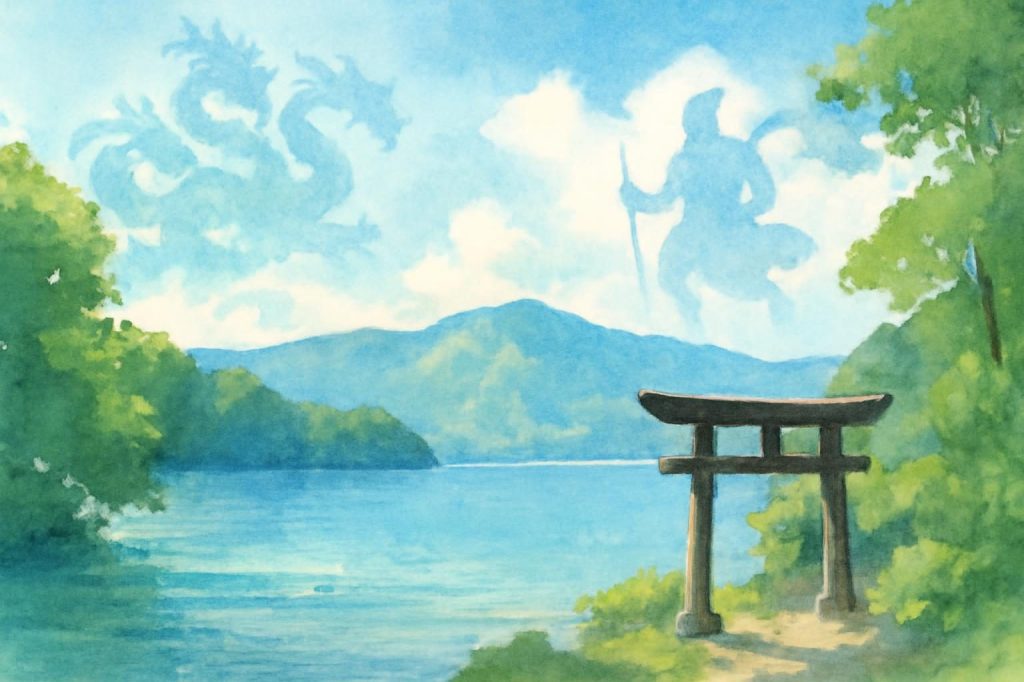
Lake Towada, located in Towada, Aomori Prefecture, is not only a natural wonder but also a site steeped in myth and legend. Among these stories is the captivating tale of Nansobō, the nine-headed dragon, which continues to intrigue visitors and locals alike.

Introduction to Lake Towada and Its Mythic Origins
FACT: The Natural Beauty of Lake Towada
Lake Towada is a double-caldera crater lake, renowned for its depth and beauty. At 327 meters, it is the third deepest lake in Japan and is noted for its clarity and the fact that it never freezes, even during the harsh winters. The lake’s natural beauty is complemented by the surrounding landscapes, which offer stunning views across all seasons. The lake is situated on the border between Aomori and Akita Prefectures, adding to its geographical significance and allure. Visitors can enjoy activities such as boating and hiking, which allow them to fully immerse themselves in the lake’s serene environment. The lake’s unique geological formation and its rich biodiversity make it a subject of interest for both geologists and ecologists.
LEGEND: The Tale of Nansobō
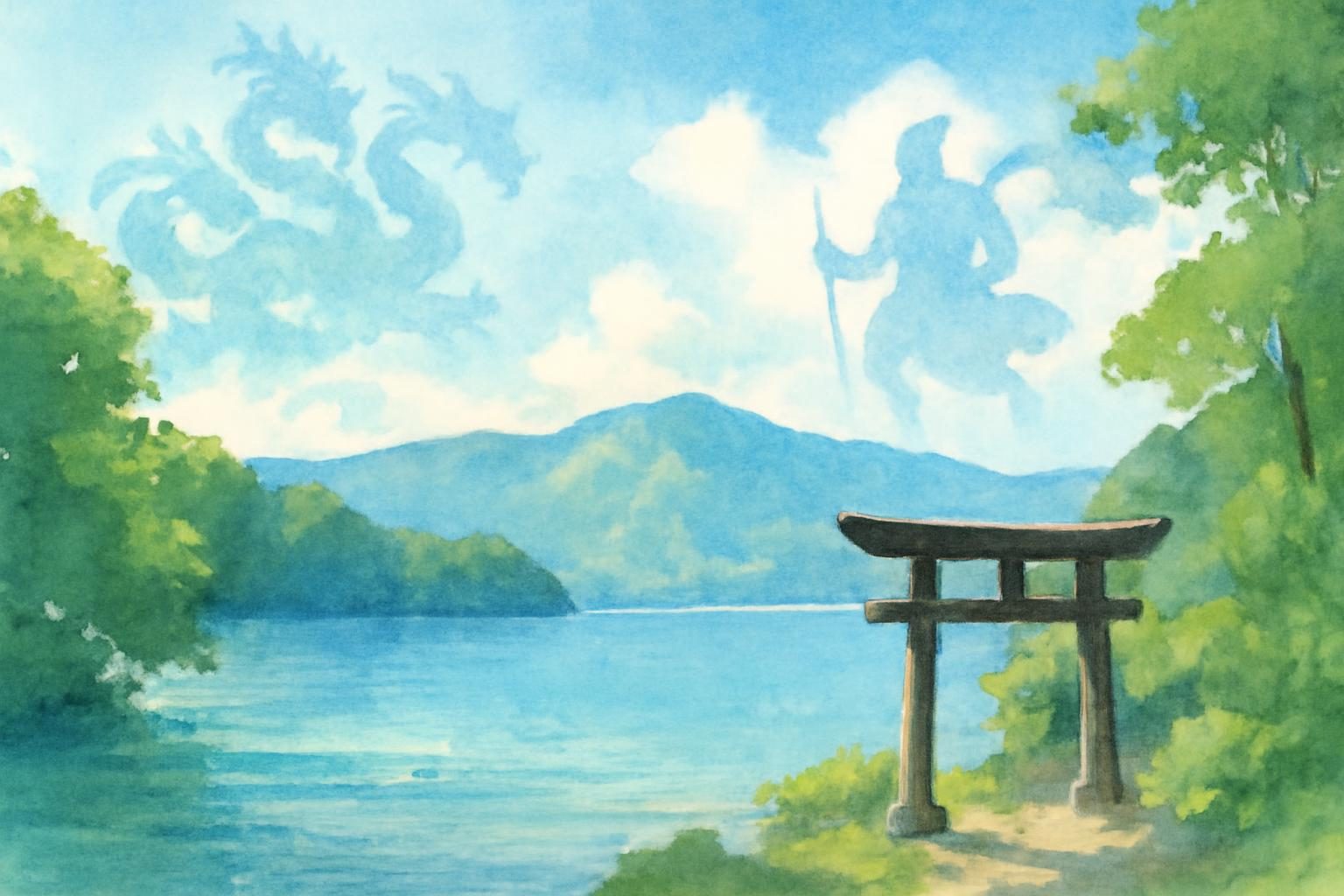
According to legend, Nansobō was an ascetic from Kumano who transformed into a nine-headed dragon known as Seiryū Daigongen. This transformation was pivotal in his battle against the serpent Hachirōtarō. After defeating the serpent, Nansobō became the guardian deity of Lake Towada, ensuring its protection and prosperity. The legend speaks to the deep cultural and spiritual connections between the people and the natural world, reflecting themes of transformation, power, and guardianship. This tale is not just a story of mythical creatures; it embodies the values of courage and protection, symbolizing the eternal watch over the land and its inhabitants.
The Legend of Nansobō and the Nine-Headed Dragon
FACT: Towada Shrine’s Historical Significance
Towada Shrine, located on the Nakayama Peninsula by Lake Towada, is intrinsically linked to the legend of Nansobō. The shrine is believed to have been founded in 807, either by Sakanoue no Tamuramaro or Nansobō himself, and served as a center for water-deity worship. This historical site continues to attract visitors seeking spiritual solace and connection to the divine. The shrine’s location by the lake adds to its mystical aura, making it a focal point for those interested in both history and legend. The shrine’s architecture and its serene environment provide a glimpse into the spiritual practices of ancient Japan, where nature and spirituality were deeply intertwined.
LEGEND: Nansobō’s Transformation and Battle
The legend of Nansobō’s transformation into a dragon is a tale of power and protection. As Seiryū Daigongen, Nansobō’s victory over Hachirōtarō symbolizes the triumph of good over evil and the establishment of a guardian presence over the lake. This story is a testament to the rich tapestry of folklore that enriches the cultural heritage of the region. The battle between Nansobō and Hachirōtarō is often depicted in local art and storytelling, serving as a reminder of the area’s legendary past. These depictions not only keep the legend alive but also serve as cultural artifacts that connect the present with the past, highlighting the enduring influence of folklore in shaping regional identity.

Visiting Towada Shrine: Sacred Cedar Groves and Iron Sandals
FACT: The Enchanting Atmosphere of Towada Shrine
Towada Shrine is regarded as one of Tōhoku’s most powerful ‘power spots’, surrounded by majestic cedar groves that create a tranquil and sacred atmosphere. Visitors often feel a sense of peace and spiritual energy as they walk through the shrine’s precincts. The towering cedars, some of which are centuries old, add to the shrine’s sense of timelessness and spiritual significance. These natural sentinels stand as silent witnesses to the countless pilgrims and visitors who have sought solace and inspiration here over the centuries.
FACT: The Relics of Nansobō
Within the shrine’s grounds, the subsidiary Kumano Shrine houses iron straw sandals believed to have been worn by Nansobō. These relics offer a tangible connection to the legendary figure and are a point of interest for those exploring the shrine’s rich history. The sandals are a symbol of Nansobō’s journey and transformation, providing visitors with a unique glimpse into the past. They serve as a reminder of the enduring legacy of Nansobō’s legend and the spiritual journey that continues to inspire those who visit.
The Historic Divination Cliff at Towada Shrine
FACT: The Cliff-Side Divination Spot
Behind Towada Shrine lies a cliff-side divination spot known as uranai-ba. This site was traditionally used for fortune-telling rituals involving oyori-gami paper, akin to omikuji. Although accessing the spot via an iron ladder is now prohibited, it remains an intriguing aspect of the shrine’s mystical allure. The practice of divination at this site reflects the deep spiritual traditions associated with the shrine and the lake. Visitors may still participate in divination rituals at the shrine, connecting with the ancient practices that once took place at the cliff-side spot.

The Wonders of Lake Towada: Japan’s Deep Crater Lake
FACT: Lake Towada’s Unique Features
Lake Towada’s status as a double-caldera lake contributes to its unique geological and ecological characteristics. The lake is a haven for various species and offers a picturesque setting for activities such as boating and hiking. Its untouched beauty and serene waters make it a popular destination for nature enthusiasts. The lake’s reputation for never freezing in winter adds to its mystique, drawing visitors year-round to experience its tranquil beauty. The surrounding landscapes, with their vibrant seasonal changes, offer a dynamic backdrop that enhances the lake’s natural charm.
Tasting Local Culture: Himemasu Kokanee Salmon
FACT: The Introduction of Himemasu
Himemasu, or kokanee salmon, was introduced to Lake Towada in the early 20th century by Wainai Sadayuki. This fish has since become a local culinary specialty, with its eggs collected in autumn and hatched at a local hatchery. The fingerlings are released back into the lake in spring, maintaining the population and ensuring its availability for locals and visitors alike. The introduction and cultivation of himemasu reflect the harmonious relationship between the community and the natural resources of Lake Towada. This sustainable practice not only supports local cuisine but also underscores the community’s commitment to preserving the lake’s ecological balance.

Related on JAPAN ESSENCE: Exploring the Killing Stone of Nasu: The Legend of Tamamo-no-Mae | Exploring Sefa-utaki: Okinawa’s Most Sacred Grove and UNESCO Site
Regional guide
Location: Towada, Aomori Prefecture
- Himemasu (kokanee salmon) (Towada) — source
- Towada Shrine (Towada Jinja) (Towada) — source
- Divination cliff spot (uranai‑ba) (Towada) — source
- Lake Towada (double‑caldera lake) (Towada) — source


Leave a comment